Disclosure: This post may contain affiliate links. If you click and buy, we may earn a commission at no extra cost to you. As an Amazon Associate, we earn from qualifying purchases.
Last Updated: July 11, 2026
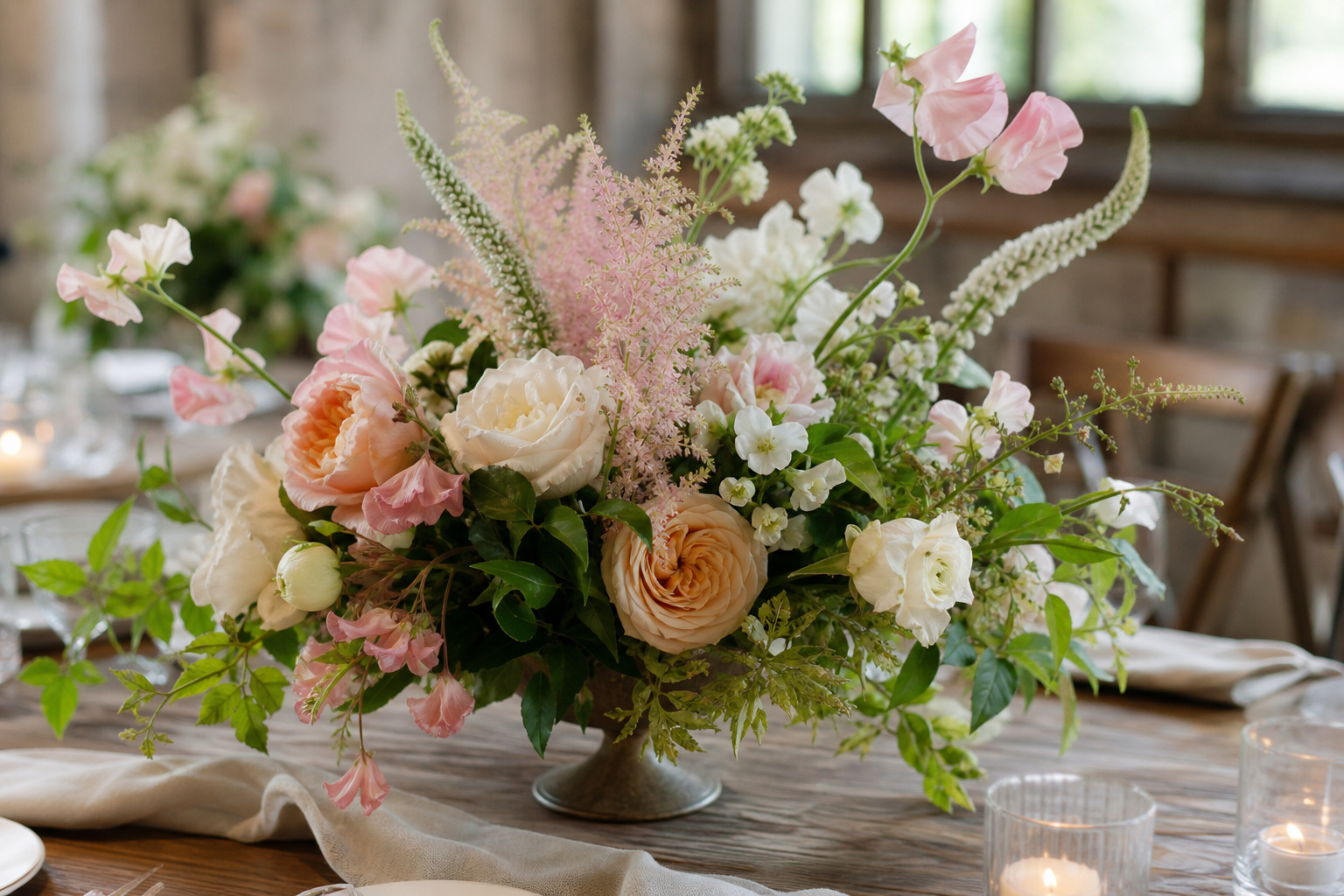
A bride sat across from me at a consultation a few years back and said she wanted her centerpieces to look “like someone just gathered flowers from a garden and set them on the table.” She didn’t want them to look designed at all.
That’s harder to pull off than a tight, symmetrical centerpiece. Looking effortless takes more skill than looking polished, not less. Here’s how I actually build that soft, garden-gathered look, and what it takes to get there.
Skip the Foam and Build on Wire Instead
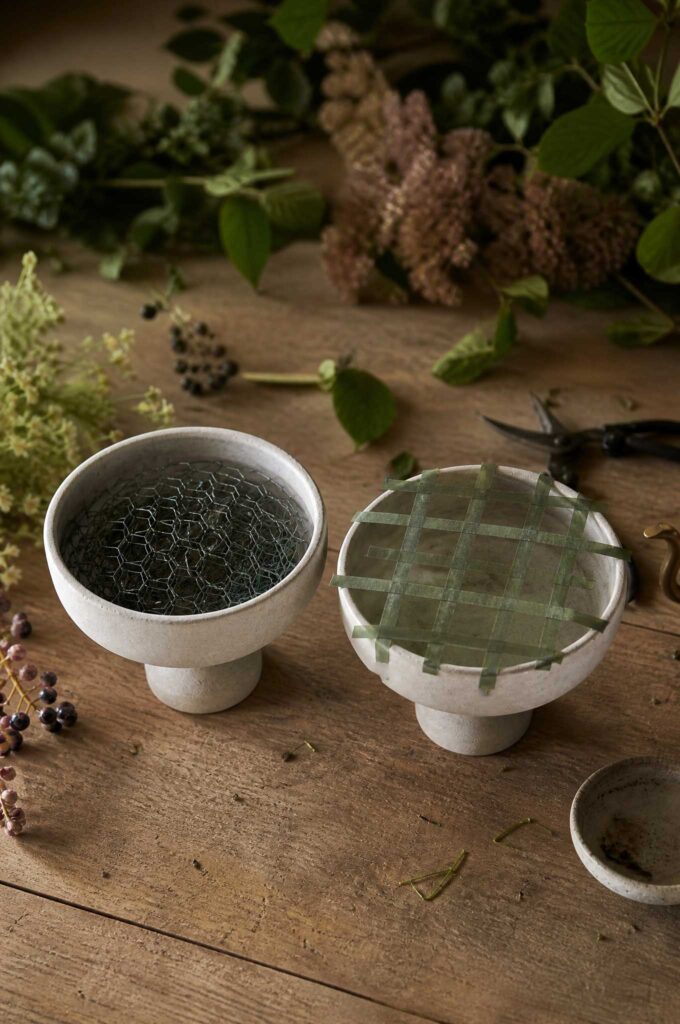
Garden-style centerpieces seldom sit in floral foam. Foam gives you a rigid grid of insertion points, and rigid grids produce the tight, uniform look you’re trying to avoid.
Instead, I build these on a chicken wire armature, crumpled into the vessel or a loose grid of waterproof floral tape across the opening. Both give the stems something to lean against without dictating exactly where each one has to go.
If this is new to you, it isn’t. It’s the technique florists used before foam took over the industry, and it’s having a real comeback. I go through the mechanics of both approaches, along with when each one makes more sense, in our guide to floral foam versus chicken wire.
Let Stems Cross at Different Heights
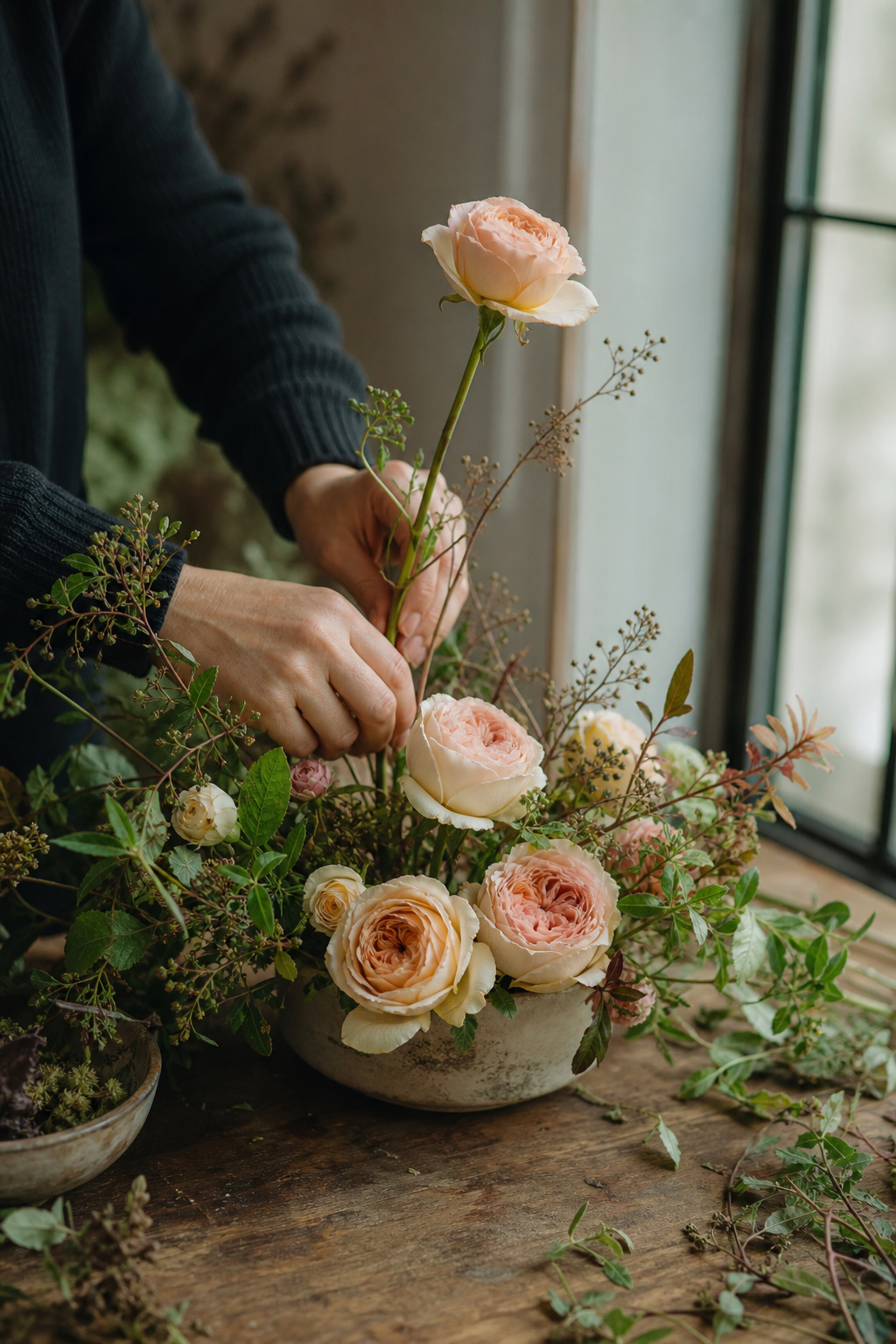
The single biggest thing separating a garden-style centerpiece from a stiff one is stem height. Uniform height reads as designed. Varied height reads as gathered.
Place your first few stems at noticeably different heights before you add anything else. Let some blooms sit low and tucked in, and let one or two rise well above the rest. Once that uneven framework is set, everything you add afterward has permission to break the same rules.
In my shop, I tell new designers to place three stems, then step back and check that no two are at the same height. If two match, move one before you go any further. It’s a small habit that keeps the whole piece from tightening up as you work.
Choose Flowers That Already Look Undesigned
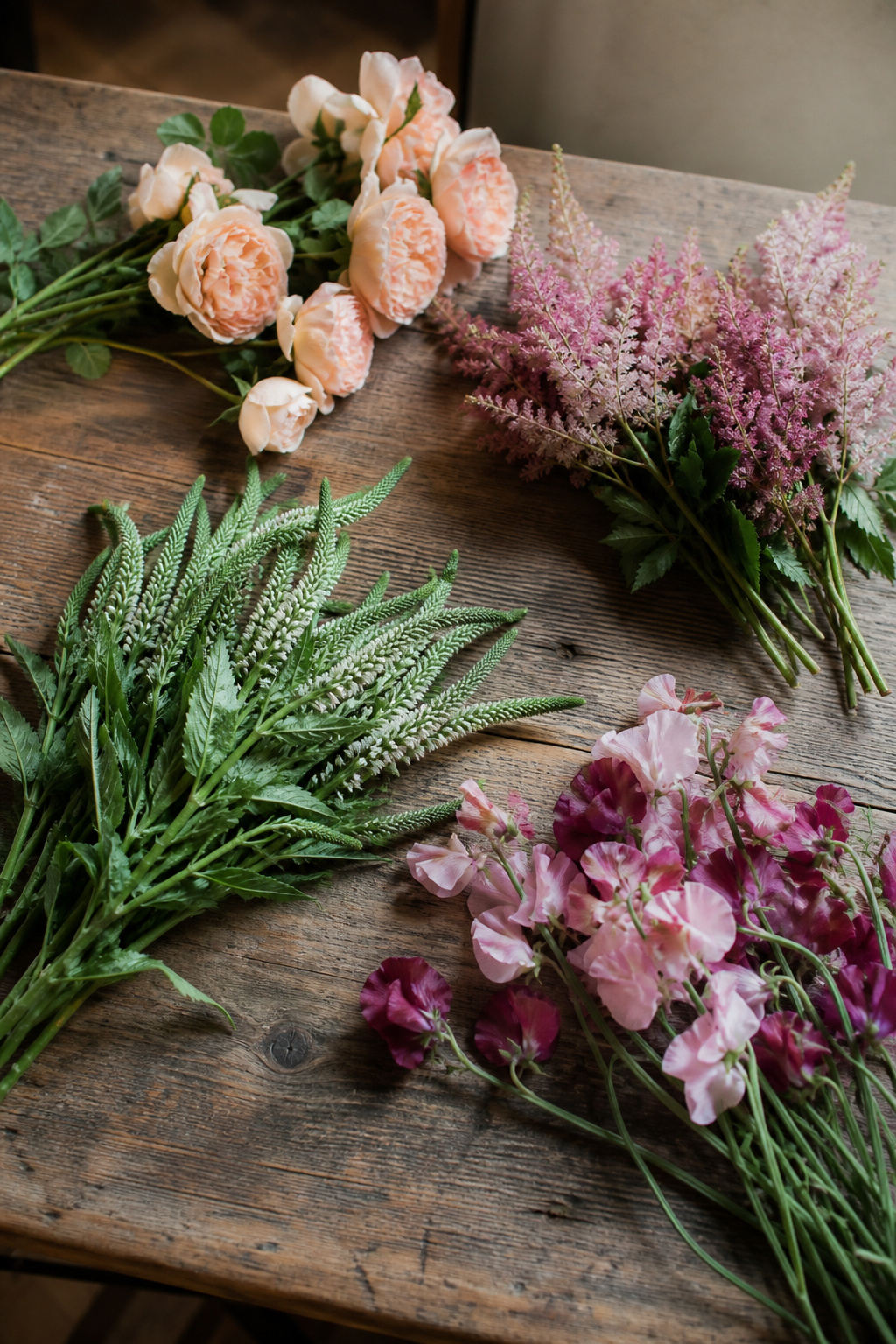
Some flowers fight the garden look, no matter how you place them. Others do half the work for you.
Garden roses, ranunculus, and sweet peas already have that loose, slightly imperfect shape built in. Airy fillers like astilbe, veronica, and scabiosa add movement without adding bulk. And for greenery, I reach for trailing pieces like jasmine vine or amaranthus over anything stiff and upright. A stiff spike of greenery will undo ten minutes of careful stem placement in one insertion.
If your budget is tight, lean on the fillers. A garden-style centerpiece built mostly from astilbe and veronica with a handful of garden roses as focal points costs a fraction of one built entirely from roses and peonies, and the loose texture actually favors the cheaper flowers.
What I use in the shop: a roll of galvanized chicken wire for the armature on every garden-style piece. It holds its shape once bent, and it’s light enough that it doesn’t fight the loose stem placement you’re going for.
Spend Where Guests Will Actually Look
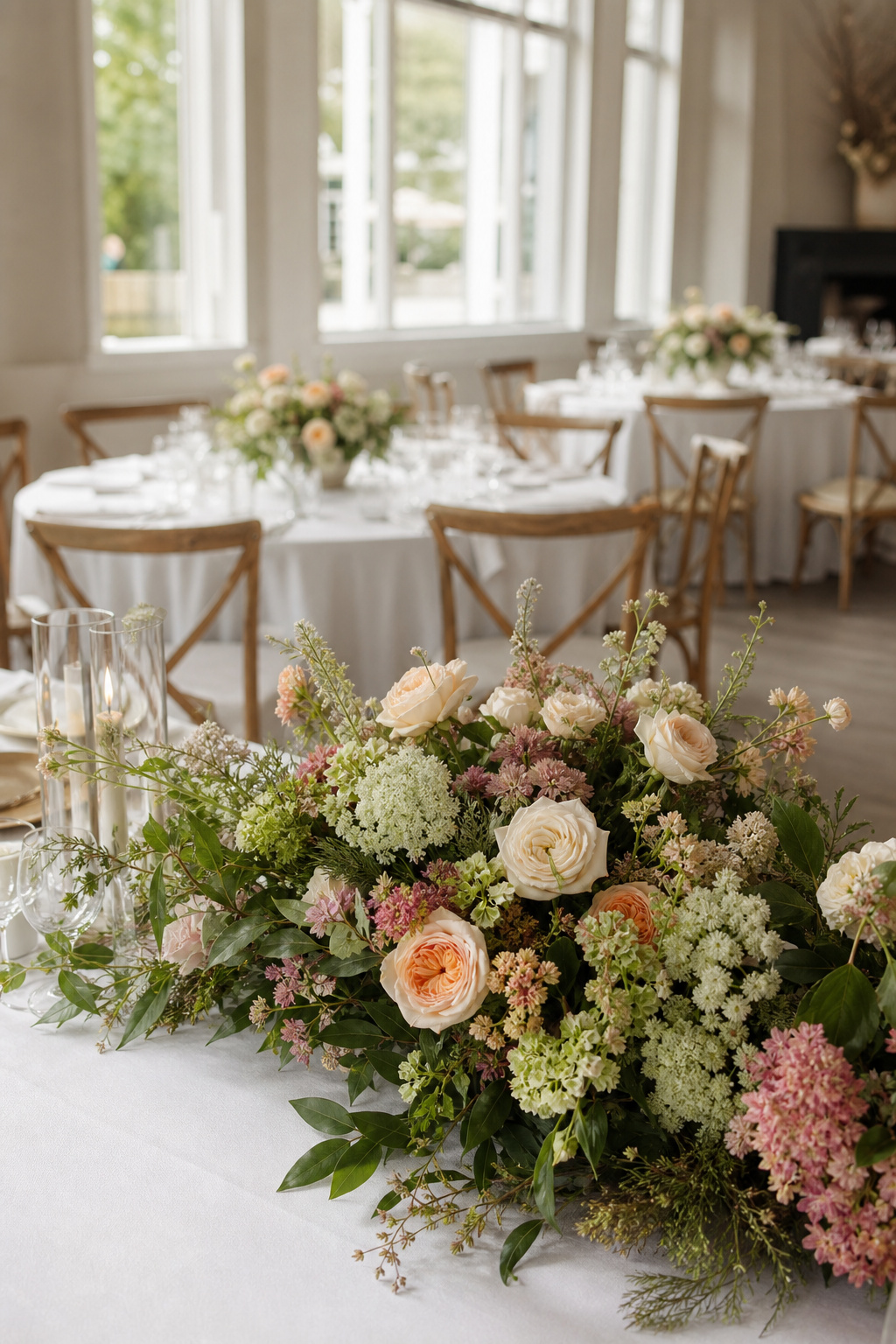
Not every table needs the same size centerpiece. Guest tables get seen for hours at close range. The head table, the entry, and the cake table are seen in photographs and from across the room.
Put your budget into a handful of larger, more elaborate centerpieces at the highest-visibility spots, and scale down the guest table pieces to something simpler and more repeatable. Nobody at a wedding compares the centerpiece size from table to table. They remember the room, not the inventory. If you want more on where your flower dollars go furthest, I get into it in our guide to choosing a wedding florist.
Frequently Asked Questions
What’s the easiest way to get a garden-style centerpiece without foam?
Crumple a ball of chicken wire into the vessel, or bend 12-gauge aluminum wire into a loose grid across the opening. Either gives stems something to rest against without forcing them into a rigid pattern. Vary your stem heights right from the start, and the loose look follows naturally.
Which flowers work best for a garden-style wedding centerpiece?
Garden roses, ranunculus, and sweet peas naturally have the loose, slightly imperfect shape you’re after. Astilbe, Veronica, and scabiosa add movement as fillers. Avoid stiff, upright greenery, since it fights the relaxed feel more than any flower choice will.
How do I keep garden-style centerpieces affordable?
Build mostly from inexpensive filler flowers like astilbe and veronica, and use pricier focal flowers like garden roses sparingly. The loose, textured style actually favors this approach, since it reads as gathered rather than sparse even with fewer expensive stems.
Should every table have the same-sized centerpiece?
No. Put your larger, more elaborate pieces where they’ll be seen the most, like the head table or entry, and scale down guest tables to something simpler. Guests don’t compare centerpieces from table to table, so this saves real money without anyone noticing a difference.
Can I use a bouquet egg armature for centerpieces instead of table pieces?
Bouquet eggs are built for handheld arrangements rather than table centerpieces, but the design logic is the same, giving you control over stem placement without a rigid grid. For an actual table piece, wire or chicken wire in the vessel is a better mechanic.
How do I keep stems from shifting once the centerpiece is finished?
A well-packed wire armature holds stems in place better than people expect, but a loose garden style is naturally more forgiving of small shifts than a tight, symmetrical design. If a piece is being transported, add water right before it travels rather than hours ahead, since a fuller vessel is more prone to sloshing and disturbing stem placement.
Closing Thoughts
Garden-style centerpieces look effortless because someone made deliberate choices about height, texture, and mechanics before a single stem went in. Skip the foam, vary your heights, and let the cheaper filler flowers do more of the work than the expensive focal blooms.
Get that right, and the room will look like it grew that way on its own.
Are you leaning toward the tight, symmetrical look or the loose garden style for your tables? Tell me in the comments. I read them all.
Til next time,