Disclosure: This post may contain affiliate links. If you click and buy, we may earn a commission at no extra cost to you. As an Amazon Associate, we earn from qualifying purchases.
Last Updated: September 2026
A bride called the shop a few weeks back, asking about sunflower bouquets. She’d seen a photo online with big golden blooms, loose greenery, and wrapped stems. She wanted to know if she could pull it off herself. I told her the same thing I’ll tell you: sunflowers are one of the easiest flowers to work with. They’re forgiving, they photograph beautifully, and they’re available year-round.
The video below, put together by the folks at Blooms By The Box, walks you through making a simple sunflower bouquet from start to finish. Watch it, and see if you agree.
As you can see, it’s not complicated. The supplies are easy to find, the technique is straightforward, and the results look like you spent a lot more time on it than you actually did.
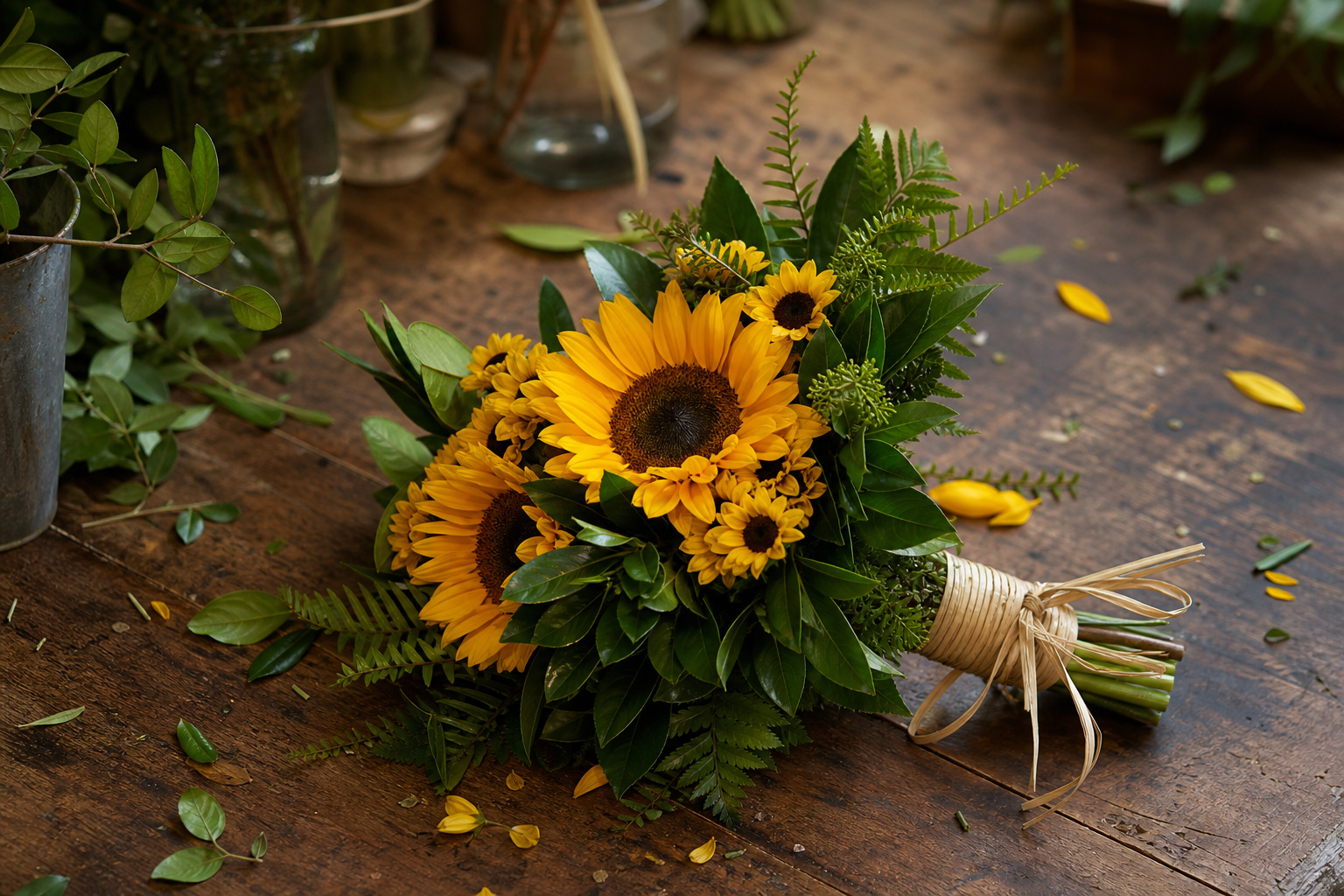
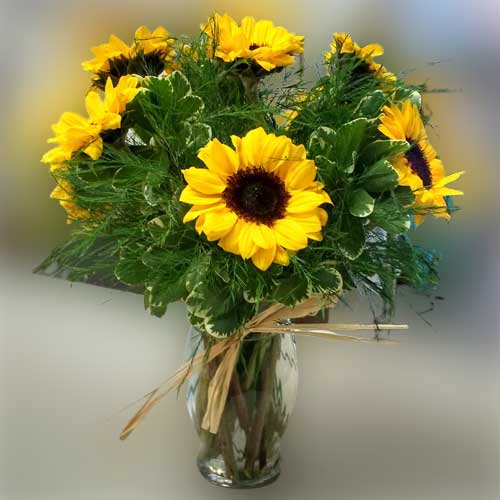
I recently made sunflower bouquets for an intimate wedding ceremony at a farm venue. I combined the sunflowers with some dark green pittosporum and tree fern, and wrapped the stems in natural raffia with a simple shoelace bow. Took me about twenty minutes per bouquet once the flowers were conditioned and ready to go, faster than it takes most couples to agree on a wedding hashtag.
Below, I’ll walk you through everything you need to know. From choosing the right varieties, how many stems to buy, where to get them, and a few things I’ve learned from years of making these at the shop.
Pick the Right Sunflower Variety
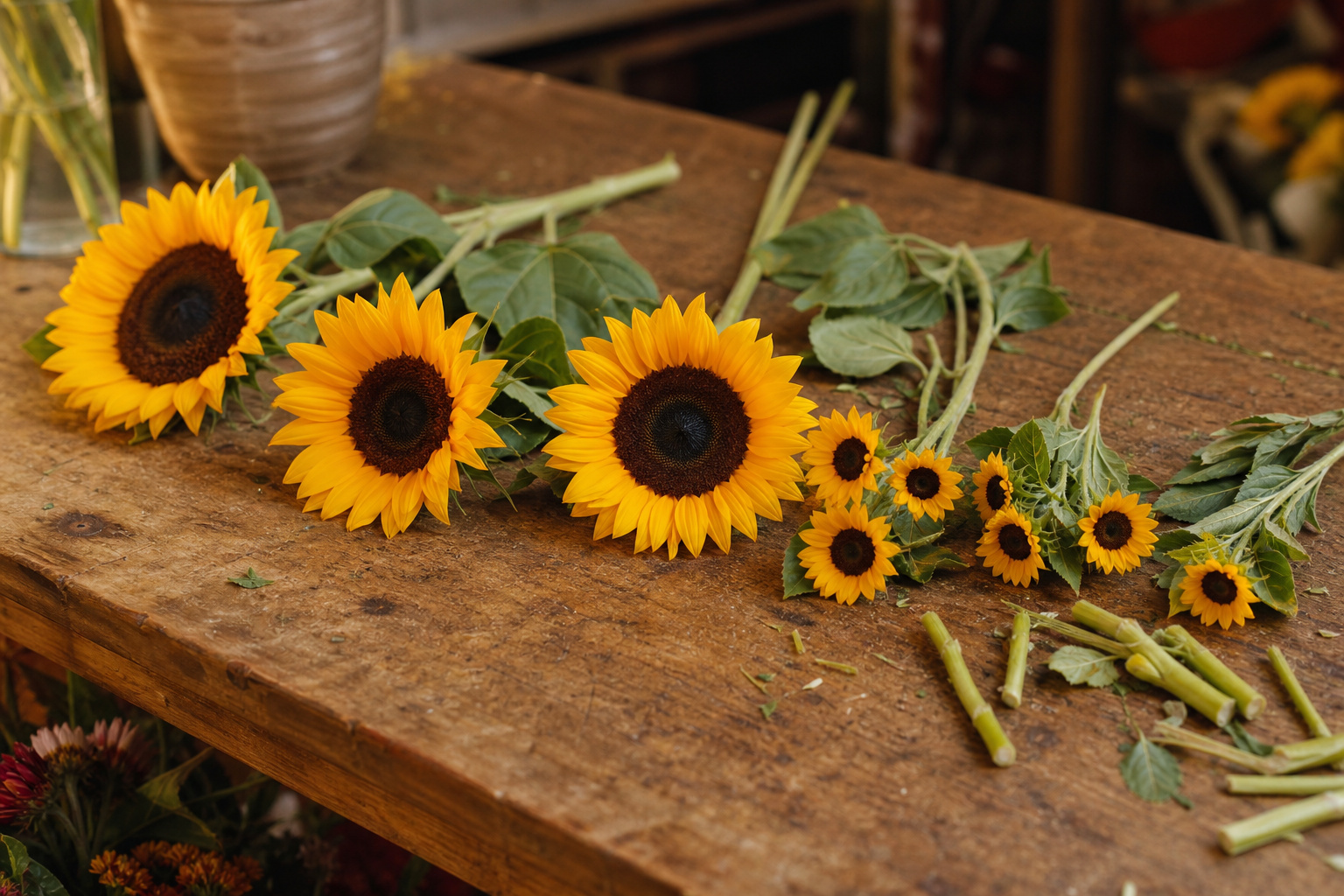
When I make sunflower bouquets, I like to combine different bloom sizes. It gives the arrangement a more natural, garden-picked look rather than something that came off an assembly line.
Commercially grown sunflowers are carefully graded for consistent quality and bloom size. In my experience, that consistency is actually a big advantage when you’re designing wedding bouquets. You’re not sorting through stems trying to find ones that match.
Traditional yellow sunflowers with dark centers are the most recognizable, but there are also orange, red, mahogany, and brown shades. Some varieties have green centers. With more than thirty varieties commercially grown for cut flower use today, you’ll find one that works for your color palette.
For a classic look, standard large sunflowers paired with mini sunflowers is the combination I come back to most. The size contrast reads well in photos and gives the bouquet some visual movement.
What I use in the shop: For DIY sunflower bouquets, I recommend mixing one bunch of large sunflowers with one bunch of minis. The stems are sold separately. Large sunflowers typically come 5 stems per bunch, minis in 10-stem bunches, and the cost per bunch is about the same for either size.
Figure Out How Many Stems You Need
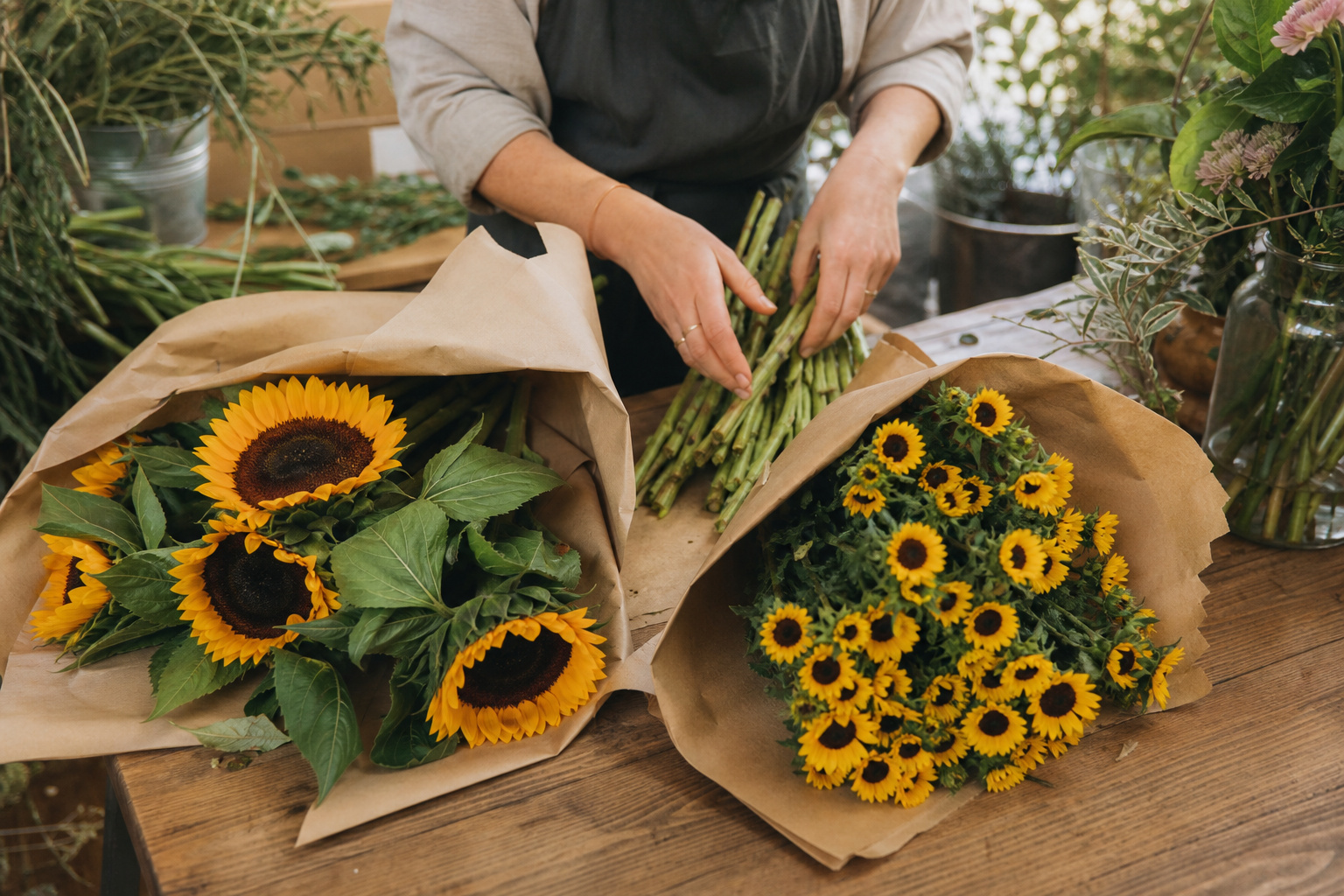
Your budget and the size of the bouquet you want will determine your stem count. That said, my general advice is to buy a little more than you think you’ll need.
Sunflowers are sold in fixed bunches, so you’re often buying in sets of 5 or 10 anyway. If you end up with extras, they’re easy to use in centerpieces, bud vases, or simply scattered on a reception table. Nothing goes to waste.
Here’s how I sized the flowers for a recent bridal party: the bridal bouquet had three large sunflowers and eight stems of mini sunflowers. Each bridesmaid’s bouquet used just two large blooms. I also made two mini sunflower boutonnieres from what was left. One bunch each of large and mini sunflowers covered everything for a bridal party of three.
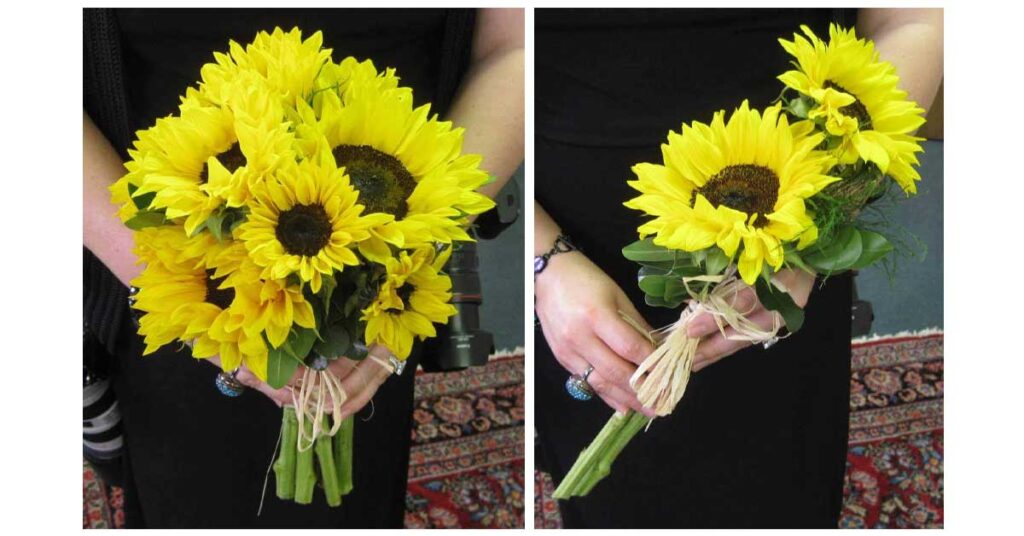
If you’re going bigger or have a larger bridal party, scale those numbers proportionally. If you’re unsure, add one extra bunch. You’ll find a use for it.
For more on planning your flower quantities across the full wedding, the wedding flower budget guide has a solid breakdown by flower type and event.
Understand Sunflower Availability and Colors
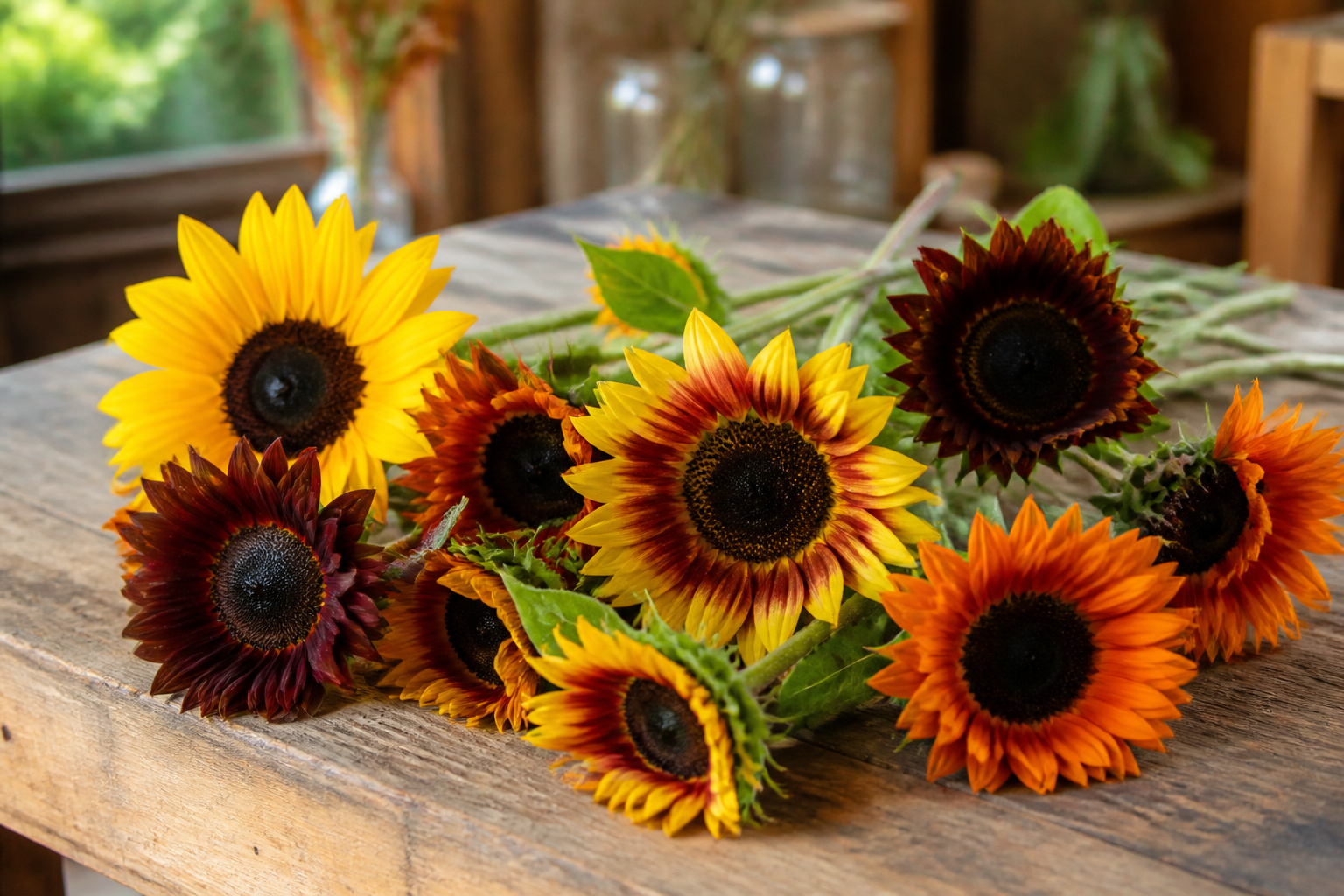
Sunflowers are available year-round from commercial growers, so you’re not locked into a particular season. That said, they’re most popular and most plentiful in late summer and autumn, which also happens to be when they fit naturally into a rustic or boho wedding aesthetic.
If you’re planning a summer wedding and want flowers that hold up in the heat, sunflowers are a reliable choice. Their stems are sturdy, and they have a longer-than-average vase life compared to more delicate blooms. I wrote about that challenge over in the summer wedding bouquet guide.
Know Where to Buy Your Sunflowers
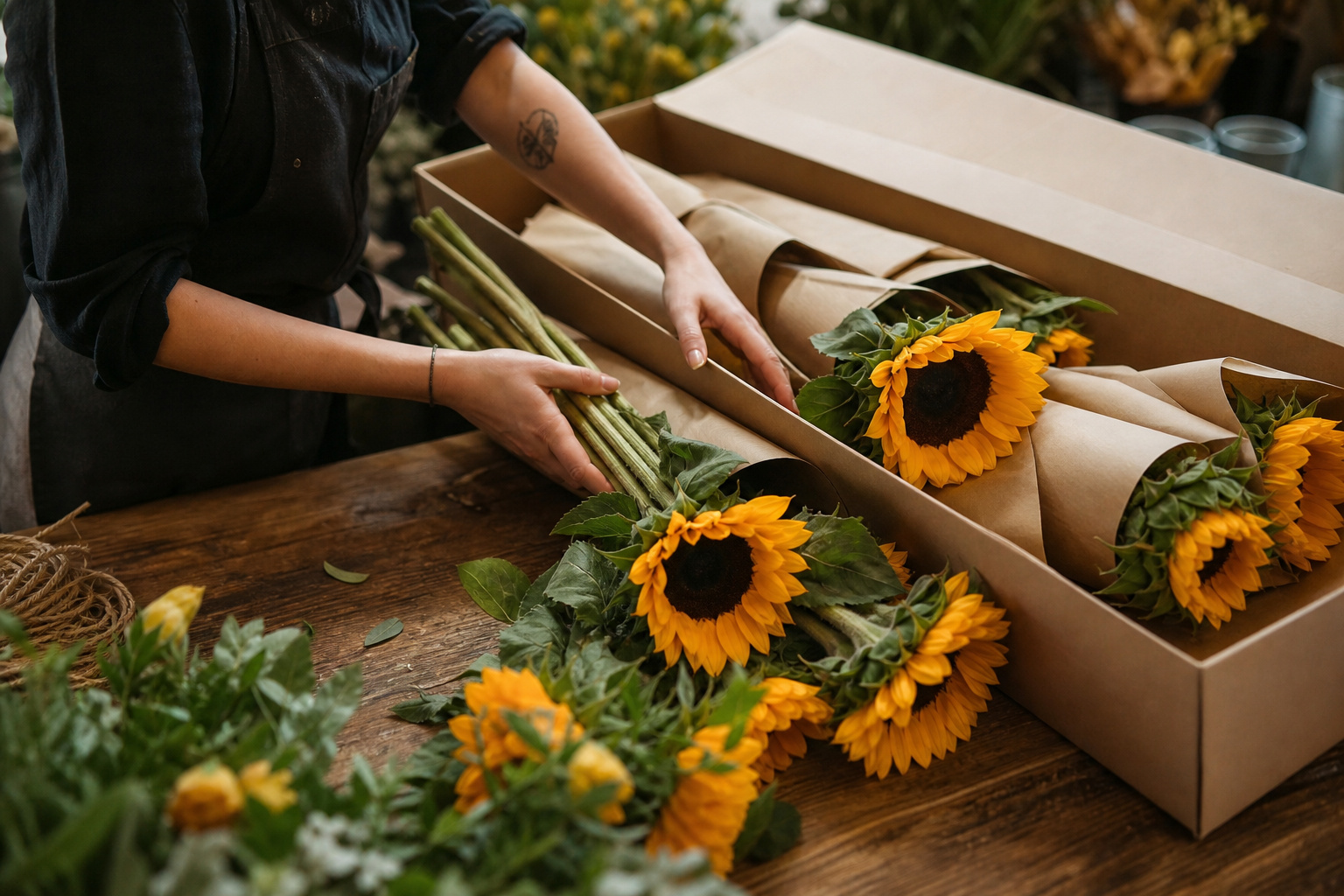
For smaller quantities, start with a local florist. If you need 25 or more large sunflowers or 50 or more minis, buying online wholesale usually makes more financial sense.
Sunflowers can be purchased at BloomsbytheBox. It’s their video, after all, and they know the product well. You can also find them at FlowerExplosion and GlobalRose. Those three are the only online sources I’ve personally bought from, so they’re the only ones I’ll recommend.
For a broader look at buying flowers online before your wedding, the post on buying bulk wedding flowers online covers what to look for and what to watch out for.
If you’re considering silk sunflowers, you’ll find a solid selection at NearlyNatural, Michaels, Hobby Lobby, or through your local florist. One piece of advice: mix in fresh foliage when you can. Even a handful of eucalyptus or fern sprigs makes silk flowers look significantly more lifelike. That’s true for any silk arrangement, not just sunflowers.
Add Greenery That Complements the Blooms
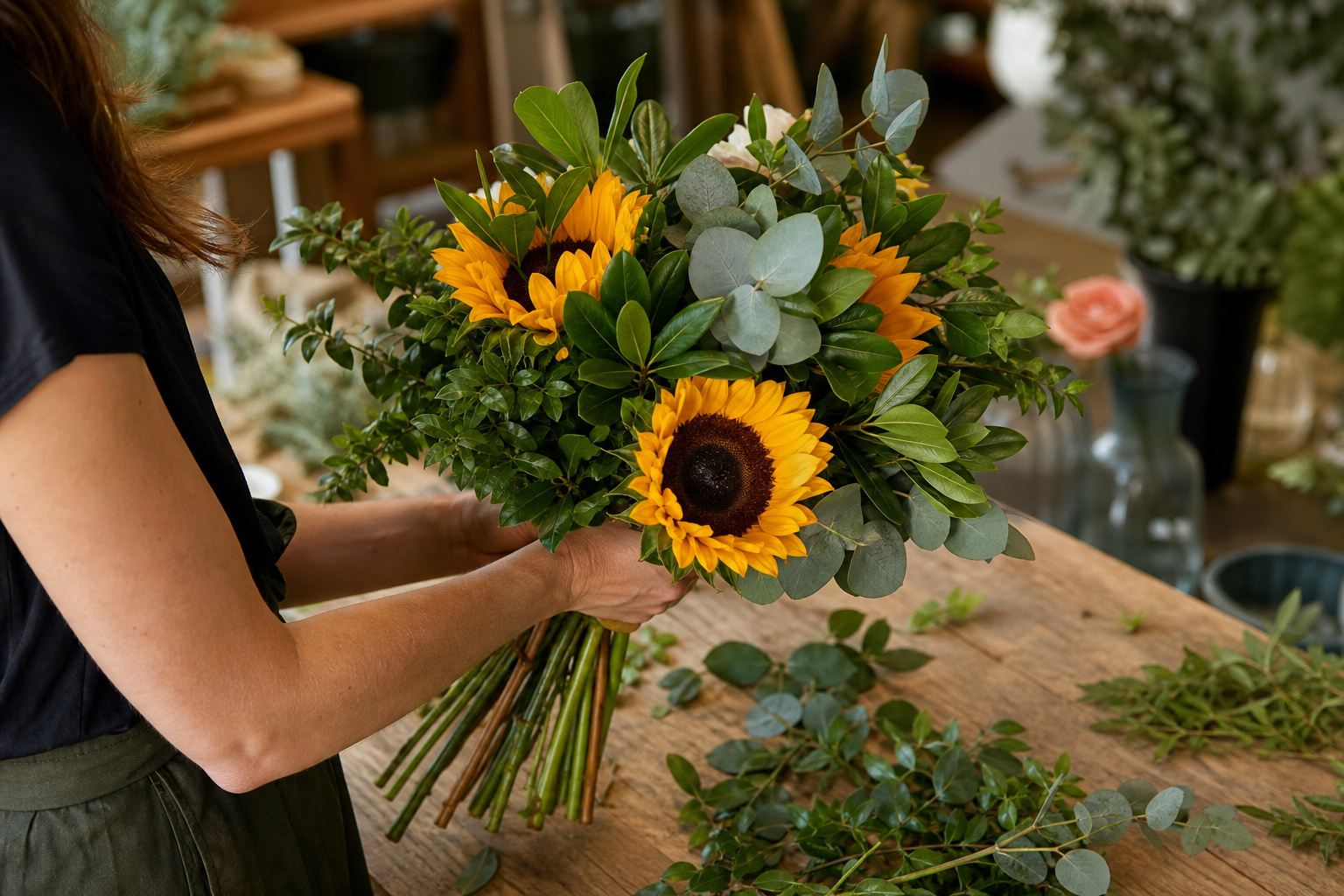
Sunflowers are bold enough to carry a bouquet on their own, but greenery gives the arrangement its shape and makes the flowers look intentional rather than just gathered together.
For the farm wedding I mentioned, I used pittosporum and tree fern. Both hold up well, have good visual weight, and don’t compete with the sunflowers. But you can use whatever greenery is available to you. Eucalyptus is a popular choice right now and works well with sunflowers. Italian ruscus gives a more structured look. Salal is a good budget-friendly option.
The rule I give people: use at least two different types of greenery if you can. The contrast in leaf shape and texture makes the bouquet look more finished without requiring any advanced design skills.
If you’re thinking about how greenery fits into the larger question of focal flowers vs. fillers, that’s covered in the focal flowers guide.
Wrap and Finish the Stems Cleanly
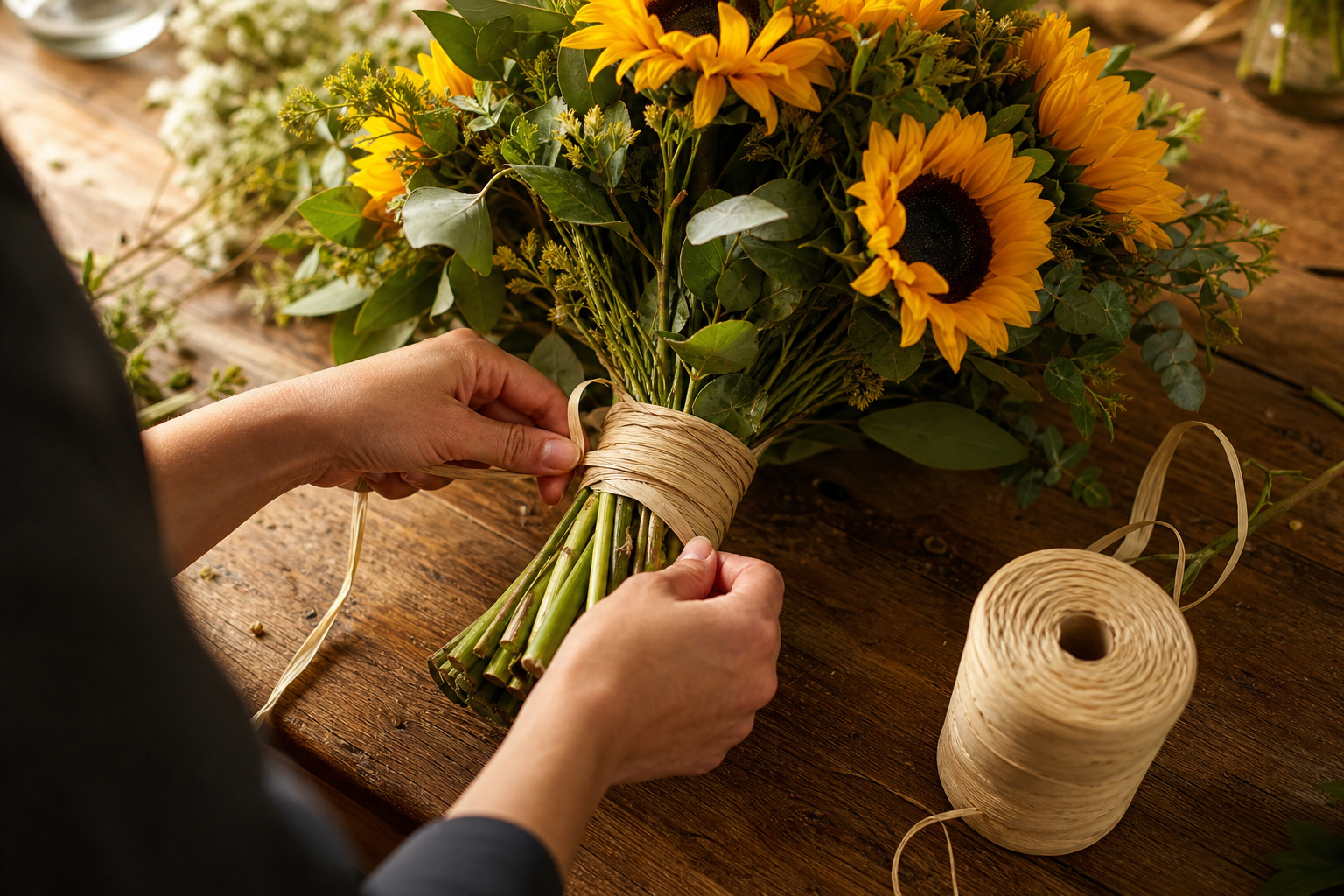
Once you assemble your bouquet, secure and wrap the stems. This is where many DIY brides overthink things.
Start with floral tape to bind the stems together just below the flower heads; this holds everything in position while you work on the wrap. Then cover the stems with whatever finishing material fits your look: natural raffia for a rustic feel, satin ribbon for something more formal, burlap twine for a barn-style wedding.
I finish mine with a simple bow. The shoelace-style bow shown in the video works well and is easy to do neatly. Whatever you use, wrap down at least four inches of stem so the bouquet is comfortable to hold.
What I use in the shop: Natural raffia for rustic designs, satin ribbon for a more polished look. Both are inexpensive and available on Amazon. Grab more than you think you’ll need. You’ll want to practice the bow a few times before the wedding day.
Frequently Asked Questions
How far in advance can I make a sunflower wedding bouquet?
I recommend making the bouquet the day before the wedding at the earliest. Sunflowers hold up well, but assembling too far in advance means the stems have been cut twice and the blooms have been out of water longer. Keep the finished bouquet in a cool room with the stems in water until the morning of the wedding.
How do I keep a sunflower bouquet fresh on the wedding day?
Keep the bouquet in water right up until you leave for the venue. Sunflowers wilt quickly if left out in warm conditions for too long. If it’s a hot day, a cool car and a vase of water for the ride make a real difference.
What greenery works best with sunflowers?
Pittosporum, eucalyptus, and tree fern are my go-to choices. They hold up well, have good visual weight, and complement sunflowers without competing with them. Salal is a good budget option if you’re buying locally.
Can I use silk sunflowers for a wedding bouquet?
Yes, and they work reasonably well, especially if your venue is very warm. The key is mixing in fresh foliage. A few stems of real eucalyptus or fern alongside silk sunflowers make the whole arrangement look much more convincing.
How many sunflowers do I need for a bridal bouquet?
For a medium-sized bridal bouquet, three large sunflowers and eight mini sunflowers are a solid starting point. That’s roughly one bunch each of large (5 stems) and mini (10 stems) sunflowers, with a few mini stems left over for a boutonniere or two.
Do sunflowers come in colors other than yellow?
Yes. Commercial sunflower varieties include orange, red, mahogany, brown, and bi-color options. Some have green centers rather than the traditional dark brown. There are more than thirty varieties grown for cut flower use, so you have real options depending on your color scheme.
Closing Thoughts
Sunflowers are one of those flowers that make a strong impression without asking much of the designer. They’re durable, widely available, and they read beautifully in photos. For a DIY bride who wants something that looks like it came from a florist without the florist price tag, they’re a hard choice to beat.
The key is in the prep: buy a little more than you think you need, condition the stems properly before you assemble, and keep everything cool until the last minute. Do that, and the bouquet will take care of itself.
Like the flower itself, a good sunflower bouquet doesn’t need much dressing up to shine.
If you’ve made a sunflower bouquet, or you’re planning one, drop a comment below and tell me what greenery combination you used. I’m always curious what people are reaching for.
Til next time,