Disclosure: This post may contain affiliate links. If you click and buy, we may earn a commission at no extra cost to you. As an Amazon Associate, we earn from qualifying purchases.
Last Updated: June 2, 2026
A bride came in last spring with a Pinterest folder, a tight budget, and a pretty clear idea of what she wanted. Her maid of honor had gotten married the year before with a florist who charged three times what we charge. Same flower types, similar style. She was certain she could get the same results for less.
She was right. She just needed to know where to pull back and where not to.
Wedding flower costs can run anywhere from a few hundred dollars to a few thousand, and that gap has a lot to do with decisions you make before you ever walk through a florist’s door. At our shop, weddings typically range between $1500 and $3,000, and that’s just our side of things. Reception florals can push that number higher.
I’ve also been around long enough to know what couples get wrong before they even sit down for a consultation. So here are five strategies that actually work, plus a few things most florists wish you already knew.
1. Start With a Realistic Budget and Lock It In Early
The biggest problem I see is couples who arrive at a florist consultation with no working budget, or one they’ve already quietly raided to cover the venue deposit. By that point, you’re negotiating with one hand tied behind your back.
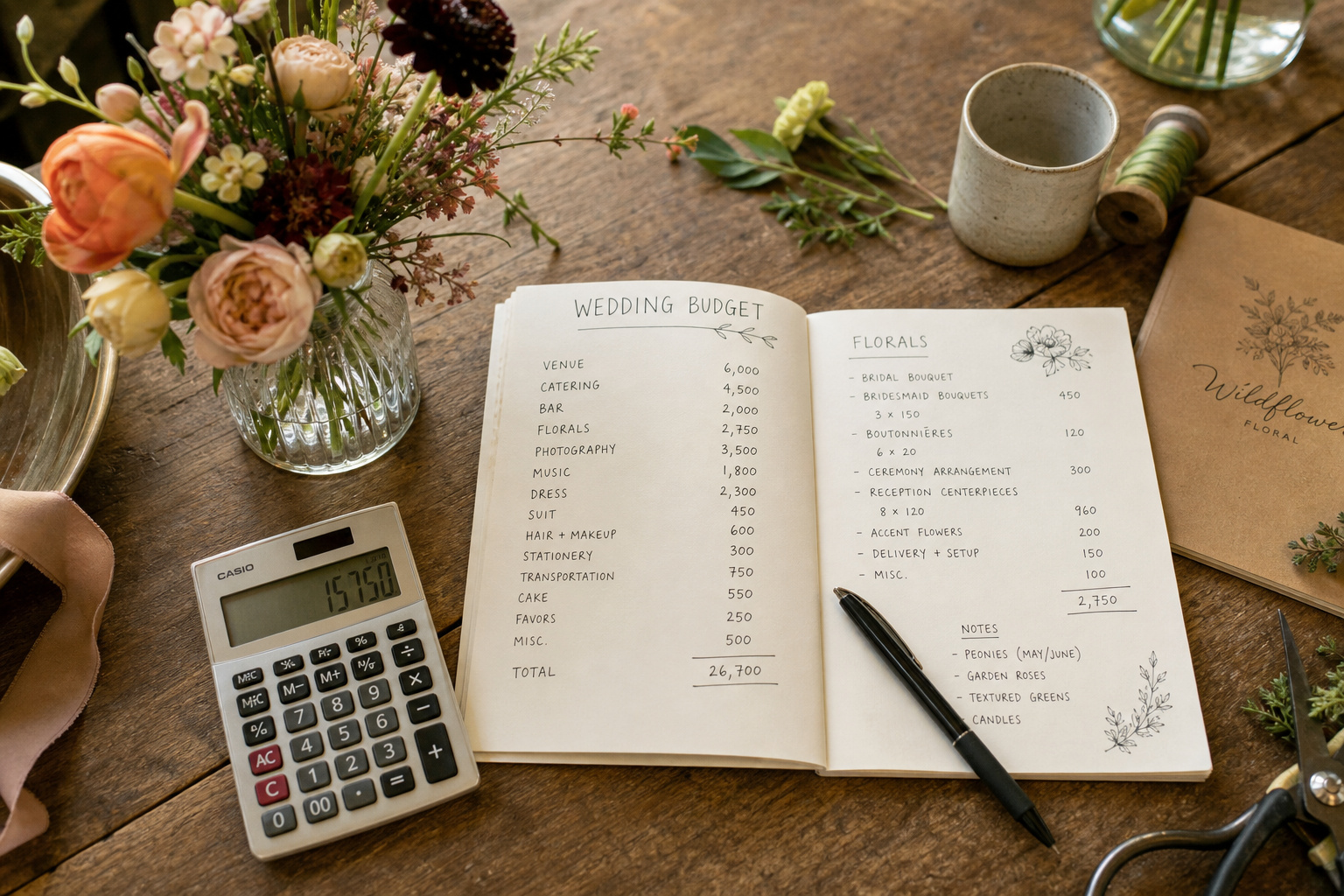
Most wedding planning sites will tell you to allocate 8–10% of your total wedding budget to flowers. That’s a reasonable anchor if you need something to start with. But the more useful move is to find out what couples in your area actually spent. Our wedding cost estimator tool pulls from real local data rather than vendor pricing. Run your numbers through it before your first consultation.
One thing I’d add: don’t set a range. Set a ceiling. Tell your florist what it is upfront. It’s the fastest way to get proposals that are actually useful, rather than proposals that have to be walked back in a second meeting. And build in a 10% cushion. Designs evolve, prices move. That’s not waste, that’s just reality.
A note on sticker shock: the reason proposals come in higher than expected is that most couples have no everyday purchasing experience to compare them to. Wedding flowers involve design work, sourcing, staffing, transportation, and installation, all compressed into a very tight timeline. You’re not just paying for flowers. You’re paying for a perishable product that has to look perfect exactly once. Understanding that before your first meeting will save you a lot of frustration.
2. Book Your Venue Before You Talk to a Florist
This one surprises people, but it’s one of the most consistent pieces of advice I give. The venue drives almost every floral decision, including the scale, logistics, and cost. Without it, any proposal a florist gives you is really just a guess.
Think about the table shape alone. Rectangle tables seat fewer people per table, which means more centerpieces than you’d need with rounds. That adds up fast. And installation windows matter too. Venues that give you two hours to set up require a larger crew working simultaneously, which raises your labor cost even before a single stem is cut.
Labor, by the way, is usually the biggest cost driver, not the flowers themselves. An expensive arrangement isn’t expensive because you chose peonies instead of carnations. It’s expensive because building it, transporting it, and placing it correctly takes skilled hours under pressure. Keep that in mind when you’re comparing proposals.
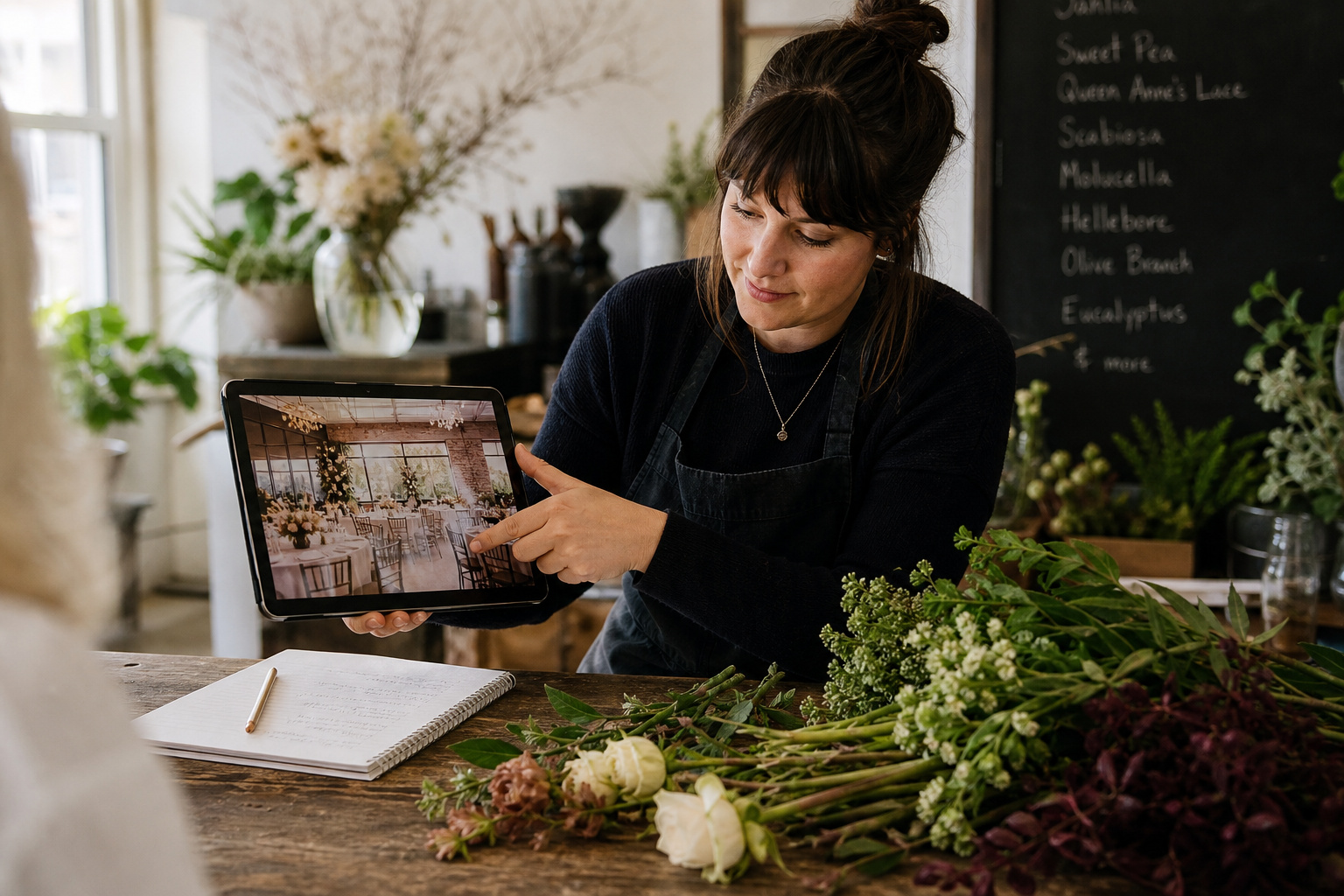
Once you have the venue locked down, bring it to your florist consultation along with a rough guest count, a few inspiration images, and the table shape. You don’t need an itemized list of every flower you want. You need enough context for the florist to give you a real number. That’s it.
3. Get Your Priorities Straight Before You Meet Anyone
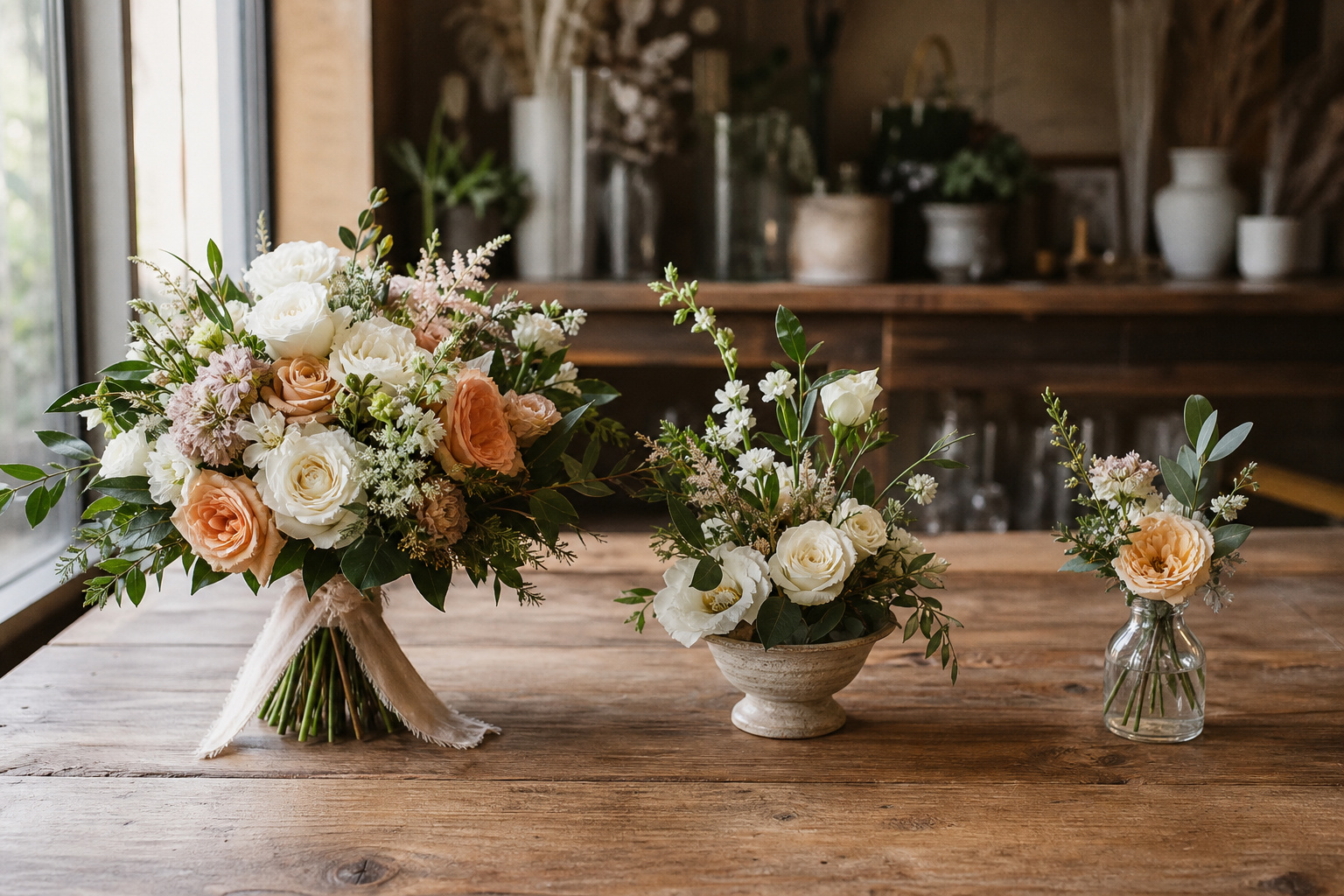
Before you step into a florist’s shop, decide which flowers matter most to you. Bridal party? Ceremony? Reception? You don’t need every answer, but knowing your priority order will save you real money in the consultation.
Personal Flowers First
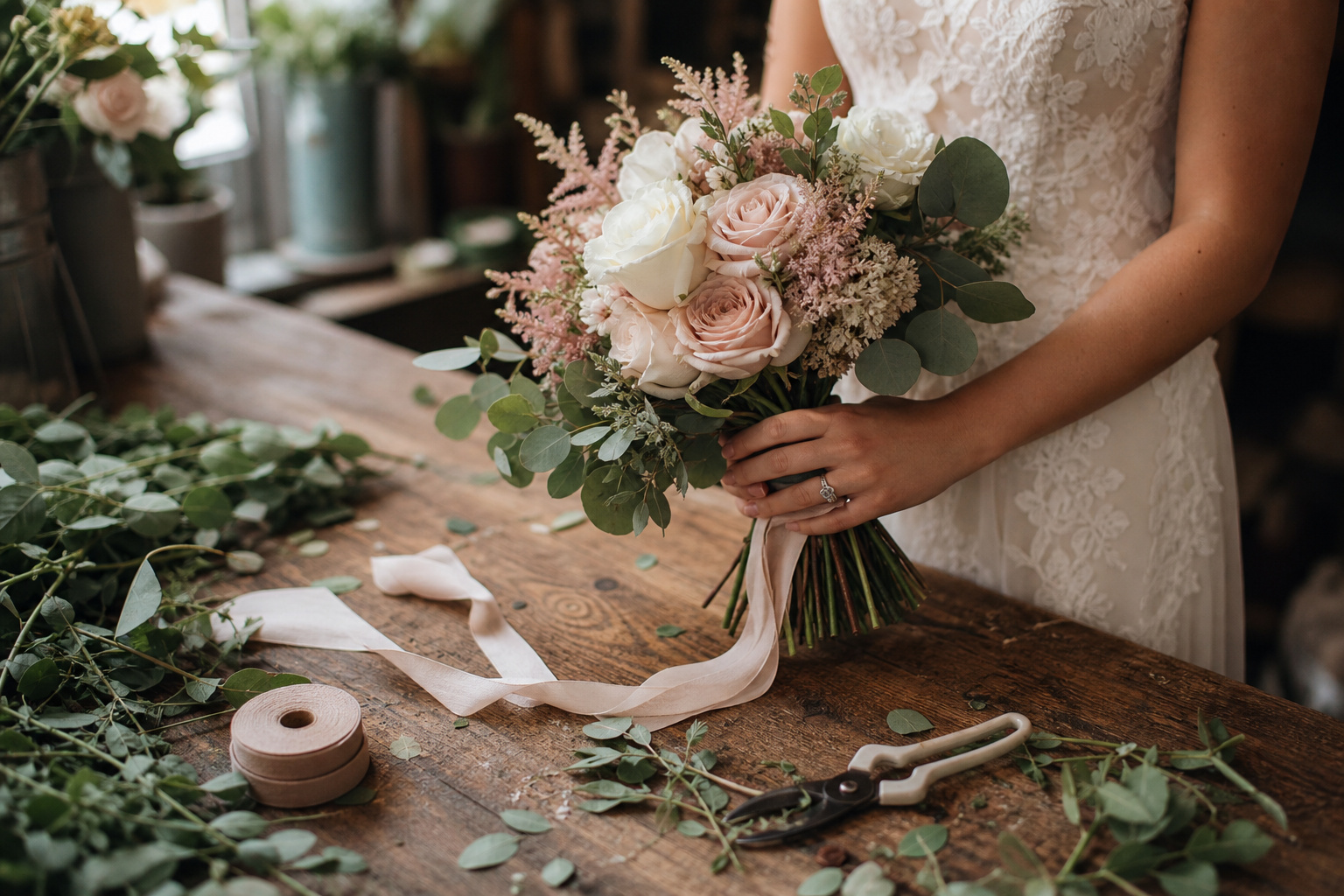
Your bridal bouquet and your attendants’ bouquets should get the lion’s share of your attention and your budget. These are the most photographed elements of your wedding. They’re in every formal portrait. If your budget is limited, put most of it here before worrying about anything else.
This is not the place to cut corners.
Reception Flowers Second
Reception florals run the widest range, from simple bud vases to elaborate installations that cost more than some entire weddings. That’s why it helps to have spent wisely on personal flowers before you get to this line.
Reception flowers do matter. Your guests spend the most time there, and not everyone who attends the reception was at the ceremony. Simple, well-chosen flowers leave an impression. Just don’t let them eat your budget before the bouquet gets funded.
Ceremony Flowers Last
My thinking on ceremony flowers has shifted over the years. Ceremony and reception venues are often the same space today, which makes these significantly more cost-effective than they used to be.
When they’re in a larger standalone space — a church, say — size matters more than quantity. Two impressive altar arrangements will read better on camera than six smaller ones scattered around. And everything you use at the ceremony can move to the reception if you plan for it. Design for the reception first, then figure out placement at the ceremony. That’s one of the most consistently underused cost-saving moves I see couples miss.
4. Stay Flexible on Varieties and Get the Florist Involved Early
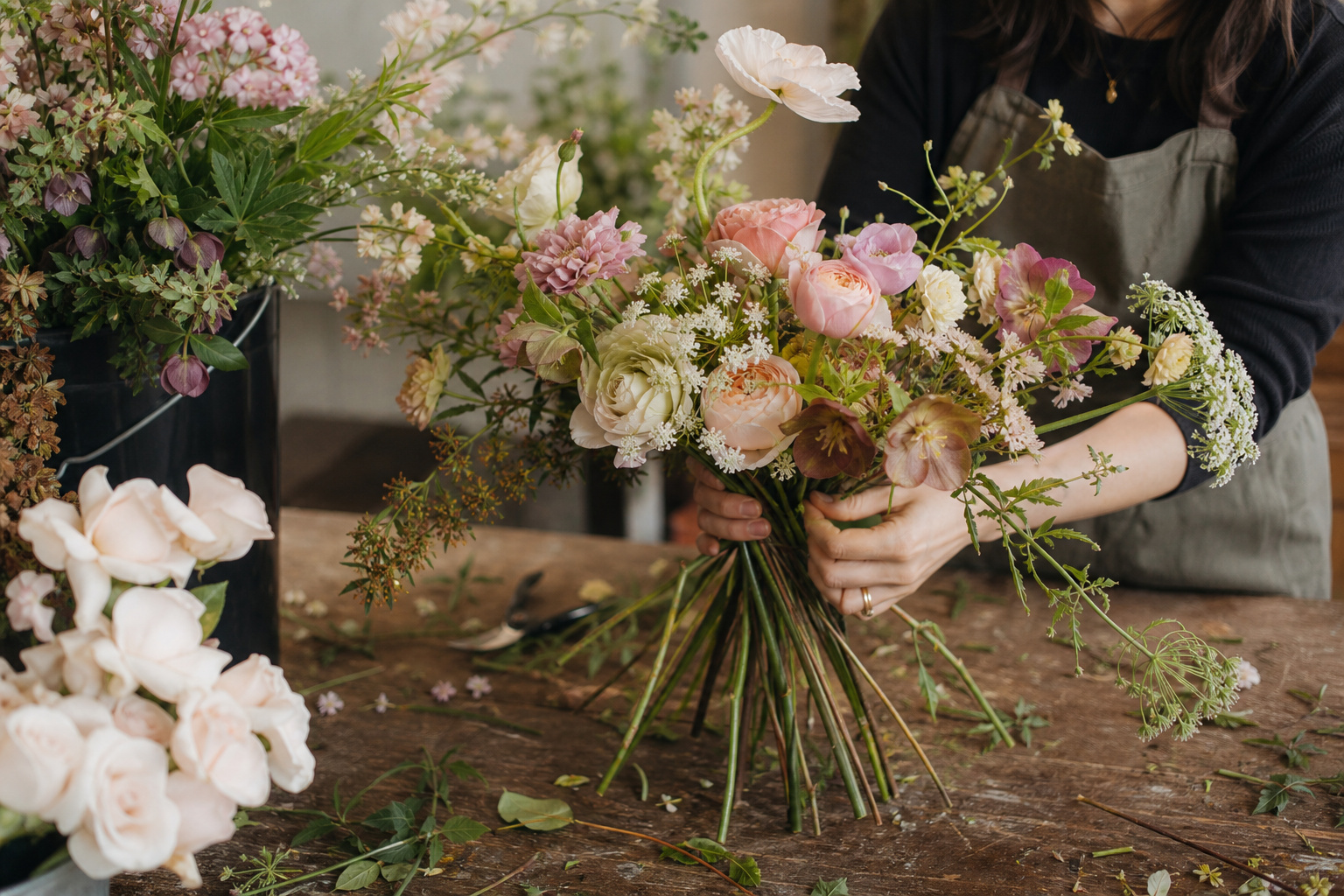
One of the fastest ways to cut costs is to specify a color palette rather than exact flower varieties. Instead of “I need blush garden roses,” try “I want soft pinks and creams with some greenery.” That opens up what your florist can source at a given price point on a given week. Color-driven design almost always pencils out better than variety-driven design.
Getting your florist involved early pays off in other ways, too. Many florists offer rental inventory, such as cylinder vases, linens, candelabras, and lighting. I’ve sat across from brides who spent $200 buying large vases they could have rented from us for a fraction of that. By the time they realized it, the vases were already in the back of their car.
One more thing worth thinking through early: the small details. Bars, welcome tables, escort card tables, and flowers for parents, these are the items that get added at the last minute. A quick walkthrough of your venue, with notes on every spot you’d like flowers, will prevent a frantic call three weeks out. Your florist will thank you. Your budget will too.
And if you’re still weighing whether to hire a florist or go the DIY route, check out this breakdown. The time math alone usually settles the question.
5. Ask the Right Questions Before You Sign Anything
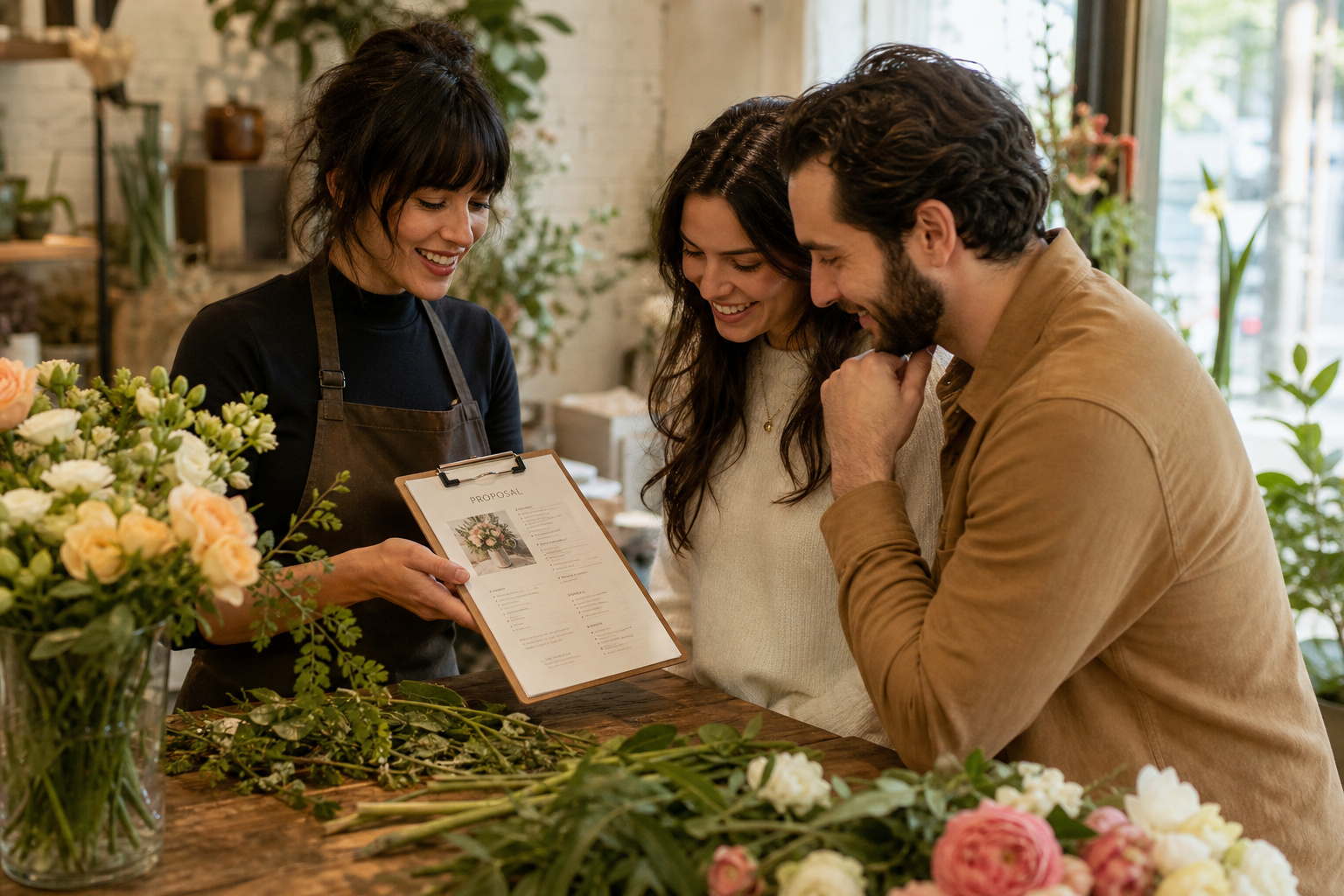
This one sounds obvious. Most people don’t do it.
If you’re upfront about your budget, a florist who wants your business will find a way to work with it. That might mean swapping some varieties, simplifying a design element, or adding extras at cost to close the deal. What it seldom means is the florist walking away from a committed buyer.
Watch the line items that go unnoticed: delivery, setup, teardown, service fees. These are real charges, and they can add up. But they’re also generally negotiable. Sometimes the ask is as simple as “Can you waive the delivery fee if I meet you halfway?”
Beyond price, there are three questions worth asking any florist before you sign:
What’s your backup plan if something goes wrong on the day? For smaller independent shops, this matters. You want a clear answer, not a reassurance.
What can I change after signing, and what are the fees? Wedding plans evolve. Guest counts shift. Designs get refined. Know exactly what flexibility you have before you commit.
What’s your best idea for maximizing my budget? Every florist worth working with has an answer to this question. If they don’t, that tells you something, too.
And if the first florist you talk to is out of your range, that’s not a dead end. Take their proposal, understand what you’re looking at, and use it as a baseline when you talk to the next one. There’s a florist for every budget. The new rules for choosing the right florist post cover how to vet them effectively once you start making calls.
Ask About Packages — Most Florists Have Them
Many florists, including us, offer wedding flower packages that bundle commonly requested items at a lower combined price. They don’t fit every wedding perfectly, but they’re worth asking about, and the good ones leave room for creative flexibility.
One bride used one of our corsage packages to add floral accents to gift boxes she used as guest table decor. Not what the package was designed for, but it worked beautifully and came in well under what custom-ordering the same pieces would have cost. Ask your florist what flexibility they have. You might be surprised.
Frequently Asked Questions
What percentage of a wedding budget should go to flowers?
The 8–10% figure you’ll find on most planning sites is a rough starting point. It doesn’t account for your venue, your guest count, or your priorities. I’ve seen couples spend 5% and have a stunning wedding. I’ve seen others spend 15% and feel like they came up short. Use the percentage as a baseline, then adjust based on what actually matters to you.
Is it cheaper to do your own wedding flowers?
Sometimes, but not always, once you factor in your time. DIY wedding flowers can save money on labor, but flowers are perishable, and the work is concentrated in the 24–48 hours before the wedding, which is already a stressful stretch. Whether it makes sense depends on your skill level, your available time, and how comfortable you are with some uncertainty. If you go that route, read up on how to process fresh flowers properly. That’s where most DIY brides lose blooms they can’t afford to lose.
What’s the best way to save money on wedding centerpieces?
Specify a color palette instead of specific flowers, and let your florist source what’s available and affordable that week. Greenery-forward designs cost less than full-bloom arrangements without sacrificing visual impact. Bud vases in clusters are another option that reads beautifully in photos and runs well below the cost of traditional centerpieces.
Can ceremony flowers be reused at the reception?
Yes, and this is one of the most consistently underused cost-saving moves. Altar arrangements, pew markers, and candelabra flowers can all move to the reception if you plan for it. Design them for the reception venue first, then identify placement at the ceremony. Talk to your florist about logistics before you finalize any designs.
When should I book a wedding florist?
Earlier than you think. Good florists in popular markets book 9–12 months out for peak wedding dates. Even if you don’t have every detail locked down, securing your florist early gives you time to develop the proposal properly and make adjustments as the date approaches. The wedding planning timeline tips post has a useful calendar to work backward from.
Are delivery and setup fees negotiable?
Often, yes. These are service charges, and many florists have flexibility on them, especially if you’re a committed buyer or if the logistics are straightforward. Ask. The worst they can say is no.
What should I bring to a florist consultation?
Keep it simple: a rough guest count, your venue details, the shape of your tables, and a few inspiration images of floral designs you like. You don’t need to know specific flower types or what’s in season. That’s your florist’s job. Come with a feel for what you want, and let them translate it.
Closing Thoughts
None of this requires you to compromise on what your wedding looks like. It just requires going in with a clear head and a few good questions ready. Budget early, prioritize honestly, lock in your venue before your first consultation, stay flexible on varieties, and don’t be shy about asking for what you need.
The couples who get the most out of their floral budget aren’t the ones who spend the most. They’re the ones who spend smart. Like a well-tended garden, a little planning at the start pays off far more than last-minute fixes ever do.
If you’ve been through the wedding flower budgeting process or you’re in the middle of it right now, drop a comment below and tell me what worked for you. Which of these strategies made the biggest difference?
Til next time,