Disclosure: This post may contain affiliate links. If you click and buy, we may earn a commission at no extra cost to you. As an Amazon Associate, we earn from qualifying purchases.
Last Updated: June 2026
A bride called me a few years back, completely convinced she’d seen the perfect bouquet on Pinterest. All blue. Lush, deep blue. She wanted to know which flowers I’d use to recreate it. When I asked her to send me the image, I could see right away that about half those flowers had been tinted. The other half were naturally blue, and those are harder to source than most people expect.
Blue is one of the rarest colors in the flower world. That’s not a complaint, just a fact. But it does mean that if you’re planning a blue wedding bouquet, you need to know which flowers are naturally that color, which ones can be tinted, and what’s best for a bouquet that has to hold up on a wedding day.
I’ve put together this guide to walk you through both categories. By the end, you’ll know exactly what to order and what to ask for.
Start With Naturally Blue Flowers
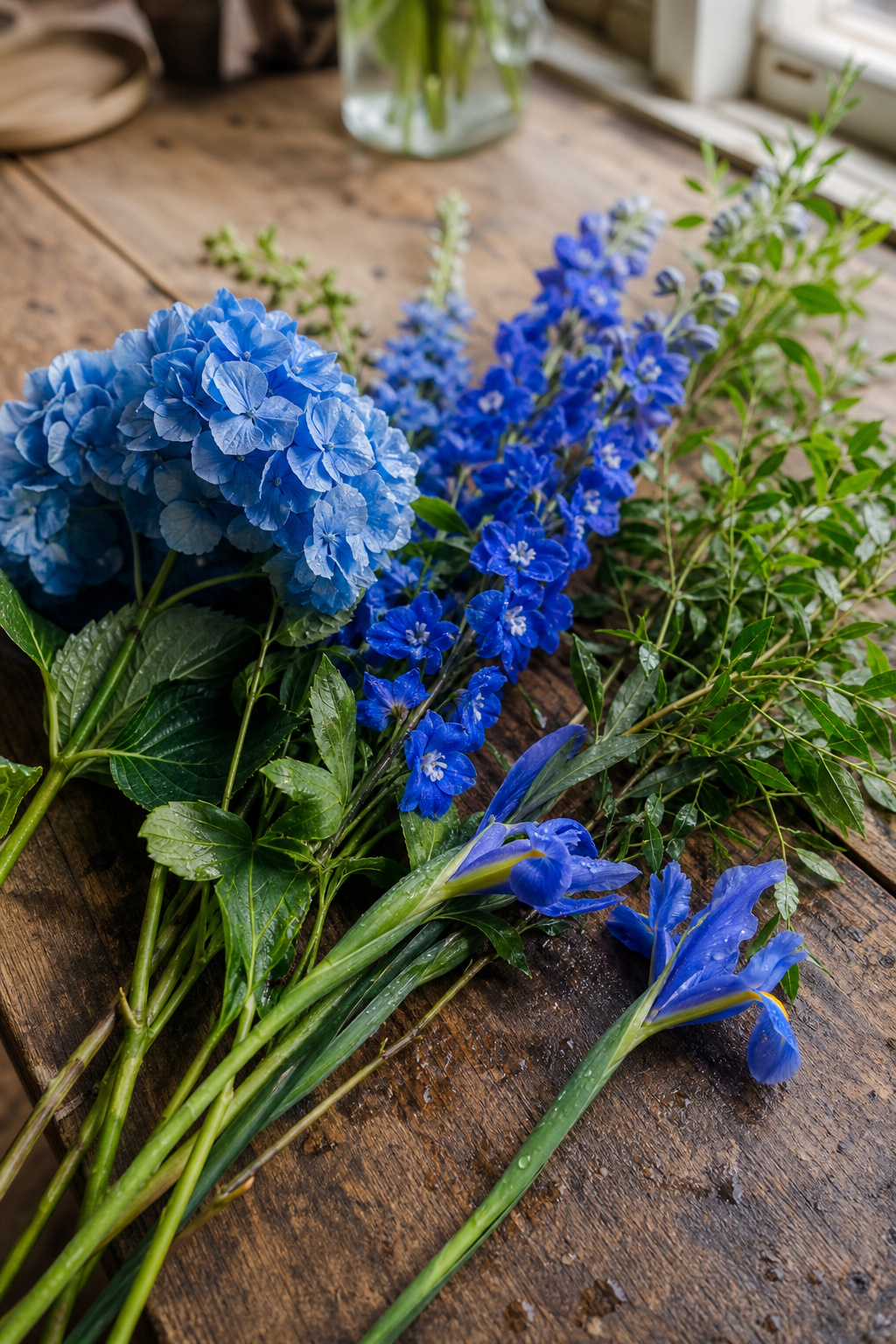
These are the flowers that are actually blue without any help from dye. They vary in shade, from pale powder blue to deep violet-blue, and in availability, they depend on your wedding date and your region.
Blue hydrangea is the one most brides reach for first, and for good reason. The blooms are full and lush; they fill out a bouquet quickly, and the color is consistent. One or two stems can carry a lot of visual weight. The tradeoff is that hydrangeas are a notoriously thirsty flower. Keep them properly conditioned before the wedding, and make sure your florist or wholesaler processes them well. Wilted hydrangea is not a good look walking down the aisle.
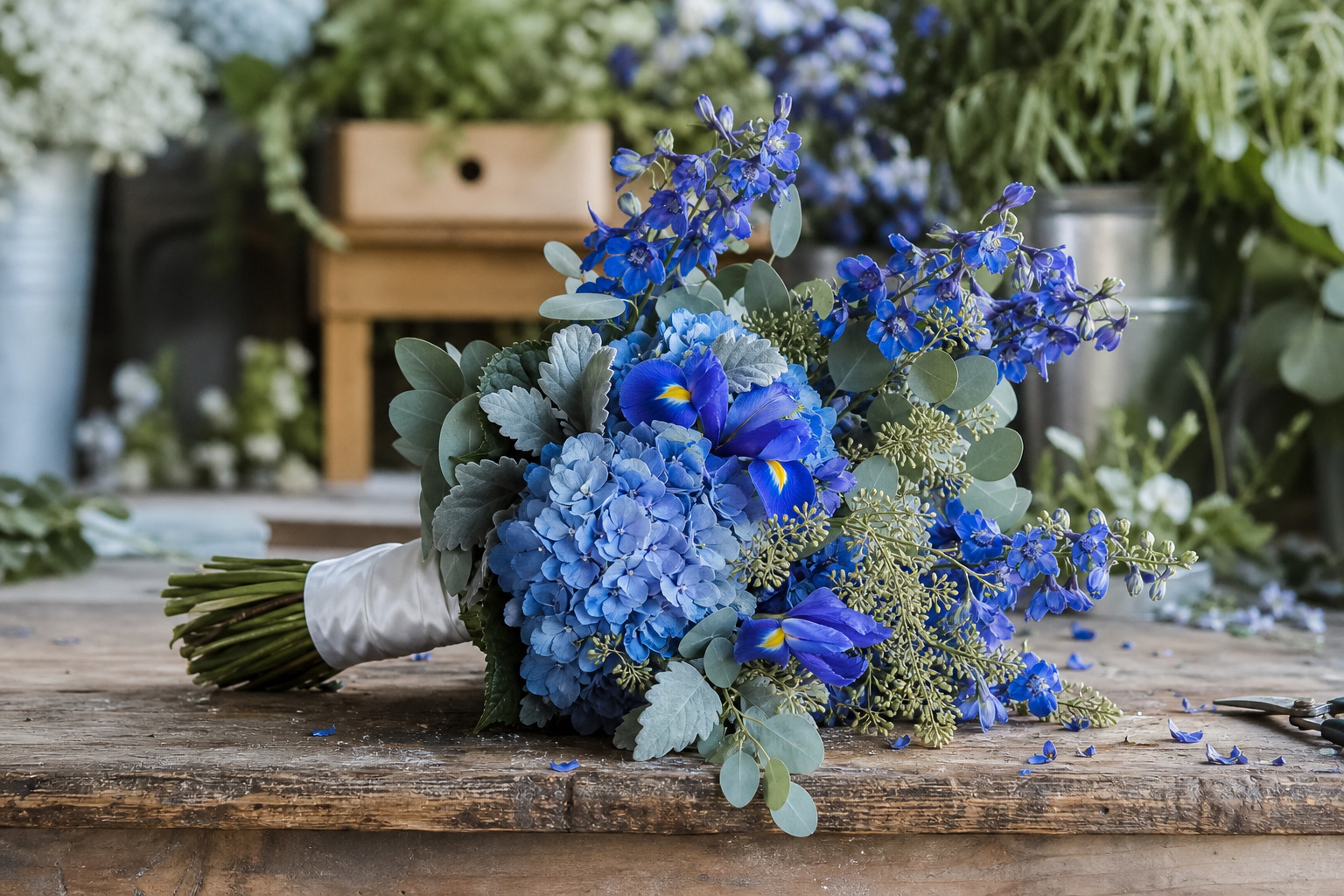
Delphinium gives you a spike-shaped bloom in a range of blues, from pale sky blue to deep cobalt. It works beautifully as both a focal flower and a vertical accent. In the video below, delphinium is used, along with hydrangeas and iris, to show how different natural blue flowers can work together in one arrangement.
Blue iris is another strong choice. Bold, graphic, and naturally blue in a way that reads clearly, even in photos. The bloom is larger than most people expect, so a single iris adds a lot of visual punch without needing many stems.
A few others worth knowing: blue thistle (eryngium) has a spiky, textural look that adds a lot of interest. Veronica gives you a thin spike in lavender-blue that works well as a filler. Agapanthus is a bolder, rounder bloom, more of a statement piece. And bachelor buttons (cornflower) are small but charming, great for texture in looser arrangements. If you can find grape hyacinth (muscari), those tiny clustered blooms are beautiful tucked in as accents, though they’re seasonal and not always easy to source.
Check availability on all of these before committing. Some are seasonal, some are regional. Your local wholesaler will tell you what’s running. If you’re still in the early planning stages, it’s worth reading my post on wedding flower trends. It’ll give you a sense of what’s popular right now and what florists are actually working with.
Know When to Use Tinted Flowers
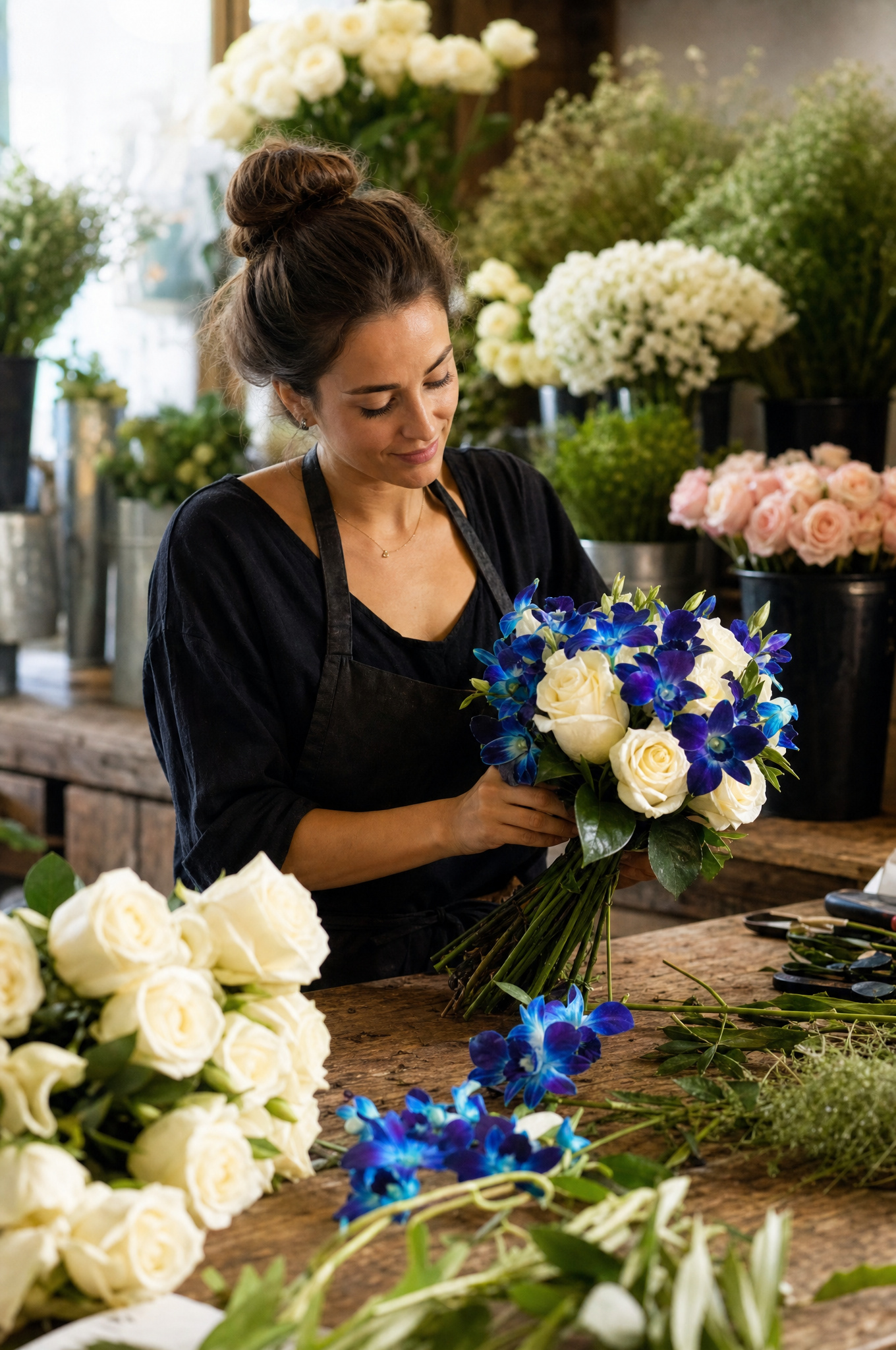
Tinting opens up a lot of options. The most popular tinted blue flowers are blue dendrobium orchids and blue roses. Both are widely available, and the color is consistent enough that you can order them with reasonable confidence of what you’ll get.
Beyond those two, plenty of other flowers can be tinted blue — white roses, white carnations, white tulips. White lisianthus is one I particularly like for tinting; it takes color well and holds up beautifully in a hand-tied bouquet. The dyeing and tinting process involves either submerging the stems in colored water (absorption method) or dipping the blooms directly. Not every flower takes color the same way.
Here’s what I tell brides: if you’re going the tinted route, do a test run. Order a few stems well before the wedding date and experiment. Some flowers come out beautifully; others look patchy or artificial. It’s worth knowing before you commit your entire order.
Also, talk to your local florist if you’re not doing this yourself. Tinting is a skill, and a florist who has done it many times will get you better results than a first attempt.
What I use in the shop: For tinting, we’ve had good results with Design Master Absorbit stem dye. It produces a consistent color without the streaky, uneven look you sometimes get with homemade solutions.
Pick the Right Greenery and Fillers
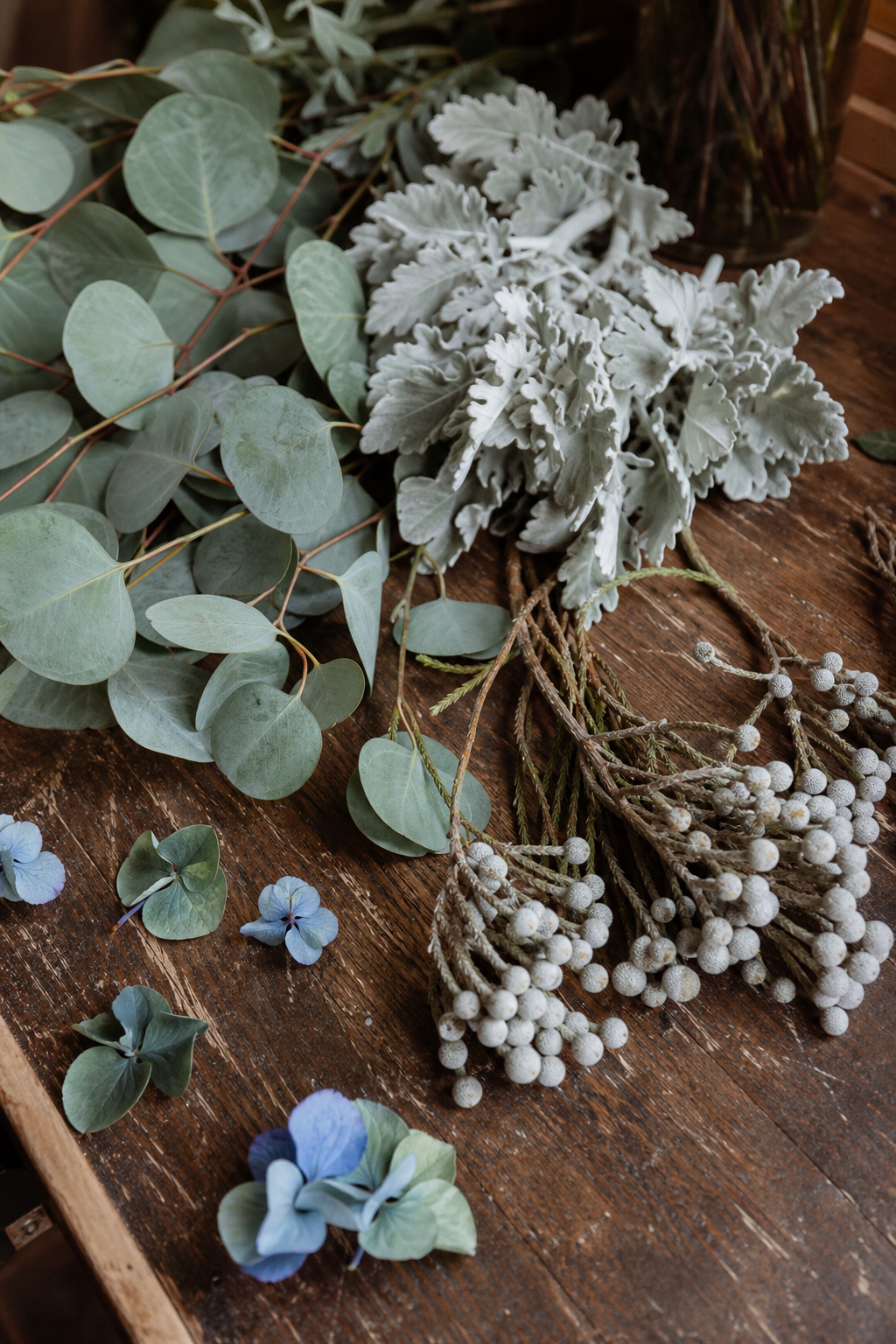
Blue flowers read best against greenery with cool, silvery undertones. Warm greens can work, but they can also pull the blue toward purple in ways that might not photograph the way you expect.
My go-to greenery for blue bouquets is eucalyptus. Most varieties work well — seeded eucalyptus for texture, silver dollar for rounder shapes, willow for drape. All of them have that slightly gray-green tone that pairs well with blue flowers without competing.
Dusty Miller is another solid choice. The silvery-white leaves echo the cooler tones in the flowers and add a softness that works especially well in garden-style or loose bouquets.
For fillers, silver brunia adds little round silver accents that look great tucked between blooms. Small blue-gray succulents are also popular right now — they add a structural, modern element that balances the softness of the flowers. If you’re interested in a broader look at boho-style wedding bouquets, those tend to lean heavily on this kind of textured, mixed-greenery approach.
Build a Bouquet That Holds Together
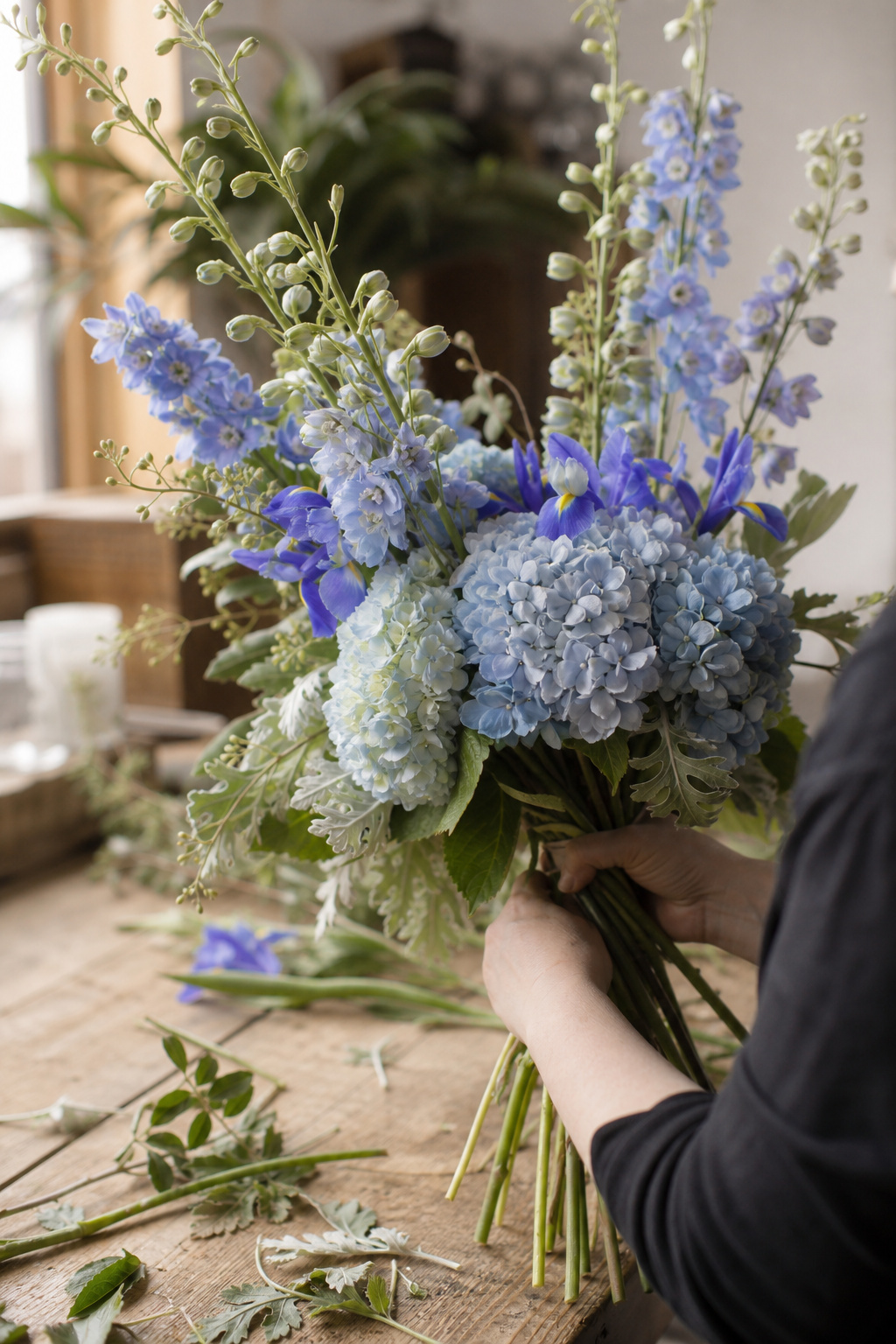
Blue flowers tend to be mix-and-match by nature. You’re rarely working with a single species when you’re building a blue bouquet. That’s actually an advantage. The variety of shapes and textures (hydrangea clusters, delphinium spikes, iris blooms, eryngium spikes) creates a more interesting arrangement than a single-flower design would.
What I’d do: start with hydrangeas as the base filler, they’re forgiving and easy to place. Add your focal flowers (iris or delphinium) next. Then tuck in the smaller textural elements last. Work in a spiral technique if you’re hand-tying; it keeps the stems aligned and the bouquet from collapsing on itself.
Keep the color palette tight. Blue, white, and silver read clean and elegant. Blue plus green reads more garden-style. Adding another color, even a soft blush, shifts the feel significantly. Decide on your palette before you order, and don’t let yourself get pulled in multiple directions by inspiration images that all have slightly different vibes.
For a summer wedding, check out my guide to summer wedding bouquet ideas. It covers which flowers hold up in heat, which matters a lot if your ceremony is outdoors.
Order Smart: Sourcing Tips for Blue Flowers
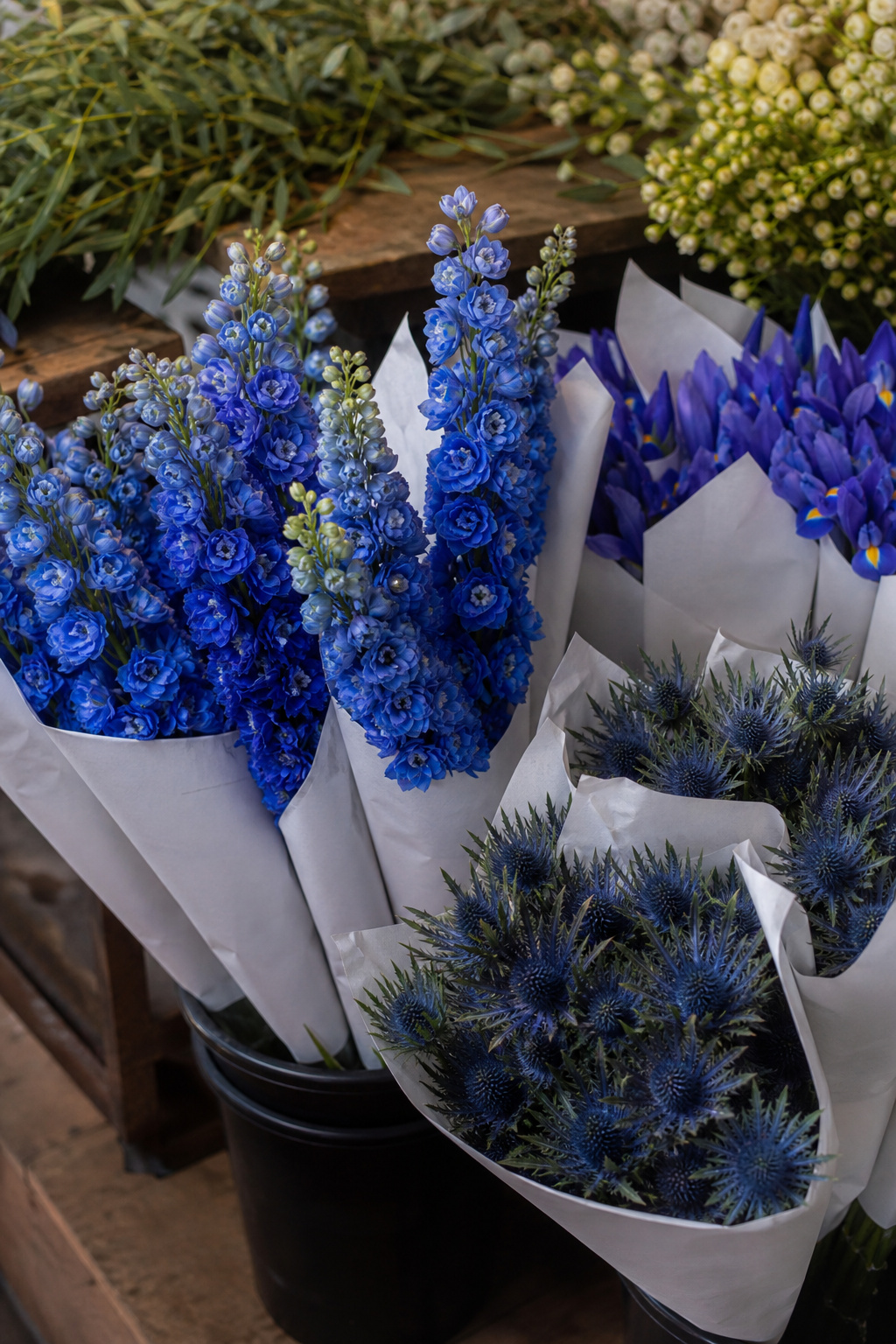
If you’re buying flowers wholesale for a DIY bouquet, order more than you think you need. Blue flowers, especially naturally blue varieties like iris and delphinium, can vary in color intensity from one grower’s batch to the next. Having extra stems gives you the flexibility to cull anything off-color or opened too early.
Order 10–15% more than your target stem count. For blue flowers specifically, I’d push that to 20%, because the selection range is narrower and you want consistency.
Process your flowers as soon as they arrive. Recut the stems, get them into clean water with floral preservative, and keep them in a cool space away from sunlight and heat sources. Hydrangeas, in particular, benefit from an overnight conditioning period before you start arranging. If you haven’t gone through the whole wholesale ordering process before, my post on buying bulk wedding flowers online covers what to watch out for.
What I use in the shop: I reach for FloraLife Crystal Clear Liquid Flower Food when processing flowers. Mix it into the water when you first condition your stems, and it makes a real difference in how long the flowers stay open and fresh.
Frequently Asked Questions
What are the most popular natural blue flowers for wedding bouquets?
Blue hydrangea, delphinium, and blue iris are the most widely available and commonly used. Blue thistle (eryngium) and veronica are popular secondary choices for texture and filler.
Are blue roses real?
Naturally, blue roses don’t exist. The ones you see in bouquets have been tinted. They’re widely available through florists and wholesalers, and the color is generally consistent, but they are dyed, not naturally blue.
Can I tint flowers myself at home?
Yes, with the absorption method. Place white flowers in water mixed with floral dye and let the stems drink up the color over several hours. Results vary by flower type. Do a test run before your wedding to see how a particular flower responds.
What greenery works best with blue flowers?
Greenery with cool, silvery undertones pairs best. Eucalyptus and dusty miller are the two I recommend most often. Avoid warm-toned greens that can push the blue toward purple in photos.
How far in advance should I order blue wedding flowers?
For naturally blue flowers, order 5–7 days before your wedding if you’re buying wholesale. This gives you time to condition them for use. For tinted flowers, check with your supplier about lead time, as some need extra processing time.
Is blue a hard color to work with in floral design?
Blue is more limited in natural flower options than most other colors, which means you need to be more intentional about sourcing. But it’s not technically harder to work with the flowers themselves. They behave like any other flower. The challenge is on the sourcing and planning side, not the design side.
Closing Thoughts
A blue wedding bouquet is one of those things that looks effortless in the finished photos but takes a bit more planning than most people expect. The sourcing is trickier, the palette requires some thought, and if you’re going the tinted route, a test run is worth the time. Get those pieces right, and the bouquet comes together like any other.
Blue is rare in the flower world for a reason. That rarity is exactly what makes it special on a wedding day. Plan and source carefully, and you’ll end up with something that’s genuinely hard to find anywhere else. Like a good blue delphinium; easy to overlook in a catalog, unforgettable in person.
Are you going all-natural, all-tinted, or mixing both in your bouquet? Drop a comment below. I’d love to hear what you’re planning.
Til next time,