

Disclosure: This post may contain affiliate links. If you click and buy, we may earn a commission at no extra cost to you. As an Amazon Associate, we earn from qualifying purchases.
Last Updated: June 2026
A bride came into the shop a few years back and said something I’ve heard dozens of times since: “We love each other, we’re excited to get married, but nobody told us it was going to feel like a business negotiation.” She wasn’t talking about vendors. She was talking about her own family.
The money conversation is one of the first hard ones engaged couples have to navigate, and it usually starts with some version of the same question: who’s supposed to pay for what?
There’s a traditional framework for that. It’s been around for generations, and while modern couples don’t follow it to the letter anymore, it still provides a useful starting point for those conversations. Let me walk you through how it’s supposed to work and where reality tends to diverge.
Understand What the Tradition Actually Says
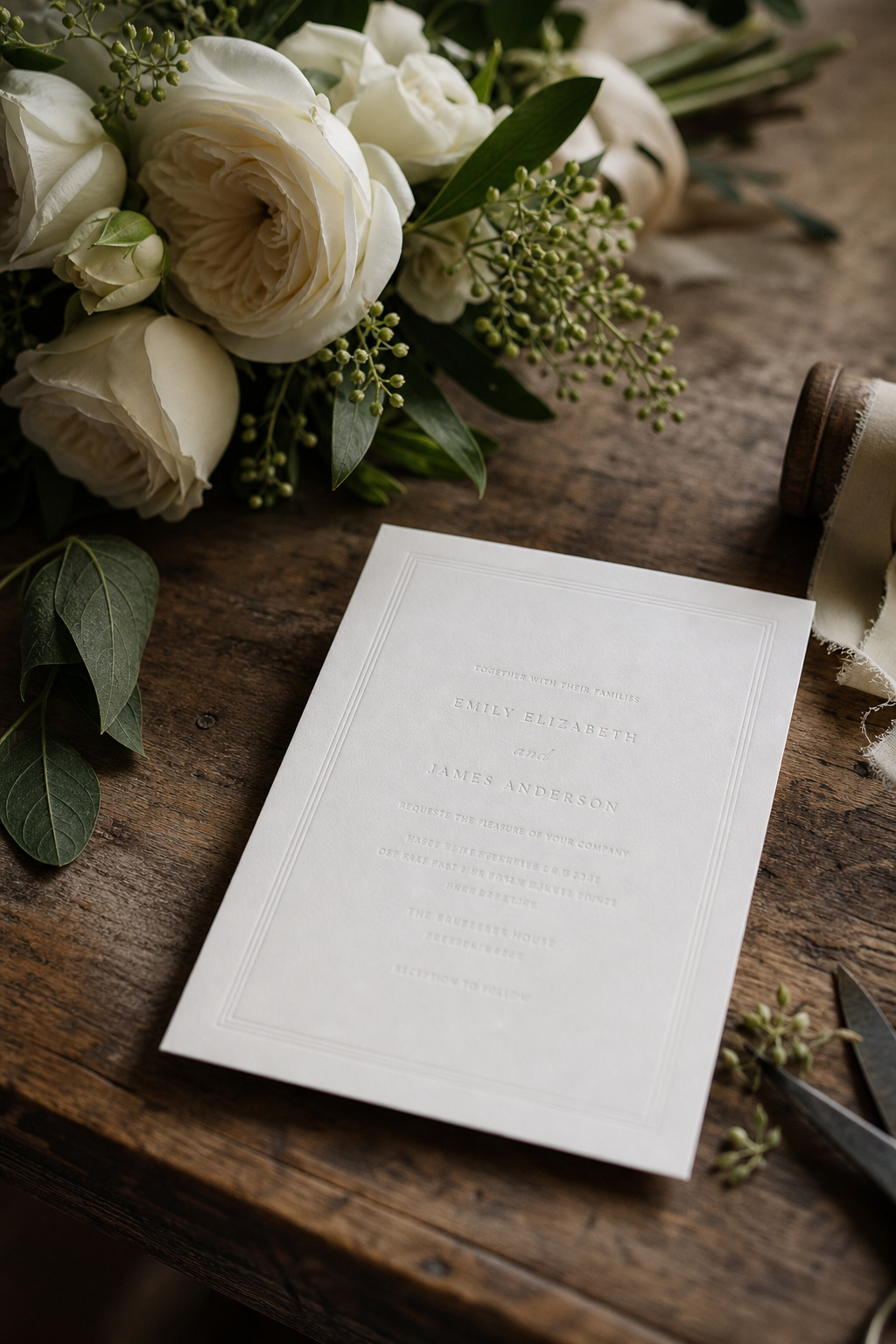
The traditional breakdown dates back to a time when marriage was, in large part, an economic transaction between families. The bride’s family was essentially hosting the event, which meant they footed most of the bill. The groom’s family handled the legal pieces and a few specific celebrations. That’s the origin.
Traditionally, the bride’s family covered the ceremony venue, ceremony flowers and décor, invitations and stationery, the reception (venue, food, drink, typically the largest single expense), and the bride’s ring.
The groom’s family traditionally covered the marriage license, officiant fee, honeymoon, rehearsal dinner, boutonnieres, corsages for the wedding party, and entertainment, the DJ or band at the reception.
That’s the skeleton. Most couples today don’t follow it exactly, but knowing it helps when you’re sitting across the table from parents who were raised on those expectations.
Know Where the Big Numbers Live

If you look at that list, the reception is the line item that tends to swallow everything else. Venue rental, catering, bar service, cake, it adds up faster than most couples anticipate. The ceremony flowers and décor traditionally fall to the bride’s family, and that’s a significant budget line too, especially if you’re working with a full-service florist.
I’ve had plenty of brides over the years come in with a rough sense of what they wanted to spend on flowers, only to discover that what they’d budgeted was half of what the design actually costs. It’s not anyone’s fault. Most people have never priced wedding flowers before. The labor involved, the perishability, the timing pressure. They all factor in.
Before you start talking to florists, it genuinely helps to know what your overall wedding budget looks like. There’s a free tool on our site called the Wedding Cost Estimator that pulls local spend data by zip code with no sign-up required. It gives you a category-by-category breakdown based on what couples in your area are actually spending. Worth five minutes before your first vendor meeting.
Have the Money Talk Before You Talk to Anyone Else

Here’s what I’d do. Sit down as a couple before you approach either family. Agree on a realistic total number, or at least a firm ceiling, and decide together which elements matter most. Flowers? Photography? Food? Rank them. That conversation is much easier to have between the two of you than on the fly in front of parents who may have very different ideas.
When you do bring family into it, use the traditional breakdown as a conversation starter, not a contract. Most families today want to contribute in some way. They just don’t always know how to frame it. Giving them a category to anchor on (“traditionally the groom’s family handles the rehearsal dinner”) makes it easier for them to say yes to something specific.
And be realistic about what each side can actually give. Accepting financial help almost always means accepting some degree of input. That’s just how it works. If a contribution comes with strings attached that you’re not willing to accept, it may not be worth it. That’s a decision worth making before the conversation, not during it.
Build a Budget That Reflects Your Actual Priorities

Once you know who’s contributing what, build the budget from reality up, not from Pinterest down. I’ve watched couples fall in love with a look that was designed for a $50,000 floral budget when they have $3,000 to spend. There’s nothing wrong with $3,000. That budget can produce a beautiful wedding. But it won’t reproduce what you saw in a luxury editorial spread.
For flowers specifically, a few things move the needle more than the specific blooms you choose. Centerpiece count, ceremony arch installations, and whether you’re renting or buying your vessels drive cost more than swapping one flower variety for another. If you’re working with a florist, ask them directly: “What can I cut without gutting the look?” Most florists appreciate that question. It tells them you’re serious and they can work with you.
If you’re doing flowers yourself, check out our post on wedding flower trends to get a feel for what’s working right now, and our wedding aisle decor ideas for ceremony-specific options at a range of budget levels.
Keep Records and Follow Through on Gratitude

Once contributions are agreed on, write them down. Doesn’t have to be formal; a shared document or even a text thread works. The goal is to have something to refer back to if memory gets fuzzy six months from now.
And however it all shakes out, say thank you, specifically and sincerely. If someone paid for the rehearsal dinner, acknowledge that at the dinner. If a parent wrote a check for flowers, thank them when the arrangements arrive. People who contribute to a wedding want to feel like their contribution was noticed. That costs nothing and matters more than you’d expect.
Frequently Asked Questions
Is it still common for the bride’s family to pay for most of the wedding?
Less common than it once was. Most couples today share costs between themselves and accept contributions from both families without strict adherence to the traditional breakdown. The traditional framework is useful as a starting point for conversations, not as a rule.
What if neither family is in a position to contribute?
Then you plan within what you have. There’s no shame in that. Plenty of beautiful weddings have been planned on tight budgets. Start with your priorities, cut what doesn’t matter to you, and spend where it does.
Who traditionally pays for the wedding flowers?
Traditionally, the bride’s family covers the ceremony flowers and décor. Boutonnieres and corsages for the wedding party fall to the groom’s family. In practice today, couples often handle the full floral budget themselves or split it however makes sense.
Should we set a budget before talking to vendors?
Yes. Go into vendor meetings with at least a ceiling in mind. You don’t have to share the exact number, but knowing it protects you from falling in love with a proposal that’s twice what you can spend.
What happens if contributions come with conditions we don’t agree with?
That’s a real conversation to have before you accept the money. A contribution with strings attached is different than a gift. Decide together, as a couple, what input you’re willing to accept in exchange for financial help, and what you’re not.
Is there a tool to help us estimate total wedding costs in our area?
There is. Our Wedding Cost Estimator pulls local spend data by zip code and breaks down costs by category. No sign-up required. It’s a good reality check before your first vendor meeting.
Closing Thoughts
The traditional breakdown of wedding expenses is just a map. It shows you where things have historically landed, not where they have to land for you. Use it to start the conversation. Then adapt it to your situation, your family, and what you actually care about.
What I’ve seen over the years is that the couples who come out of the planning process with the least stress are the ones who talked about money early, often, and honestly, with each other first, then with family. The wedding itself is one day. The relationships involved last a lot longer. Keep that in mind when the money conversations get hard.
If you’ve navigated the “who pays for what” conversation in your own planning, or if you’re in the middle of it right now, drop a comment below. I’d like to hear how other couples are handling it in the real world.
Til next time,