Disclosure: This post may contain affiliate links. If you click and buy, we may earn a commission at no extra cost to you. As an Amazon Associate, we earn from qualifying purchases.
Last Updated: July 11, 2026
A woman texted me a picture a couple of winters back of her holding a cyclamen that looked half dead. Every leaf had gone yellow, and the whole plant was flopped over the side of the pot. She was ready to toss it.
It wasn’t dying. It was thirsty, and it was sitting in a spot that ran too warm. Cyclamen tell you exactly what’s wrong if you know what to look for, and most of what goes wrong with them comes down to just two things: water and temperature.
Get the Light and Temperature Right First
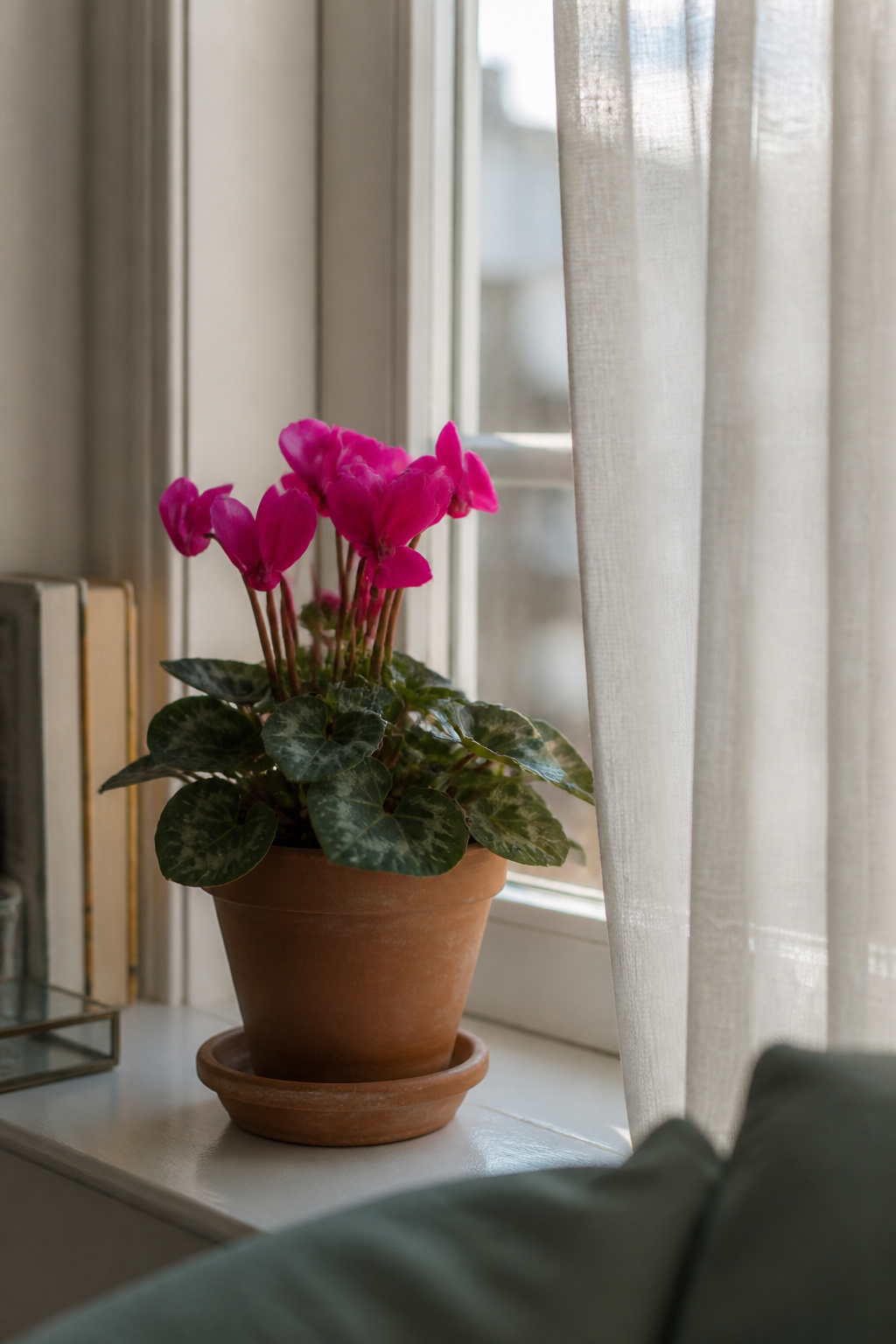
Cyclamen (Cyclamen persicum) is a winter bloomer, and it wants conditions that feel more like early spring than the inside of a heated house. Bright, indirect light near a window works well. Direct sun through glass will scorch the leaves faster than you’d expect.
Temperature matters more with cyclamen than with most houseplants. They prefer 65 to 70°F during the day and 50 to 60°F at night, and that gap between day and night temperature isn’t optional. It’s part of what tells the plant it’s still cyclamen season. A spot near a heat vent or a radiator will push the plant into decline fast, even if you’re watering it perfectly.
If your house runs warm all winter, a cooler room, an unheated sunroom, or even a spot near a drafty window will usually treat a cyclamen better than the coziest room in the house.
Water From the Bottom If You Can
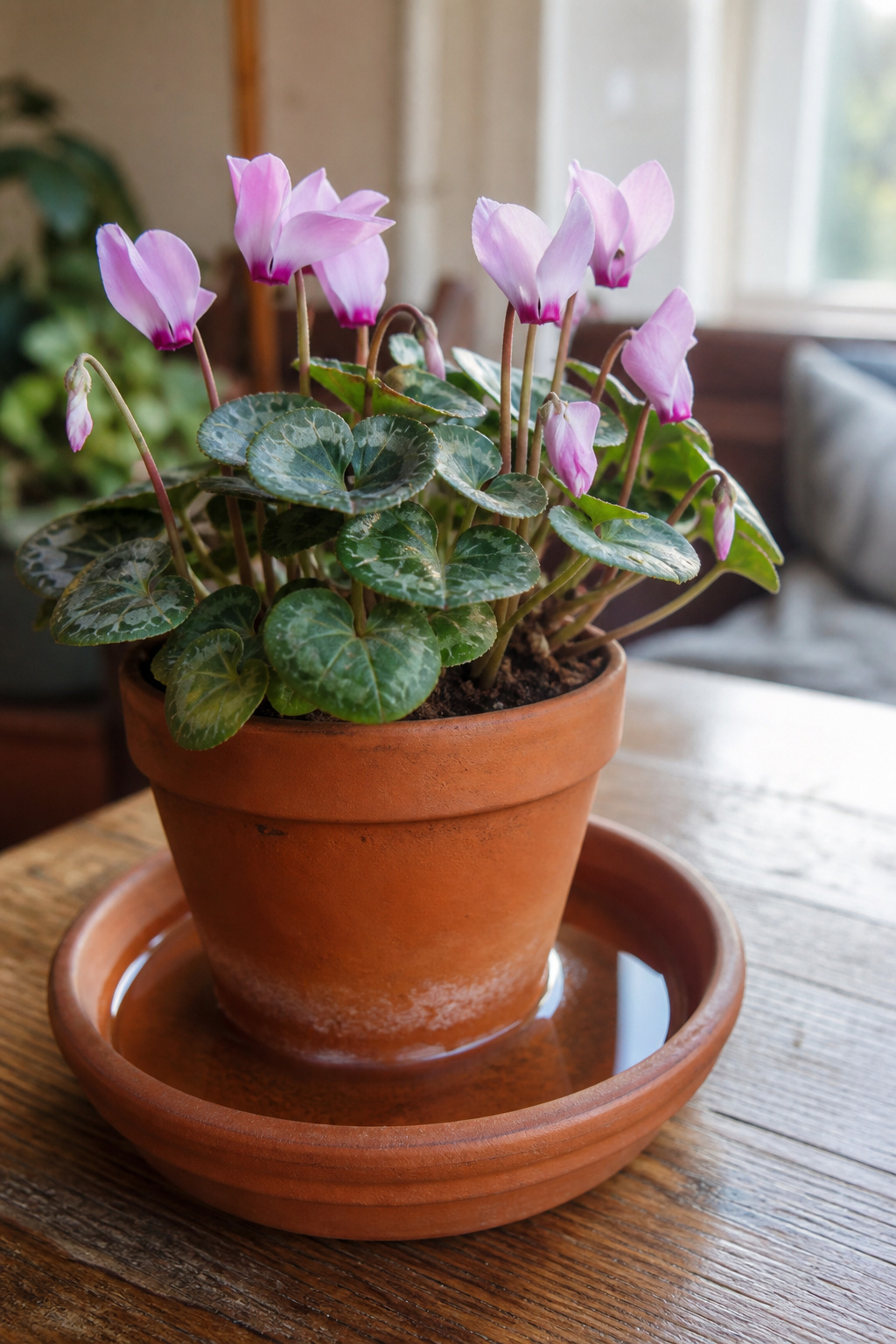
Cyclamen grow from a tuber sitting at or just above the soil surface, and that tuber rots fast if water sits directly on top of it. In my shop, I water cyclamen from the bottom whenever possible. Set the pot in a saucer of water for fifteen to twenty minutes, let it drink up through the drainage hole, then pour off whatever’s left.
If you’re watering from the top, pour around the edge of the pot rather than over the crown of the plant. Water thoroughly when the surface feels dry to the touch, and never let the pot sit in standing water afterward.
Yellowing leaves that go soft and droopy almost always mean the plant is thirsty. Yellowing leaves on a plant that still feels heavy and moist at the base usually mean the opposite, and it’s time to ease off the watering can.
Feed Sparingly While It’s Actively Blooming
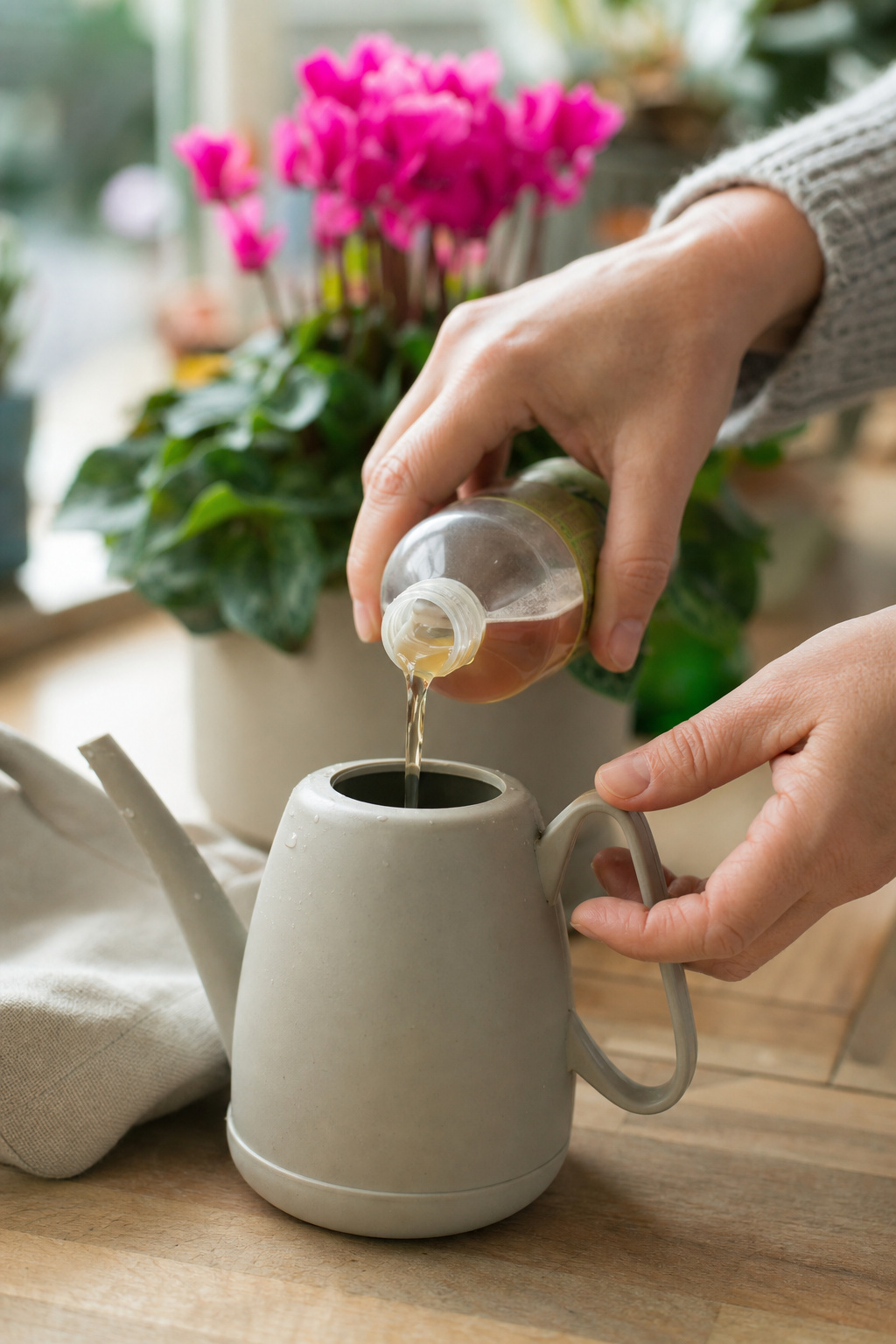
Fertilize a blooming cyclamen every three to four weeks with a complete houseplant fertilizer, something like a 10-10-10 or 20-20-20 diluted to about half strength. Full-strength fertilizer on a plant this size does more harm than good.
Stop feeding entirely once the plant finishes blooming and starts heading into dormancy. That’s the same rule I follow with Rieger begonias, another flowering plant that needs a real rest period between bloom cycles. Pushing fertilizer on a dormant plant just wastes it.
Let It Go Dormant Instead of Fighting It
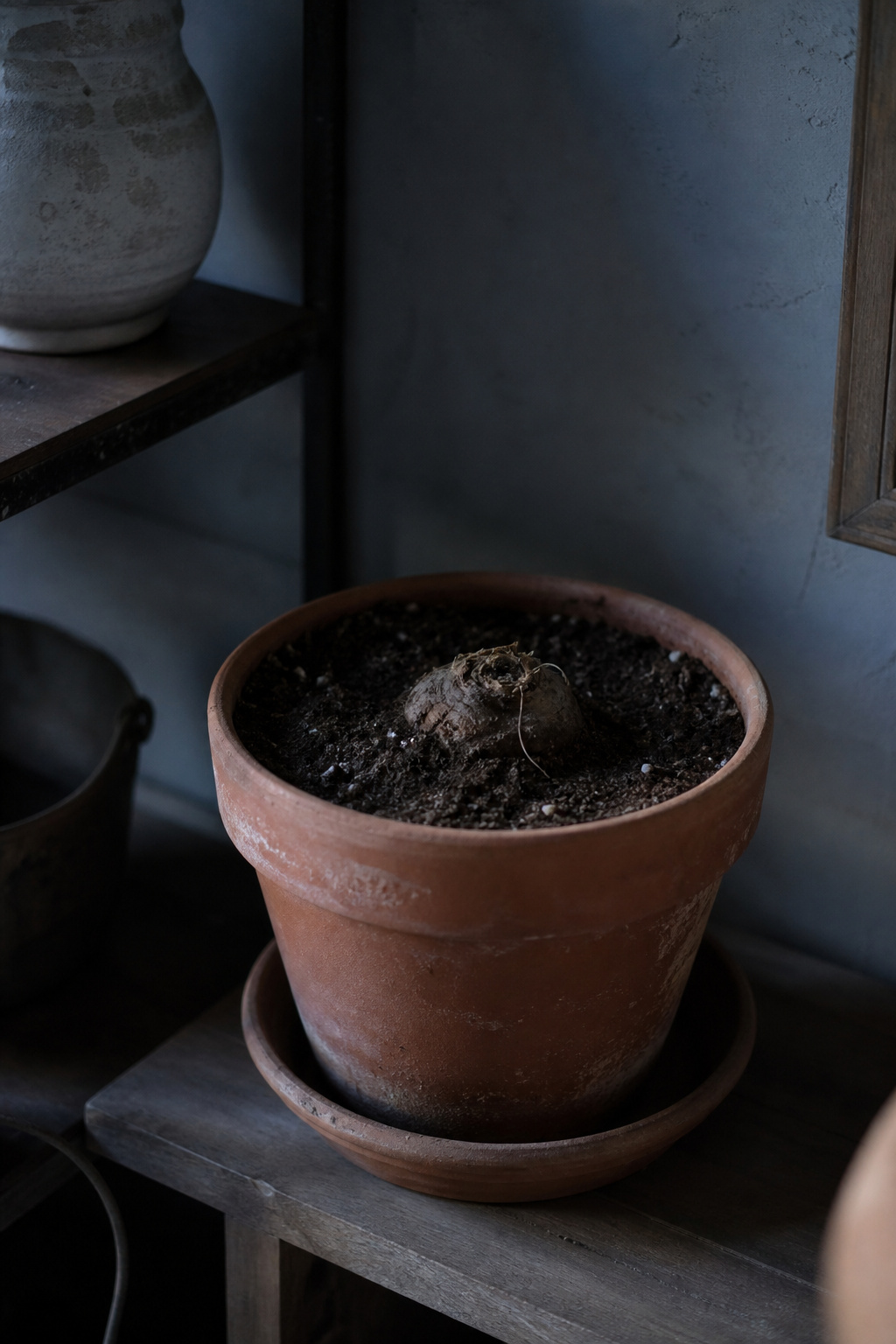
Sometime in spring, a cyclamen’s leaves will start yellowing and dying back, no matter how well you’ve cared for it. That’s not a mistake you made. It’s the plant heading into summer dormancy, and it’s completely normal.
Let the foliage die back on its own instead of watering harder to try to save it. Once the leaves are gone, cut back on water almost entirely and let the tuber rest in a cool, dark spot for the summer. Come early fall, start watering again, and new growth should appear within a few weeks.
If you’re worried you’ve killed it because the pot looks like bare dirt all summer, don’t be. A resting cyclamen tuber is supposed to look like that. It’s the same dormancy pattern I walk through with Christmas cactus, and it trips people up for the same reason: we’re conditioned to think a bare pot means a dead plant.
Give Rebloom a Real Shot
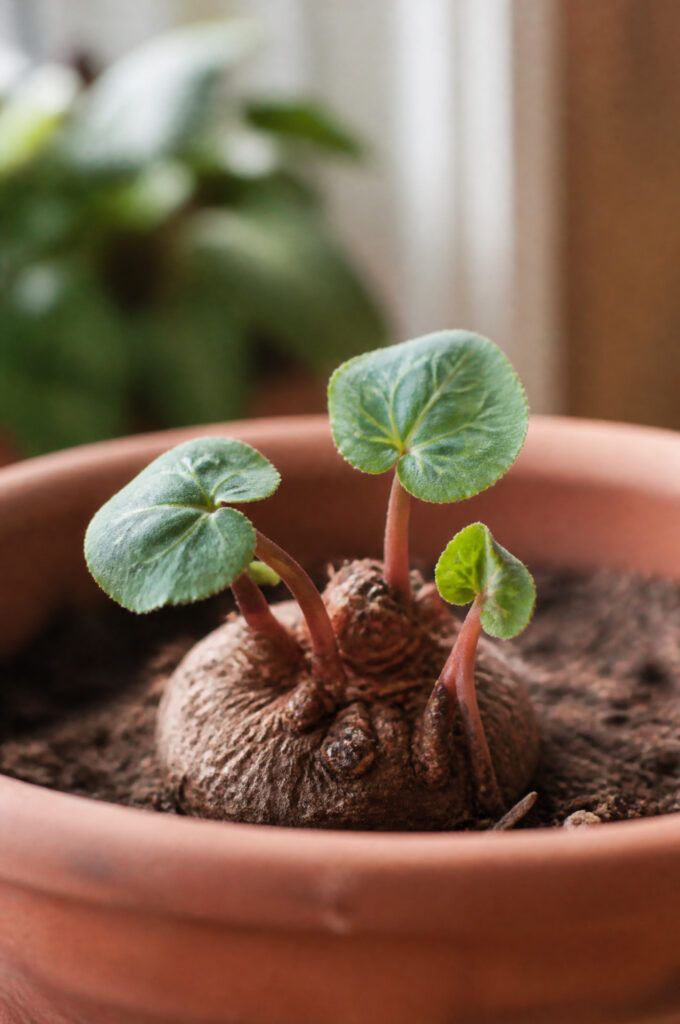
Getting a cyclamen to rebloom takes more patience than most houseplants, but it’s not as hard as its reputation suggests, and it’s a bit easier than coaxing a poinsettia through a second season.
The short version: let it go fully dormant over summer, resume watering in early fall as new leaves emerge, and get back to the light and temperature routine above once growth restarts. It reliably comes back if you stop interrupting the dormancy with sporadic watering.
Frequently Asked Questions
Why are my cyclamen leaves turning yellow?
Check the soil first. Soft, droopy yellow leaves on dry soil mean the plant needs water. Yellow leaves on soil that’s still damp usually mean overwatering or a tuber that’s starting to rot. If it’s spring and the whole plant is yellowing evenly, that’s likely just seasonal dormancy setting in, not a problem to fix.
How often should I water my cyclamen?
Water thoroughly whenever the soil surface feels dry to the touch, which is usually every seven to ten days while the plant is actively blooming. Watering from the bottom by setting the pot in a saucer of water for fifteen to twenty minutes protects the tuber from the rot that comes with water sitting on top of it.
Is it normal for cyclamen leaves to die back completely?
Yes. Cyclamen go dormant in late spring or summer, and the leaves dying back is part of that natural cycle, not a sign of a dying plant. Let the foliage die back, cut watering way down, and rest the tuber in a cool, dark spot until early fall.
Can I keep a cyclamen going year after year?
Yes, with a proper dormancy period each year. A cyclamen that gets a real summer rest, minimal water, cool and dark storage, will typically rebloom the following fall or winter. Skipping the dormancy or watering through it is the most common reason people lose their cyclamen for good.
Why won’t my cyclamen bloom again?
Usually it’s a skipped or interrupted dormancy period. If the plant never got a real rest, cool and dark with almost no water for a few months, it won’t have the energy stored up to bloom again. Give it a proper dormancy this time and resume care once new leaves emerge in early fall.
Do cyclamen need a lot of light?
Bright, indirect light is ideal. Direct sun through a window will scorch the leaves, especially in the afternoon. A spot a few feet back from a bright window, or one with filtered light through a sheer curtain, works well while the plant is actively growing and blooming.
Closing Thoughts
Cyclamen aren’t fussy once you understand what they’re asking for. Cool temperatures, water from below, and a summer rest they’re allowed to actually take. Fight any one of those and the plant will tell you.
Work with its rhythm instead, and a single cyclamen can bloom for you winter after winter.
Has your cyclamen gone through a full dormancy cycle yet, or are you still on your first bloom? Tell me in the comments. I read every one.
Til next time,