Disclosure: This post may contain affiliate links. If you click and buy, we may earn a commission at no extra cost to you. As an Amazon Associate, we earn from qualifying purchases.
Last Updated: June 24, 2026
A bride came into the shop a few years back, maybe six weeks before her wedding, and asked if I could show her how to make her own cascading calla lily bouquet. She’d seen one in a magazine, long, dramatic, trailing down the front of the dress, and she wanted to do it herself. I told her it was one of the more achievable DIY bouquet styles out there, as long as she understood a few things going in.
She made a beautiful bouquet. Brought me a photo after the wedding. That’s what this post is about.
Below you’ll find a complete breakdown of how to make a cascading calla lily bridal bouquet: the supplies, the flowers, the wiring, the shaping, all of it. I’ve also included a video walkthrough from a skilled designer that covers the technique well. Watch it, then read through the supporting detail here. Together, they’ll get you where you need to go.
Understand What Makes This Style Different
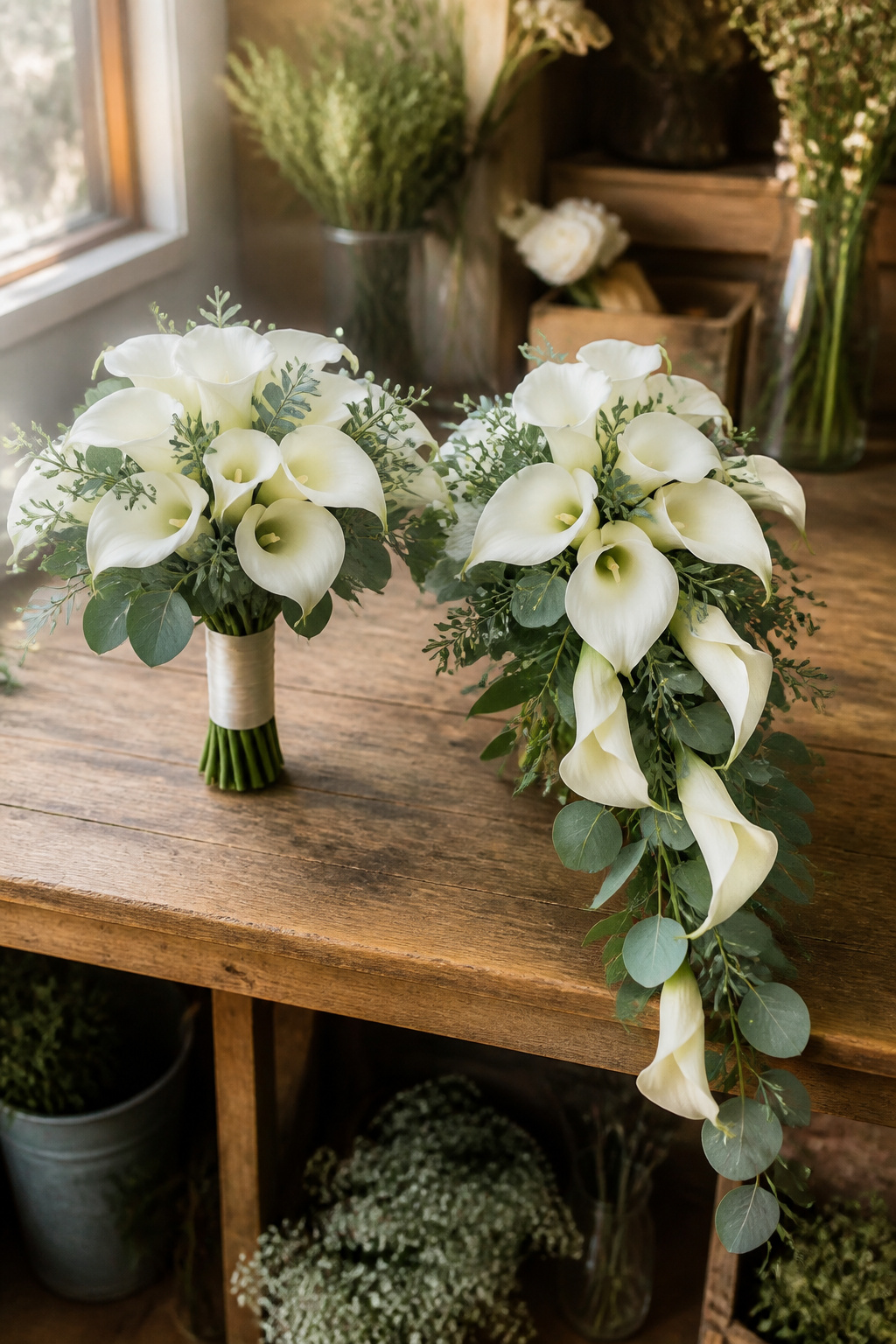
A cascading bouquet isn’t just a round bouquet with extra flowers dangling off the bottom. It’s a different structural approach entirely. The cascade is built intentionally: longer stems wired and positioned to trail downward, shorter stems filling the top and sides. The finished bouquet has a distinct teardrop shape when held.
Calla lilies are one of the best flowers for this style. The stems are naturally flexible when conditioned, the blooms are substantial without being heavy, and the clean lines of the flower read beautifully in photos. Mini callas are especially useful for cascading work: the smaller blooms layer well at the trailing end.
What you won’t get away with here is winging it. This style requires planning before you pick up a single stem.
Choose the Right Calla Lilies
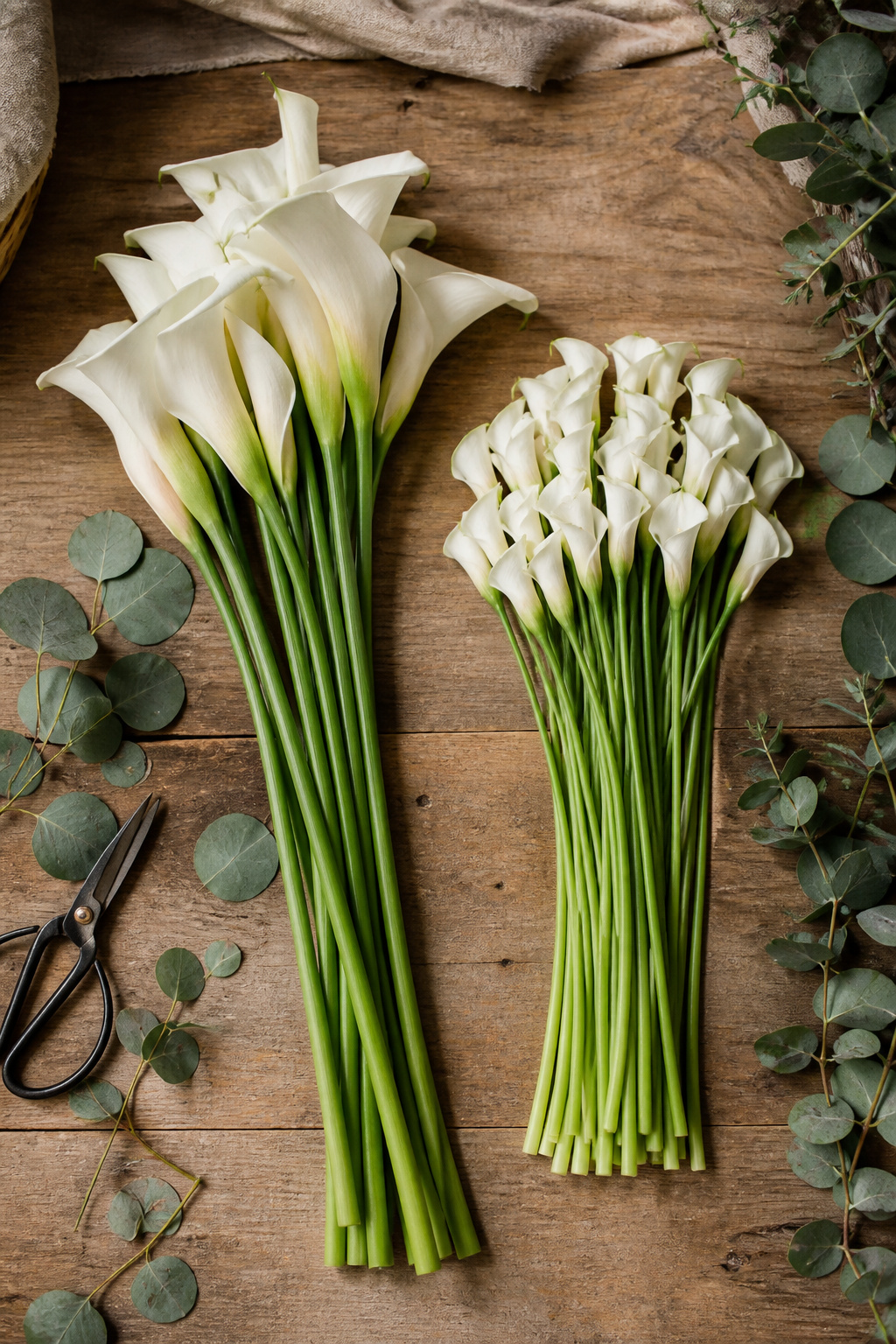
Standard callas (the large ones) work for the body of the bouquet: the upper, more compact section. Mini callas are your best tool for the cascade itself. They’re lighter, more flexible, and easier to wire into a trailing shape without the arrangement getting top-heavy.
For color, white is the classic choice for bridal work, but blush, cream, and soft purple mini callas are widely available and photograph well. If you’re ordering online, give yourself at least five to seven days before the wedding so the flowers have time to open properly after shipping.
For a medium-sized cascading bouquet, plan on 12 to 15 standard callas and 10 to 15 mini callas, plus foliage. You’ll trim some down, and it’s better to have extras than to run short on the day you’re assembling.
What I use in the shop: fresh mini calla lilies ordered through a reliable wholesale supplier. For DIY brides buying smaller quantities, sites like FiftyFlowers and BloomsbytheBox offer wedding-quantity packs that arrive ready to condition.
Gather Your Supplies Before You Start
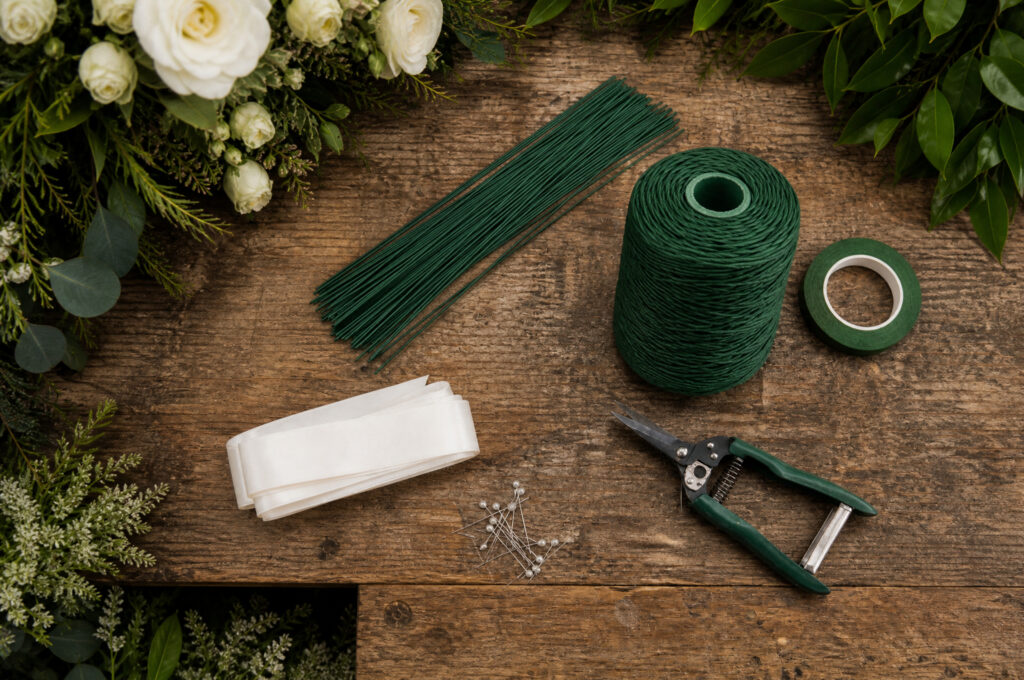
There’s nothing more frustrating than getting halfway through a bouquet and realizing you’re out of floral wire. Get everything together before you condition the flowers.
Here’s what you need:
Floral wire: 18 and 22 gauge. The heavier gauge for stems that need reinforcement; the lighter gauge for binding and detail work.
Floral tape: Green, to wrap wired stems. It stretches and bonds when you pull it, so keep tension on it as you wrap.
Sharp floral scissors or snips: Dull blades crush stems. A clean cut makes a real difference in water uptake.
Ribbon: For finishing the handle. Satin ribbon in white or ivory, wide enough to cover the stems cleanly. About two to three yards.
Pearl-head pins: For securing the ribbon at the handle. They also add a finished look if left showing.
Floral foam or a water tube: If you’re holding the finished bouquet for more than an hour before the ceremony, a water source matters.
What I use in the shop: floral wire assortment and green floral tape are the basic supplies that make a real difference in how the finished bouquet holds together.
Condition the Flowers First
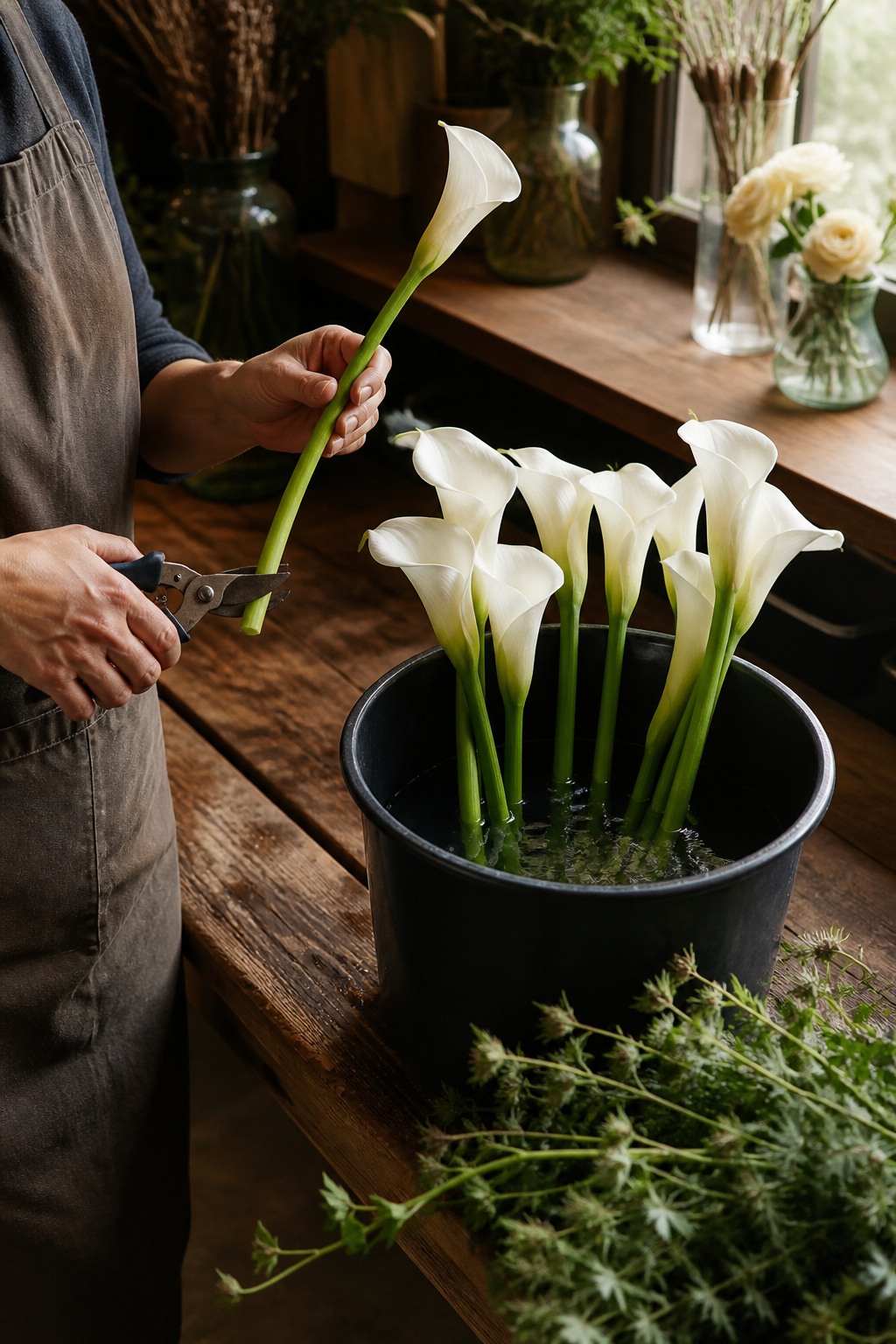
Don’t skip this. Conditioning is what separates a bouquet that holds up through a ceremony from one that starts wilting in photos.
When your callas arrive, cut about an inch off each stem at a 45-degree angle. Use a sharp blade, not scissors, for the initial cut; scissors can pinch the stem. Place them immediately in clean, cool water with a floral preservative and let them hydrate for at least four hours, overnight if possible.
Calla lilies are prone to bending at the neck, that weak point just below the bloom. If you see any stems already starting to curve, don’t worry yet. Properly hydrated callas straighten out on their own in most cases. If a stem is severely bent, you can wrap it in damp newspaper and leave it upright overnight.
For a deeper look at keeping callas in prime condition before and after the bouquet is assembled, the calla lily cut flower care guide covers everything you need to know.
Watch the Technique First
Before you touch a single stem, watch floral designer John MacDonald build this exact bouquet from calla lilies, salal, eucalyptus, asparagus fern, and looped bear grass. He works hand-tied, crossing the stems at a central point rather than wiring every bloom, which is the shower-style approach and a faster route to the same trailing shape. Watch it, then come back here for the supporting detail.
Notice near the end how he wraps decorative wire around the aspidistra leaf at the handle, twists it to secure, then tucks the sharp ends back into the foliage. What I’d do: always fold those wire ends in before you hand the bouquet to anyone. A cut palm on the walk down the aisle is not the memory you want from that day.
Wire and Tape the Cascade Stems
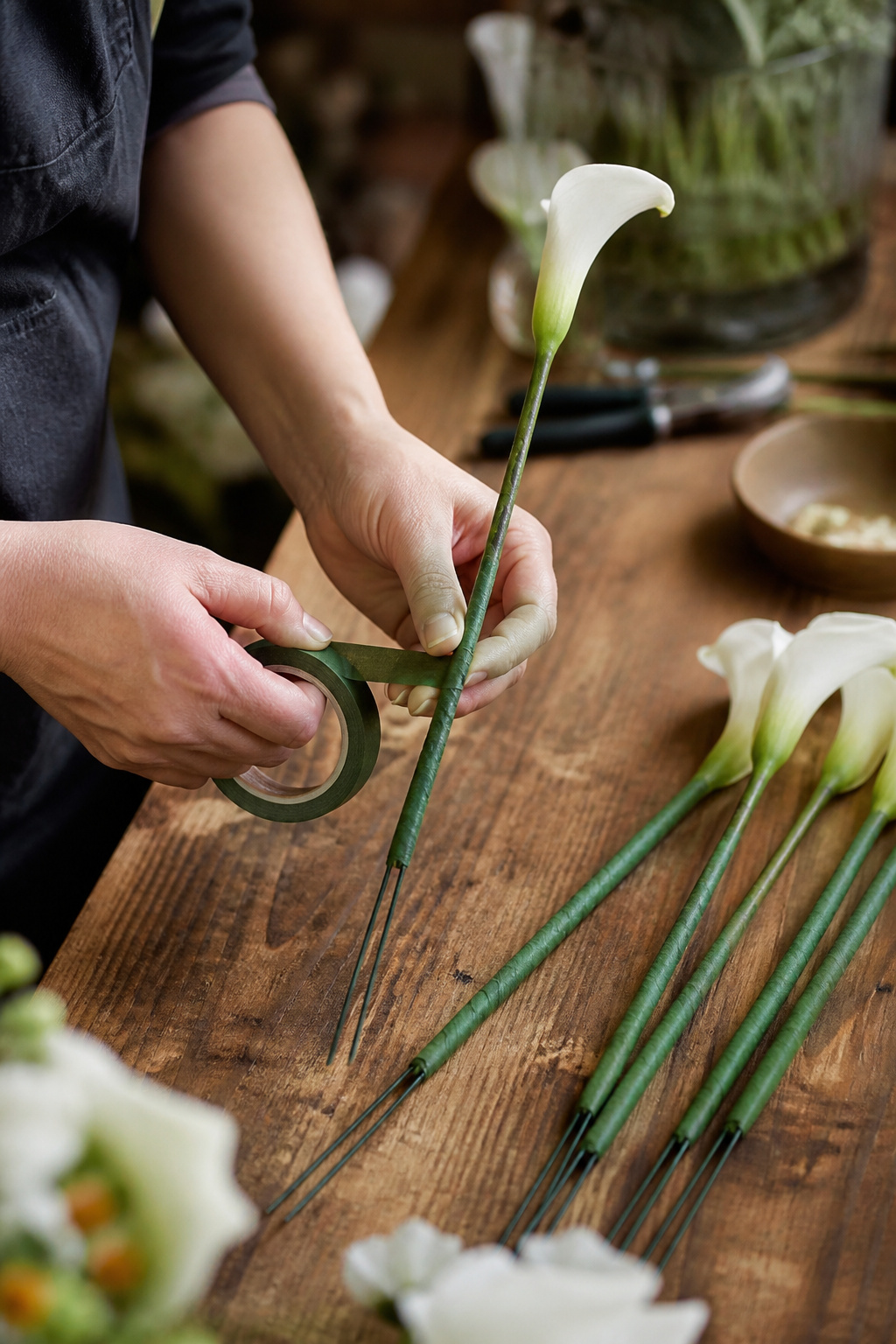
There’s more than one way to build a cascade, and both get you to the same finished shape. The video takes the hand-tied route: lay your stems out first, check each one for natural curve and strength, and set aside the longest, bendiest mini callas to run through the center of the bouquet. Cross them with the standard callas and foliage at one binding point, and the weight of the arrangement does most of the shaping for you.
I still teach the fully-wired method to beginners, and it’s the one described below. Individually wiring each mini calla gives you total control over exactly where a stem sits, which matters if your minis arrived a little stiff from shipping and don’t have much natural bend left. Callas are patient flowers, though. They’ll let you take a stem apart and start over without holding a grudge, so don’t stress over getting it right on the first try with either method.
For mini callas going the wired route, insert a piece of 22-gauge wire up through the base of the stem, into the flower head, until it’s secure. Then wrap the full length of the stem with floral tape, starting at the base of the bloom and working down. The tape bonds to itself with a little warmth and pressure; keep it under tension as you wrap.
For standard callas going into the body of the bouquet, you can leave them as natural stems unless they need reinforcement. If a stem is bending where you don’t want it to, wire and tape it the same way. Building the hand-tied version instead? Reach for paper-covered wire at the binding point only; it holds the crossed stems together without adding bulk you’ll have to hide later.
What I use in the shop: paper-covered floral wire for hand-tied binding points. It grips better than bare wire and doesn’t slip once the stems are under tension.
Work through all your cascade stems before you start assembling, whichever method you choose. It’s much easier to wire 10 stems at once than to stop and start while you’re building the bouquet.
Build the Bouquet From the Top Down
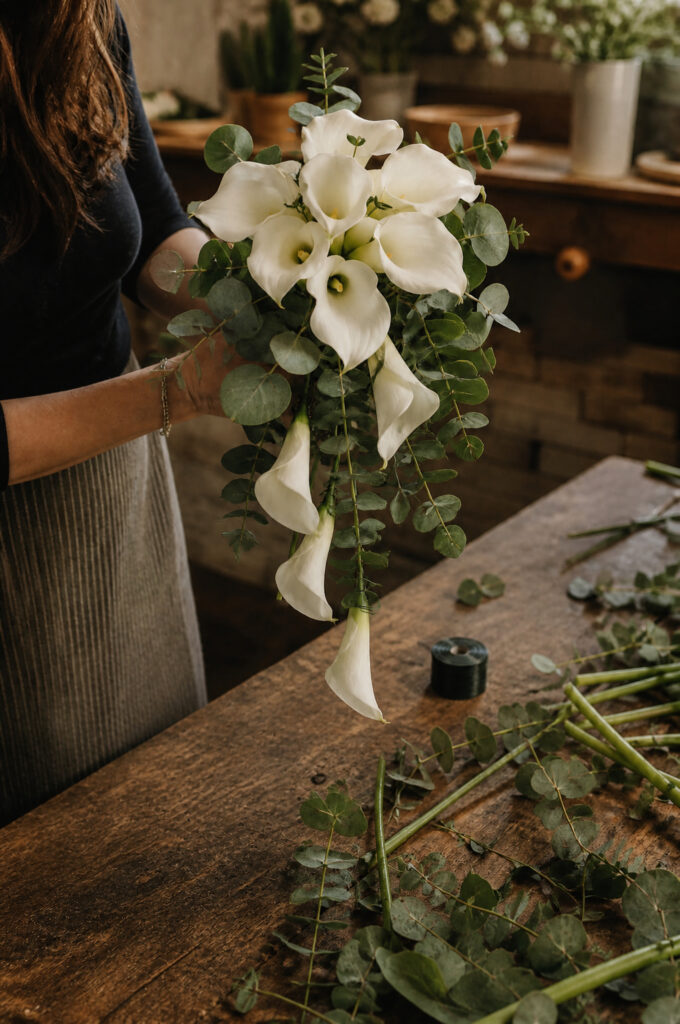
Start with the body: the upper compact section of the bouquet. Hold three to five standard callas together in one hand, stems aligned, and build a light frame around them with foliage. Eucalyptus and salal both work well here for structure, and aspidistra leaf gives you the clean, broad planes that photograph well against calla blooms.
Once you have the body roughed in, start introducing the cascade stems below the main cluster. Position the longest stems first. These will be the lowest trailing point, then work your way up, adding progressively shorter stems until the cascade tapers naturally into the body of the bouquet.
Hold the whole arrangement loosely as you build. Don’t bind anything permanently until you’re happy with the shape. Step back and look at the profile; a proper cascade has a gradual taper, not an abrupt drop.
Add asparagus fern throughout the cascade to fill gaps between blooms, and loop a few strands of bear grass through the lower third for movement. The loops catch the light and give the cascade a sense of motion that straight foliage alone won’t.
Bind and Finish the Handle
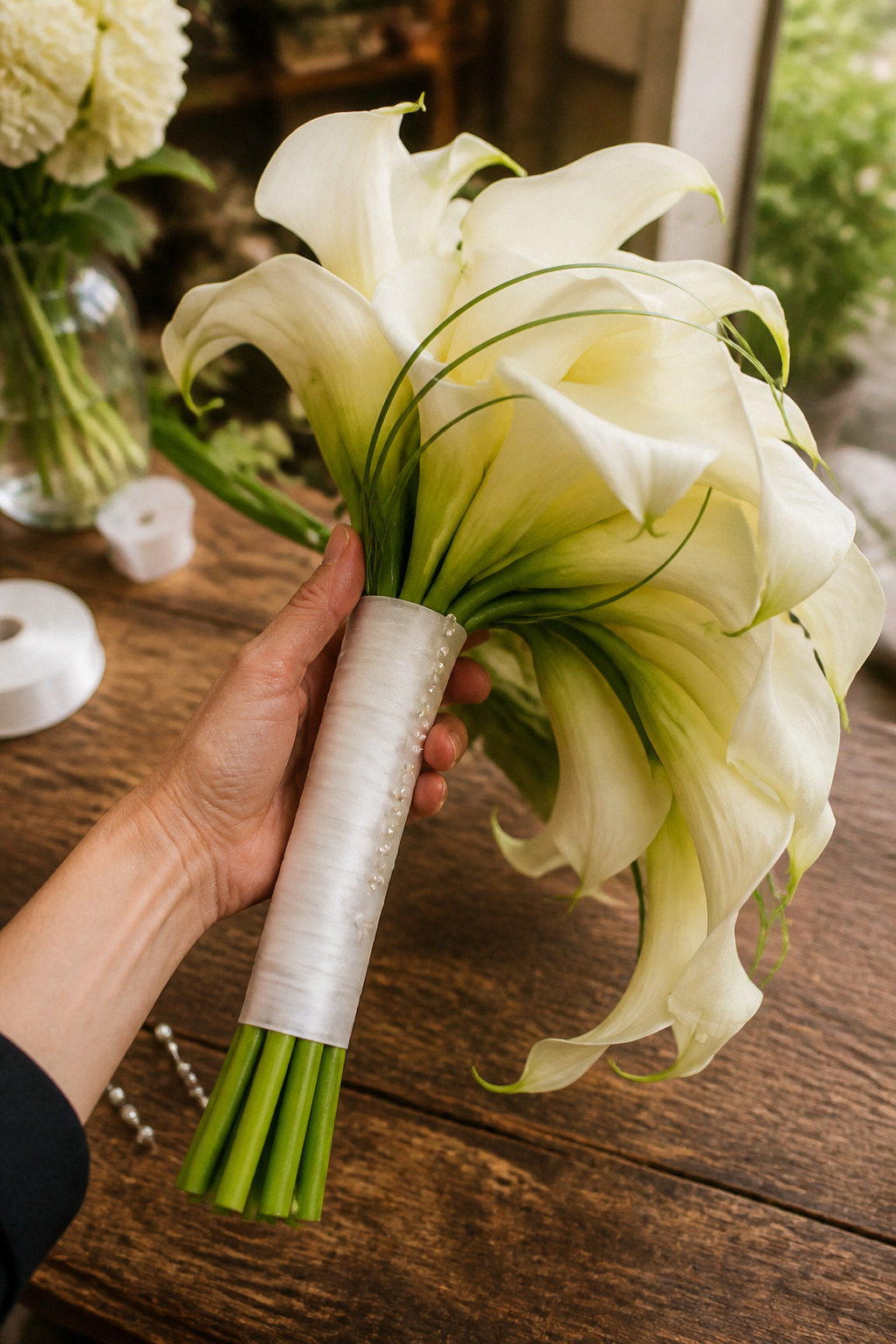
When the shape is where you want it, bind the stems firmly at the point where you’ll hold the bouquet. Wrap several times. You’re building a grip point, not just securing the stems.
Trim all the stems to a uniform length below the binding point; four to six inches is typical. Use sharp snips and make a clean cut.
From there, you’ve got two good finishing options. The classic route is ribbon: wrap satin ribbon starting at the top of the binding and working down in overlapping spirals, then secure the end with pearl-headed pins, threading them through the ribbon and into the stems. The route shown in the video is an aspidistra leaf wrap: run a strip of double-sided tape around the upper handle, wrap a whole aspidistra leaf around the stems to cover it, then wind decorative binding wire around the leaf and twist to secure. Either way, fold any sharp wire ends back into the foliage before you’re done. Nobody wants a scratch from their own bouquet.
If you want a cleaner finish at the base, cut a small circle of ribbon or leaf and pin it flat across the bottom of the handle. Takes thirty seconds and makes a noticeable difference up close.
What I use in the shop: white satin ribbon for the classic handle wrap, and decorative binding wire if you’re doing the aspidistra leaf finish shown in the video.
Where to Buy Your Flowers and Foliage
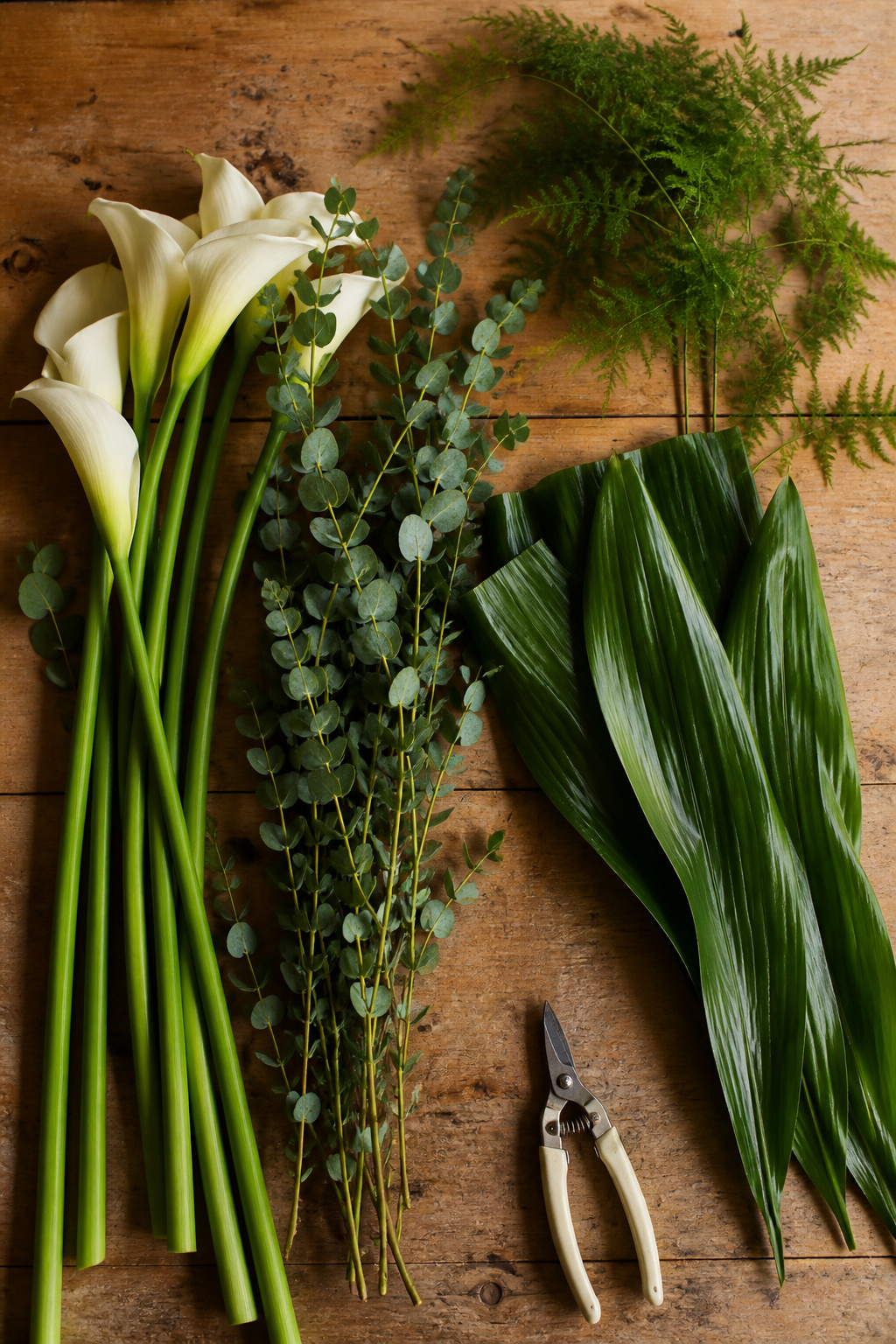
All the flowers and greens shown in the video, including calla lilies, salal, eucalyptus, asparagus fern, bear grass, and aspidistra leaf, are available from online wholesale flower sites. Buying in bulk online is usually the right move for DIY wedding work if you need more than a few stems.
If you’d rather use silk calla lilies, that’s a viable option for a cascading bouquet because both the hand-tied and wired techniques work the same way with silk stems. My suggestion: combine silk callas with fresh foliage whenever possible. The real greenery keeps the arrangement from reading as entirely artificial, and fresh eucalyptus has a scent that silk never replicates.
For more on putting together a complete wedding bouquet from scratch, the post on choosing focal flowers is a good next read. And if you’re building out the full wedding flower picture alongside this project, the summer wedding bouquet guide covers heat considerations that matter if your ceremony is outdoors.
Frequently Asked Questions
How far in advance can I make a cascading calla lily bouquet?
Assemble it the morning of the wedding, no earlier. Callas hold well when conditioned, but a fully assembled bouquet is harder to store. Keep the stems in water up until the last possible moment before you bind and finish the handle.
How many calla lilies do I need for a cascading bouquet?
For a medium cascade, plan on 12 to 15 standard callas for the body and 10 to 15 mini callas for the trailing section. Add foliage on top of that. It’s always better to order extras. You’ll use them, and running short on the morning of the wedding is a bad situation to be in.
Do I need a bouquet holder for a cascading style?
No. Both the hand-tied and fully-wired methods give you the flexibility to shape a true cascade. A foam holder won’t.
What’s the difference between the hand-tied and fully-wired methods?
Hand-tied means you cross the stems at a single binding point and let their natural curve create the cascade, as shown in the video. Fully-wired means you reinforce each mini calla with wire before you place it, which gives you more control over the exact line of the trail. Hand-tied is faster. Fully-wired is more forgiving if your stems don’t have much natural bend. Neither one is wrong.
Can I use mini calla lilies exclusively, or do I need standard callas too?
You can build an entire cascading bouquet from mini callas; some of the most elegant versions are done that way. The mini callas give you more flexibility in the cascade and a lighter finished weight. Standard callas in the body add visual mass for a more dramatic look
What foliage works best with calla lilies in a cascading bouquet?
Eucalyptus, salal, aspidistra leaf, asparagus fern, and bear grass are the go-to choices. Eucalyptus adds movement and scent. Salal and aspidistra give you clean, broad planes that contrast with the calla blooms. Asparagus fern fills gaps without competing with the flowers, and looped bear grass adds motion to the trailing end. Use as many as you can get.
How do I keep the bouquet fresh during the ceremony?
Keep it in water up until the last minute before you need to carry it. After the ceremony, immediately put the stems back in water. A small vase or floral water tube works. Callas that have been properly conditioned will hold out of water for several hours, but why push it if you don’t have to
Closing Thoughts
A cascading calla lily bouquet is one of those designs that looks harder to make than it actually is. Whether you wire every stem or build it hand-tied like the video shows, the technique is learnable in an afternoon. Once you’ve got the mechanics down, the rest is just shaping, and calla lilies are forgiving enough to let you work until you get it right.
The bride I mentioned at the start of this post sent me a photo from her reception. The bouquet was still holding its shape hours after she made it. That’s what proper conditioning and a solid foundation, wired or hand-tied, will do for you.
Tell me in the comments: are you going hand-tied like the video, or wiring every stem for more control? I’d like to know which way you land, and what foliage you end up pairing with the callas.
Til next time,