Disclosure: This post may contain affiliate links. If you click and buy, we may earn a commission at no extra cost to you. As an Amazon Associate, we earn from qualifying purchases.
Last Updated: July 2026
A customer called me in late October a couple of years back, furious about a set of porch planters she’d put together the weekend before. Everything had looked full and lush when she built them. By the first hard frost, the whole thing was mush, brown, collapsed, and frozen solid to the container. She’d used plants and mechanics built for a mild fall afternoon, not a Milwaukee winter.
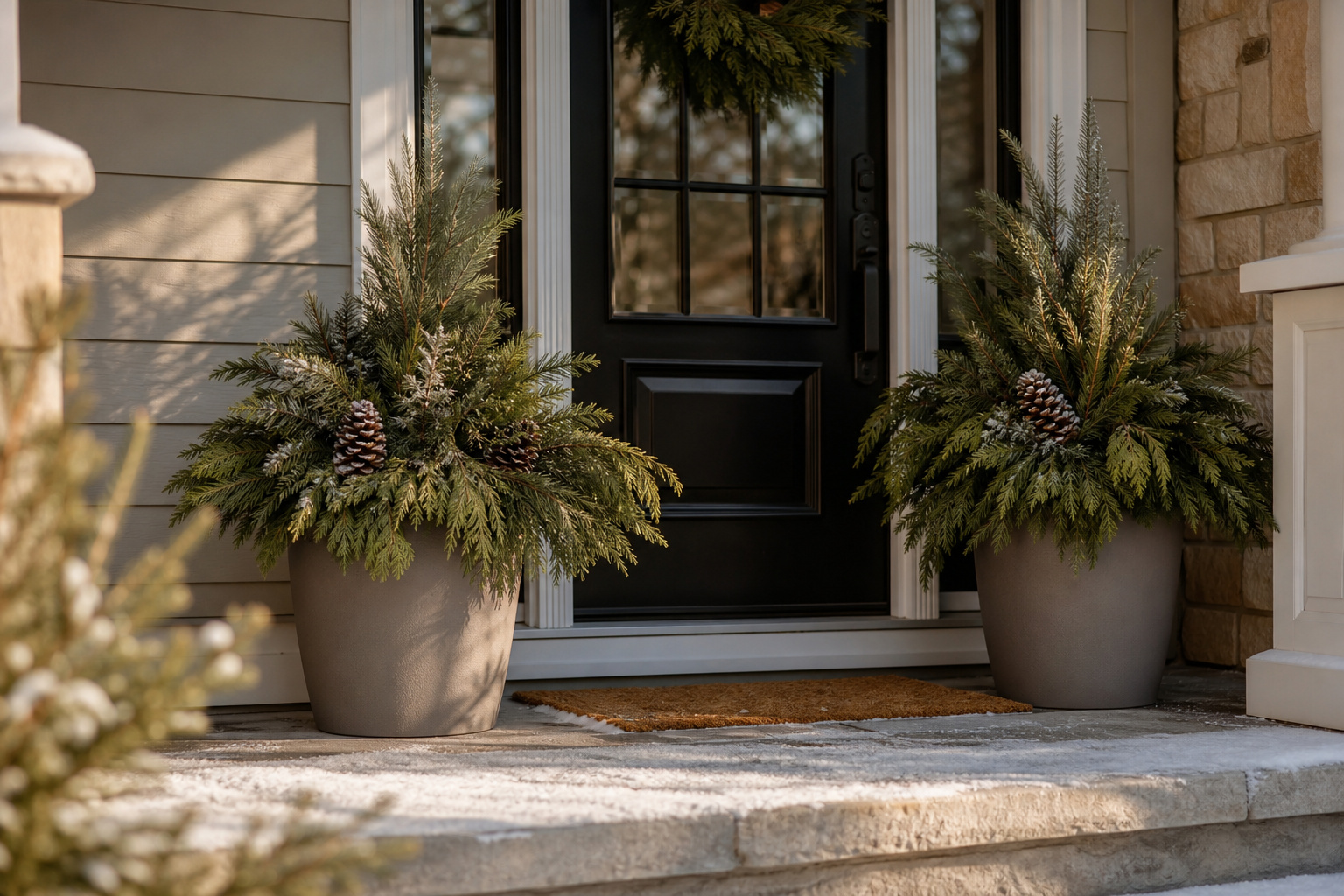
Front porch decorating gets treated like a styling exercise online, with color palettes, “thriller-filler-spiller” layering, and symmetrical urns. All of that matters less than the two decisions that actually determine whether your display survives the season: what you plant, and what you plant it in. Get those right, and the styling takes care of itself.
Choose a Container That Won’t Crack
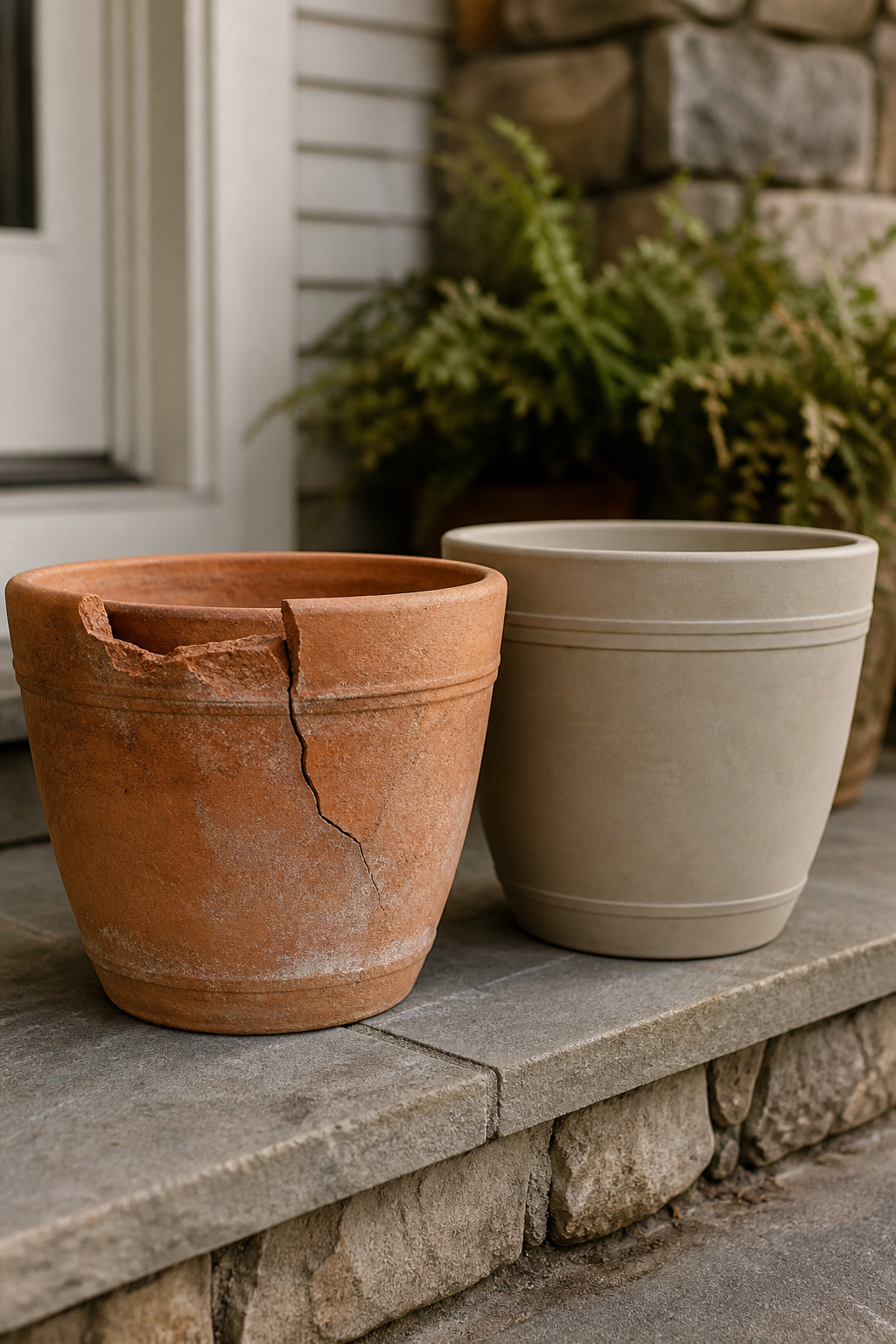
This is where most porch displays fail before a single stem goes in. Terracotta and ceramic look great, but they’re porous. They absorb moisture, and when that moisture freezes, it expands and cracks the container from the inside. I’ve had customers bring in a beautiful ceramic urn in January, split clean down one side, wondering what happened.
Fiberglass is what I point people toward for anything staying out past the first frost. It’s lightweight, flexes instead of cracking through freeze-thaw cycles, and holds up to years of winter use. Concrete works, too, and actually insulates roots better, but it’s heavy. That’s worth knowing before you commit to a design that needs moving. Metal with a powder-coated finish resists rust and won’t crack, though it offers less insulation than concrete on a genuinely cold night.
What I use in the shop: fiberglass outdoor planters — they’ve held up through more Wisconsin winters on client porches than any other material I’ve used, and they don’t chip or fade as plastic does after a couple of seasons.
Products Worth Considering

High Quality: Made of high quality plastic, which is durable, allows you to reuse the planter for several seasons.

LIGHTWEIGHT FIBERGLASS MARS PLANTER: The Mars combines a cylindrical profile with fiberglass construction and a black finish. The lightweight body makes the empty container easy to reposition as you arrange your greenery. Move and position the planter before adding your chosen plant, then use its distinctive form as the foundation of your display.

Large Round Bowl Planter, Indoor or Outdoor - The Roco is a deep round bowl planter whose sculptural silhouette makes a refined focal point on patios, entryways, living rooms, and commercial spaces, in modern or transitional decor.
Pick Greenery That Handles Real Cold
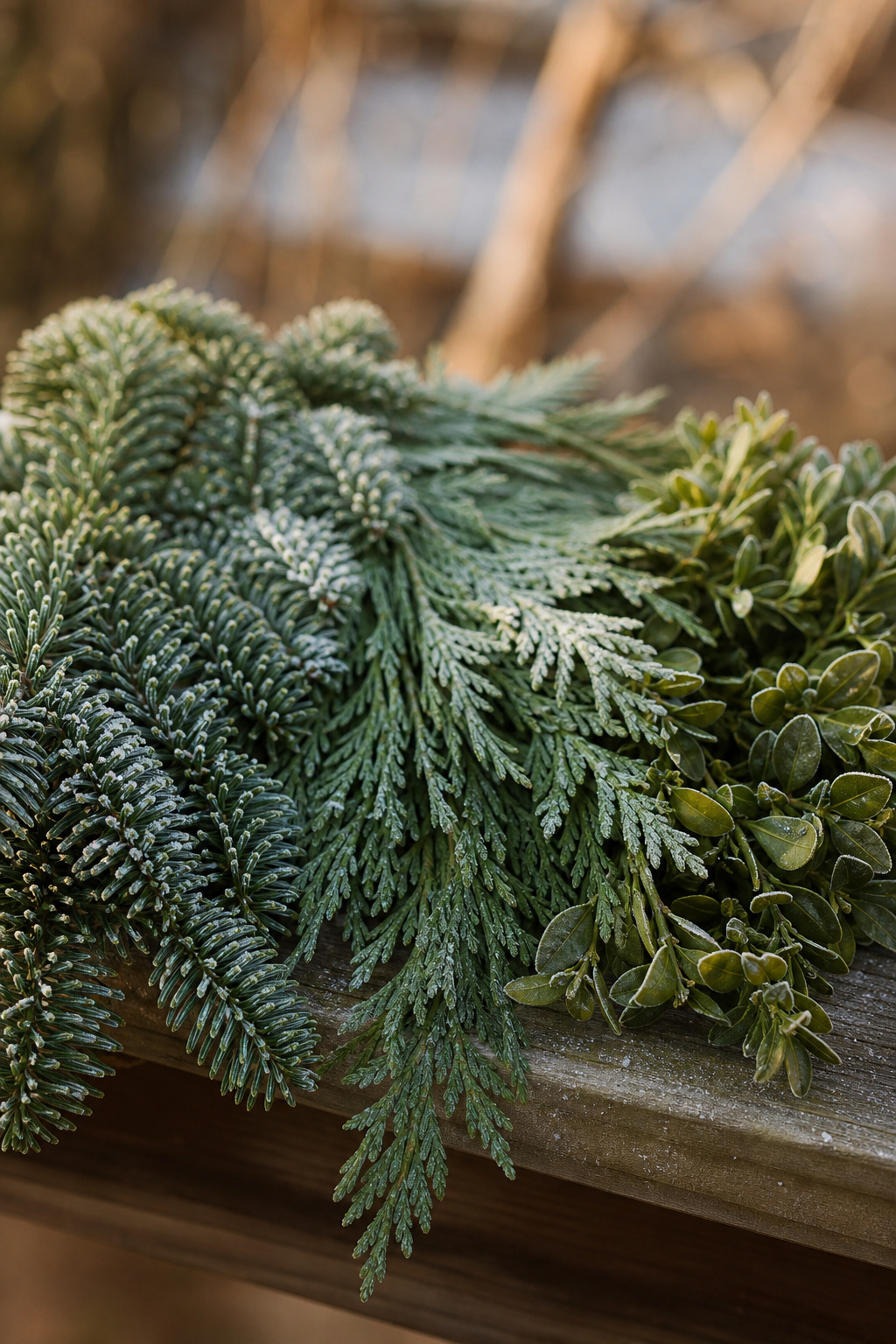
In my experience, this is the second place people go wrong. Choosing greenery that looks great in the store and folds within a few weeks outdoors. Cut evergreen branches used for porch arrangements aren’t rooted, so they’re not actively fighting the cold the way a planted shrub would be. What determines how long they last is how well they were conditioned before they went into the container and how exposed they are to wind and direct sun.
Noble fir and Fraser fir hold up the longest of anything I use for winter arrangements. The needles stay put even after weeks of freezing temperatures. Cedar and boxwood are close behind. Spruce looks full and pretty at the garden center, but it sheds fast once it’s cut and exposed to the wind. I’d skip it for anything that needs to last the whole season.
If you want live plants rather than cut greenery, dwarf Alberta spruce and boxwood in containers can survive a Midwest winter outdoors, but the container itself needs enough mass to insulate the roots; a small pot won’t cut it. Pansies and ornamental kale handle a light frost fine but won’t survive a hard freeze; treat them as fall-only and swap them out before the first deep cold snap.
Build the Container From the Ground Up
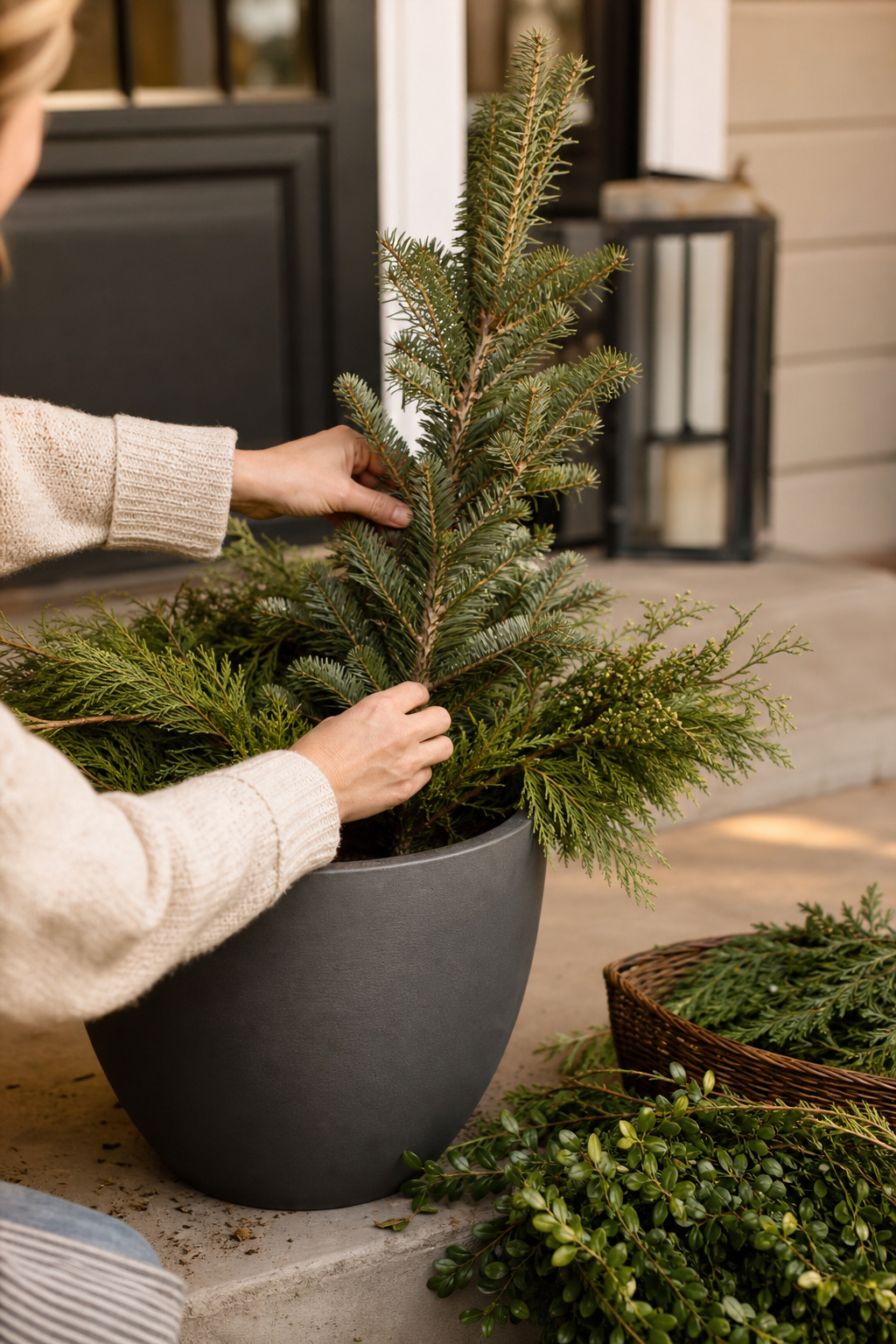
Once you’ve got the right container and the right greenery, the actual build is simple. Start with your tallest piece first, a central evergreen branch or a small potted spruce anchored slightly off-center rather than dead center, which looks more natural. Pack floral foam or well-draining soil around the base, depending on whether you’re working with cut greenery or live plants.
Work outward from there, filling in with shorter pieces of contrasting texture, cedar against fir, boxwood against something with berries. Let something trail over the edge of the container, whether that’s a cascading branch or a strand of greenery, to soften the hard line of the rim. If you’re worried about getting the proportions right, don’t be. Build it a little fuller than necessary; cut greenery settles and compresses within the first week.
Secure everything with floral wire rather than relying on the foam or soil to hold it in place. Wind is the enemy of porch displays, and a loosely built arrangement will be sideways after the first real gust.
What I use in the shop: 22-gauge paddle wire — it’s what I reach for to anchor branches into a container so they hold through wind and weather instead of shifting loose within a week.
Products Worth Considering

Perfect for Wreath-Making and Decorations:This paddle wire is specifically designed for creating holiday wreaths,garlands,and other festive decorations. Its paddle design prevents tangling and makes it easy to wrap and secure materials tightly. Whether you're crafting a eucalyptus garland,a Christmas wreath,or a seasonal swag,this wire provides the control and strength you need to make your project look professional.3 Roll 22 gauge green floral wire,39 yards/Roll,the floral wire has enough length to make any craft project you like without worrying the lack of length,and can be cut according to your need

PACKAGE CONTENT: The 4 pack of 22 gauge green paddle wire floral, 33 yards each, for a total of 131 yards / 394 feet. Green can be a very good and invisible color in plants

Size:22 gauge paddle wire, 38 yards length
Match the Season Without Starting Over
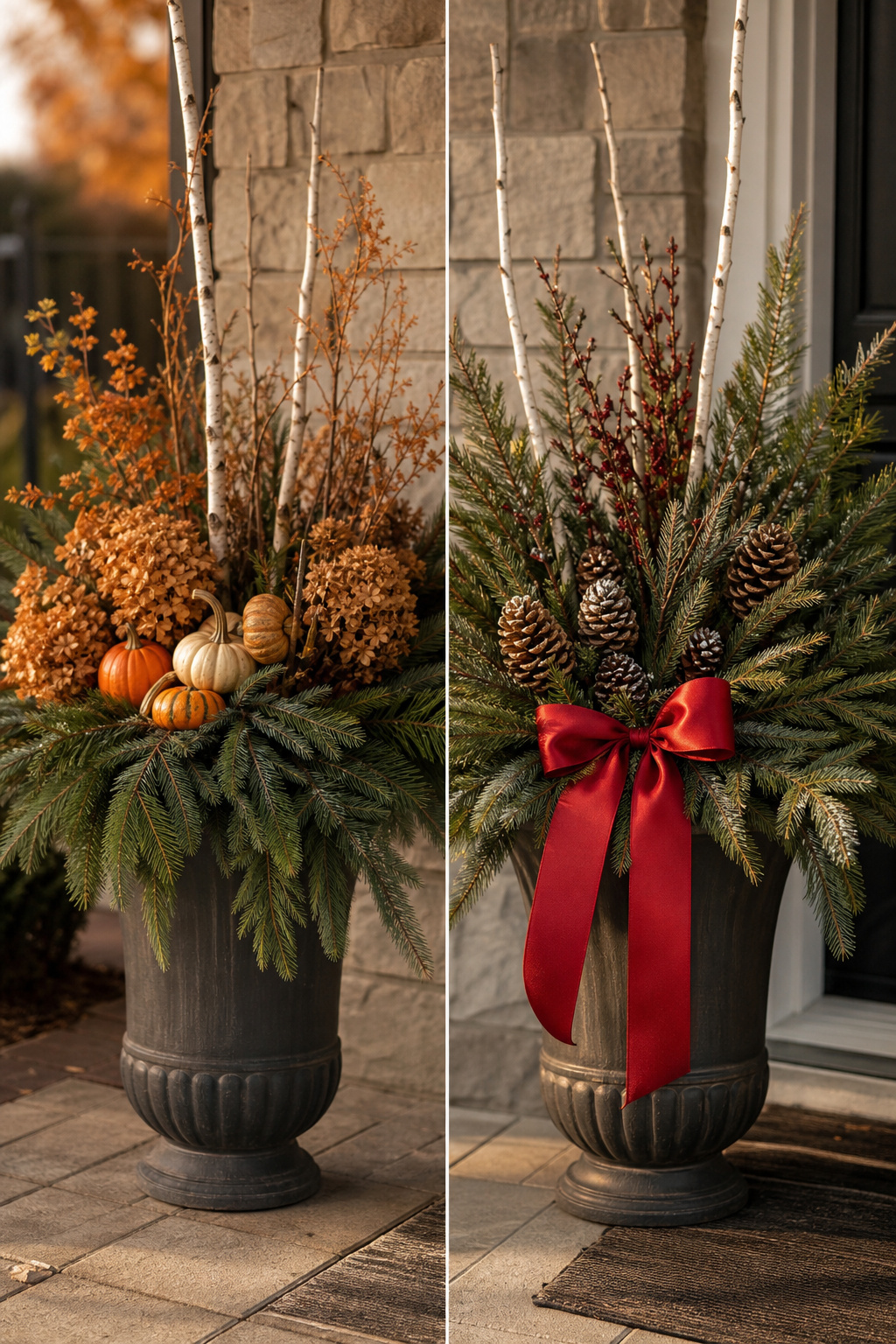
You don’t need to rebuild your porch display from scratch every time the calendar flips from fall to the holidays. If you built on the right container with the right base structure, refreshing it for the next season is mostly a matter of swapping accents.
For fall, I lean on mums, dried hydrangea, and wheat stalks worked into the greenery base, with a few mini pumpkins or gourds at the foot of the container. When it’s time to shift into the holiday season, pull the fall accents, keep the evergreen structure if it’s still holding up, and add pinecones, red berries, and a wired ribbon bow. The bones of the arrangement, the container, the anchor greenery, carry you through both.
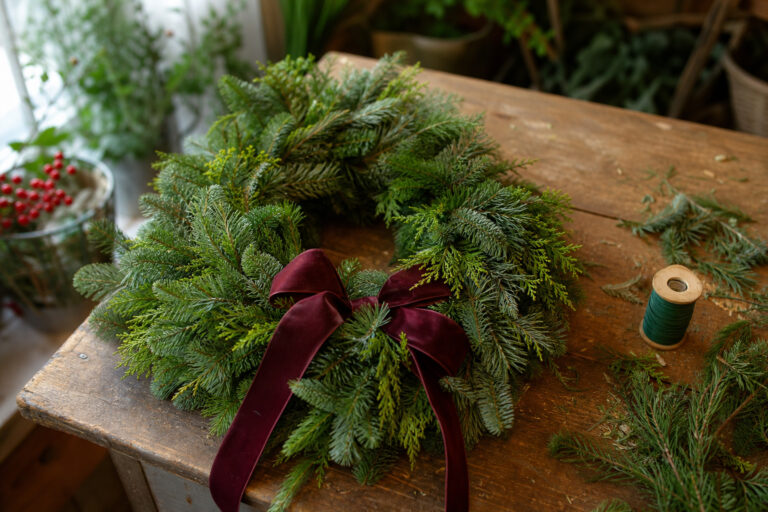
If you’re building a wreath to hang above or beside your porch containers, the same wiring technique applies. I’ve written up the full process for a wreath that holds through the whole season if you want the container and the door to match.
Keep It Watered Without Overdoing It
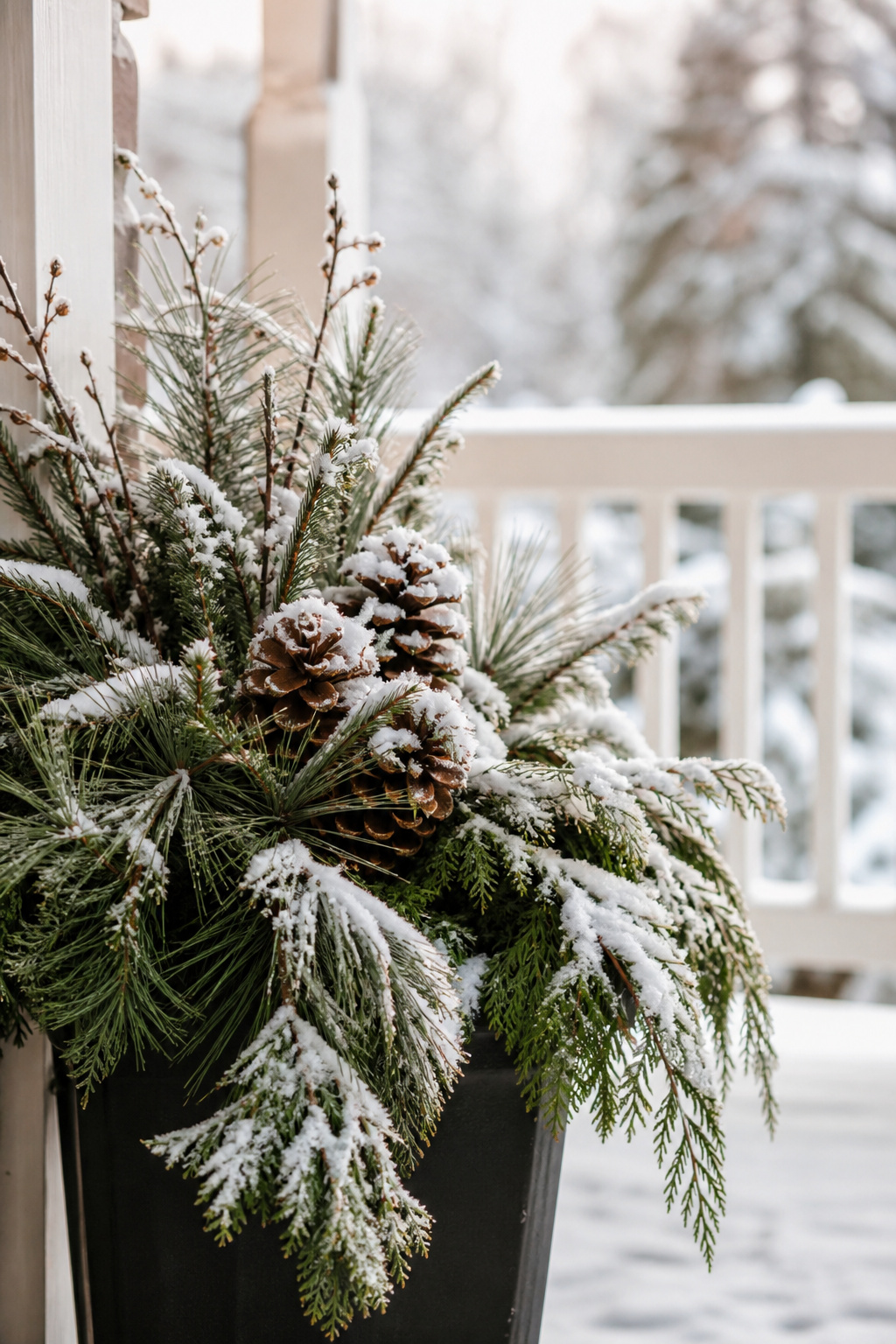
Winter container care trips people up because it runs backward from what they’re used to doing the rest of the year. Once temperatures are consistently below freezing, cut greenery and dormant live plants need very little water. Snow and rain generally handle it. Overwatering in cold weather is actually a bigger risk than underwatering, since standing water around roots can freeze and cause damage.
Water thoroughly once right after building, then leave it alone unless you’re going through an unusually dry stretch with no snow or rain. Brush heavy snow off the arrangement after a storm so branches don’t snap under the weight, and keep de-icing salt away from the container. It’s rough on both live plants and cut greenery.
Frequently Asked Questions
How long do fresh evergreen porch containers last outdoors?
With good conditioning and the right variety, several weeks to a couple of months. Fraser fir and cedar hold up the longest. Cold weather actually helps here. It slows the drying process compared to a warm indoor spot.
What container material should I avoid for winter displays?
Terracotta and unglazed ceramic. They’re porous, and trapped moisture that freezes will crack them. Fiberglass, treated wood, or powder-coated metal all hold up better through a full winter.
Can I reuse the same container from fall through the holidays?
Yes, and it’s the more practical approach. Build the greenery structure once, then swap the seasonal accents, mums and pumpkins for fall, pinecones and ribbon for the holidays, rather than rebuilding from the ground up each time.
Do I need to water my porch planters in winter?
Minimally. Water once thoroughly after building, then let snow and rain do the rest. Overwatering in freezing temperatures causes more problems than it solves.
What’s the easiest way to keep decorations secure in the wind?
Wire everything down rather than relying on foam or soil alone. Paddle wire wrapped around the container’s structural pieces holds up through wind gusts that would otherwise topple a loosely built arrangement.
Can live plants survive a Midwest winter in an outdoor container?
Some can, if the container has enough mass to insulate the roots. Dwarf Alberta spruce and boxwood are good options. Smaller containers don’t hold enough soil volume to protect roots through a hard freeze, so cut greenery is often the more reliable choice for anything decorative.
Closing Thoughts
A porch display that actually survives the season comes down to two decisions made before you ever pick up a branch: the right container, and greenery that can take real cold. Everything else, including the height, texture, and color, is just styling on top of a foundation that either holds or doesn’t.
If you’ve had a container crack on you or greenery fold early, I’d like to hear what happened. Drop a comment below, and I’ll help you troubleshoot for next season.
Til next time,