Disclosure: This post may contain affiliate links. If you click and buy, we may earn a commission at no extra cost to you. As an Amazon Associate, we earn from qualifying purchases.
Last Updated: June 26, 2026
I was out for an early morning walk the other day when I stopped dead in my tracks in front of a neighbor’s yard. Asiatic lilies, wall to wall, in full bloom. Deep oranges, hot pinks, and creamy whites are just going off. Even after all my years in the shop, that kind of display still gets me.
My first thought, naturally, was: those would look incredible in a vase.
If your garden is putting on a similar show right now or you’re eyeing a few stems you’d like to bring inside, here’s what you need to know to do it right.
Cut at the Right Time of Day
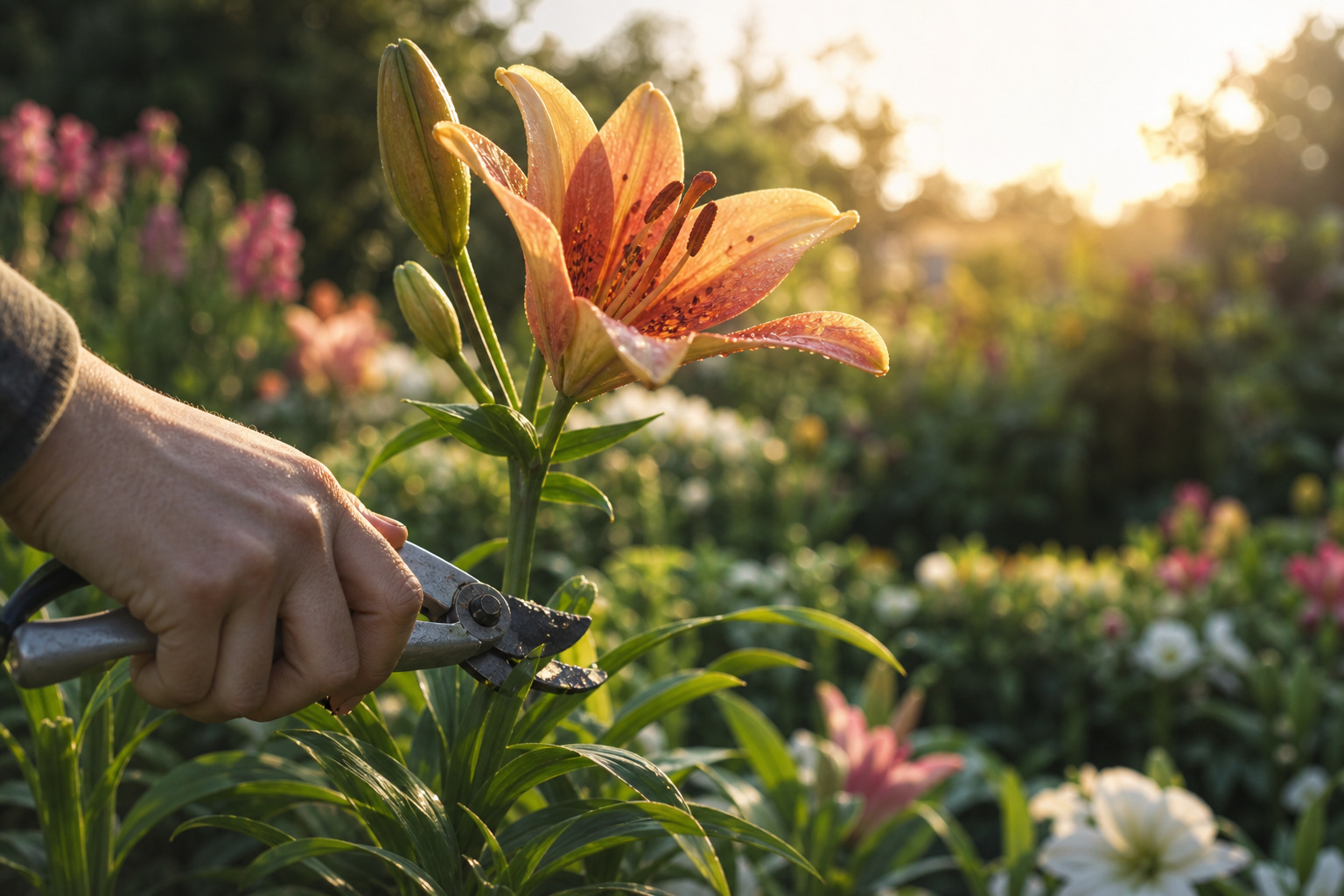
Timing matters more than most people realize. Cut your flowers during the coolest part of the day. Early morning is best. That’s when the stems are fully hydrated from the overnight hours, and the blooms are at their freshest. Midday cutting, when the sun is high and the plant is stressed, noticeably shortens vase life.
I tell people: treat it like harvesting produce. You wouldn’t pick tomatoes at noon in August if you could help it.
Choose Blooms That Are Just Starting to Open
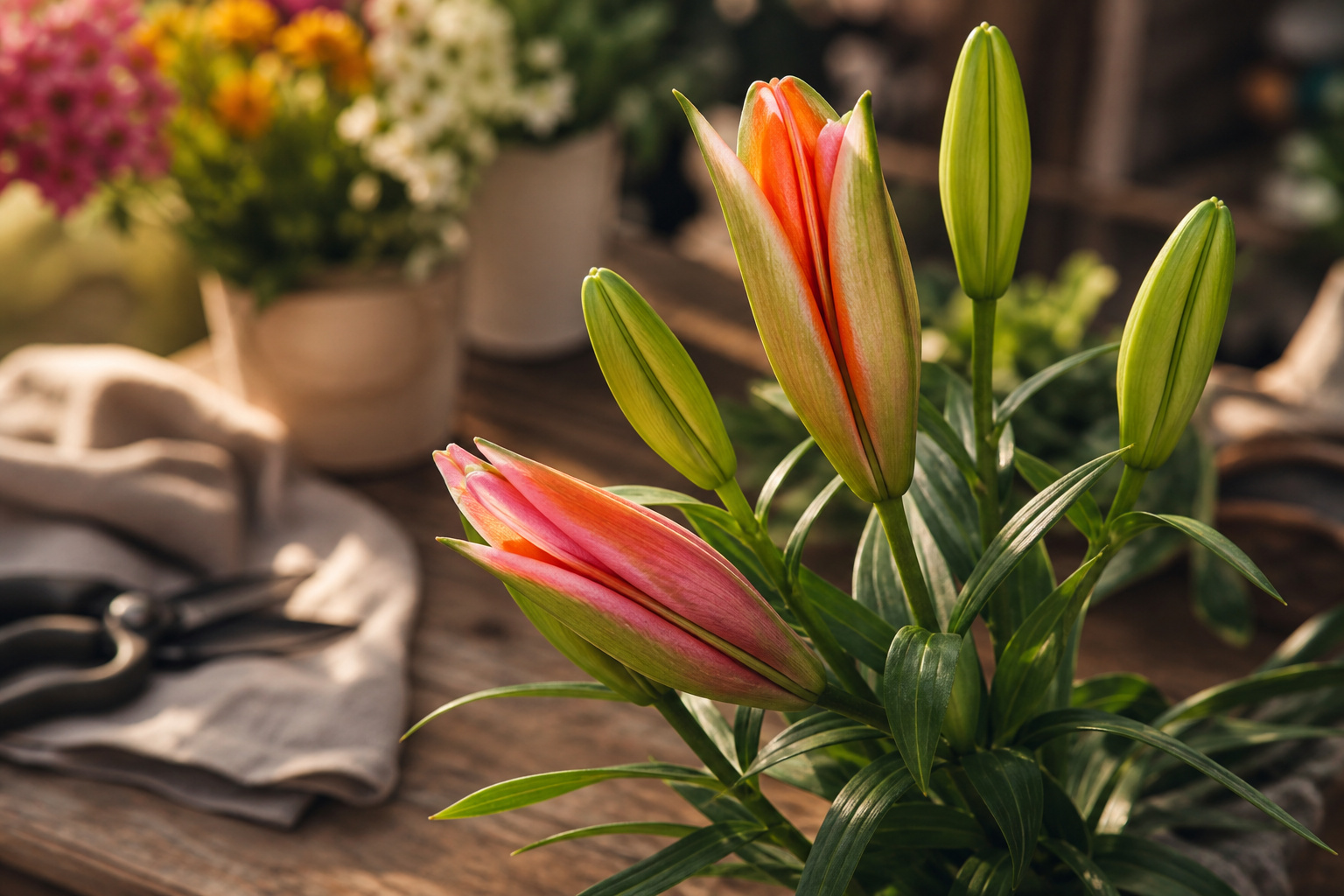
Resist the urge to cut the fully open flowers. They’re gorgeous in the garden, but they won’t last as long in the vase. Instead, select stems where the buds are just beginning to show color and crack open. They’ll continue to open indoors, and you’ll get several more days of enjoyment out of them.
This is especially true with Asiatic lilies. Cut them when one or two buds are starting to open, and the rest will follow over the next few days.
Cut Stems Longer Than You Think You Need
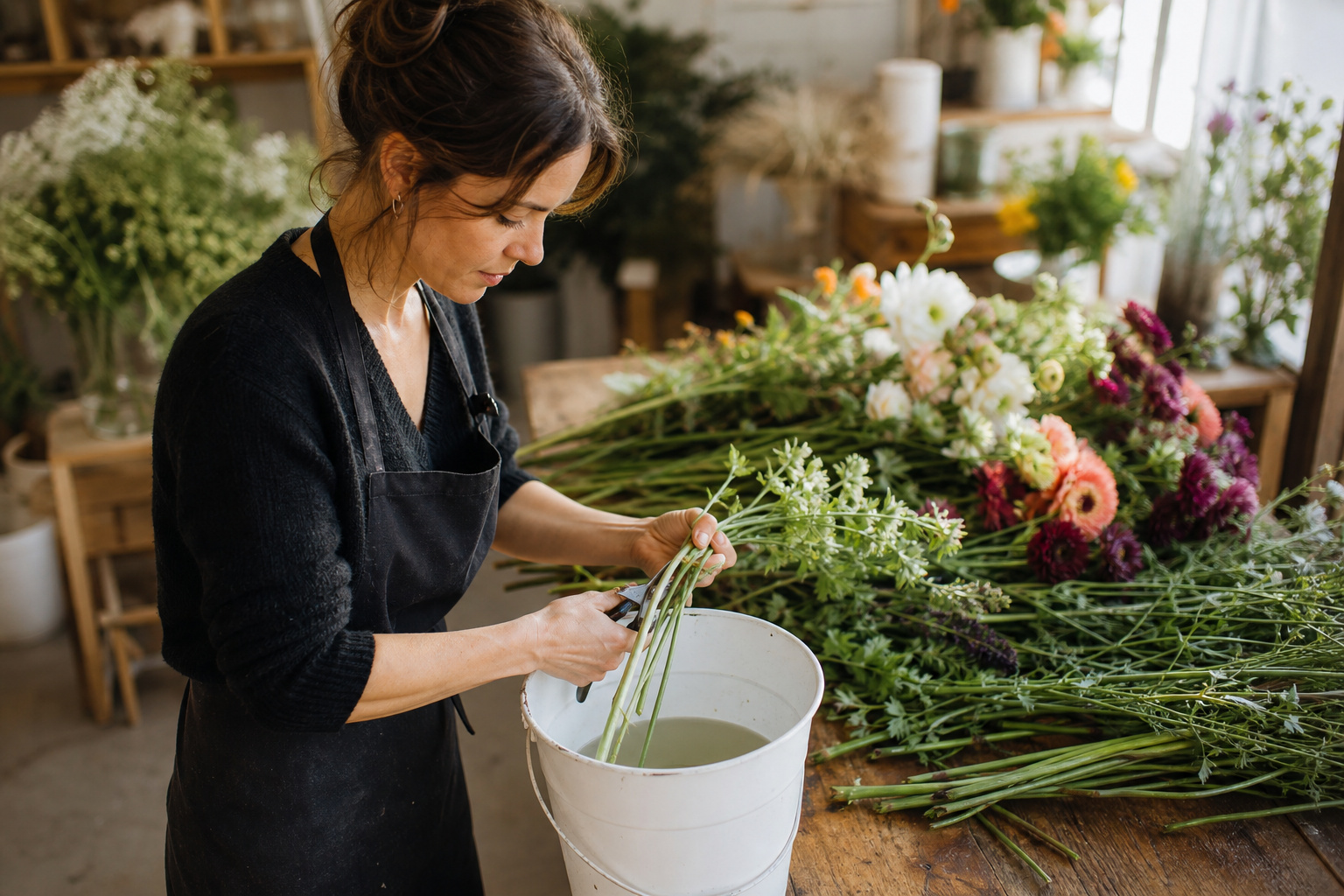
Always cut stems longer than you think you’ll use. You’re going to re-cut them at an angle before they go in the vase. That fresh cut opens up the stem’s vascular system and allows water to move freely. If you cut too short in the garden, you don’t have anything to work with later.
Make the re-cut underwater or immediately before placing the stems in a bucket. Don’t let them sit out in the air while you wander around the garden collecting more. Bring a bucket of water with you and drop each stem in as you go.
For the full conditioning sequence, this post on processing fresh flowers walks through everything step by step.
Strip the Foliage Below the Waterline
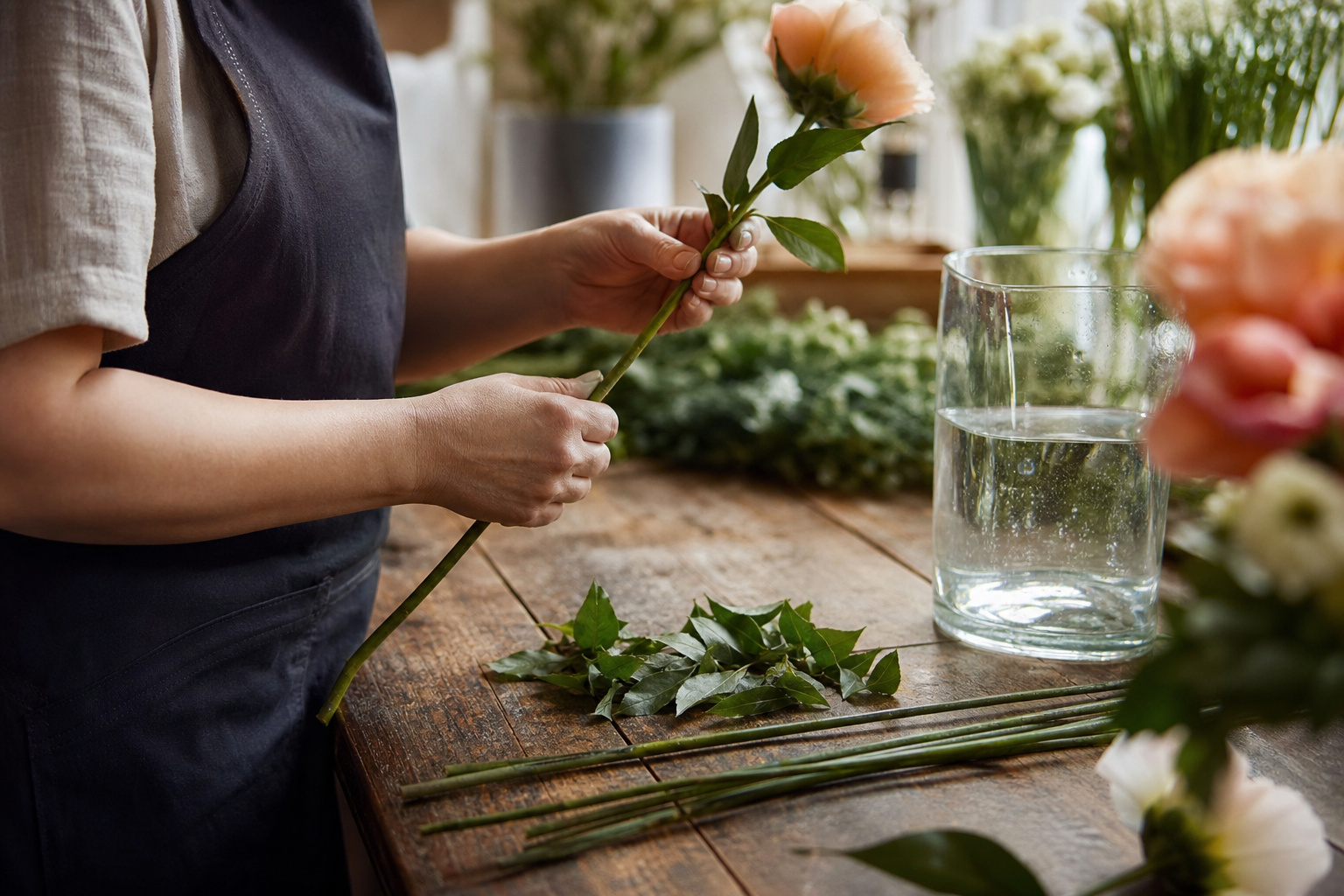
Any leaves that sit below the waterline will rot. Rotting foliage clouds the water and creates bacteria that attack the stems from the bottom up — and that kills your arrangement faster than almost anything else.
Strip everything below where the water line will hit. Leave the foliage above that point. It helps the arrangement look full and natural. Then change the water every couple of days and give the stems a fresh re-cut each time.
Fill In With a Few Purchased Stems
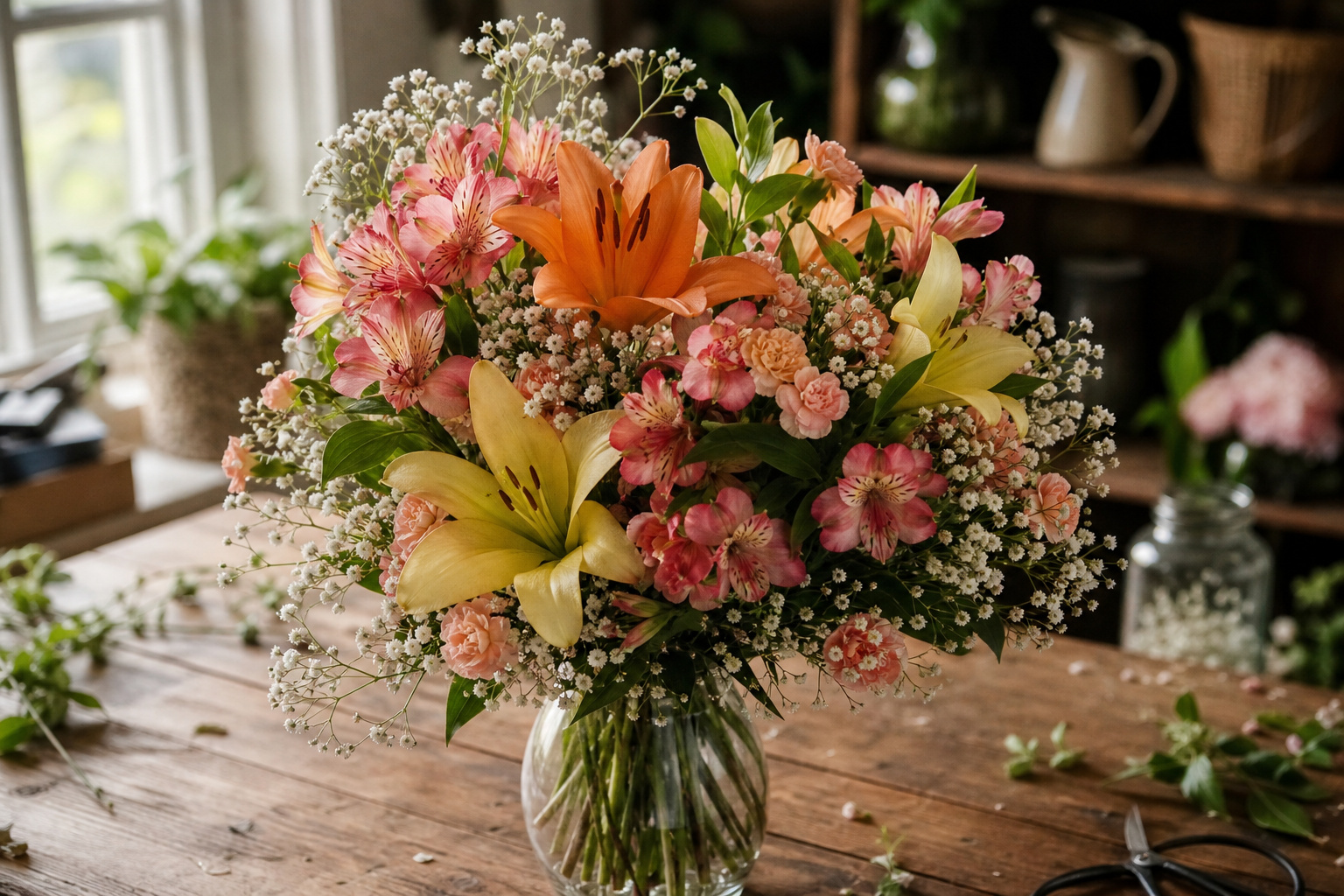
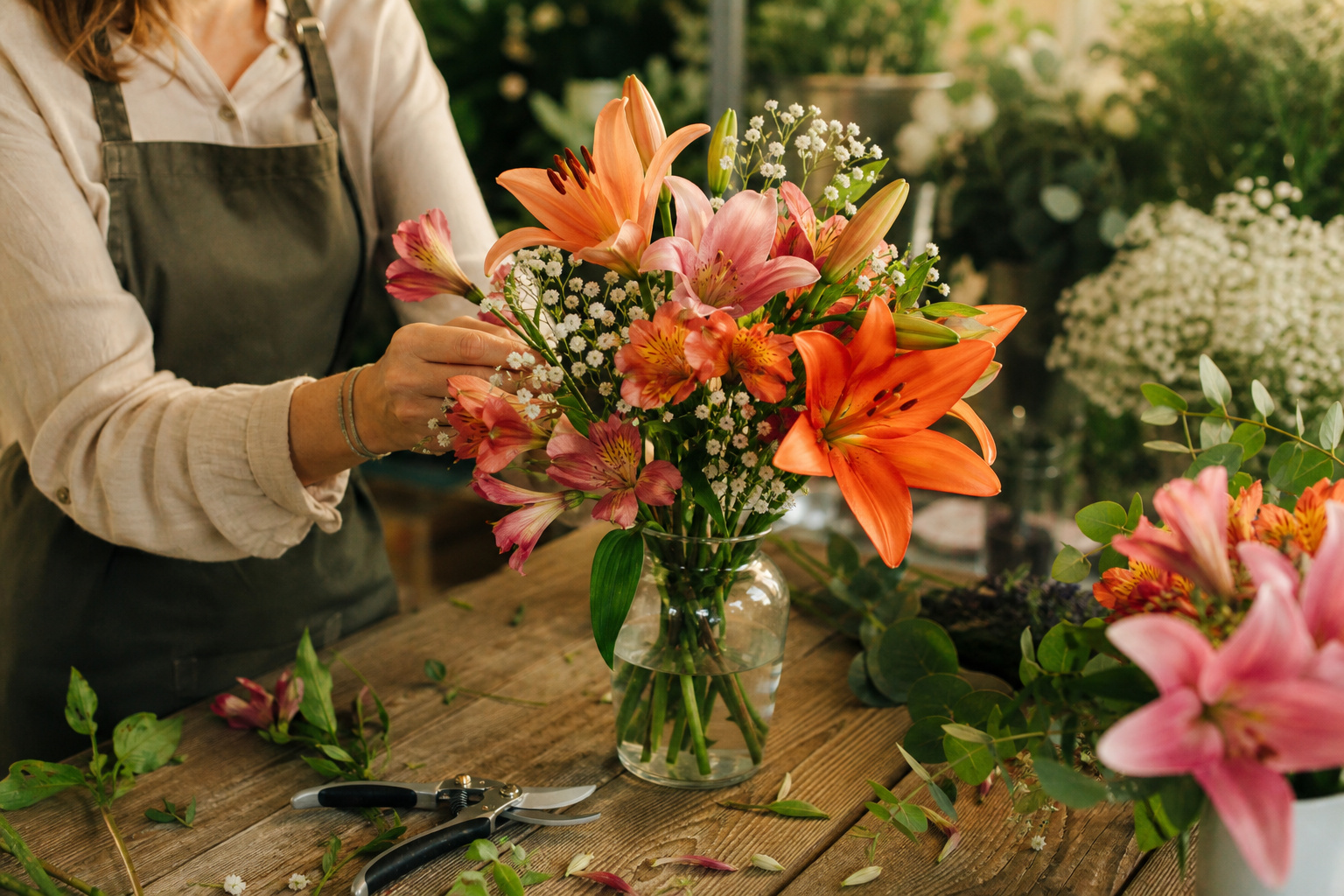
Here’s something I do myself when I cut from the garden: I’ll grab a few extra stems from the shop to round out the arrangement. A few sprigs of baby’s breath, some miniature carnations, or a handful of alstroemeria go a long way toward making a garden bouquet look intentional rather than just grabbed.
You don’t need a lot. Three or four purchased stems mixed in with what you’ve cut give you contrast in texture and scale, and it fills any gaps without stripping the garden bare. If you’ve never tried mixing your own cut flowers with a few from a florist or grocery store, give it a shot.
If you want to take it a step further and learn how actually to construct an arrangement, this foam-free front-facing arrangement tutorial is a good place to start.
Frequently Asked Questions
Can I cut flowers from my garden any time of year?
You can cut whenever your garden is blooming, but spring and summer are the prime seasons for the most common garden flowers. The technique stays the same regardless of the bloom.
What’s the best way to transport cut flowers from the garden?
A bucket of cool water is ideal. Drop each stem in immediately after cutting. If you’re moving them indoors or to another location, keep them out of direct sun and away from heat during the trip.
Do I need flower food for garden-cut flowers?
It helps. A packet of commercial flower food provides sugar, an acidifier, and a biocide; all things that slow bacterial growth and feed the blooms. It’s not mandatory, but vase life will be noticeably longer with it than without.
How long will garden flowers last in a vase?
Depends on the variety and how well they’re conditioned. Properly processed garden flowers typically last five to seven days. Lilies can push ten or more if you cut at the right stage.
Can I mix different types of garden flowers in the same vase?
Yes, that’s where the fun is. Just watch for incompatible varieties. Daffodils, for example, release a sap that shortens the life of other flowers around them. When in doubt, keep daffodils in their own vase for the first few hours after cutting.
Should I use warm or cold water in the vase?
Warm water is absorbed more quickly and is generally better for most cut flowers. Cold water slows the opening process, which can be useful if you want to hold blooms back, but for everyday arrangements, room temperature to slightly warm is the right call.
Closing Thoughts
There’s something satisfying about cutting flowers from your own garden and bringing them inside. You grew those. And with a little attention to timing and conditioning, they’ll perform just as well as anything you’d buy at the shop.
If you’re also thinking about what to plant for next season, fall is the right time to get bulbs in the ground. The Farmer’s Almanac has a solid guide on fall bulb planting worth bookmarking now.
Drop a comment below and tell me what’s blooming in your garden right now — I’m always curious what people are working with.
Til next time,