Disclosure: This post may contain affiliate links. If you click and buy, we may earn a commission at no extra cost to you. As an Amazon Associate, we earn from qualifying purchases.
Last Updated: June 2026
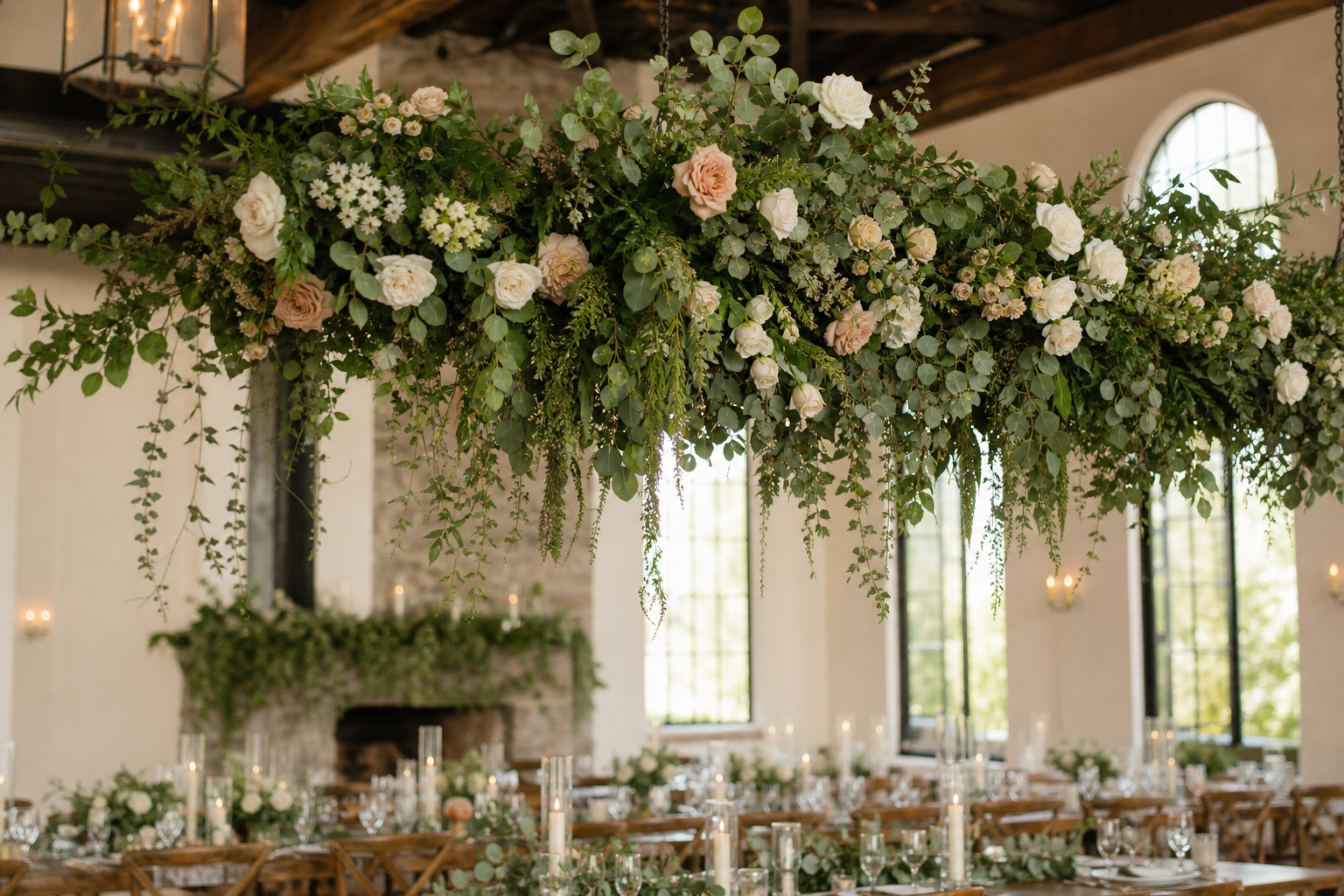
A few years back, a bride came into the shop with a photo on her phone. It was a hanging floral cloud suspended above a reception table with roses, eucalyptus, and trailing greenery all woven together like something out of a fairy tale. She wanted to know if she could make one herself.
My answer was yes. But I also told her what she was getting into.
A hanging floral installation is one of the most dramatic things you can do with flowers. They transform a room in a way that no centerpiece on a table can. They’re also more involved than most people realize in terms of materials, labor, and flower volume. I’ve done several over the years, and every time, we use more blooms than the customer expects.
That said, with the right prep and a clear process, they’re completely achievable for a motivated DIY designer. This post walks you through exactly how to plan and execute one.
I also want you to watch this video from event designer Shean Strong. He walks through a full hanging installation from start to finish and shares some technique details I think you’ll find useful. Watch it, and see if you agree.
Start With a Clear Plan Before You Touch a Flower
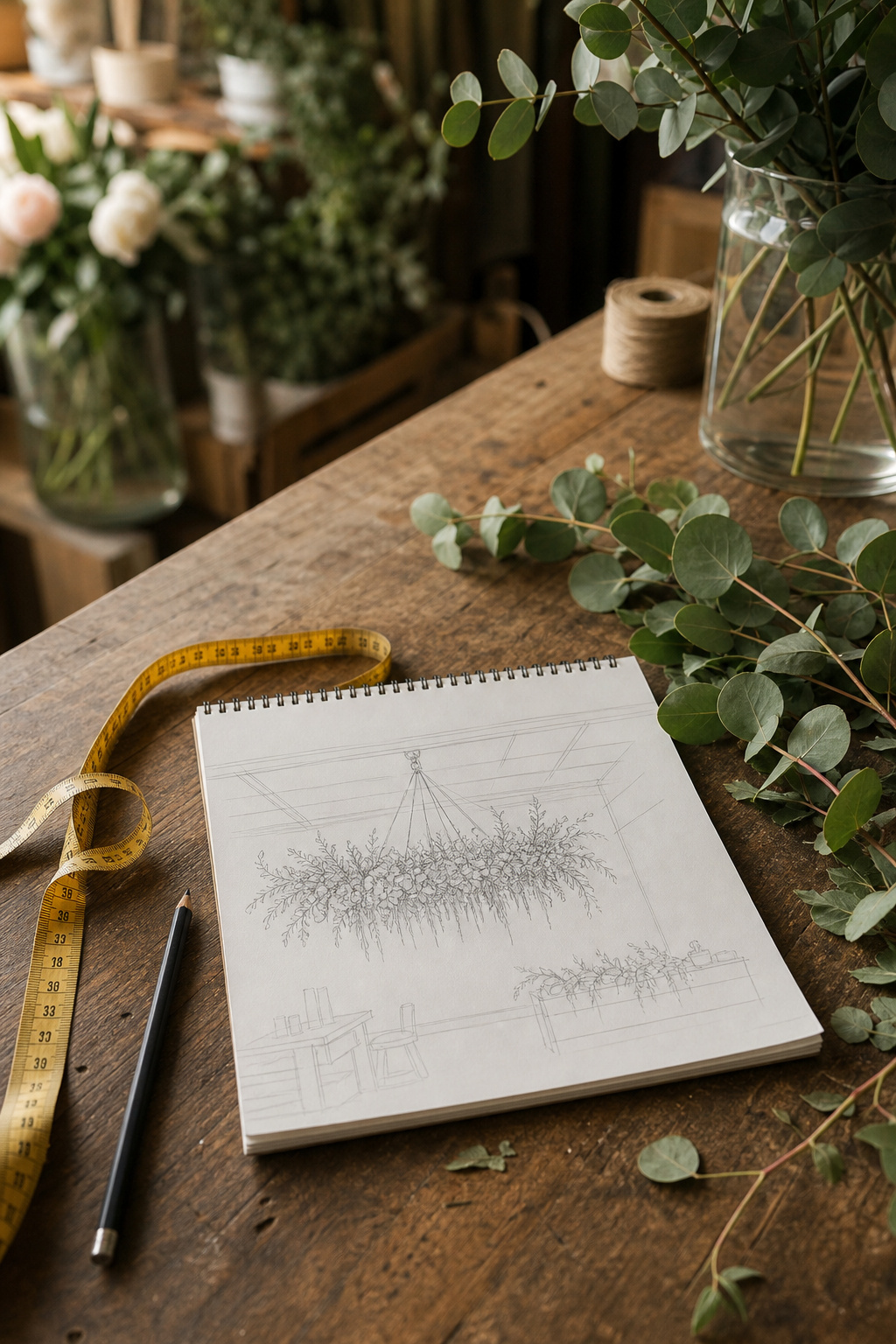
The biggest mistake I see DIY designers make with hanging installations is jumping straight to flowers. You need to know a few things before you order a single stem.
Where is it hanging? The ceiling structure matters. You need a solid anchor point, not a decorative beam, not a dropped tile ceiling. If you’re working in a venue, talk to the coordinator before you commit to anything overhead. Some venues won’t allow ceiling attachments at all.
How big is it? Sketch out the rough dimensions. A small installation, say, 18 to 24 inches across, is very manageable. Once you start going larger, the weight increases fast, and the logistics get more complicated.
How long will it hang? A one-hour event is very different from an all-day reception. Heat, humidity, and air conditioning all affect how long your blooms hold up overhead.
Get those answers first. Then move to materials.
Gather Your Supplies Before the Day Of
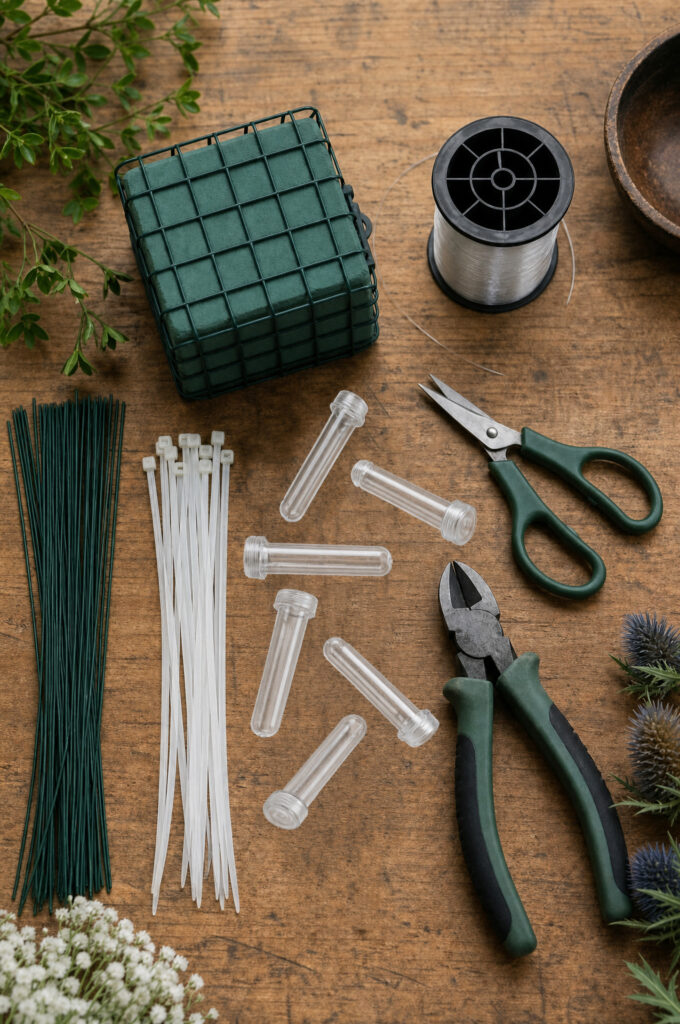
Running out of wire or zip ties mid-installation is a nightmare. I always tell people: buy more than you think you need, and have it all on the table before you start.
Here’s what you’ll need:
Structure and suspension: A floral foam cage or chicken wire frame, clear fishing line or ribbon for hanging, wire cutters, floral wire, and zip ties. Zip ties are one of the most underrated tools in floral design. They hold better than wire in most overhead applications and are much faster to work with.
Flowers and greens: A mix of long-stemmed focal blooms and trailing greenery. Think eucalyptus, ivy, or smilax for the cascading effect. Focal flowers with strong stems, like roses, dahlias, and lisianthus, hold up better overhead than delicate varieties.
Hydration tools: Water picks, a spray bottle with clean water, and flower food. If you’re using foam, soak it thoroughly the night before. A dry block in the middle of the installation is a fast way to lose your flowers early.
What I use in the shop: Our Amazon storefront has the floral supplies we reach for regularly, foam, picks, wire, and more. Worth a look if you’re starting from scratch.
Buy Your Flowers From the Right Source
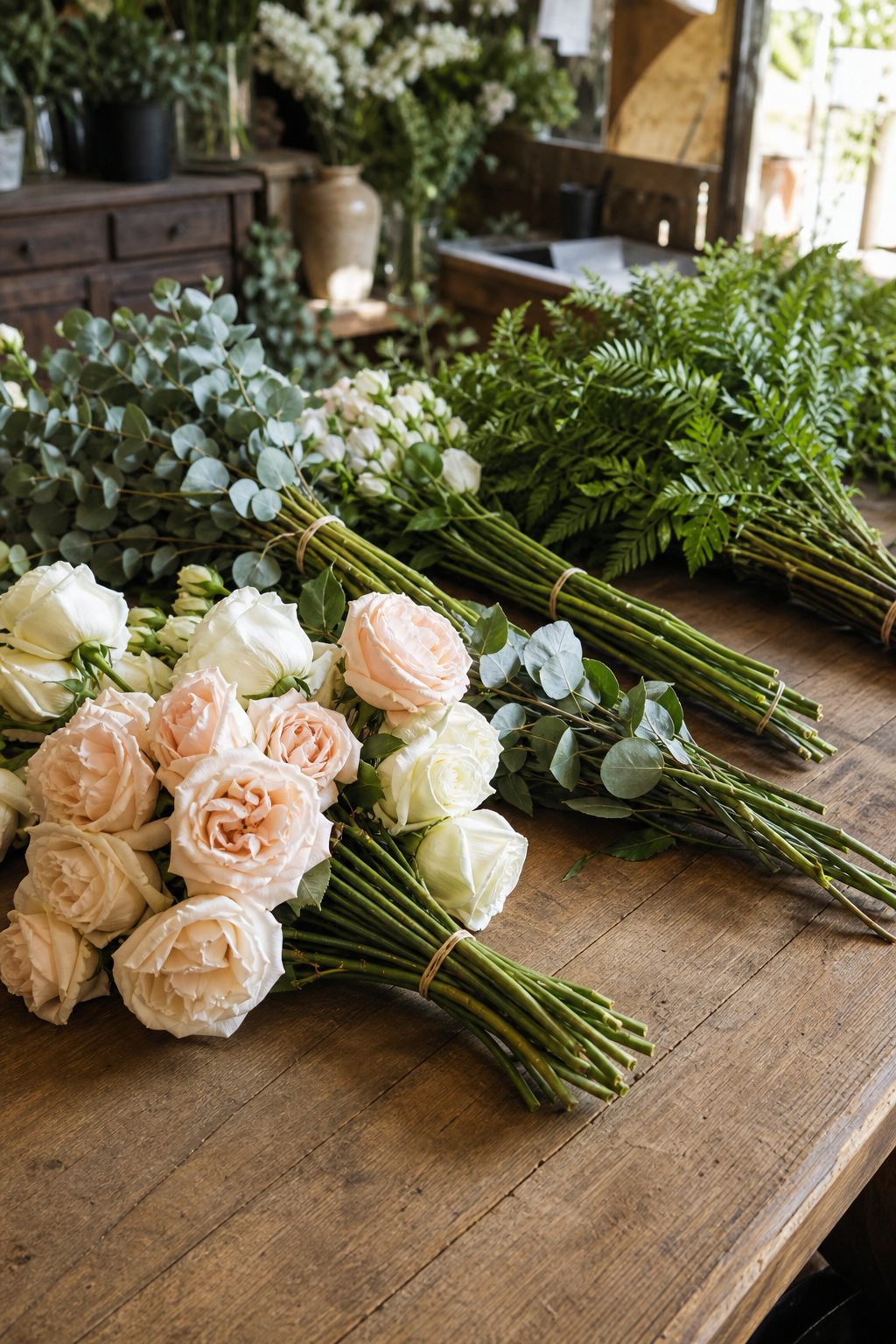
For a project like this, you’ll need volume, more than your local grocery store is going to stock. I’d point you toward online bulk flower suppliers.
BloomsbytheBox is a solid option for wedding-grade stems. GlobalRose ships directly from farms and tends to be very price-competitive. JRRoses is another one worth checking. All three let you order in bulk without the markups you’d pay at a florist.
One thing to keep in mind: some of the flowers you’ll see in inspiration photos are seasonal. If a variety isn’t available when you’re shopping, don’t panic. Substitute something in the same color family with a similar texture. The overall effect matters more than hitting every specific bloom.
If you want to add silk or faux flowers to fill in gaps or reduce cost, NearlyNatural has a wide selection. Craft stores like Michaels and Hobby Lobby are also useful for accent pieces and filler.
For more on sourcing flowers for large DIY projects, the post on buying bulk wedding flowers online covers what to watch for before you place an order.
Build It in the Right Order
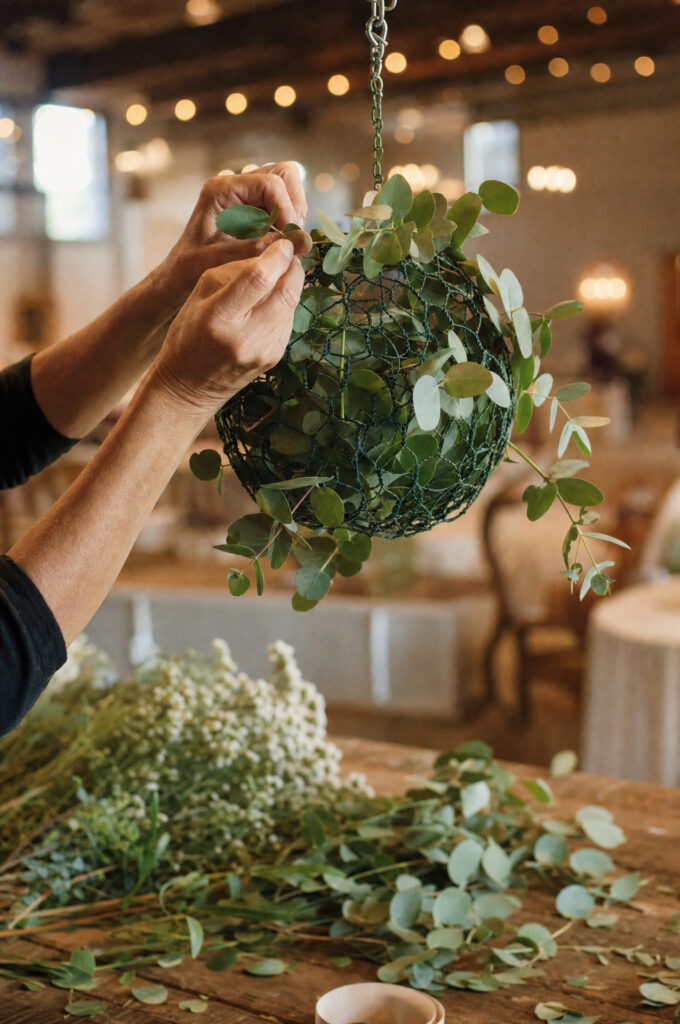
This is where most people get tripped up. They start adding flowers before the structure is solid. Work through this sequence, and you’ll have a much better result.
1. Set your base. Attach your foam cage or chicken wire frame to your suspension point. Test the balance before you add anything. An uneven base becomes a bigger problem once there’s weight on it.
2. Establish the hang. Run your fishing line or ribbon through the frame and secure it. Check that it’s level. If you’re doing multiple points of suspension, adjust tension until the piece hangs flat.
3. Add greens first. Insert your trailing greenery before a single bloom goes in. The greens create your shape, your volume, and your frame. Blossoms fill in after.
4. Place focal flowers. Work from the center outward. Larger statement blooms anchor the design. Distribute them evenly so the piece looks balanced from multiple viewing angles. Remember, guests will see this from all sides.
5. Fill with accent flowers. Smaller blooms, berries, and filler flowers go in last. They close gaps and give the installation its finished, layered look.
6. Check the balance and mist the design. Walk around the piece. Look from below. That’s the angle most guests will see it from. Tuck any loose stems, mist lightly with water, and you’re done.
Keep It Hydrated and Keep It Light
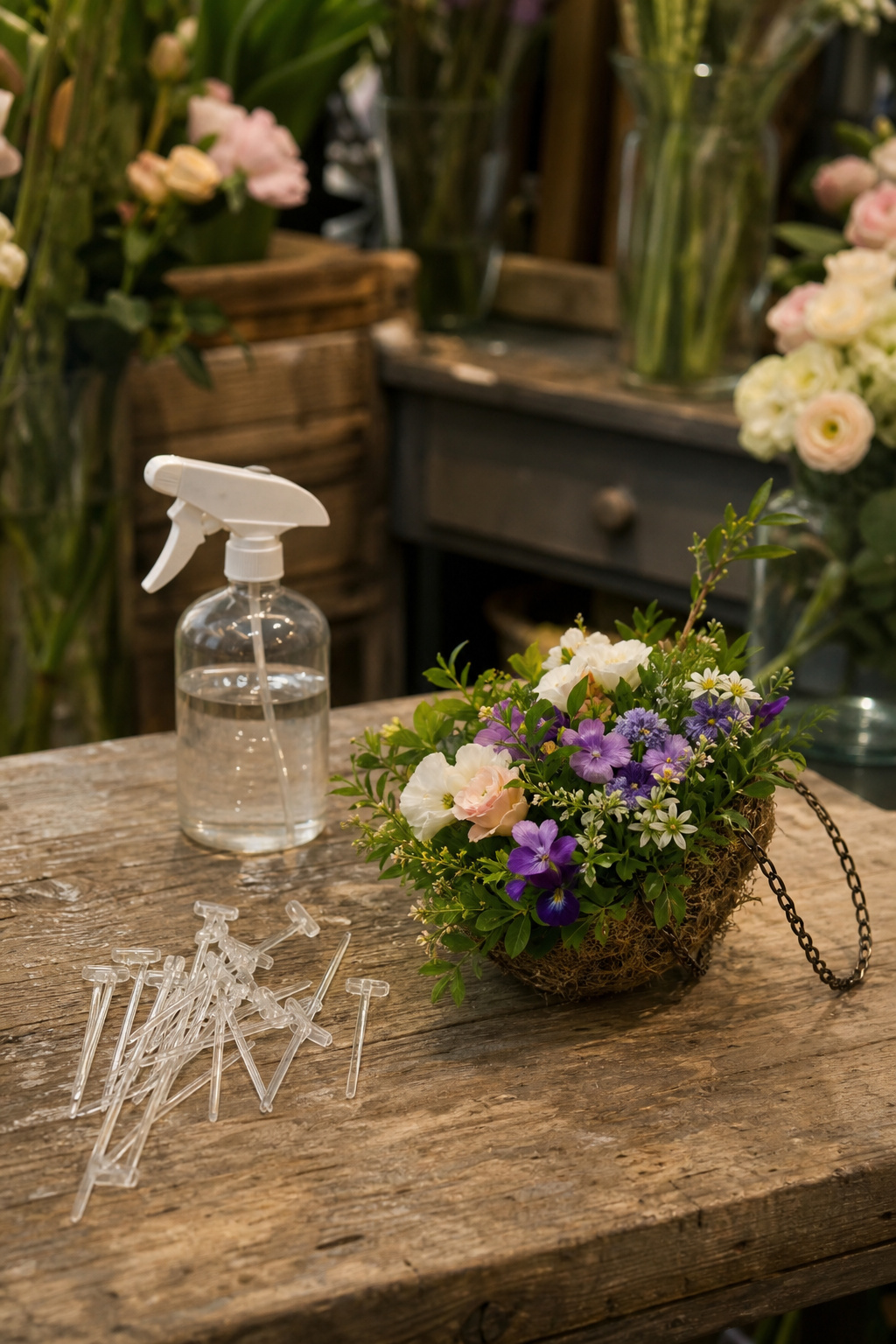
Two things that matter more than most people expect: weight and water.
Wet foam is heavy. A large installation on fully saturated foam can put real strain on your anchor point. If weight is a concern, use water picks in the stems instead of a foam block. It gives you hydration without the bulk.
For the suspension itself, clear fishing line is my first choice. It disappears visually, creating that effect where the flowers seem to float. Wire works if you need more structural support. Ribbon adds a decorative element, but stretches more over time.
One trick I’ve used: tuck a folded damp paper towel or small water pick into dense greenery to keep that area hydrated without adding visible bulk. It buys you a few extra hours on a hot reception day.
And plan your installation timing carefully. Build it as close to the event start as you reasonably can. Flowers hanging in a warm venue will open faster and fatigue faster than flowers in a cooler holding space.
Frequently Asked Questions
How many flowers do I need for a hanging floral installation?
More than you think. A modest 24-inch installation might use 30 to 50 stems once you factor in greens and filler. Larger cloud-style installations for events can run into the hundreds. Always buy extra. You’ll use it, and running short mid-build is stressful.
How do I keep a hanging floral installation fresh?
Hydration is the key. Use soaked floral foam, water picks, or small tubes of water solution. Mist the installation lightly before the event. Keep it away from direct sunlight and heating vents. Build it as close to the event start as possible.
Can I use fake flowers in a hanging installation?
Yes, and it’s a reasonable approach for certain situations like permanent installations, outdoor events in extreme heat, or anywhere long-term display matters more than the freshness of real blooms. Mix silk and fresh carefully; the textures and sheen are different enough to be noticeable up close.
What flowers hold up best in a hanging installation?
Sturdy focal flowers with thick petals perform best: roses, lisianthus, carnations, and chrysanthemums. Avoid delicate varieties like sweet peas or ranunculus for hanging work; they wilt faster, and petals drop. Eucalyptus, salal, and leather leaf are reliable greens that hold their shape well overhead.
Do I need a professional to install it?
Not necessarily, but you do need to be comfortable working overhead and confident in your anchor point. If you’re working in a venue you’re unfamiliar with, ask the coordinator about ceiling load limits and whether they allow attachments. Safety first, always.
Can I make a hanging installation without floral foam?
Yes. Chicken wire frames with water tubes or picks are a common alternative, especially for designers moving away from foam. It takes a little more time to secure individual stems, but it works well and reduces waste. The post on floral foam basics covers the foam-free options in more detail.
Closing Thoughts
A hanging floral installation is one of those projects that looks much harder from the outside than it actually is once you understand the process. The planning is what makes it work. Get the structure right, source enough flowers, build in the right order, and the design almost takes care of itself.
I’ve seen DIY brides pull off installations that genuinely rivaled professional work. The difference was always preparation, not talent. Start with a solid plan, and you’ll be in good shape.
If you’ve tried a hanging installation yourself, or if you have questions about a project you’re planning, drop a comment below. I’d like to hear how it goes.
Til next time,