Disclosure: This post may contain affiliate links. If you click and buy, we may earn a commission at no extra cost to you. As an Amazon Associate, we earn from qualifying purchases.
Last Updated: July 11, 2026
A bride asked me a few years back if it was strange to skip flowers on her guest tables entirely. Her venue was already dripping with greenery, and she didn’t want to pay for centerpieces nobody would really look at.
It wasn’t strange. Some of the best tables I’ve ever set had no flowers on them at all. Non-floral centerpieces aren’t a consolation prize for a tight budget. Done right, they’re a real design choice.
Build Height With Candles, Not Just Flowers
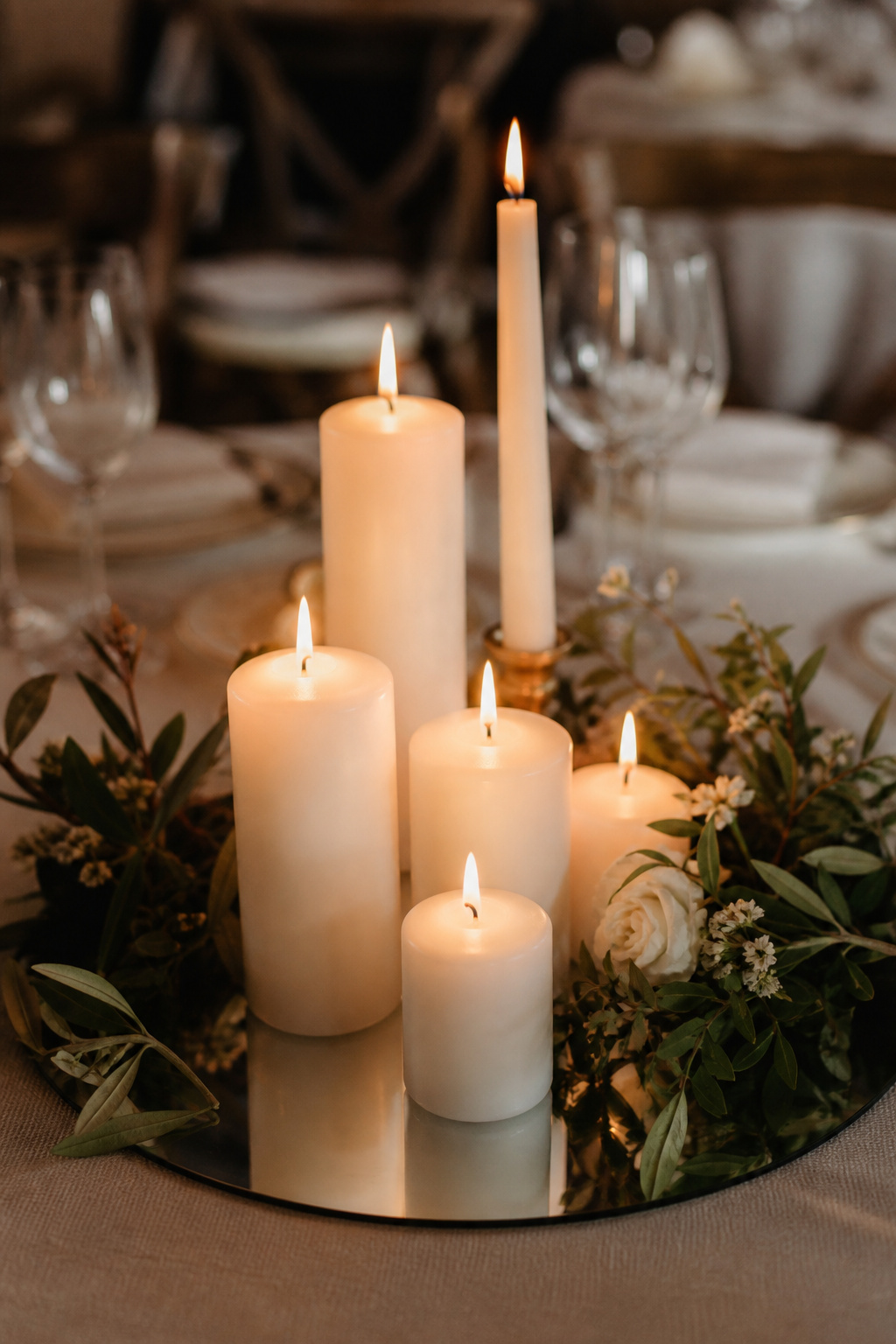
Candles do most of the heavy lifting in a non-floral centerpiece, and they’re the cheapest way to add both height and light to a table.
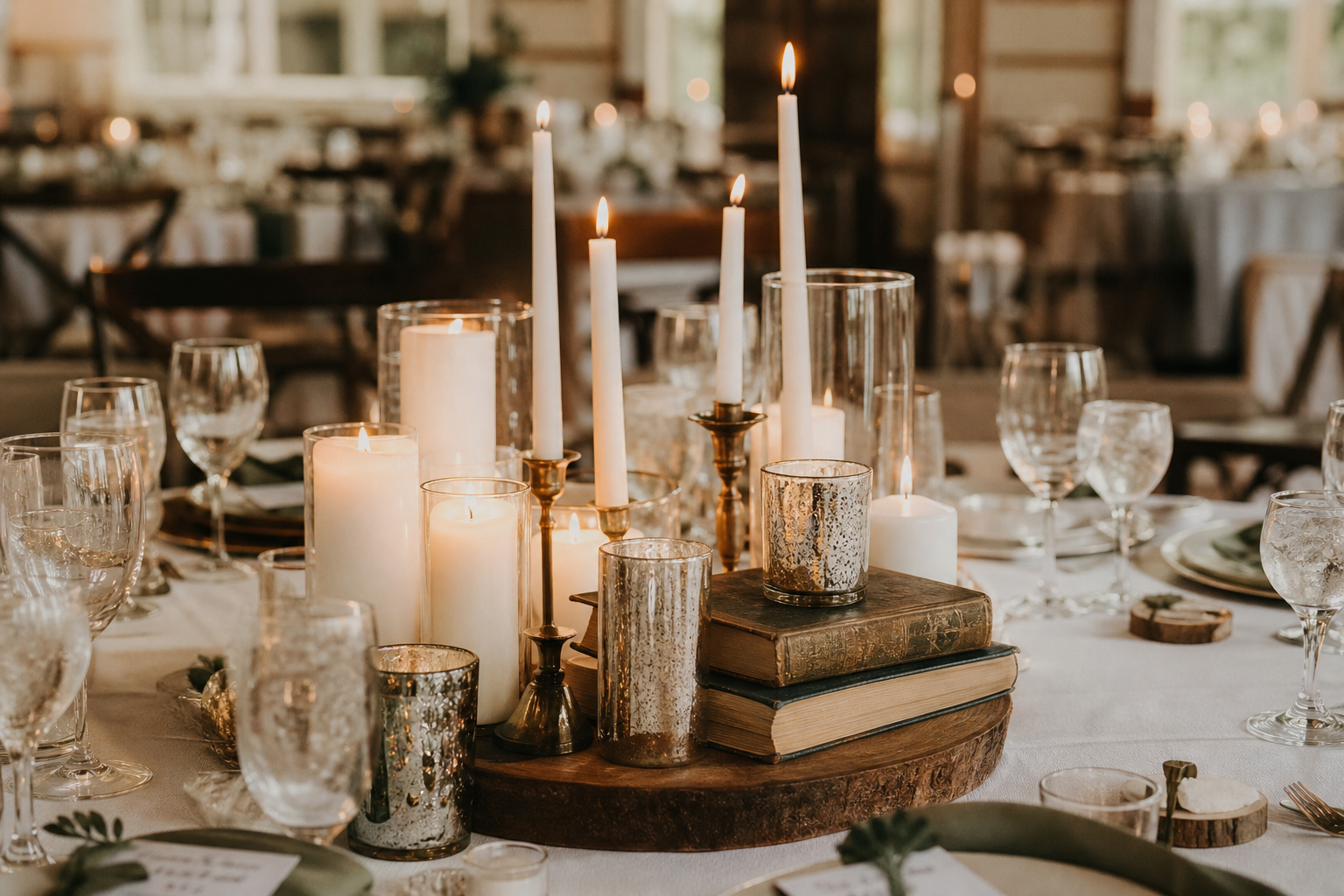
Mix candle heights the same way you’d vary stem heights in a bouquet. A cluster of three pillar candles at different heights, or a single tall taper flanked by a scatter of votives, reads as intentional in a way that a row of matching candles never does. Grouping in odd numbers works here too, just as it does with flowers.
If you’re worried candles look bare or unfinished without flowers around them, don’t be. A cluster of candles at varied heights on a mirror or wood slab already reads as a finished centerpiece. Adding greenery is optional texture, not a requirement.
Handle Open Flame Safely at a Long Reception
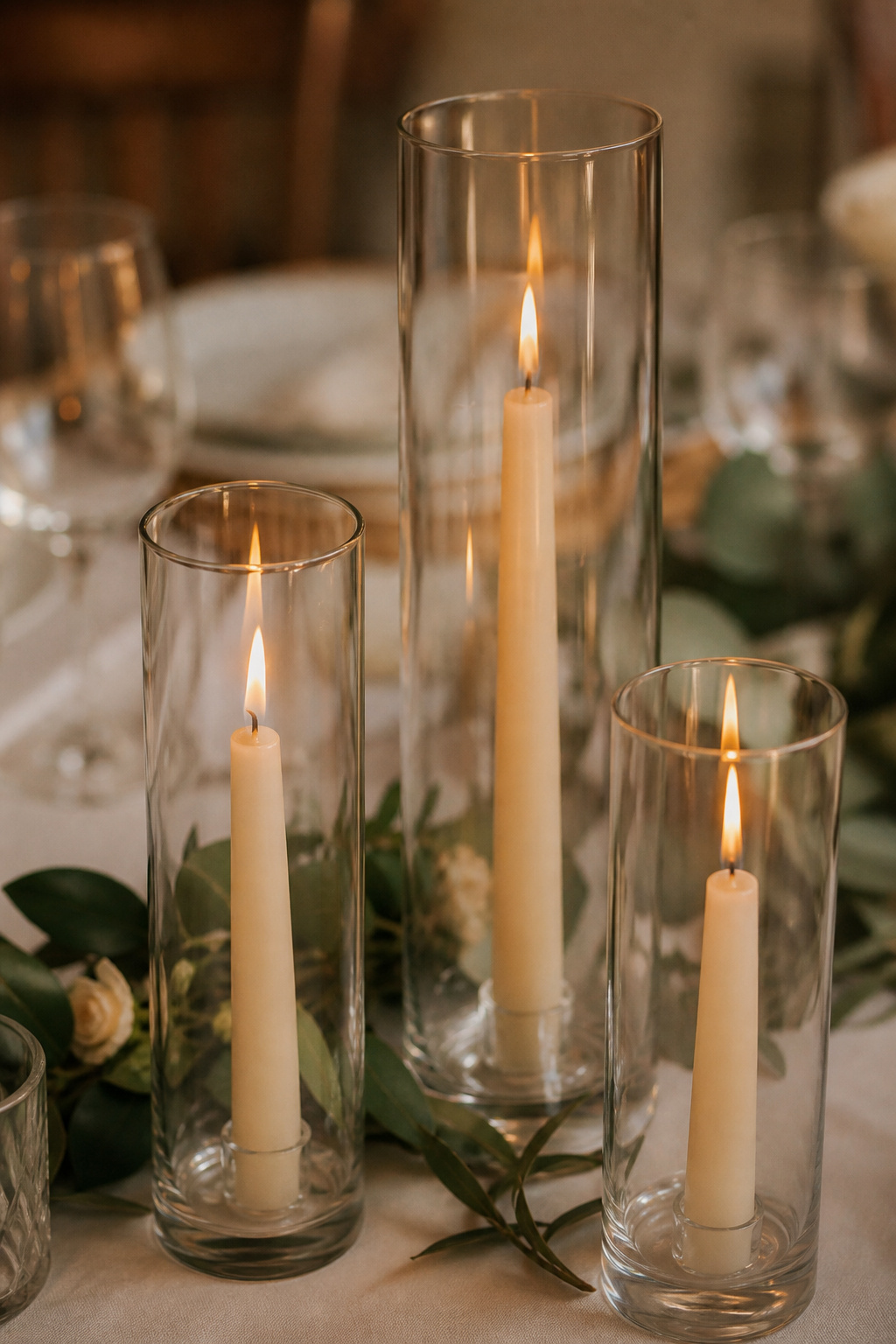
Candles at a reception table sit lit for hours, often near tablecloths, floating centerpieces, and guests who’ve had a drink or two. That’s worth planning for before the day, not during it.
Keep any open flame at least a few inches from linens, greenery, or anything else that could catch. Hurricane glasses or lanterns around taper candles solve most of the risk in one move, and they also protect the flame from getting blown out by an open venue door or an outdoor breeze. If the venue allows it, flameless LED candles do the job with zero risk, and modern versions are convincing enough that most guests won’t clock the difference from across a table.
Check your venue’s fire code before you commit to open flame. Some venues require enclosed candles only, and finding that out the week of the event is a bad time to redesign your tables.
Use Objects That Already Mean Something
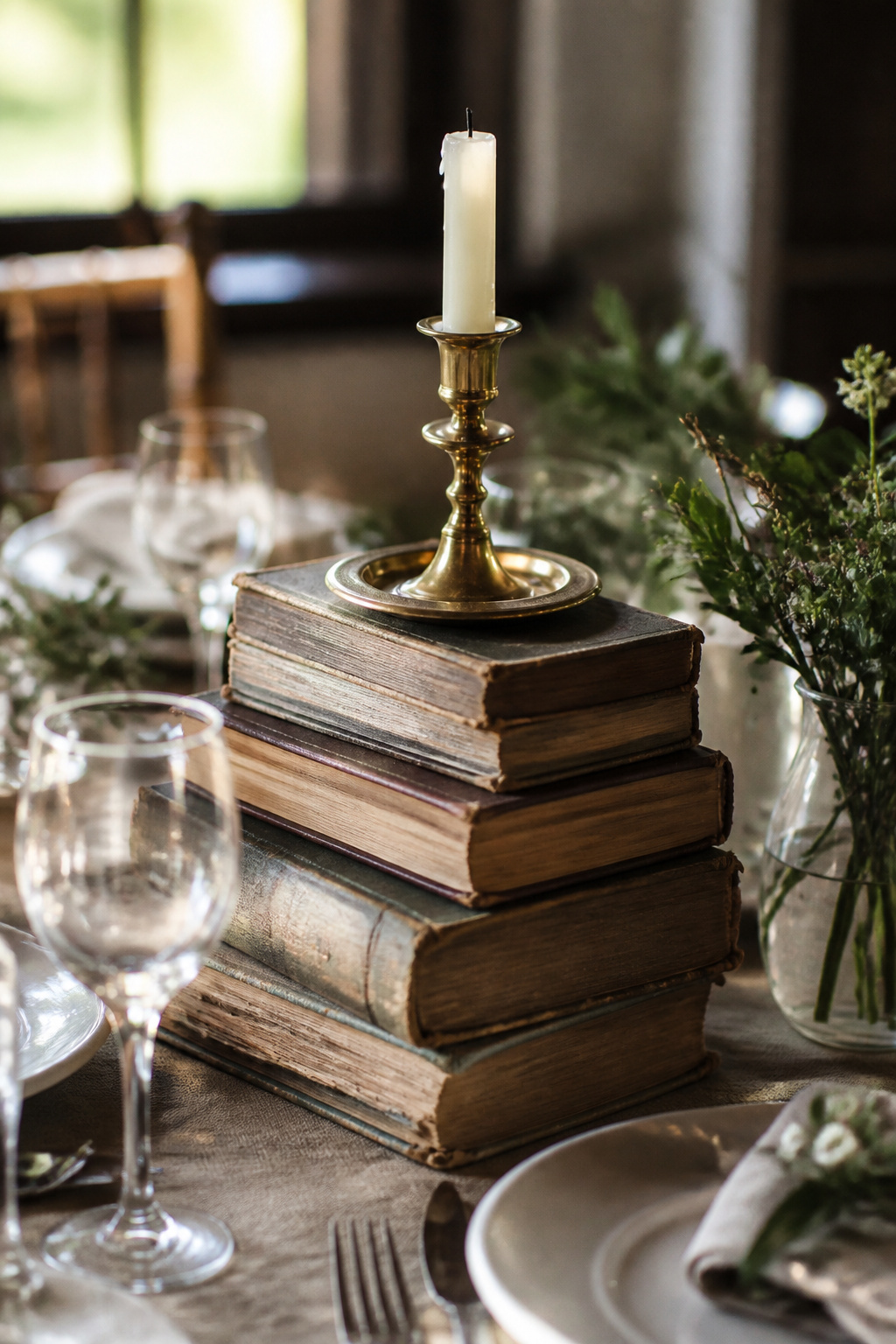
The best non-floral centerpieces I’ve built usually start with an object, not a color scheme. Stacked vintage books, brass candlesticks, geode slices, a collection of mismatched mercury glass, a bowl of seasonal fruit. Anything with texture and a story behind it works.
This is where a couple can put something genuinely personal on the table instead of a rented arrangement. A stack of the groom’s grandfather’s books. A collection of bottles from where the couple first met. Guests notice objects like that in a way they never notice a centerpiece that looks like every other wedding they’ve been to.
Throughout my time at the design bench, the tables people remember are rarely the ones with the most expensive flowers. They’re the ones that felt like the couple.
Add a Small Greenery Touch If You Want It
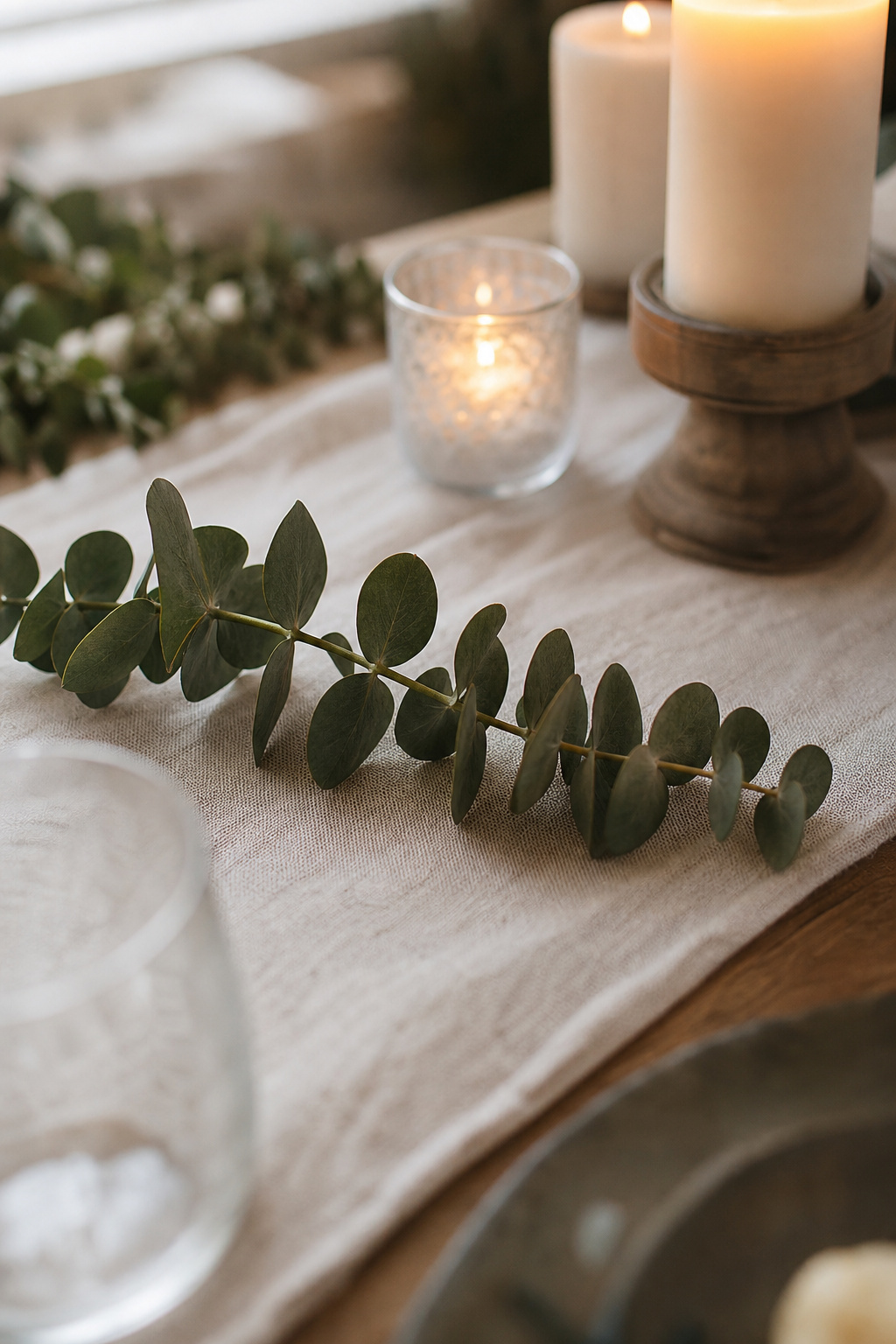
A centerpiece doesn’t have to be all-in on no flowers. A trailing sprig of eucalyptus laid flat along the table, a few loose sprigs of rosemary tucked near the candles, or a single stem in a bud vase can soften a non-floral setup without turning it into a floral centerpiece by another name.
The line I use with brides: if you can remove the greenery and the centerpiece still works, you’ve built a true non-floral table with a floral accent. If removing it leaves the table looking bare, you’ve actually built a floral centerpiece with fewer flowers in it. Both are fine. Just know which one you’re going for.
Know What You’re Actually Saving
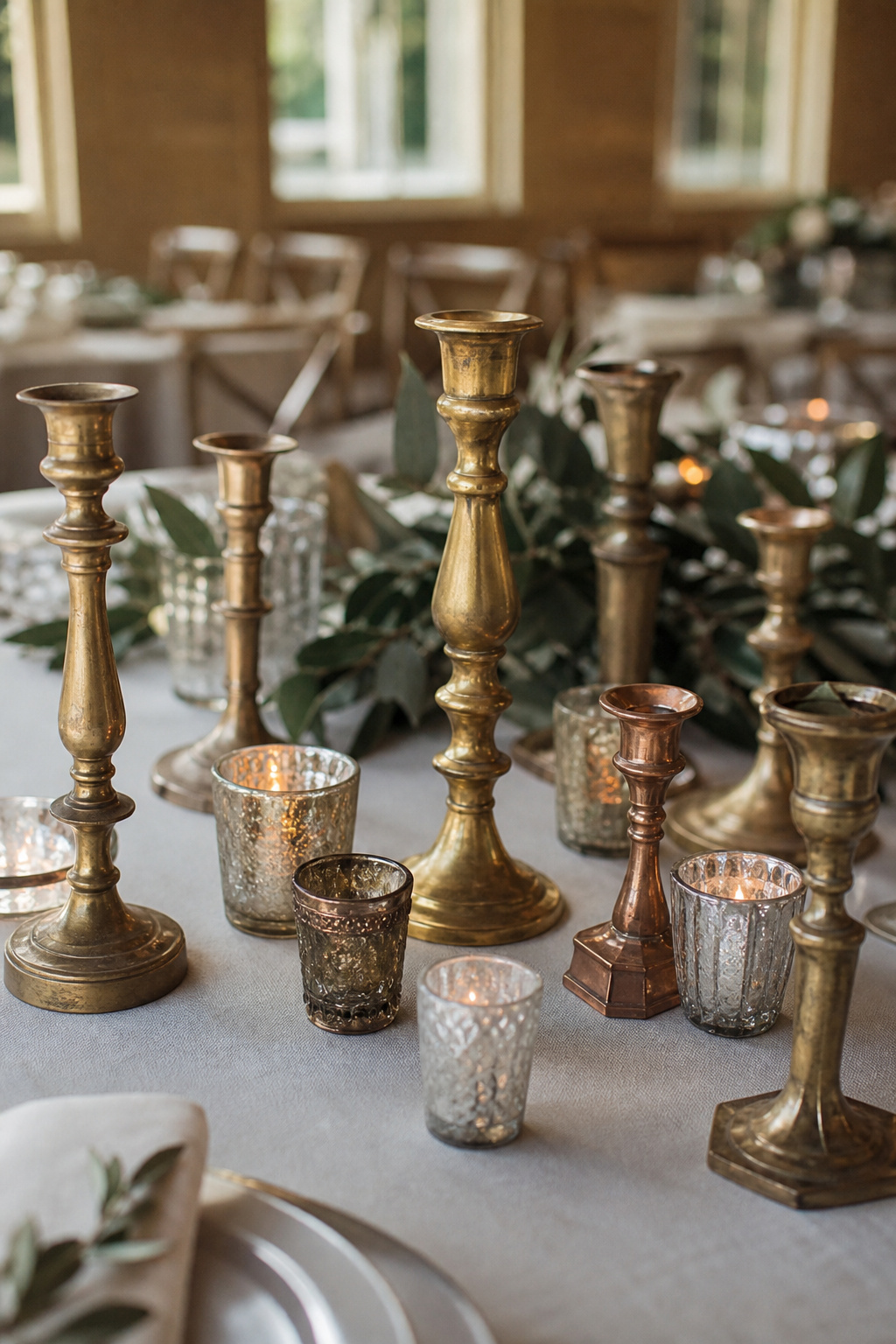
Non-floral centerpieces are often cheaper than floral ones, but not automatically. Vintage books, brass candlesticks, and mercury glass add up fast if you’re buying rather than sourcing secondhand, and a table full of quality candles isn’t free either.
Where the real savings usually come from is rental and reuse. Candlesticks, books, and vases can be sourced from thrift stores, borrowed from family, or reused from the ceremony to the reception, none of which is true of fresh flowers. If you’re weighing this against a full floral budget, our guide to negotiating with wedding vendors has more on where flower dollars actually go furthest, which makes it easier to see where a non-floral table genuinely saves you money.
Frequently Asked Questions
Are non-floral centerpieces actually cheaper than flowers?
Often, but not automatically. The real savings come from sourcing secondhand and reusing items rather than buying everything new. A table of purchased brass candlesticks and fresh candles can cost as much as a modest floral centerpiece. Thrifted or borrowed objects are where the actual savings show up.
Is it safe to use real candles at a wedding reception?
Yes, with reasonable precautions. Keep the flame a few inches from linens and greenery, use hurricane glasses or lanterns to contain the flame, and check your venue’s fire code ahead of time since some require enclosed candles only. Flameless LED candles remove the risk entirely if the venue allows or requires them.
What are good non-floral centerpiece ideas for a rustic wedding?
Stacked vintage books, wood slabs, mercury glass candle clusters, and lanterns all fit a rustic look well. Mixing candle heights adds the visual interest that flowers usually provide, and a few sprigs of rosemary or eucalyptus laid along the table can soften the look without turning it into a floral centerpiece.
Can I mix candles and a small amount of greenery?
Absolutely, and it’s a common approach. A useful test: if you could remove the greenery and the centerpiece still looks finished, it’s a true non-floral table with a floral accent. If taking it away leaves the table looking bare, you’ve built a floral centerpiece with fewer flowers rather than a non-floral one.
How do I add height to a non-floral centerpiece?
Vary your candle heights the same way a florist varies stem heights, mixing tall tapers with shorter pillars and votives. Stacked books or a tiered stand can also add height. Grouping items in odd numbers, three or five, tends to look more intentional than an even, symmetrical arrangement.
Where can I find affordable items for non-floral centerpieces?
Thrift stores and estate sales are the best source for mismatched candlesticks, mercury glass, and vintage books at a fraction of retail cost. Borrowing from family is another good option, and it often adds more sentimental value than anything you could buy new.
Closing Thoughts
A non-floral centerpiece isn’t a smaller version of a floral one. Done well, it’s its own design choice, built on height, light, and objects that actually mean something to the two people getting married.
Flowers aren’t required to make a table feel finished. Sometimes a lit candle and a stack of well-loved books do the job just fine.
Are you leaning toward floral, non-floral, or somewhere in between for your tables? Tell me in the comments. I read each one.
Til next time,