Disclosure: This post may contain affiliate links. If you click and buy, we may earn a commission at no extra cost to you. As an Amazon Associate, we earn from qualifying purchases.
Last Updated: September 2026
A bride came into the shop one December, maybe ten days before her wedding, with a photo on her phone of a lush burgundy bouquet she’d saved from Pinterest. Deep dahlias, cascading amaranthus, dark hypericum berries. It was a beautiful arrangement, no question. What she hadn’t accounted for was that dahlias aren’t a reliable winter flower. They peak in late summer and fall. By December, you’re hunting for them.
We found what she needed, but it took some scrambling. The whole thing could have been easier with a little planning and a better understanding of what winter actually offers.
And winter offers quite a bit, if you know where to look. The ideas below cover seven directions worth considering, some classic, some a little unexpected. None of them requires a florist to move mountains.
Go Classic With White Flowers and Pine
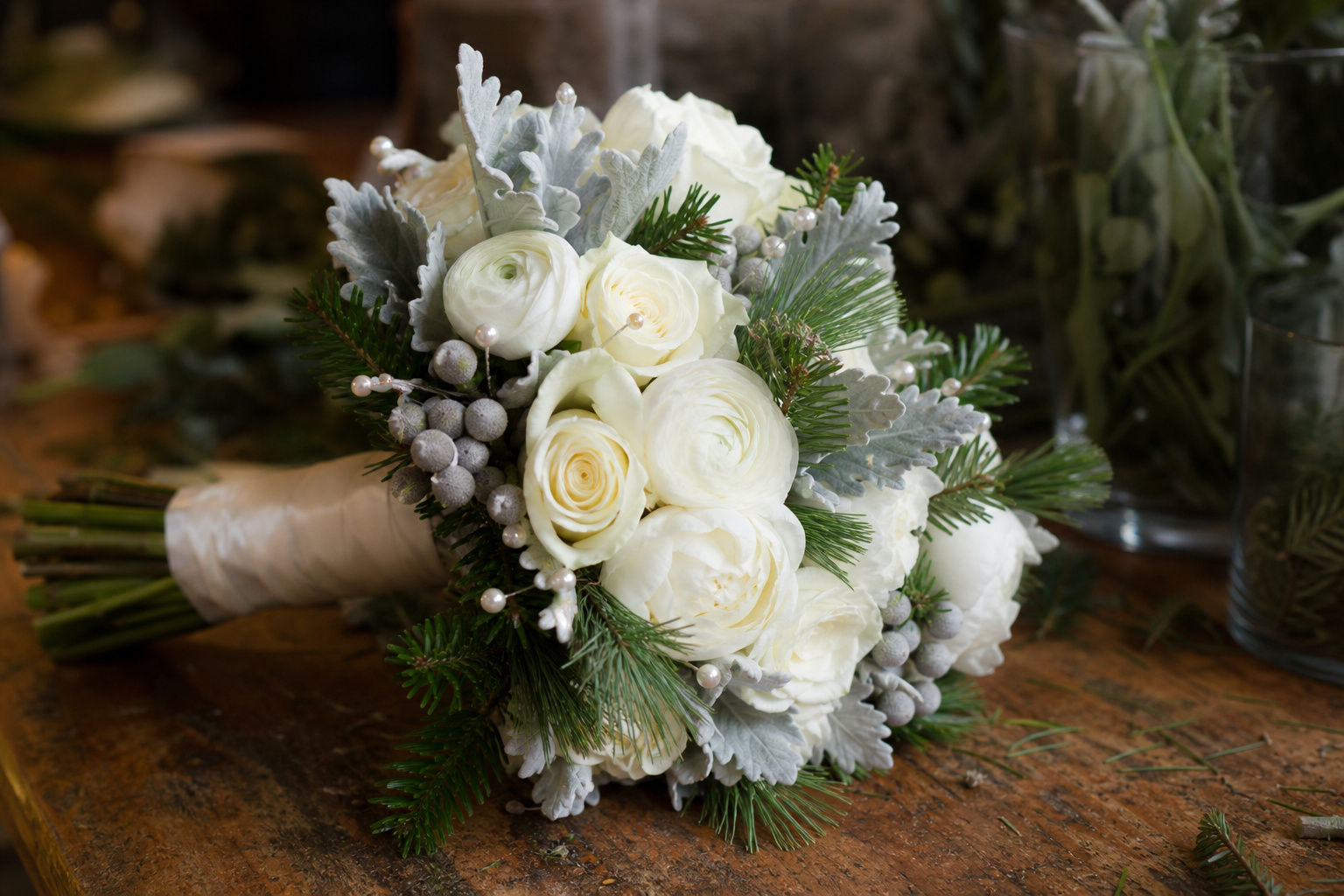
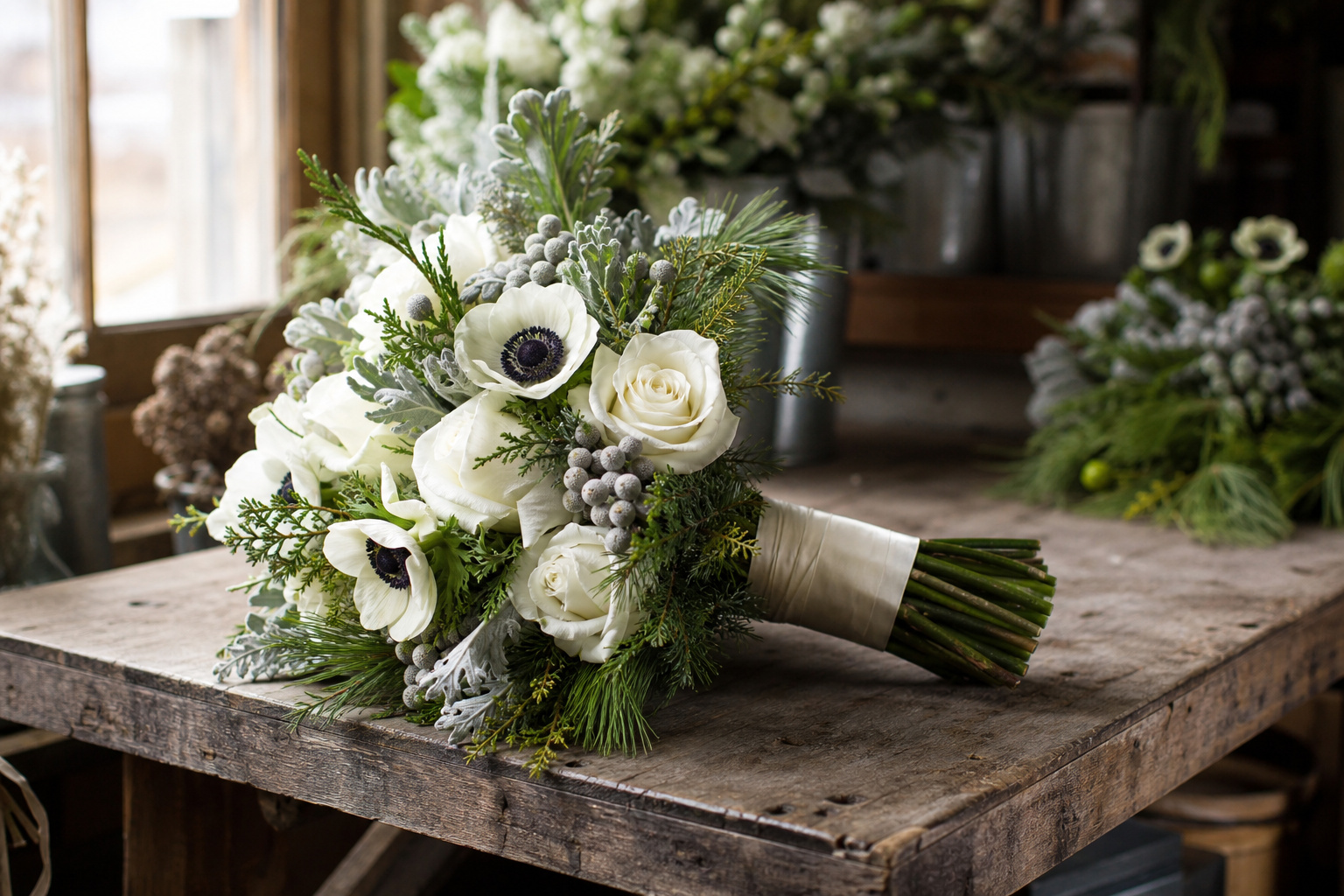
White flowers and evergreens are the most reliable combination in winter floristry. Roses, ranunculus, and anemones are all available year-round from wholesale suppliers, and they hold up well in cold conditions. Pair them with fresh pine sprigs, eucalyptus, or cedar, and you’ve got a bouquet that looks seasonal without depending on anything temperamental.
Dusty Miller and silver brunia are worth adding if you want that frosted, textured look without glitter or spray paint. Both are inexpensive and widely available in winter. White snowberries, when you can find them, add a nice finishing touch, like little pearl accents tucked into the arrangement.
For the wrap, ivory silk ribbon and pearl-headed pins are our standard choice. Simple and clean. A bouquet like this photographs well in any light, which matters when your florist is working with a December venue.
What I use in the shop: Silver brunia stems hold their shape and silver color for days without water. I use them in winter arrangements when I want that frost effect without fuss.
Try Rich Burgundy Berries for Drama
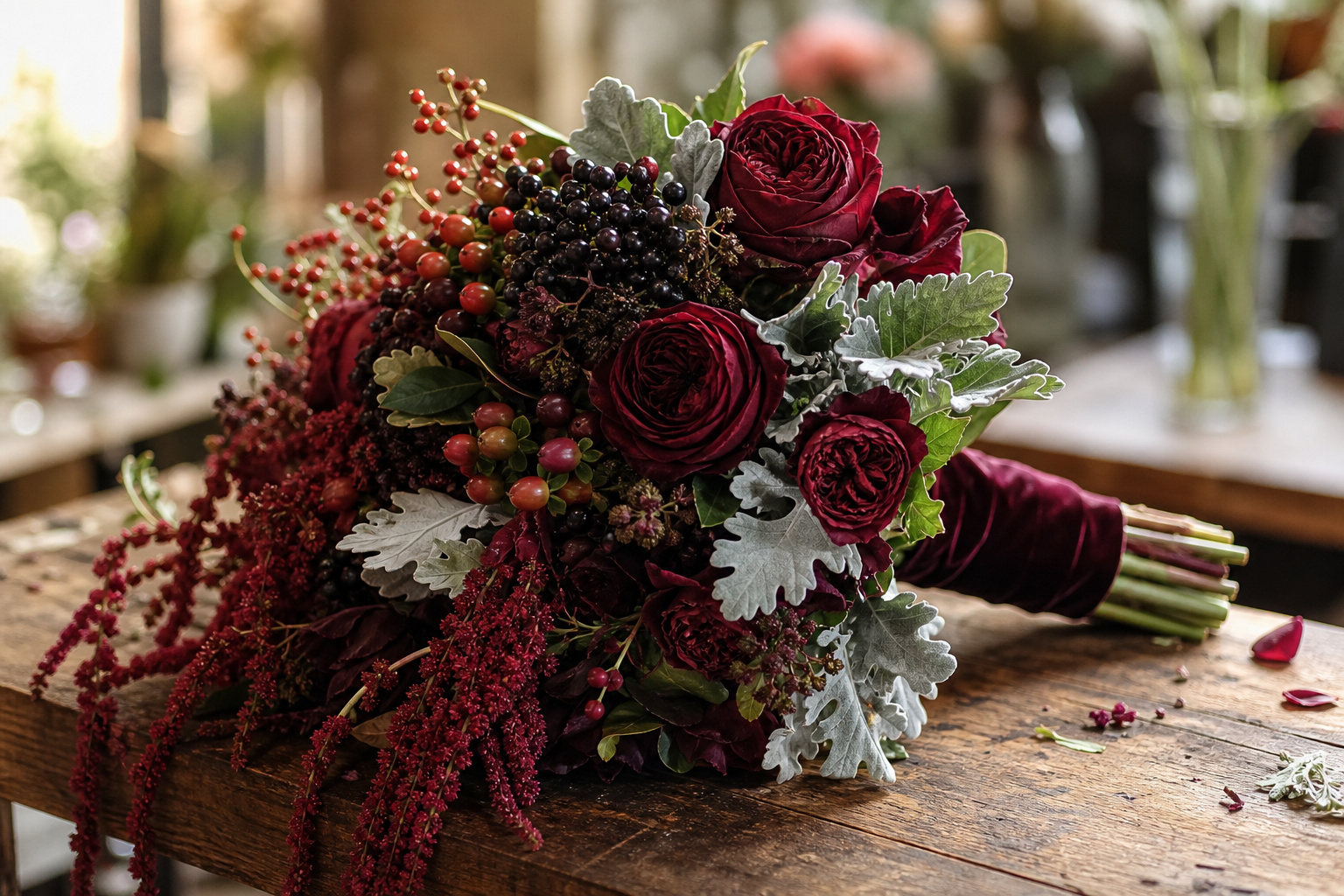
Burgundy is one of the better color directions for winter, partly because it actually works with the season rather than fighting it. Deep red hypericum berries, dark viburnum, and ruby winterberries are genuinely available in winter, and they’re reasonably priced. They anchor a bouquet the way large focal flowers do, without requiring you to source something out of season.
Mix in garden roses or ranunculus in wine and burgundy tones for real depth. Add cascading amaranthus if your florist can source it. It creates movement that photographs especially well. Dark foliage like burgundy leucadendron or smokebush leaves pulls the palette together.
A few stems of silver brunia or dusty miller keep it from reading too dark. Think of them as the frost on a winter morning. They lighten the palette just enough without softening the drama.
Velvet ribbon in a matching wine or burgundy is the right finish here. It’s one of those details that looks expensive, but it isn’t.
For more moody, jewel-toned bouquet ideas, that post covers the color territory in more detail.
Discover beautiful wholesale winter wedding flowers at GlobalRose. Shop fresh roses, hydrangeas, carnations, and more in bulk for winter weddings, bouquets, centerpieces, and floral arrangements at affordable prices.
As an affiliate, we earn on qualifying purchases.
Consider Frosted Succulents and Crystal Accents
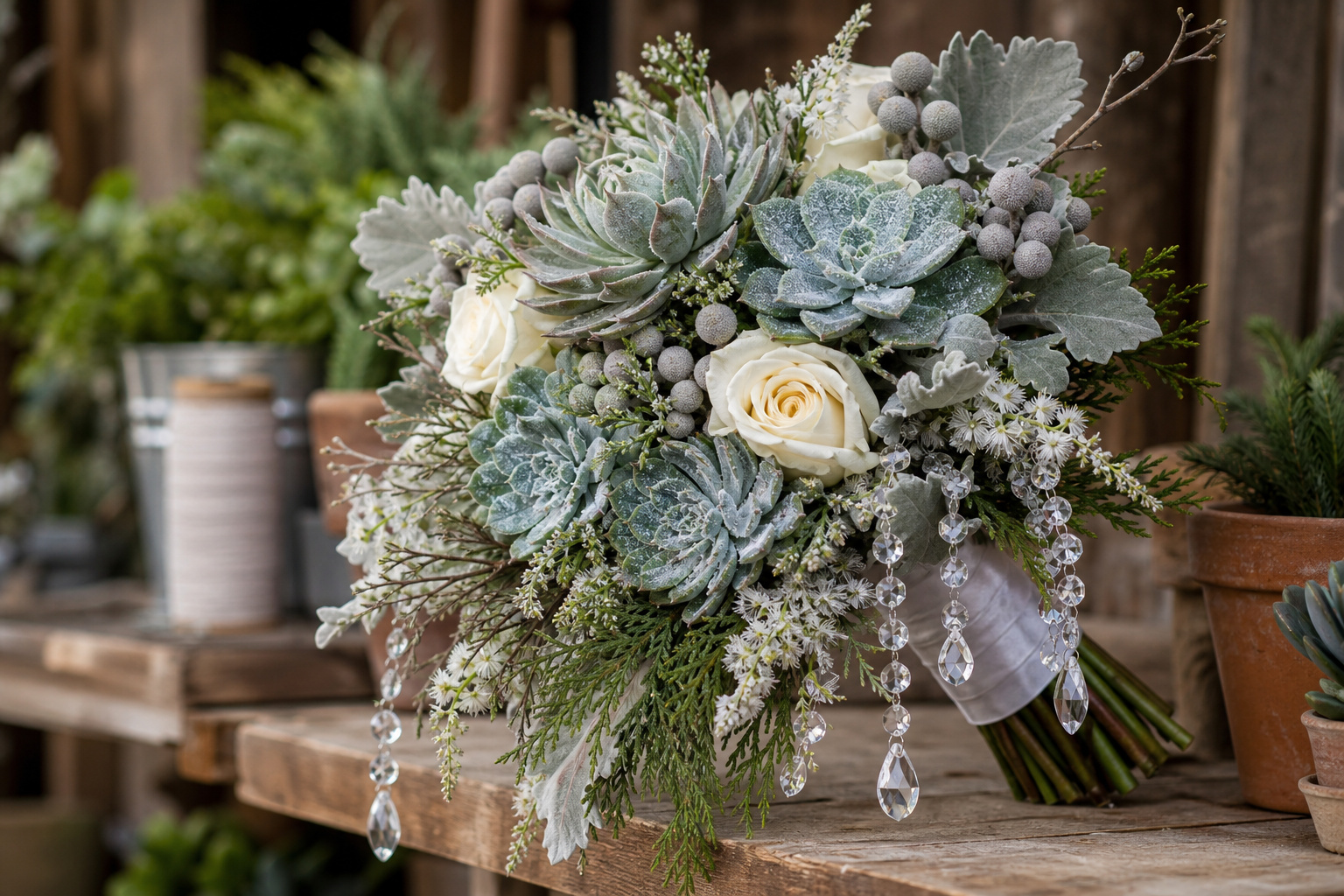
This one works better than it sounds on paper. Succulents are easy to wire; they hold up without water for hours, and a light frost spray gives them an icy look that’s genuinely striking in person. They’re also a practical choice. Unlike cut flowers, a wired succulent won’t wilt by the time photos are done.
Pair frosted succulents with Dusty Miller, silver brunia, and some hanging crystal strands or crystal-wrapped wire tendrils. The crystals catch light with every step, creating movement that works especially well for contemporary winter weddings or venues with metallic accents.
This approach suits couples who want something modern and a little architectural: less garden-casual, more composed. It also mixes well with other elements if you want cohesive winter wedding floral decor from bouquet to centerpiece.
What I use in the shop: Floral frost spray gives succulents and foliage that icy finish without making them look spray-painted. A light pass from a distance is all it takes.
Work With Dusty Blue Tones
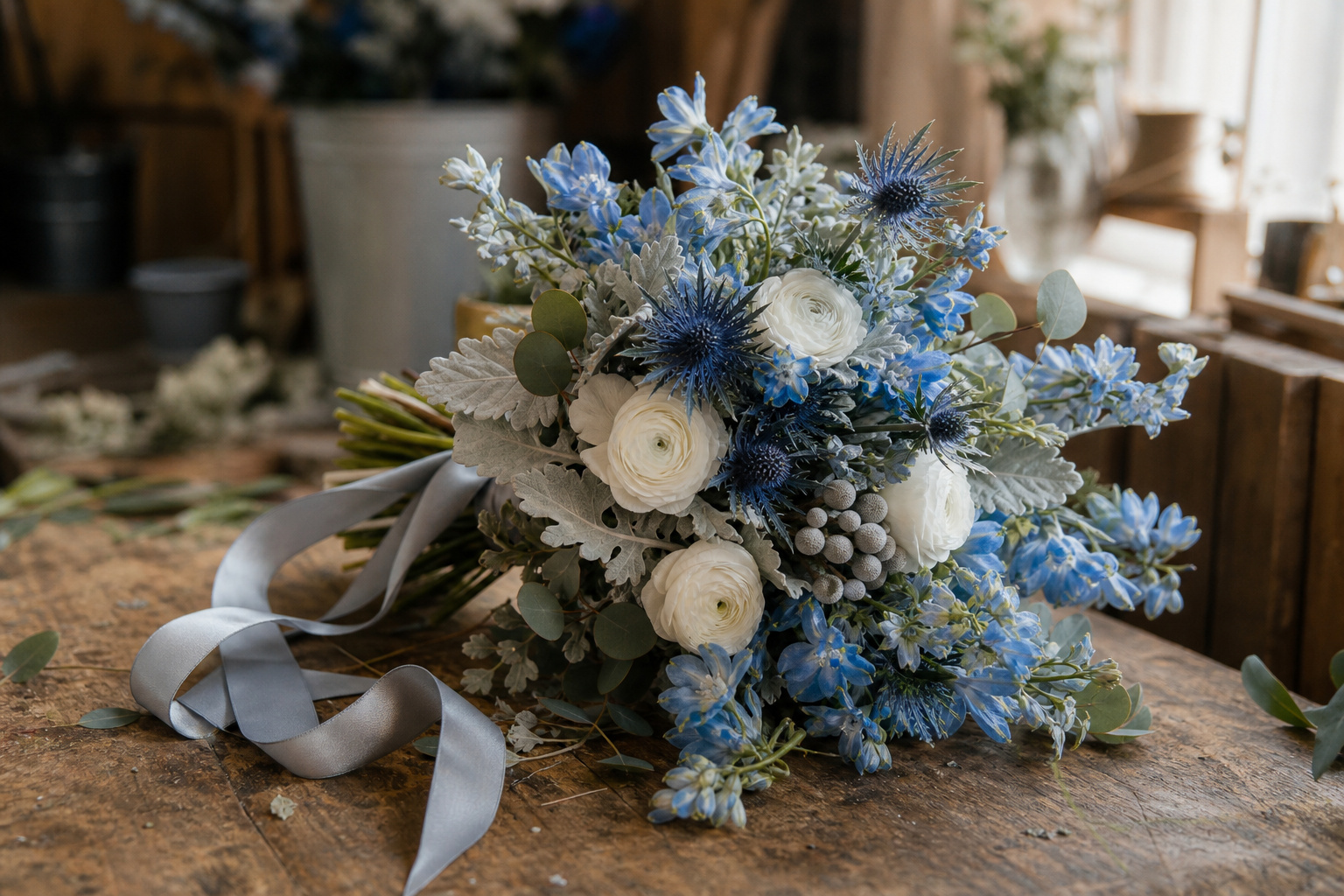
Blue thistle, delphinium, and hydrangea are the starting point here. Blue thistle is one of my favorites in winter arrangements. It’s spiky and architectural, holds well after cutting, and the color is genuinely unusual in a bridal bouquet. Delphinium adds height and drama. Hydrangea fills volume.
Silvery brunia berries and eucalyptus build out the texture. White ranunculus or anemones as focal points keep the arrangement from reading too monochromatic. Pale blue tweedia and nigella add delicacy if your florist can source them. They’re not always available, but worth asking about.
The key with blue palettes is layering shades rather than matching them exactly. A dusty slate blue hydrangea next to a vivid blue thistle creates more visual interest than two flowers of identical tone.
Dusty Miller foliage is almost mandatory here. The silver-gray leaves read as a third color that ties the blues together without competing with them. Finish with a chic silver-gray ribbon, and you’ve got a bouquet that’s cohesive from stem to bloom.
If blue is calling to you, these icy blue wedding bouquet ideas go deeper into the color palette options.
Build a Silver Anemone Arrangement
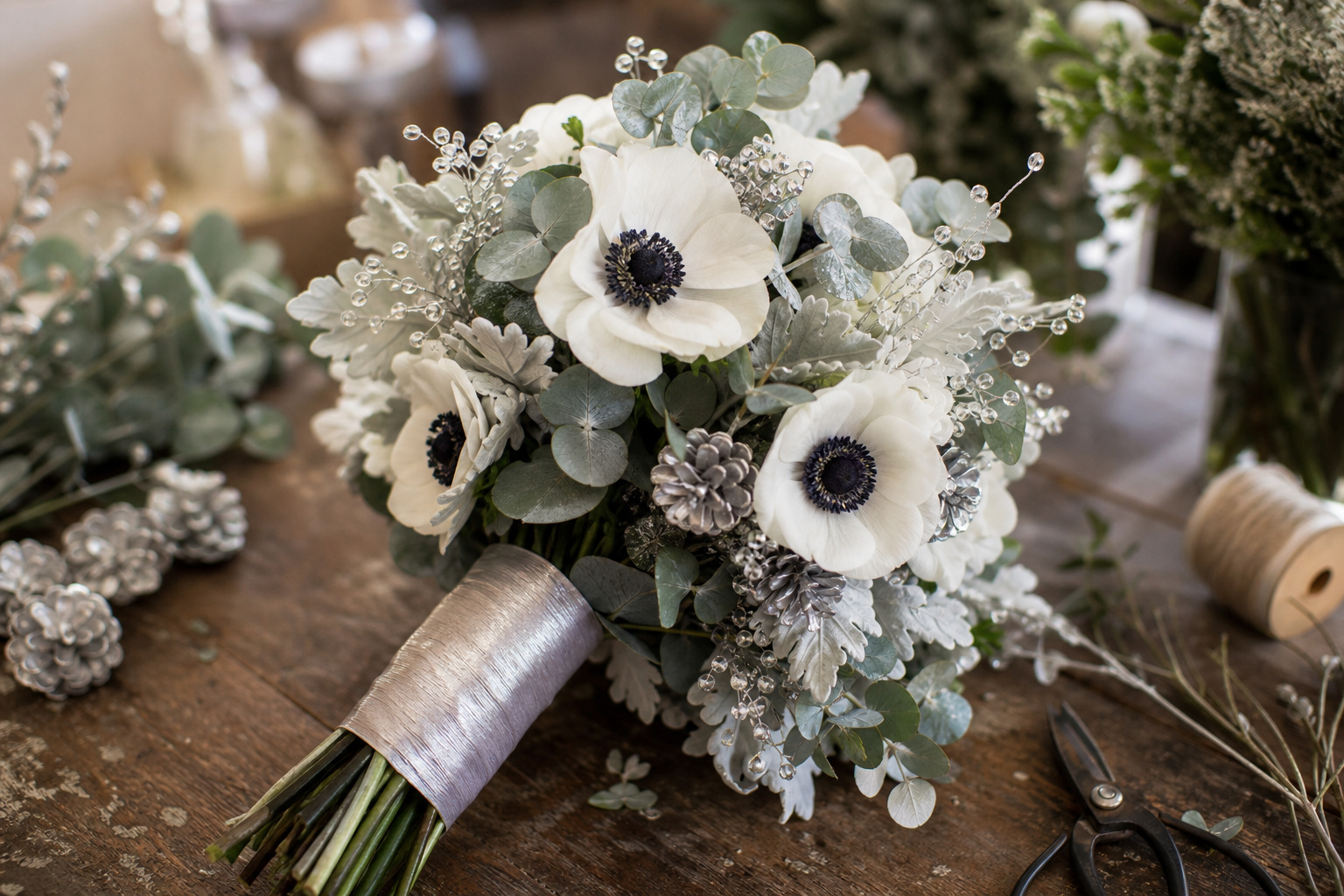
White anemones with dark centers are one of the more striking flowers in the winter palette. That dark eye in the center of a white bloom has a graphic quality that reads beautifully in photos and holds up well in person.
The silver direction plays off those dark centers well. Silver-dusted eucalyptus, Dusty Miller, silver-painted pinecones, and a pearl-to-silver shifting ribbon all keep the arrangement in the same register without making it feel matchy. Small crystal brooches or fine silver wire tucked between stems add sparkle at evening events; the kind that catches candlelight rather than looking like a craft project.
This is a good option for couples who want something that feels formal and winter-specific without going the obvious red-and-green direction. It reads elegant year-round but makes the most sense in December and January.
What I use in the shop: Silver-to-pearl ombre ribbon is the finishing touch that pulls this arrangement together. The color shift adds dimension without requiring a second ribbon color.
Pair Garden Roses With Pinecones
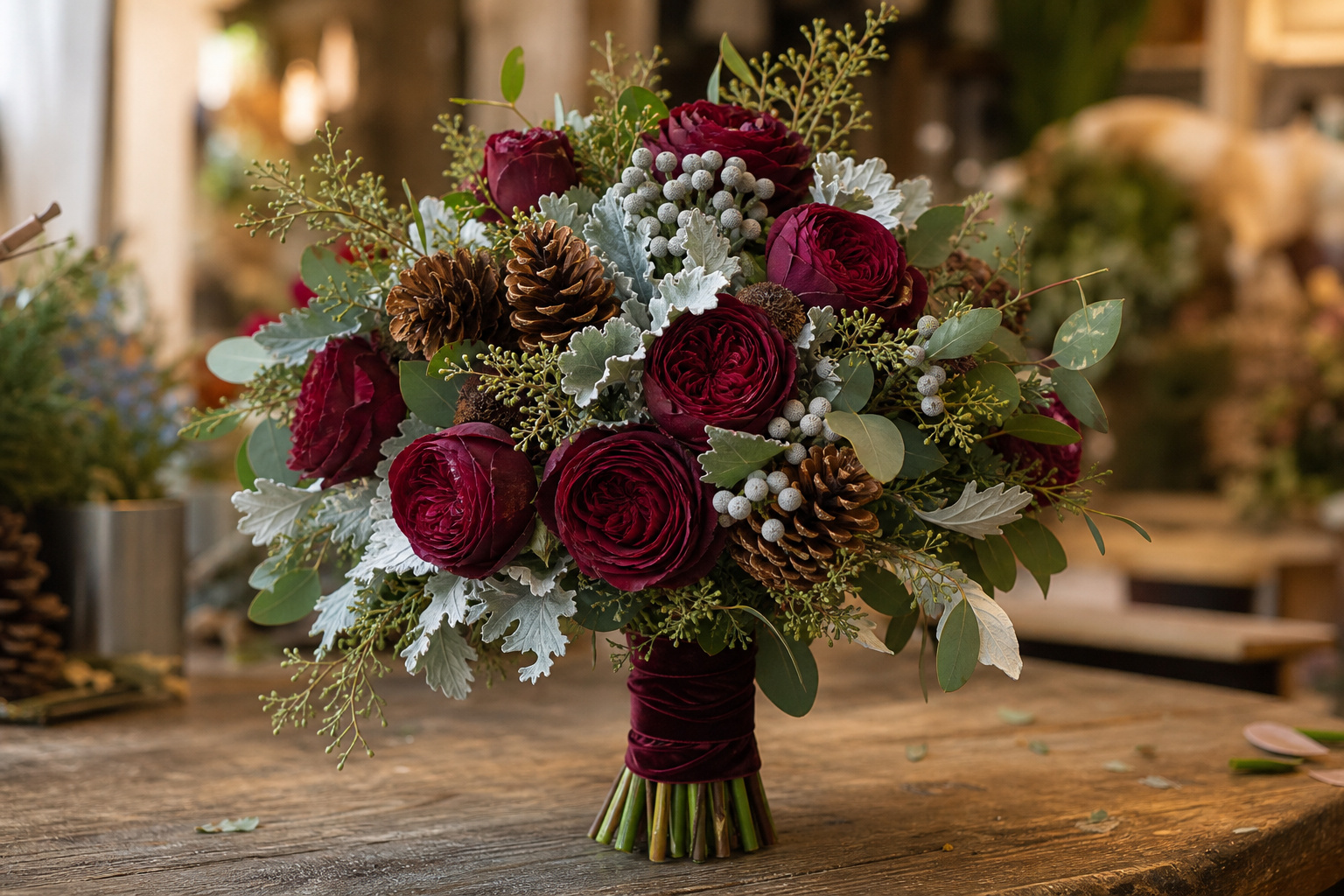
Pinecones are underused in wedding floristry. They’re free if you gather them yourself, widely available, and they hold up indefinitely, without water, without wilting. Wired into a bouquet rather than glued, they stay put and can be positioned exactly where you want them.
Garden roses in deep burgundy, soft blush, or creamy ivory are your floral anchor. Add silvery brunia berries and evergreen sprigs for seasonal texture. Adding eucalyptus or Dusty Miller between the roses and pinecones creates flow. Without it, the arrangement can feel a little blocky.
Pinecones can be natural for a rustic look or given a light dusting of metallic paint for something a little more dressed up. Either approach works. The choice comes down to the overall wedding aesthetic.
Velvet ribbon completes the winter-luxe direction. Burlap works if you’re going fully rustic. Both are inexpensive finishing touches that change how the whole arrangement reads.
Go Bold With Jewel-Toned Seasonal Flowers
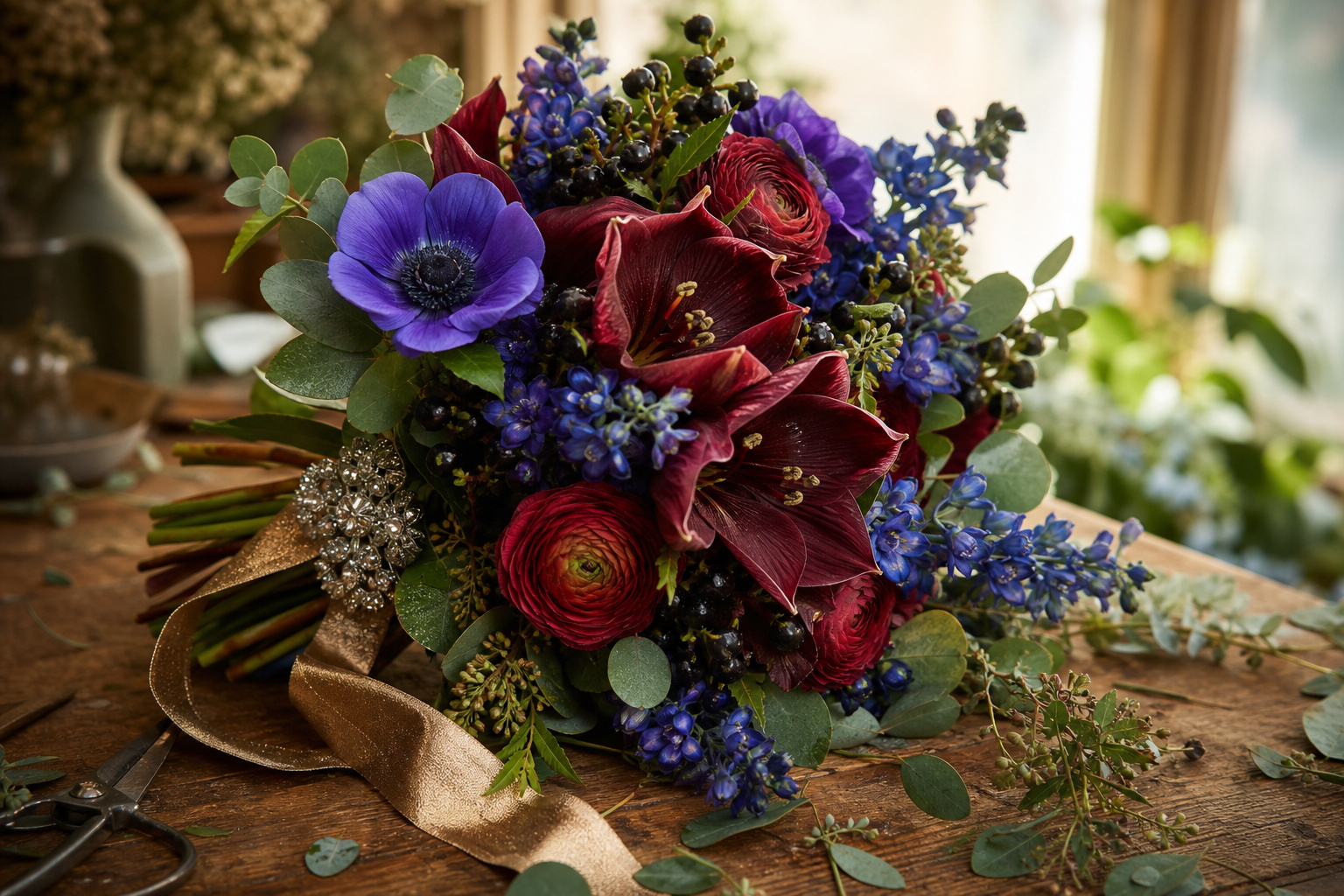
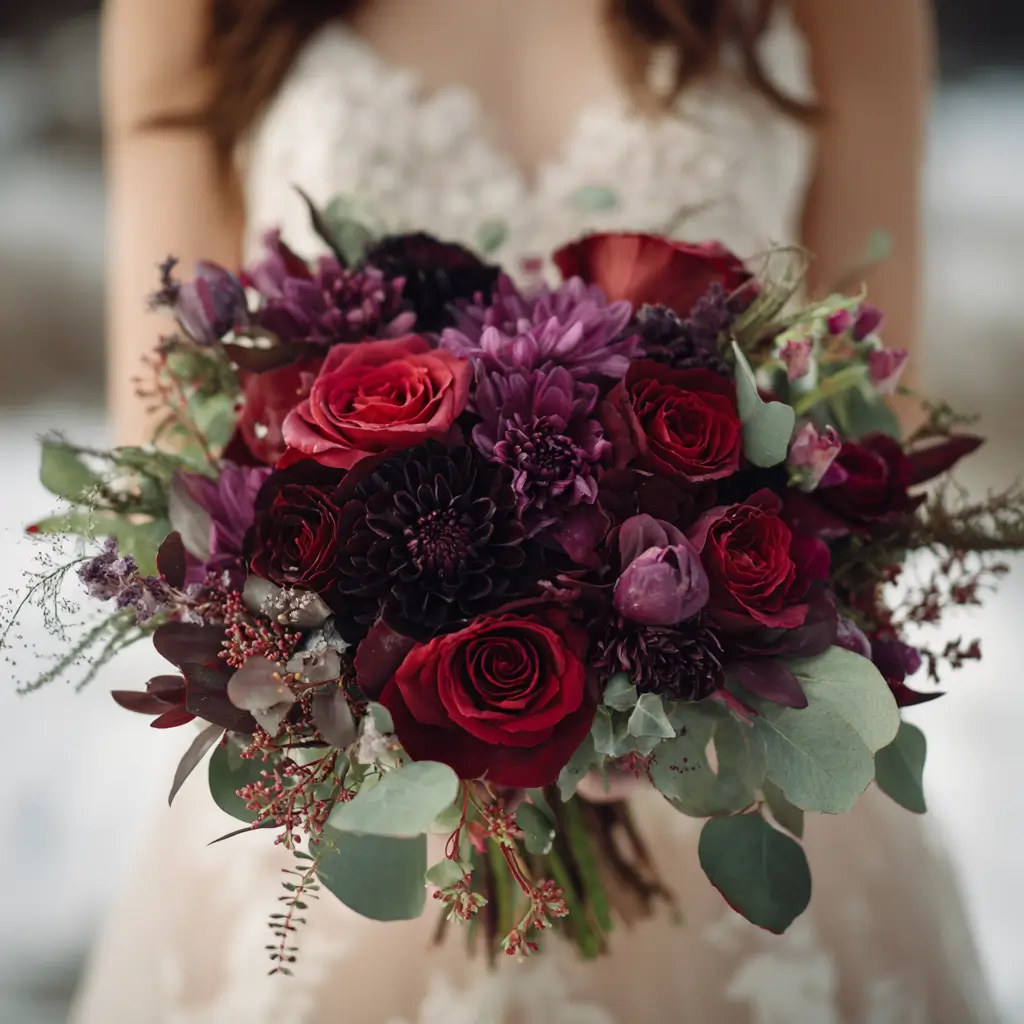
Jewel tones, deep purples, ruby reds, sapphire blues, and emerald greens are well-suited to winter. The season’s low light and muted backgrounds make saturated color pop in a way it doesn’t in summer. Worth considering if you want something visually dramatic.
Purple anemones, wine-colored dahlias (when available), ruby ranunculus, and dark blue delphinium give you the full jewel palette. Emerald eucalyptus and dark hypericum berries bring in the green tones. Garnet amaryllis is worth adding for texture and scale. It’s a big, sculptural bloom that anchors the arrangement.
One practical note on dahlias: they’re easiest to source in late summer through fall. By December, availability drops and price goes up. If dahlias are central to this direction, talk to your florist early and have a backup plan. Dark ranunculus or garden roses in similar tones can fill the gap.
Metallic ribbon and a crystal brooch finish the jewel-tone direction well. The combination looks intentional rather than thrown together, which is the goal.
For more ideas in this direction, Christmas wedding bouquet ideas cover rich, saturated color territory with holiday-specific options.
Frequently Asked Questions
What flowers are actually available in winter?
Roses, ranunculus, anemones, carnations, and chrysanthemums are available year-round from wholesale suppliers. Seasonal foliage like pine, eucalyptus, cedar, and Dusty Miller are easy to source in winter. Blue thistle, hypericum berries, and amaryllis are reliable winter options. Dahlias and peonies are trickier to source. If available, they will cost more, and quality is less predictable.
Do winter wedding bouquets cost less than summer ones?
It depends on what’s in the bouquet. Flowers that are genuinely in season in winter, certain foliage, berries, and carnations cost less than they would out of season. But if you’re requesting summer flowers like peonies or dahlias in December, you’ll pay a premium for them. The most budget-friendly approach is building around what’s actually available in winter rather than trying to replicate a summer bouquet.
How do I keep a winter bouquet from wilting in the cold?
Cold doesn’t wilt flowers. It slows them down, which is usually helpful. The real risk is freezing, which damages cell walls and causes rapid wilting when the flowers warm up again. Keep bouquets in a heated vehicle during transport if temperatures are below freezing. Minimize time spent outdoors in extreme cold. Have your florist deliver as close to ceremony time as possible, and keep everything wrapped until needed.
Can I use non-floral elements in a winter wedding bouquet?
Yes, and for winter, it makes a lot of sense. Pinecones, berries, crystals, silver brunia, and frosted succulents all hold up well without water and add texture that flowers alone can’t provide. Wiring rather than gluing gives you more control over placement and keeps things looking clean.
How far in advance should I book a florist for a winter wedding?
At least six months is reasonable for a winter wedding, especially if the date falls near Christmas or New Year’s. Holiday weekends book up fast, and florists during the holiday season are often juggling corporate events alongside weddings. The earlier you commit, the more sourcing options your florist has for specialty flowers. Here’s more on how to choose the right wedding florist.
What should I bring to a florist consultation for a winter wedding?
A few inspiration images, your venue details, a rough guest count, and a clear sense of your color direction. You don’t need to know flower names; that’s the florist’s job. What helps most is knowing the feeling you’re after: dramatic, soft, romantic, modern. That gives the florist something to work with. And if you have a firm budget maximum, share it. It saves everyone time.
Closing Thoughts
Winter is an underestimated season for wedding flowers. The palette is real: berries, evergreens, frosted foliage, jewel-toned blooms, and most of it is reliably available without the sourcing scrambles that come with chasing out-of-season flowers. The couples who come in with a clear direction and some flexibility tend to end up with bouquets that look genuinely seasonal rather than like they fought the calendar and lost.
If you’re planning a fall or winter wedding and want to go deeper on the floral side, that planning timeline post covers the sequencing well. And if you have questions about any of the directions above, what’s actually available, what to ask your florist, what substitutions make sense, drop them in the comments. I’ll answer what I can from the shop side.
Til next time,