Disclosure: This post may contain affiliate links. If you click and buy, we may earn a commission at no extra cost to you. As an Amazon Associate, we earn from qualifying purchases.
Last Updated: July 1, 2026
Every January, someone walks into the shop holding a little pot of primroses like it might go off. She usually grabbed it on impulse because the colors caught her eye, and now she wants to know if she’s already killed it.
She hasn’t. Primroses have a reputation they don’t fully deserve.
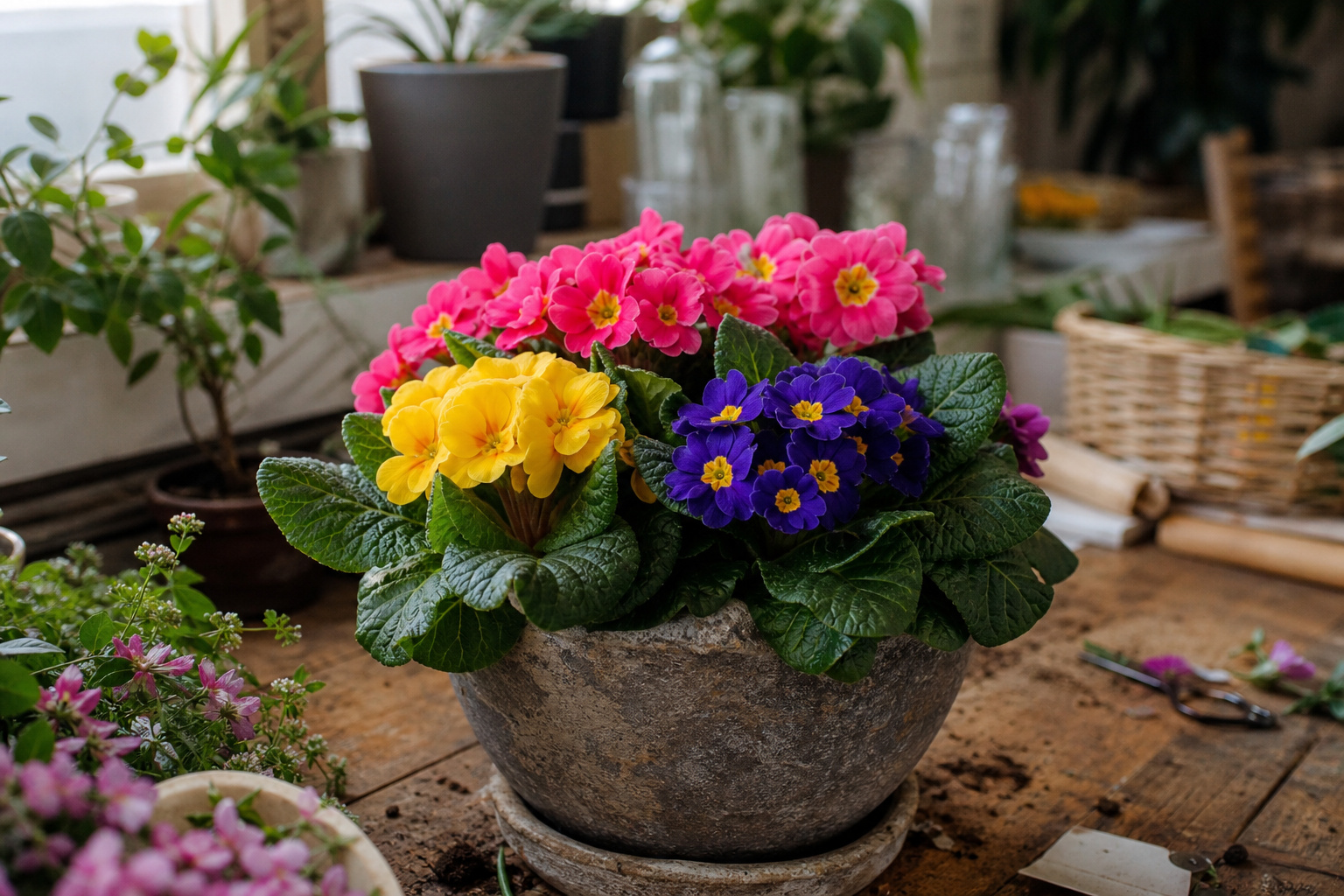
The polyanthus primula is the variety most florists sell, and it’s the one you’re most likely to bring home between fall and early spring. It’s a low, compact plant with clusters of bright flowers rising directly from the center. In my experience, the plant isn’t hard to keep alive. It’s just particular about a few things, and once you know what they are, primrose care is genuinely simple.
Give Primroses a Cool, Bright Spot — Not a Sunny One
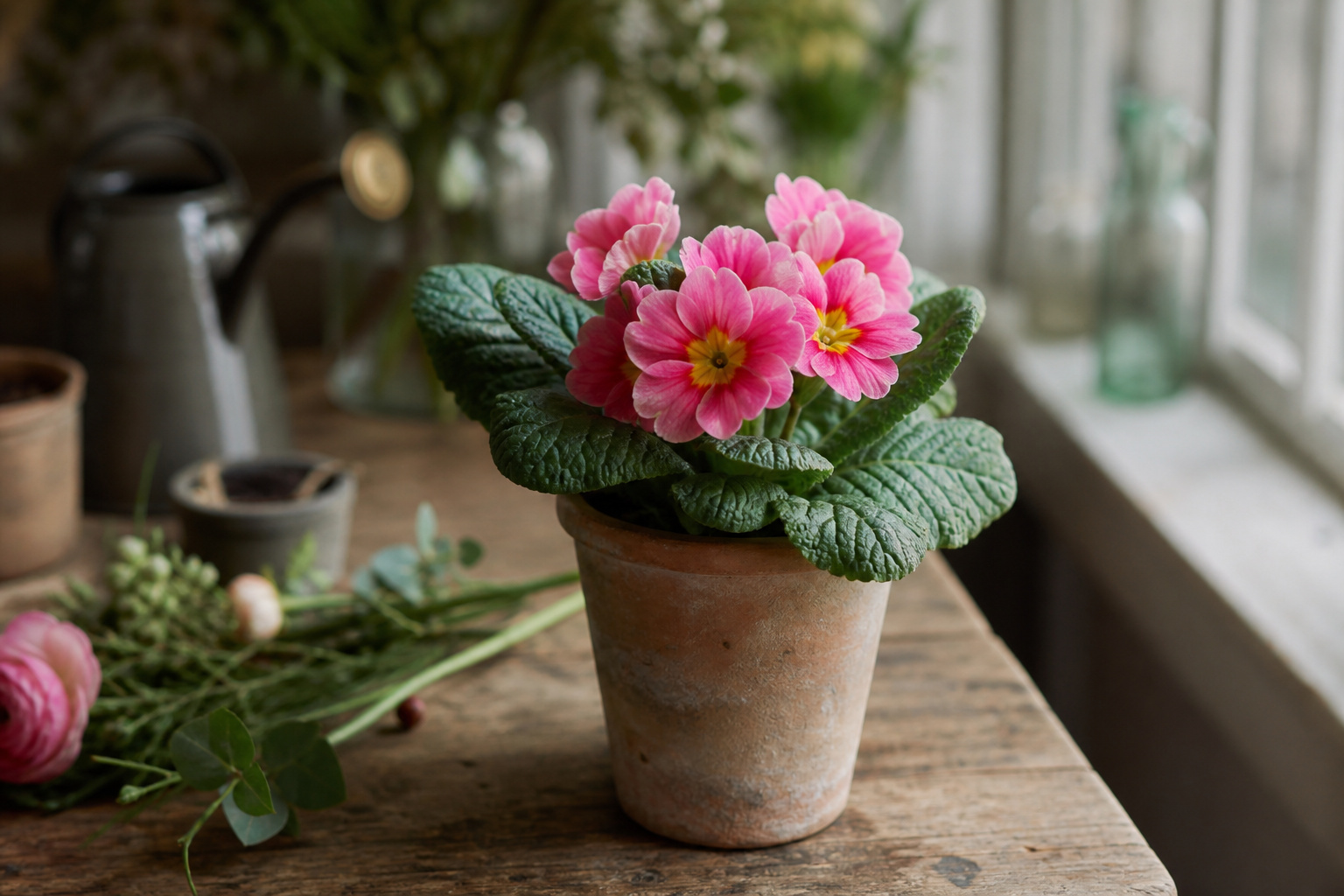
Primroses want light, not heat. Bright, indirect light near a window works well. Direct sun through the glass will scorch the leaves and dry the plant out faster than you can keep up with a watering can.
Temperature matters more than most people expect. Primroses hold their blooms longest in a room that stays between 50° and 60° Fahrenheit. Keep them away from heat vents, radiators, and the top of the fridge. A cool room, even a slightly drafty one, will get you more weeks of flowers than a warm one will.
If you’re already growing other winter gift plants, primroses fit right in alongside them. I get the same light-and-temperature questions about Christmas cactus and Rieger begonias just about every season, and the short answer is the same for all three: bright, indirect light and nothing scorching hot.
Water Primroses the Right Way (Without Rotting the Roots)
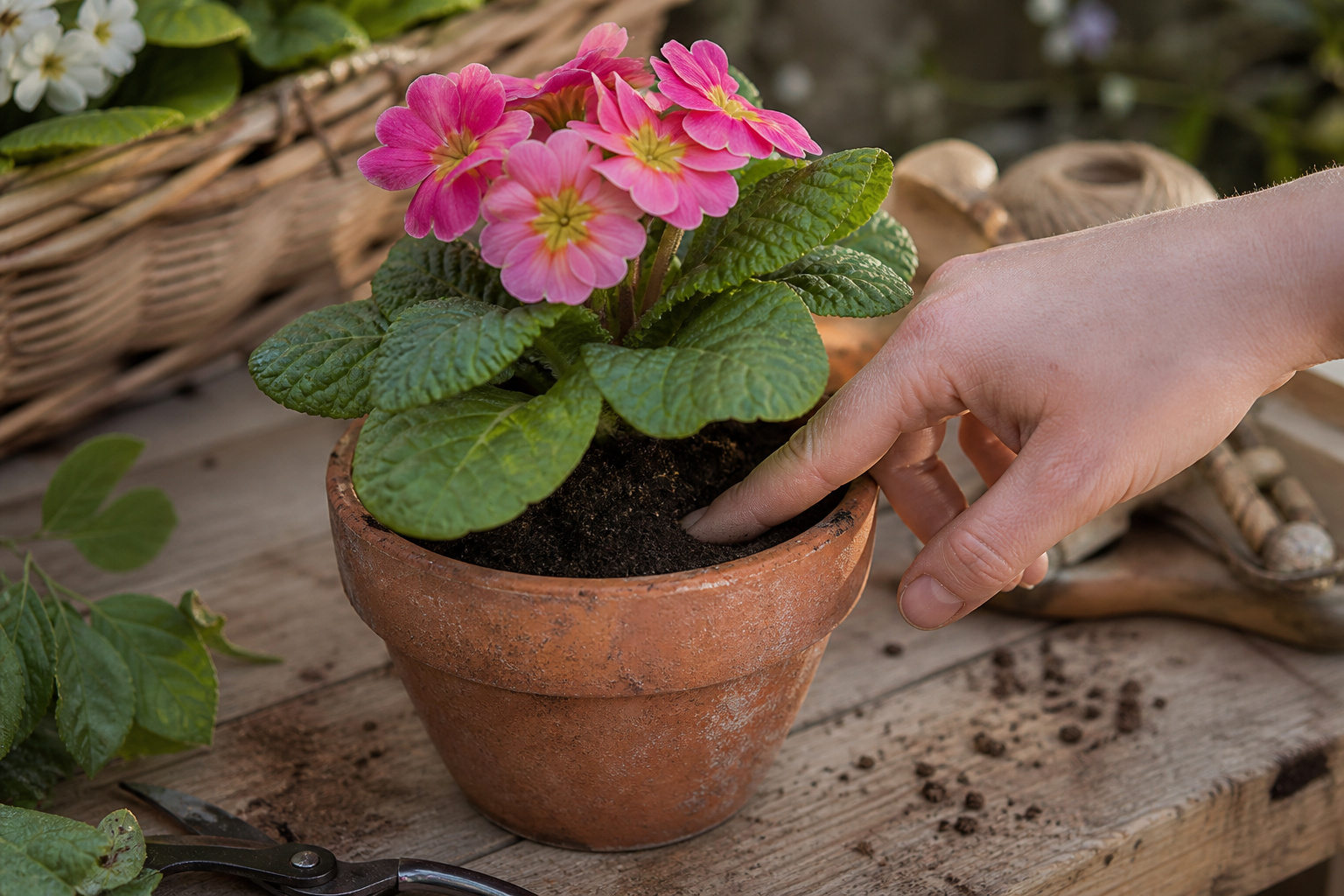
Primroses like consistently moist soil. Not soggy. Not dry and crispy at the edges. Moist, like a wrung-out sponge.
Check the top inch of soil with your finger before you water. If it’s dry, water thoroughly until it runs through the drainage holes, then let the pot finish draining before you set it back on a saucer or in a cachepot. Letting a primrose sit in standing water is the single fastest way to rot the roots and lose the plant.
In the shop, I run my finger into the soil on every primrose before I top off a single one. It takes five seconds, and it’s saved more plants than I can count. Primroses wilt dramatically when they’re thirsty, which tends to make people overcorrect and drown them right after. Water when the soil asks for it, not on a fixed schedule.
What I Use in the Shop
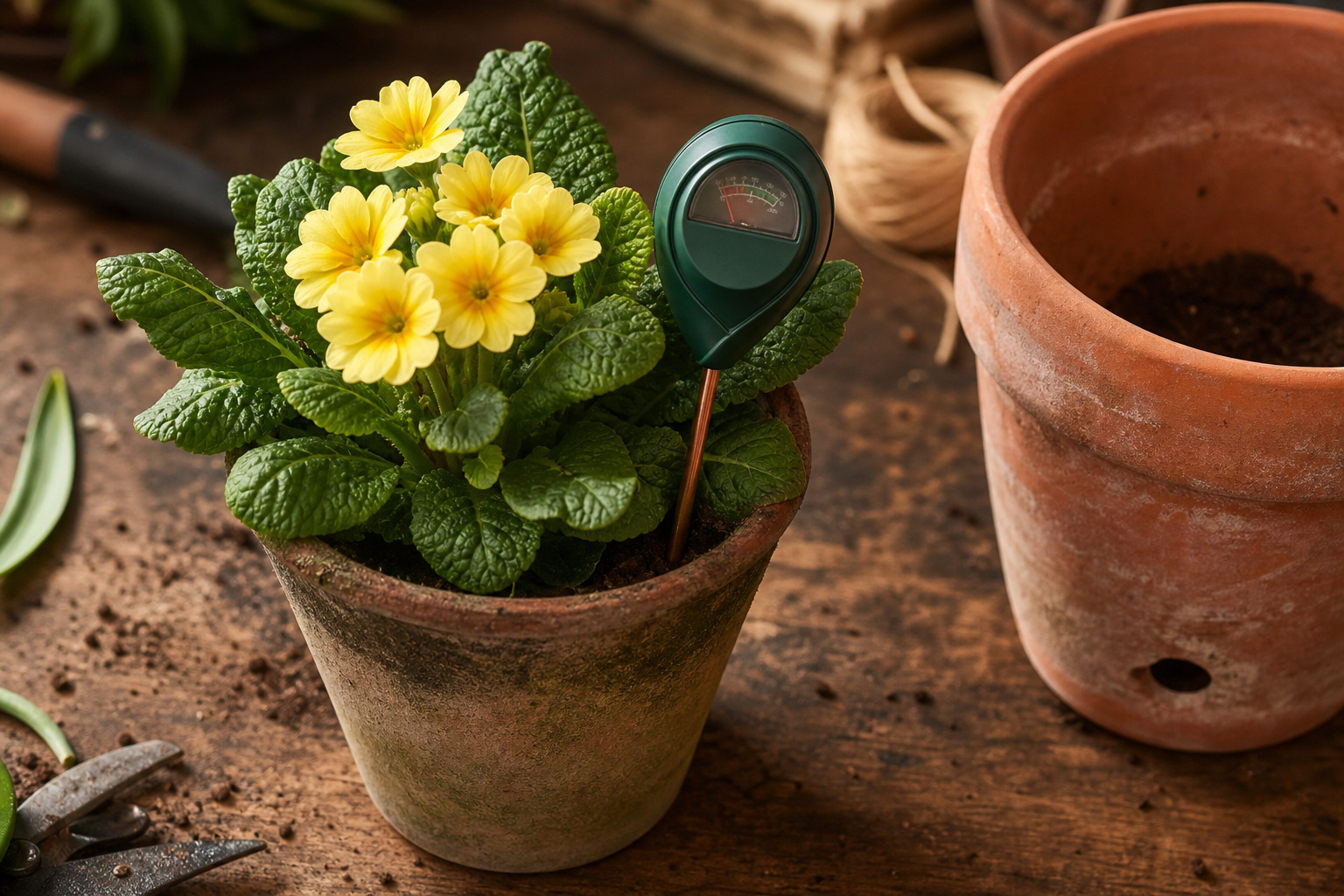
What I use in the shop: a simple soil moisture meter takes the guesswork out of watering, especially if you’re new to primroses and don’t yet trust your finger test. I also like a cachepot with proper drainage rather than a sealed decorative pot. It looks just as nice on a windowsill, and it won’t trap water against the roots.
My Primrose Stopped Blooming. Now What?
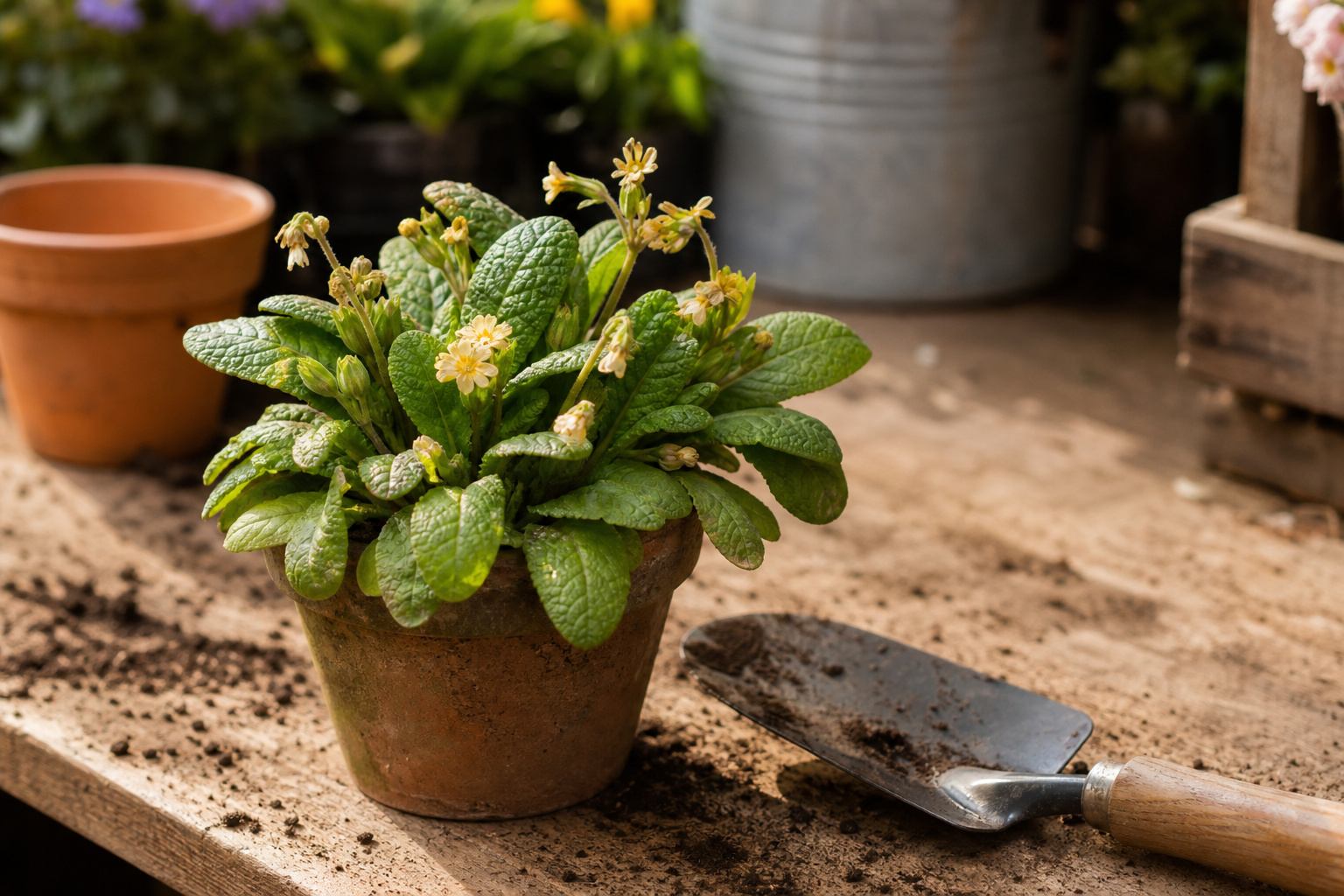
Primroses are a bit like a college basketball team on a one-and-done run. They put on a great show for a few weeks, then they’re finished.
Once the blooms fade for good, you’ve got two honest options. You can let the plant go and compost it, which is what most people do. Or, if you’ve got a shaded spot in the garden, you can transplant it outdoors in spring and let it carry on as a perennial. Penn State Extension has a good rundown on moving primroses outdoors if you want to give it a try: Pick a Primrose for a Pop of Perfection.
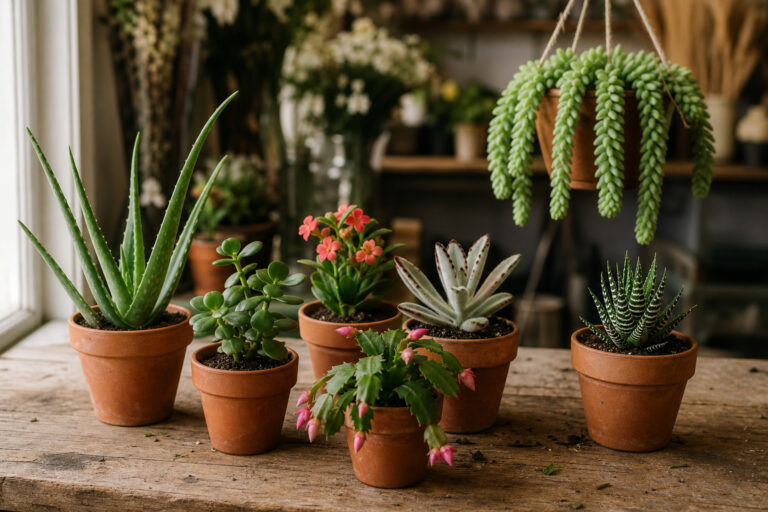
If you’d rather stick with something that blooms indoors year after year without needing a garden bed, that’s a fair trade-off. I point a lot of customers toward easy-care succulents or a jade plant for exactly that reason. Neither one is going anywhere after a few weeks.
Frequently Asked Questions
How long do primroses bloom indoors?
Typically two to four weeks, longer if you keep the room cool. Warm rooms shorten bloom time considerably.
Can I keep a primrose alive year after year indoors?
Not reliably. Indoor primroses are usually treated as short-term flowering plants. For a repeat performance, transplanting outdoors is a better bet than trying to hold it indoors long-term.
Why are my primrose’s leaves turning yellow?
Overwatering is the most common cause. Check that the pot drains freely and that it’s not sitting in water on a saucer.
Do primroses need fertilizer indoors?
No. Skip it while the plant is indoors and blooming. If you transplant it outdoors, a light feeding in spring is enough.
Can I put my primrose outside in spring?
Yes, if you have a shaded or partially shaded spot. Acclimate it gradually over a few days before leaving it out overnight.
Are primroses toxic to pets?
Some primula varieties can cause mild stomach upset if eaten. Keep pots out of reach of curious cats and dogs, just to be safe.
Closing Thoughts
Primroses aren’t fussy so much as specific. Keep them cool, keep the soil evenly moist, and give them light without direct sun, and you’ll get weeks of color out of a plant that costs less than a bouquet.
What color primrose did you pick up this year? Drop a comment below and let me know. I read each one.
Til next time,