Disclosure: This post may contain affiliate links. If you click and buy, we may earn a commission at no extra cost to you. As an Amazon Associate, we earn from qualifying purchases.
Last Updated: August 2026
A bride came into the shop last fall wanting “true black” flowers for a Halloween-themed engagement shoot. She’d seen a photo online and wanted the exact same look. I had to tell her what I’m about to tell you: that photo was almost certainly edited, because true black doesn’t grow on a stem.
What does grow is close enough to fool a camera and a room full of guests. You just have to know which flowers get you there and which ones are just marketing.
True Black Doesn’t Really Exist, and That’s Fine
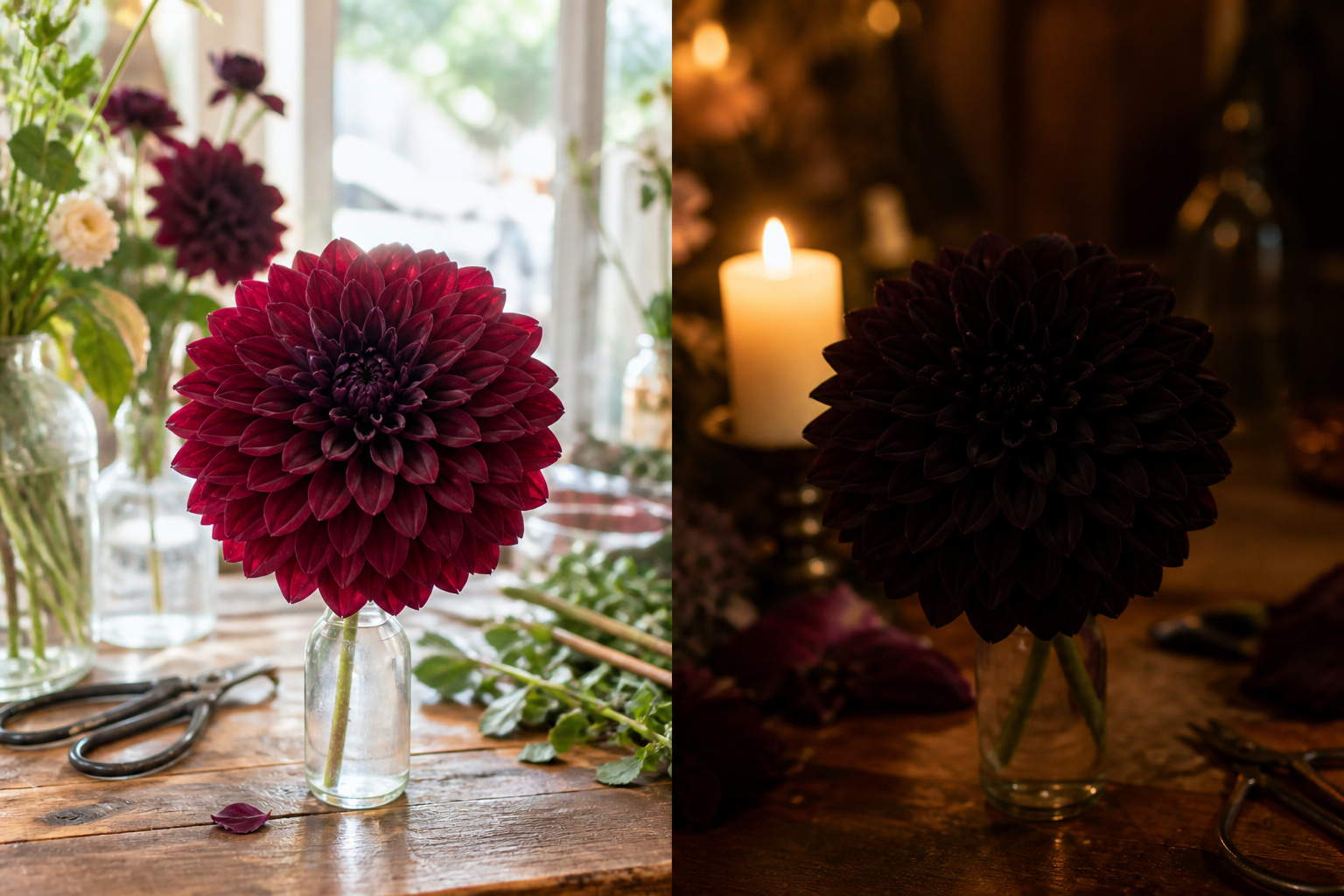
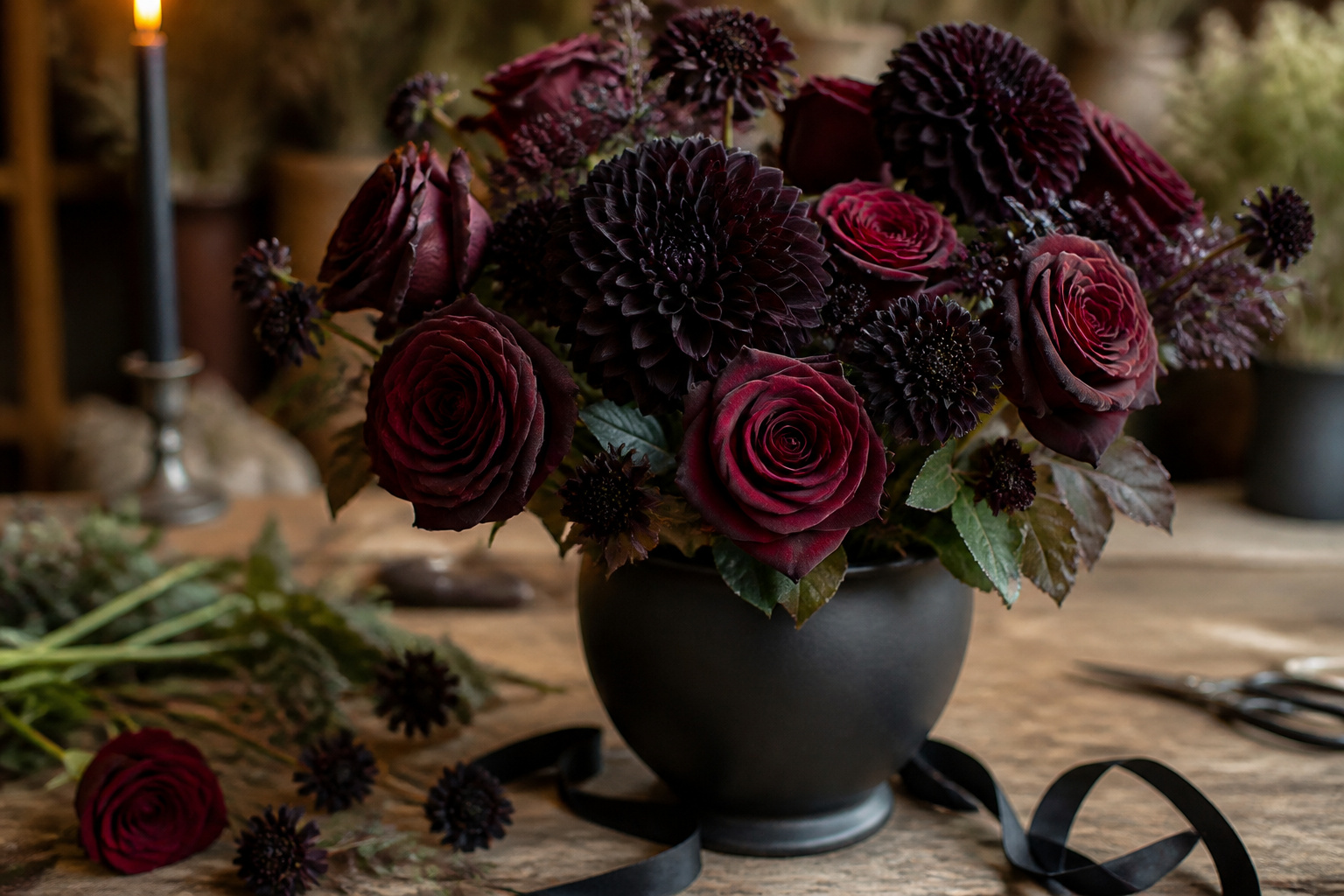
Every “black” flower you’ve seen is actually a very deep burgundy, maroon, or purple. Under bright light, you can usually still catch the true color at the edges of the petals. Under low light, candles, or a camera flash, that same flower reads as black.
Once you know that, the whole search gets easier. You’re not looking for black. You’re looking for pigment dense enough to fake it.
Start With Black Dahlias
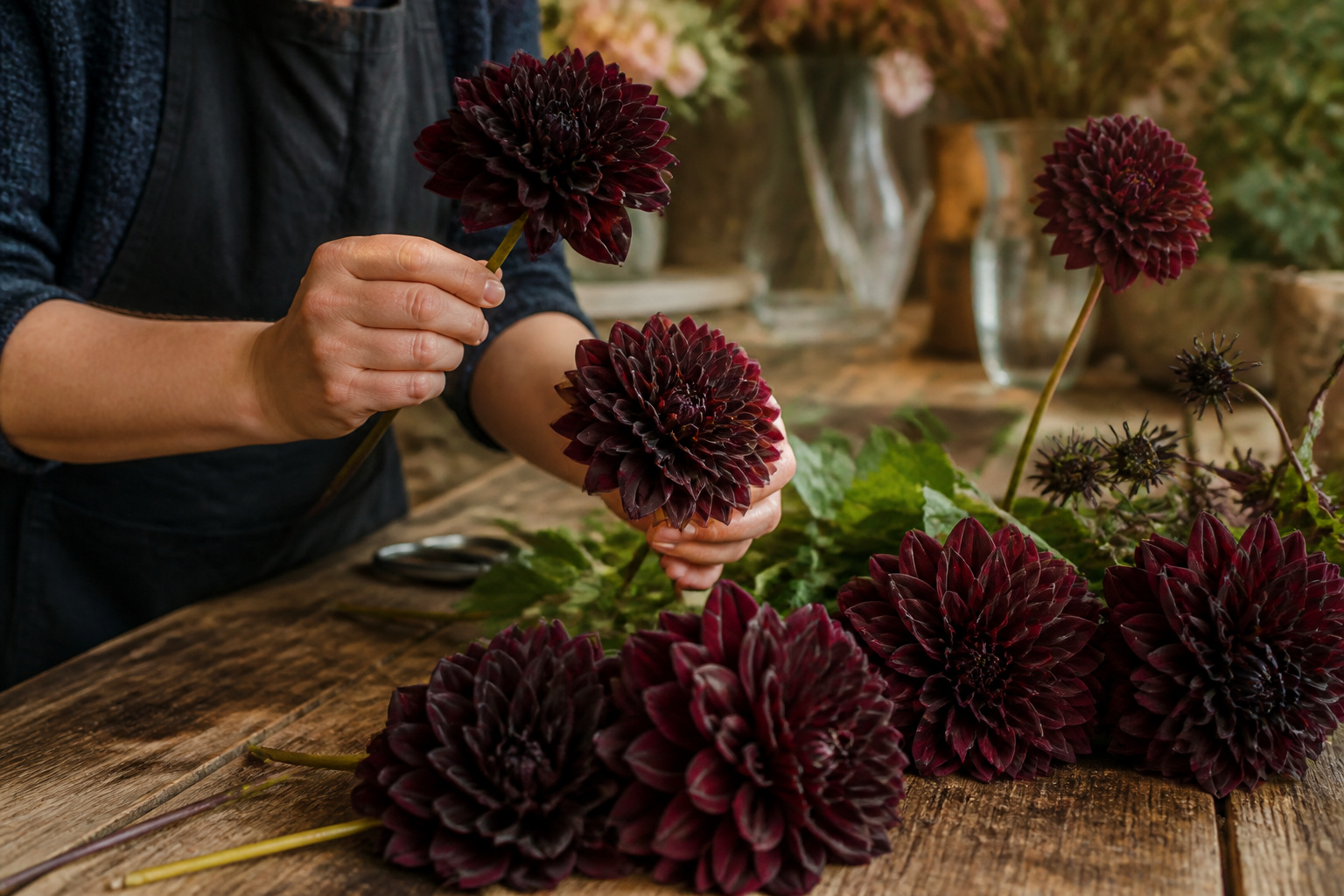
When I source dahlias, I don’t source by variety; I source by color. I look for the deepest red-black I can find.
What I’d do: if a supplier tells me a dahlia variety is “black,” I ask for a photo taken in daylight before I order it. Half the time it’s closer to a deep plum, which is still usable, just not what the customer had pictured.
True black dahlia varieties, like Karma Choc or Chat Noir, run a dark chocolate-maroon that photographs black in the right light. The problem is their availability is not reliable.
I go deeper on working black dahlias into a full arrangement in my moody wedding bouquet post, if you want more detail there.
Black Roses: Know the Difference Between Dyed and Deep Red
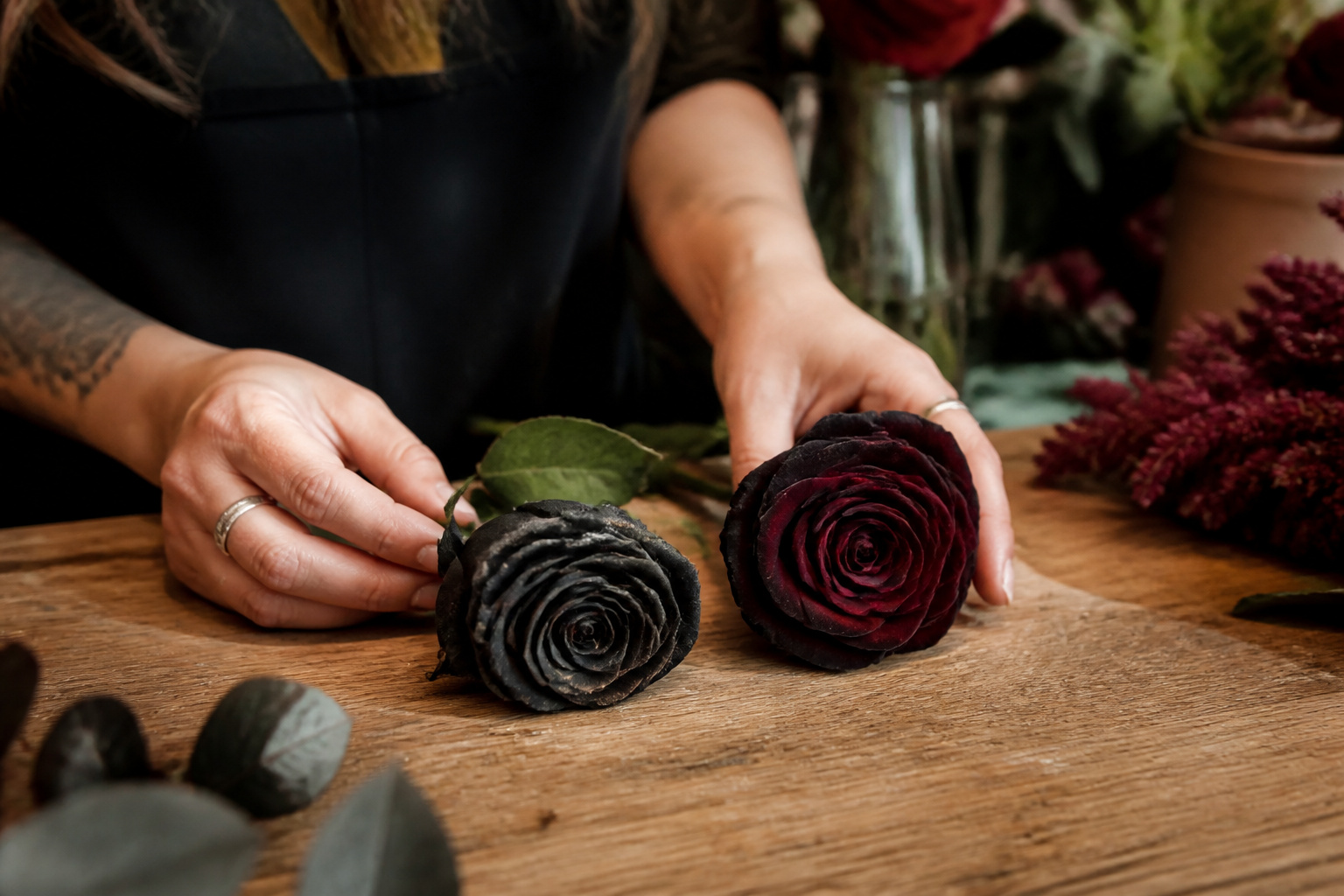
Most “black roses” sold around Halloween are tinted. This is best done at the grower level, as I’ve mentioned in my post about how the pros dye flowers.
If you only need to tint a few roses, I suggest taking a dark red rose and overspraying the flower head with black floral paint. It works, but as the flower head opens, the natural rose color shows more, and the rose head will need to be touched up. The vase life also takes a hit.
The other route is to use a natural, dark-colored rose variety like Black Magic or Black Baccara, which is dark enough to read black without any dye. They cost more, but they hold up better, and the color doesn’t fade or wash out as the bloom opens.
If straightforward rose care is what you need first, that’s covered in my fresh-cut rose care guide.
Try the Black Bat Flower for Something Unusual
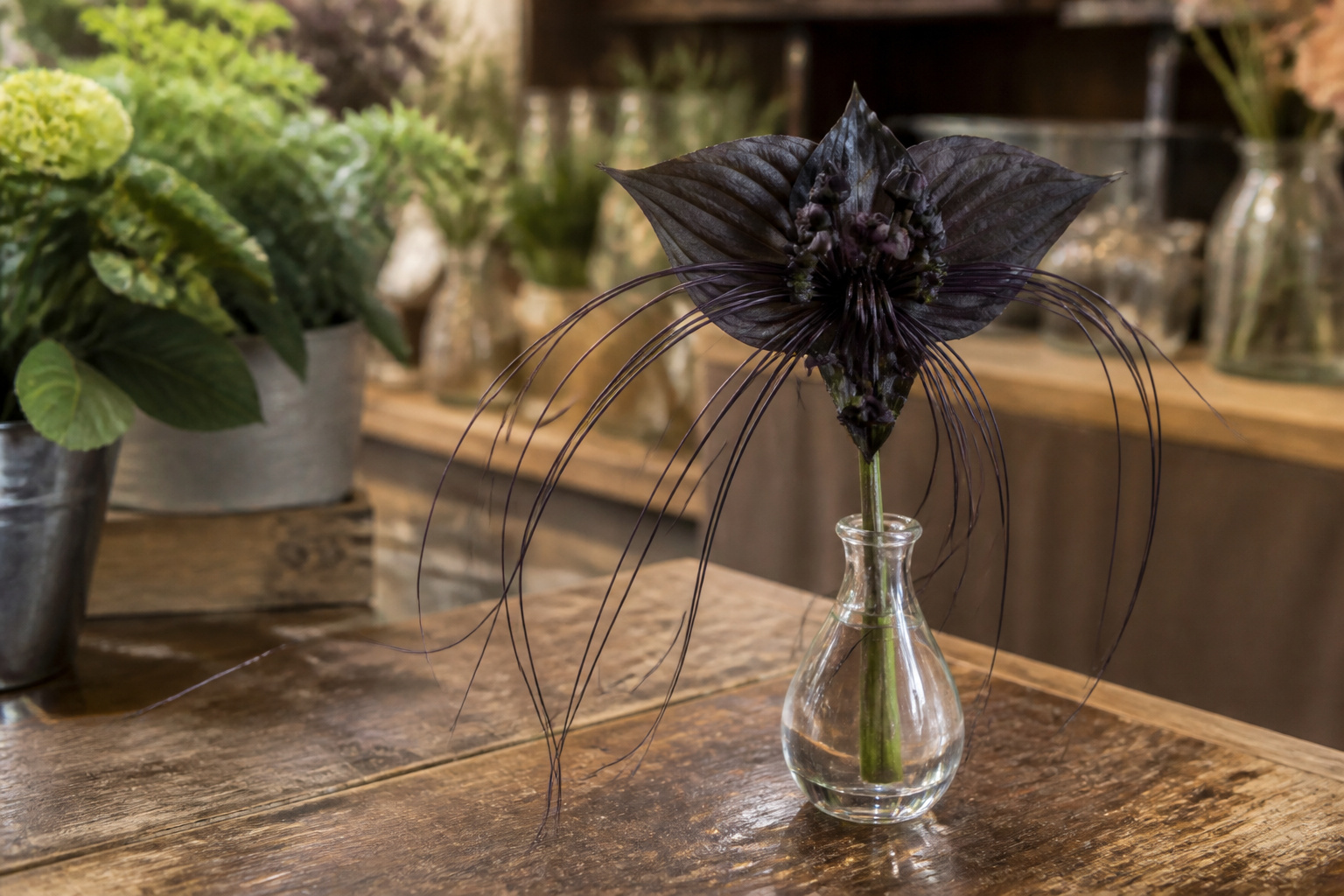
Tacca, better known as the black bat flower, is the one flower on this list that’s genuinely close to black, with long whisker-like bracts that make the whole bloom look like it’s mid-flight. Because it’s not grown for cut-flower production, you won’t find it in a grocery store floral department. It’s available as a potted plant for most home growers, sold on Amazon through 3rd-party growers.
In my experience, it’s worth the search if you’re building a single dramatic focal point rather than a full arrangement. One stem does more visual work than a dozen dahlias.
Chocolate Cosmos for Color and Scent
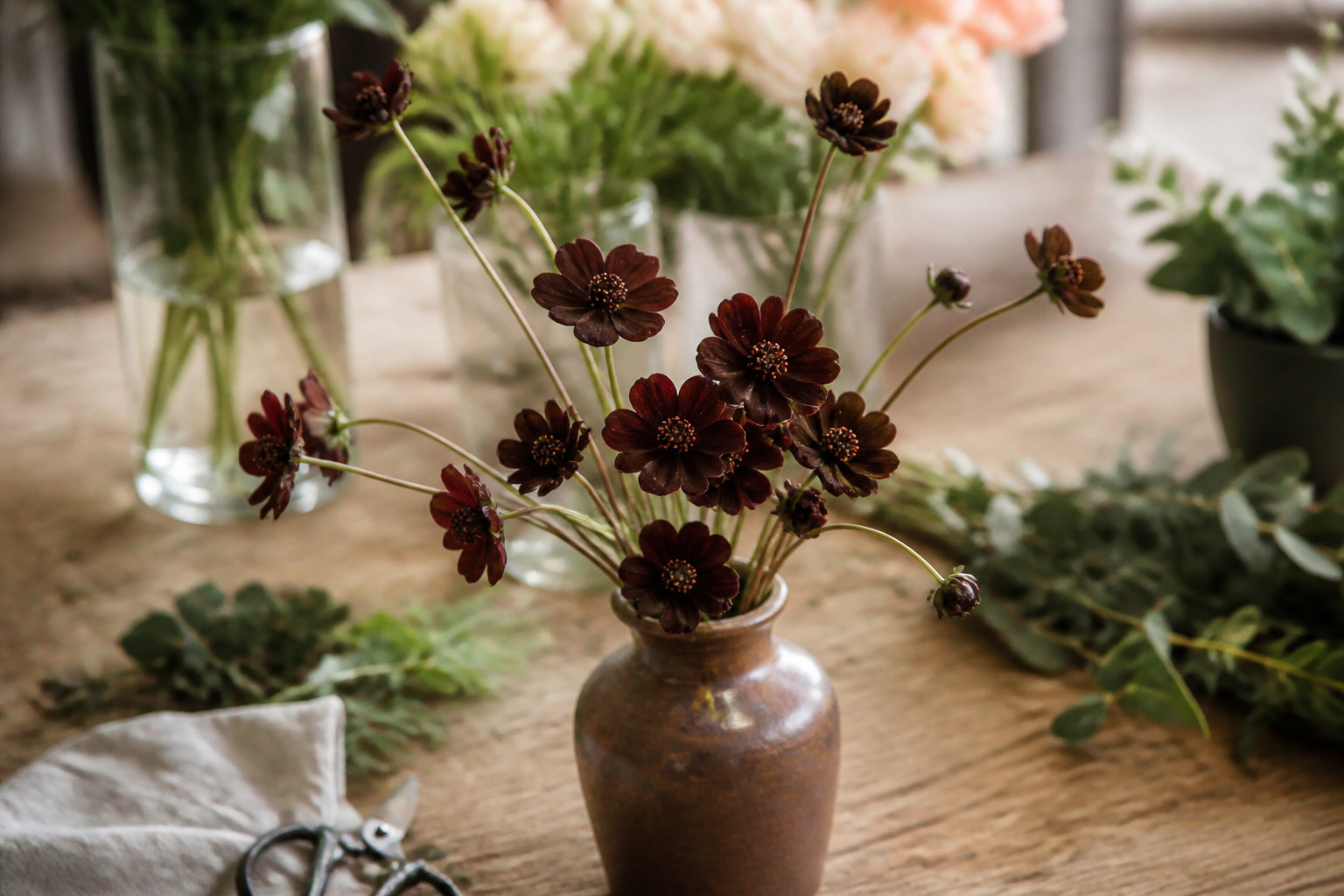
Chocolate cosmos won’t read as black from across the room, but they earn their spot on this list for a different reason: they genuinely smell like chocolate. That’s a detail guests remember. The color is closer to a deep maroon-brown, which pairs well against true black accents like ribbon or a painted vase.
Fake It With Dye and Lighting When the Real Thing Isn’t Available
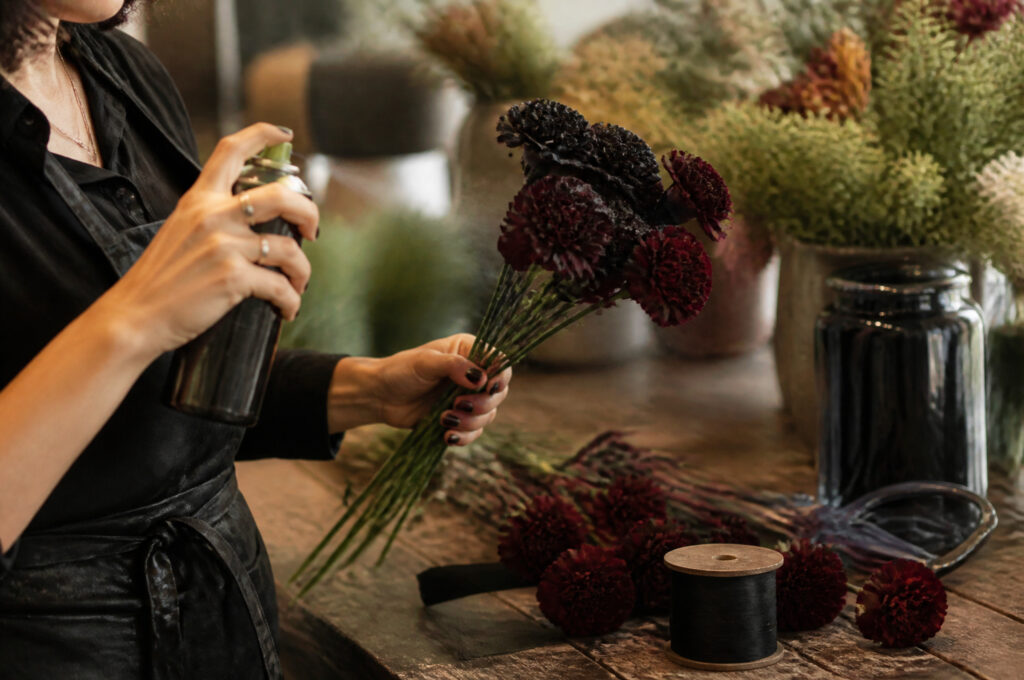
When black dahlias and Black Baccara aren’t available, tinting is a legitimate workaround, not a shortcut to be embarrassed about. Burgundy carnations and deep red roses both take paint evenly and hold the color for most of their vase life.
Lighting does the rest. Warm, dim light and a few candles will push a deep burgundy or plum arrangement the last step toward reading black to the eye, even if it wouldn’t pass under a bright kitchen light.
What I use in the shop: a black glass vase does a lot of the visual heavy lifting on its own. It frames whatever’s inside it as darker than it actually is, which takes pressure off getting the flowers themselves perfectly black.
A length of black ribbon wrapped around the stems or tied to the vase adds a true black anchor point next to all that deep burgundy and plum, which is often the detail that convinces the eye the whole arrangement is black.
If you want to build this into a full skull-and-bones arrangement instead of a standalone centerpiece, I’ve walked through that build separately in my skull-and-bones Halloween arrangement post. And if black-and-white as a full palette interests you more than black on its own, that’s its own post too: classy, creepy, and easy black and white Halloween florals. For the opposite mood entirely, my orange and purple Halloween arrangements post is the warm-toned contrast to everything on this page. And if you’d rather skip the hunt for specific blooms altogether, dried and preserved material gets you the same gothic mood without a vase-life clock running; I walk through that approach in dried and preserved flowers for a gothic Halloween look.
Frequently Asked Questions
Are true black flowers real?
Not quite. What gets sold as “black” is almost always a very deep burgundy, maroon, or purple that reads black under low light or in photos. The Black Bat Flower comes the closest to true black in nature.
Where can I source black or near-black flowers?
A local florist can usually special-order Black Baccara roses or dark dahlia varieties with a few days’ notice. Grocery store selections rarely carry them, so call ahead rather than expecting to find them on a regular shopping trip.
What’s the vase life on black or near-black flowers?
Naturally dark varieties like Black Baccara and Black Magic hold up about as well as any garden rose, typically five to seven days with proper conditioning. Dyed flowers tend to fade a day or two sooner.
What pairs well with black flowers besides orange?
White is the classic pairing, and it’s the one I reach for most. Deep purple, silvery dusty miller, and even a single pop of blood red also work well if you want more contrast than black and white alone provides.
Closing Thoughts
Chasing “true black” is a losing game. Chasing the right deep, dense colors and letting the light and the container do the rest of the work gets you a much better result, and it’s a lot less frustrating than special-ordering flowers that don’t exist.
Tell me in the comments: which black flower on this list surprised you most, the Black Bat Flower or the chocolate-scented cosmos?
Get the shade dark enough, and the mood follows on its own, the same as it does with any good Halloween arrangement.
Til next time,