Disclosure: This post may contain affiliate links. If you click and buy, we may earn a commission at no extra cost to you. As an Amazon Associate, we earn from qualifying purchases.
Last Updated: June 2026
A mother of the groom called me about two weeks before her son’s wedding. She’d just found out she wasn’t getting a corsage. The bride hadn’t thought to include her. Not out of spite, just out of not knowing that this was expected. By the time they sorted it out, the florist had already finalized the order and had to scramble to add two more pieces.
That call is more common than you’d think. Corsages and boutonnieres sit at the intersection of tradition and family politics, and most couples have never had to think about them before. Get the list right, and nobody notices. Get it wrong, and someone’s mother is on the phone.
Here’s what I tell every couple who walks into the shop with this question.
Start With the Mothers — Both of Them
The mothers of the bride and groom are the non-negotiables. If you only give corsages to two people, it’s them. Both sides. No exceptions.
From there, grandmothers are the natural next step. If both grandmothers are living and attending, they should both receive one. The same principle applies; you don’t want to honor one side and not the other.
Stepmothers get included, too, especially if they’ve had an active role in your life or your partner’s. This is where family situations get a little sensitive, and I won’t pretend there’s a universal answer. What I can tell you is that leaving someone out who expects to be included is harder to undo than including someone extra.
When in doubt, order one more than you think you need. A spare corsage is a lot cheaper than hurt feelings.
The Boutonniere Hierarchy Actually Matters
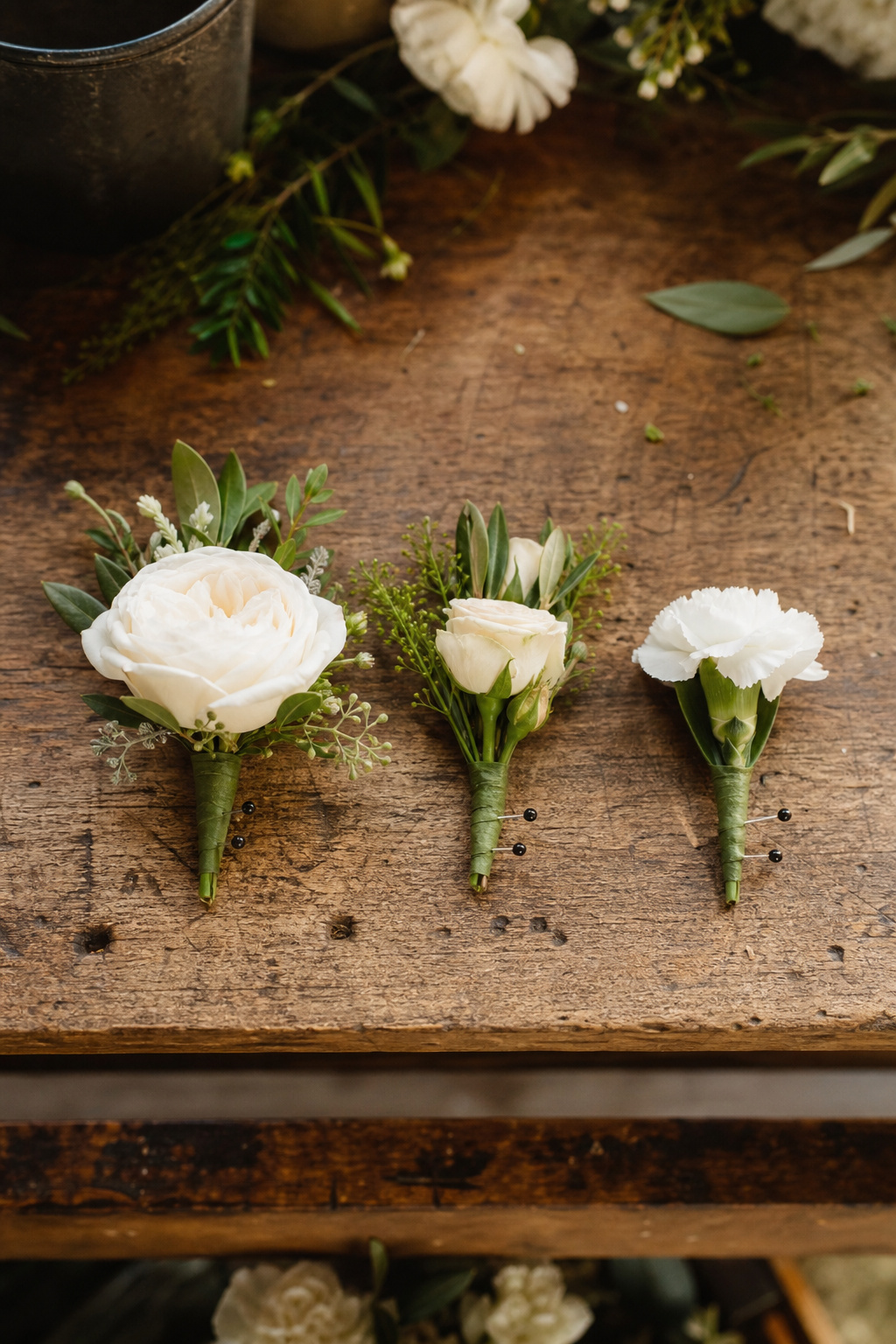
There’s a visual language to boutonnieres that most guests read without realizing it. The groom stands out. The groomsmen coordinate but don’t compete. The fathers get something classic and dignified.
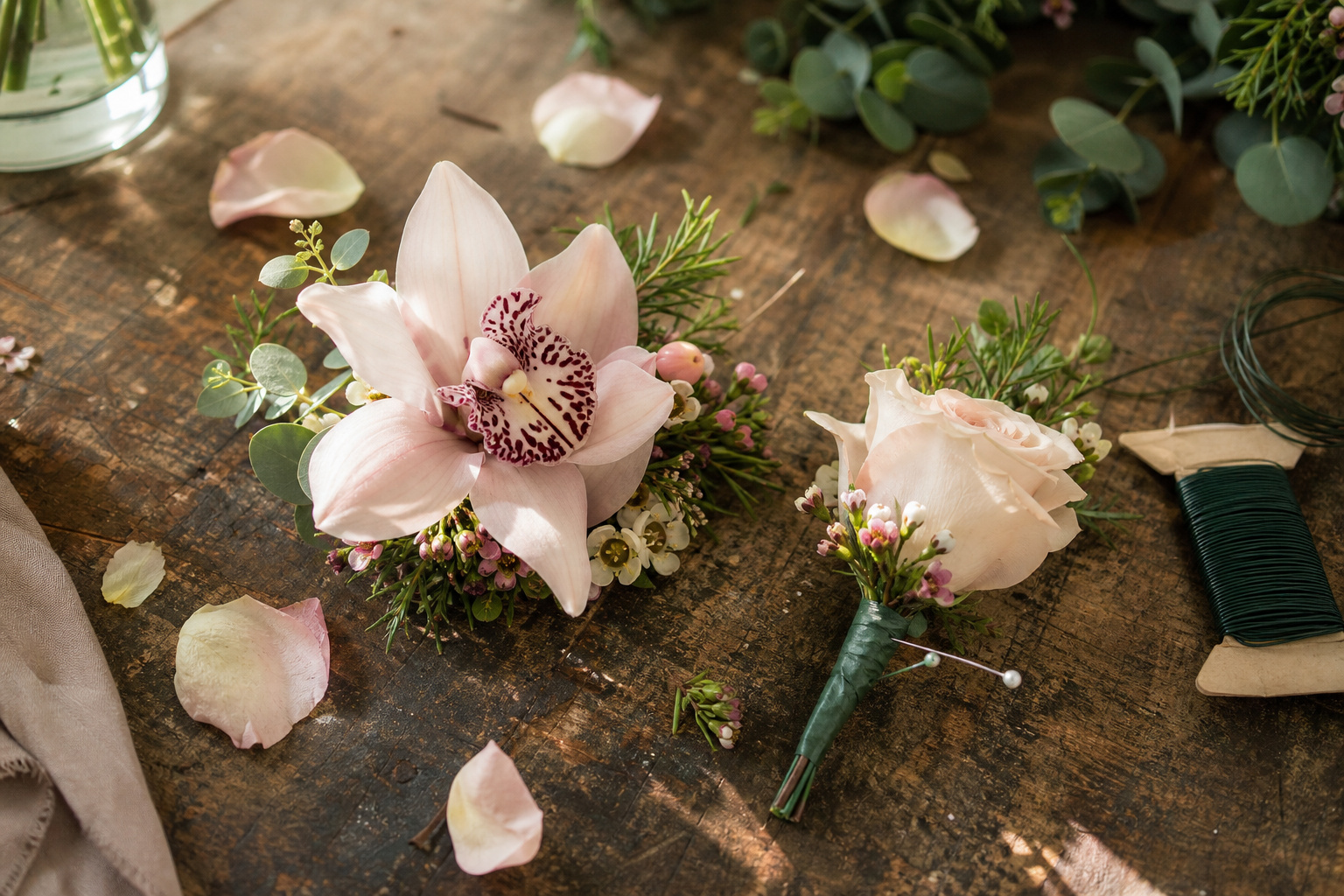
In the shop, we typically design the groom’s boutonniere with a larger or less common bloom; a garden rose, a small orchid, something that reads as special without being over the top. Groomsmen get a scaled-back version that ties into the overall palette. Fathers and grandfathers usually get a single classic bloom: a white rose, a carnation, whatever fits the formality of the wedding.
The ring bearer is optional, but many families love including him. If you do, keep it simple, with a small button flower or a single stem tucked into a pin. Nothing too fussy for a six-year-old to wear for four hours.
The officiant is worth considering, too, especially if it’s a family friend or someone close to you. A simple boutonniere is an easy gesture that means a lot.
Who Else Makes the List
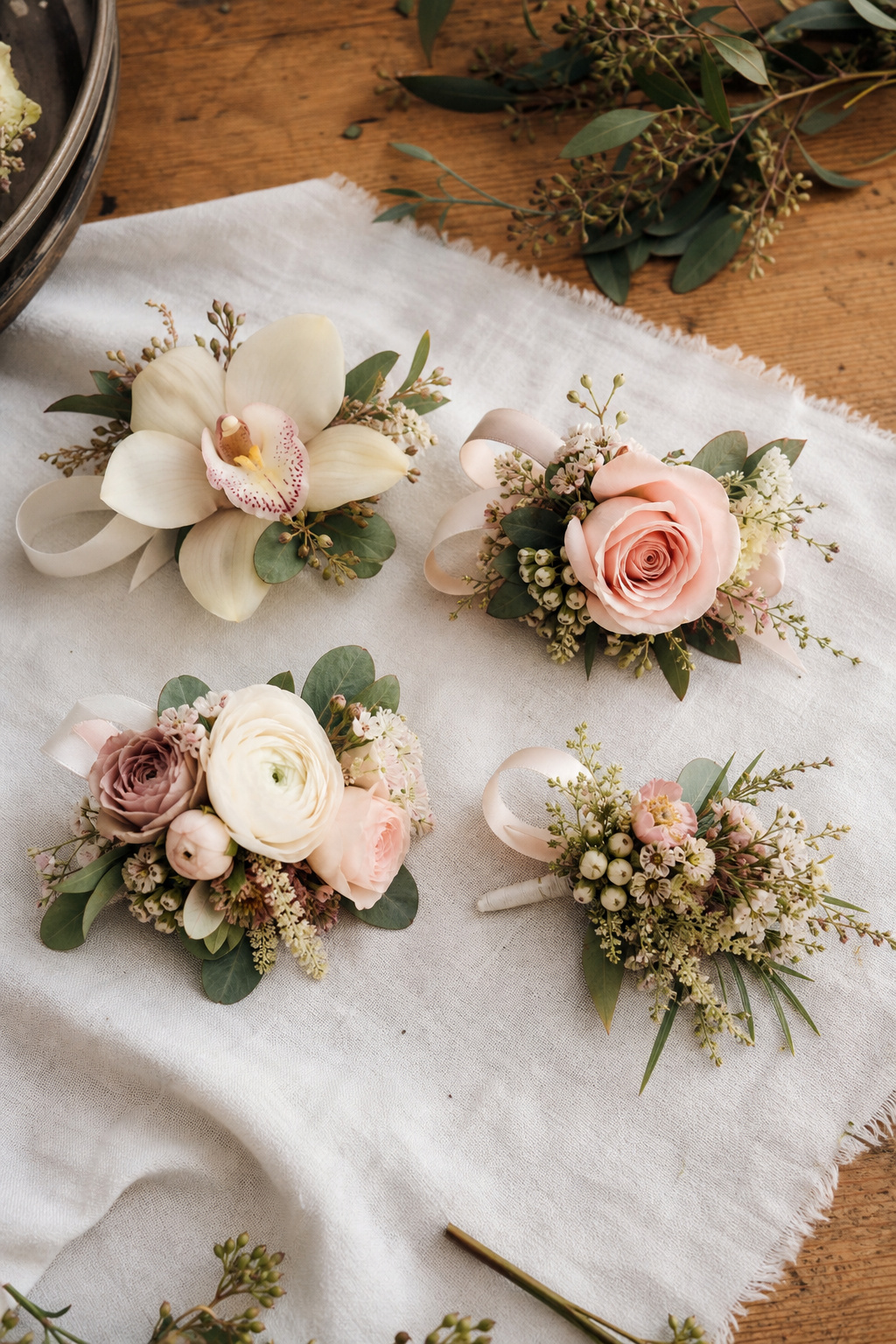
Beyond the immediate wedding party, there are a few categories worth thinking through.
Female ushers and ceremony readers — If someone has a named role in your ceremony, they should probably get something. A corsage for a female usher shows recognition without a big budget hit.
Musicians or vocalists — This one is less common, but if a friend is singing at your ceremony or playing during the reception, a corsage or boutonniere acknowledges their contribution. It’s a nice touch that people remember.
Honored elders — If there’s a great-aunt or a family friend who has been like a grandmother to you, including her is worth the cost of one more corsage. These are the gestures people talk about after the wedding.
No rule says you have to stop at immediate family. The list is yours to build. Just be consistent. If you’re including one grandmother on one side, include both.
Choose Flowers That Can Take a Full Day
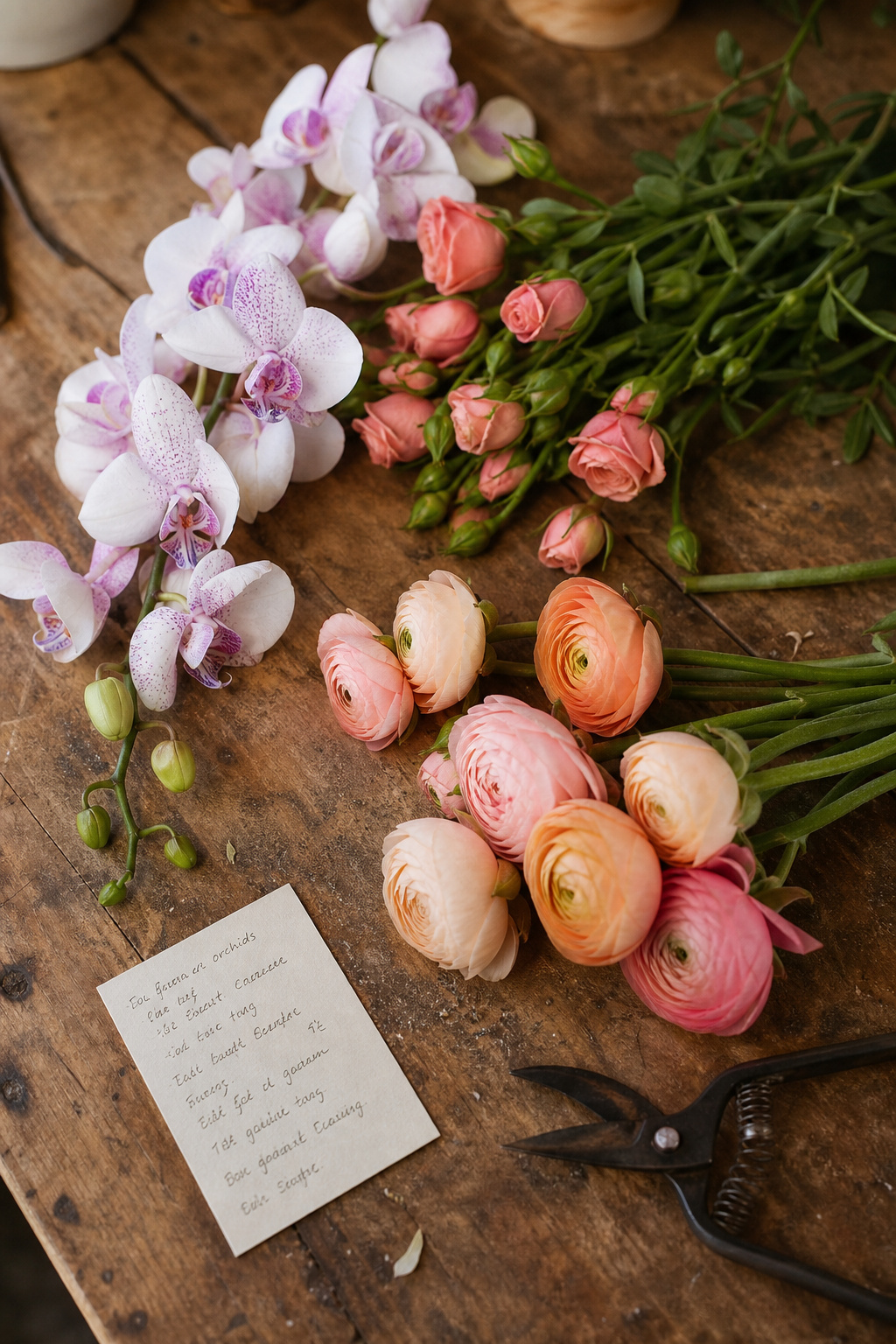
Corsages and boutonnieres have a tough job. They get pinned on in the morning, worn through a ceremony, photos, cocktail hour, and dinner, and they’re expected to still look decent in the 9 PM reception shots. Flower choice matters.
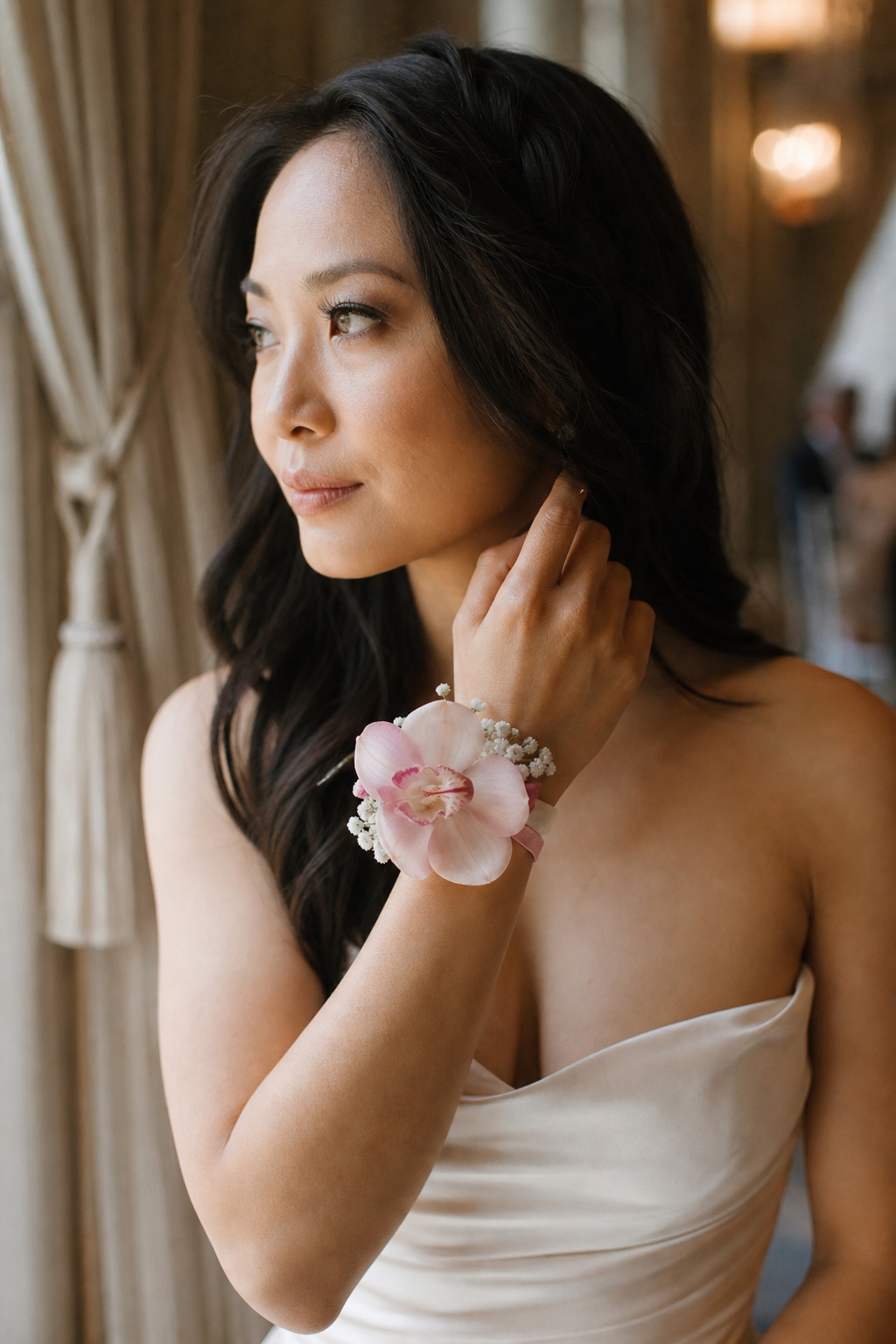
Orchids are my first recommendation for corsages. Dendrobiums and Phalaenopsis both hold up well, they photograph beautifully, and don’t wilt under heat or humidity the way some garden flowers do. Roses are a reliable second. Just make sure they’re fully hydrated the night before.
For boutonnieres, spray roses and ranunculus are workhorses. Carnations get a bad reputation they don’t deserve. A quality carnation in the right color can look sharp and will outlast almost anything else on that lapel.
What I’d avoid: stephanotis on its own (they quickly wilt without a water source), and anything too delicate or open. Lily of the valley is beautiful but high maintenance. Save the fragile stuff for the bridal bouquet, where it gets more care and attention.
What I use in the shop: Oasis Floral Adhesive for securing stems and accents in corsage work. It’s been the reliable standard for years.
Placement and Pinning — Do It Right the First Time
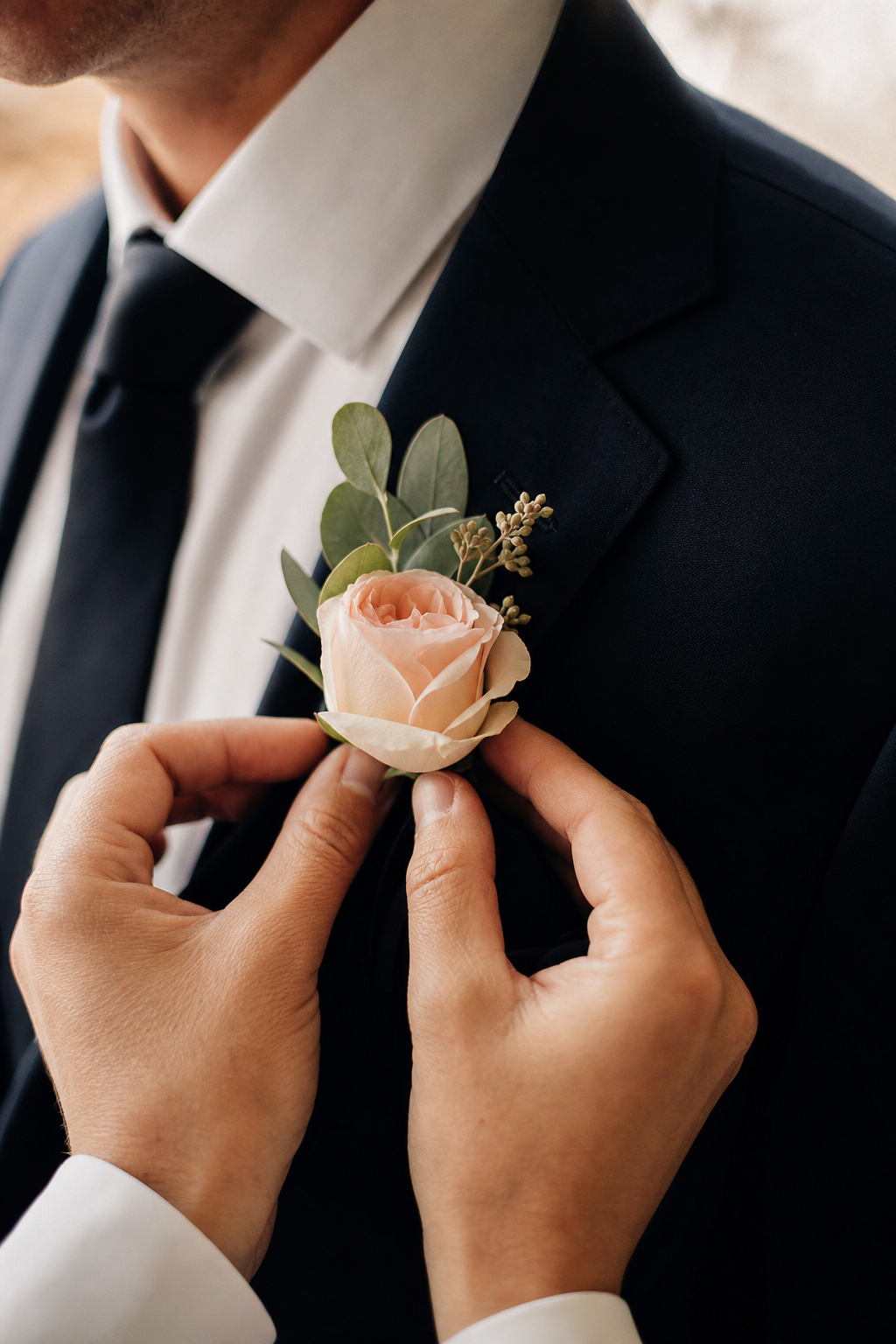
Boutonnieres go on the left lapel. Two pins, crossed at a slight upward angle, so the flower tilts toward the face rather than drooping forward. The pins are usually concealed behind the lapel, but it’s okay if they’re visible from the front.
If the jacket fabric is delicate, satin, shantung, or anything with texture, use a magnetic boutonniere holder instead of pins. They’ve gotten much better in recent years, and they won’t leave pinholes in a rented tuxedo.
Corsages traditionally go on the left wrist or the left shoulder. Wrist corsages are more common now. If the recipient is left-handed, offer the right wrist. It’s a detail most florists don’t mention, but recipients appreciate.
Timing matters too. Don’t pin boutonnieres two hours before the ceremony and expect them to look fresh in photos. Get them on as close to showtime as possible, and store everything in a cool place, not in a hot car or a sunny venue lobby, until then.
Coordinate Without Over-Matching
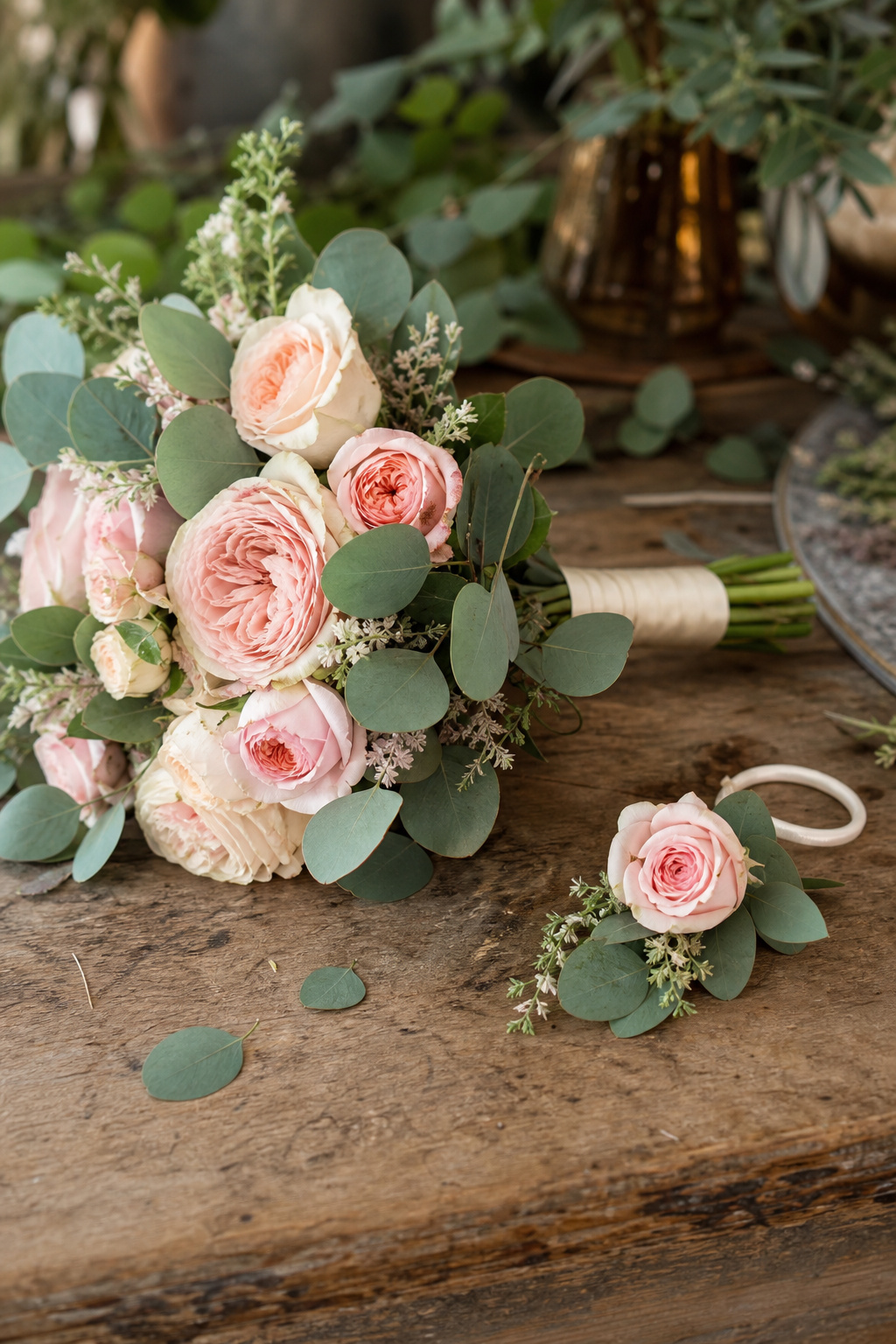
The corsages and boutonnieres should feel like they belong to the same wedding as the bridal bouquet and centerpieces, but they don’t need to be identical. A common mistake is trying to match everything too precisely, which can look forced.
A better approach: pull one or two elements from the main floral palette and use them as anchors. If the bridal bouquet features blush garden roses and eucalyptus, a boutonniere with a single blush spray rose, and a sprig of eucalyptus reads as cohesive without being a copy.
For the mothers’ corsages, I usually recommend something that coordinates with the wedding colors but also works with whatever they’re wearing. Not every mother of the bride knows their dress color six months out, but most can tell you “dusty rose” or “navy.” That’s enough to work with.
If you’re working with a florist, give them the palette and trust them on the corsage and boutonniere details. That’s what they’re good at. If you’re doing this yourself as part of a DIY wedding flower project, keep the designs simple. Fewer elements hold up better and are easier to assemble.
Frequently Asked Questions
Do bridesmaids get corsages?
Not typically. Bridesmaids carry flowers or wear flower crowns, but corsages are traditionally reserved for non-bridal-party women having a meaningful role: mothers, grandmothers, and honored guests. That said, there are no hard rules. If you want to give your bridesmaids wrist corsages instead of bouquets, that’s a perfectly valid choice.
Who pins on the boutonnieres?
This usually falls to the bride, a bridesmaid, or a family member just before the ceremony. Some venues have a coordinator who handles it. What I’d recommend: designate one person in advance and make sure they know where the boutonnieres are and how to pin them. Don’t leave this to chance.
How far in advance should I order corsages and boutonnieres?
Give your florist a final count at least two to three weeks before the wedding. Most florists can accommodate last-minute additions, but there may be an upcharge, and you risk them being unable to match the original design exactly. Finalize your list early.
What’s the average cost of a corsage or boutonniere?
Corsages typically run $25–$50 each, boutonnieres $15–$35, depending on the flowers used and the complexity of the design. Orchid corsages tend to be on the higher end. These numbers vary by region and florist, so get a quote early when you’re building your budget.
Can I make corsages and boutonnieres myself?
Yes, and many DIY brides do. The key is to keep the designs simple. Single blooms with a few accents hold together better than complex multi-flower designs. Make them the day before, store them in a cool place (not a standard refrigerator if possible, the temperature is too cold and can damage petals), and handle them as little as possible until the wedding.
What if a family member expects a corsage but I forgot to order one?
Call your florist as soon as you realize it. Most florists keep extra stems and can usually put together a simple corsage on short notice. If it’s days out and truly last-minute, a simple wrist corsage from a floral department at a local grocery can work as a backup. Not ideal, but better than nothing.
Closing Thoughts
The couples who handle corsages and boutonnieres well are the ones who think through the list early, clearly communicate it to their florist, and don’t overthink the design. These are small pieces, but they carry real meaning for the people wearing them.
If you’re working with a florist for your wedding, bring this list to your first meeting. It’s one of those details that’s easy to nail down early and easy to forget if you wait. And if you’re going the DIY route, keep the designs simple and give yourself plenty of time the day before to assemble and store them properly.
Think of it this way: the flowers bloom for a day. The photos last forever. Get the details right, and the people who matter will feel it.
Did you end up with a tricky family situation around the corsage list? Drop a comment below. I’d be curious to hear how you handled it.
Til next time,