Disclosure: This post may contain affiliate links. If you click and buy, we may earn a commission at no extra cost to you. As an Amazon Associate, we earn from qualifying purchases.
Last Updated: July 12, 2026
A customer came into the shop a few summers back with a dog that had gotten into a vase of water pearls overnight. The dog was fine, but it was a scare she didn’t need, and one she didn’t know was possible until it happened.
Water pearls are one of the easiest ways to add color and shine to a design for almost nothing, but they come with a couple of things worth knowing before you use them, especially if there’s a curious pet or a toddler in the house.
Know What You’re Actually Working With
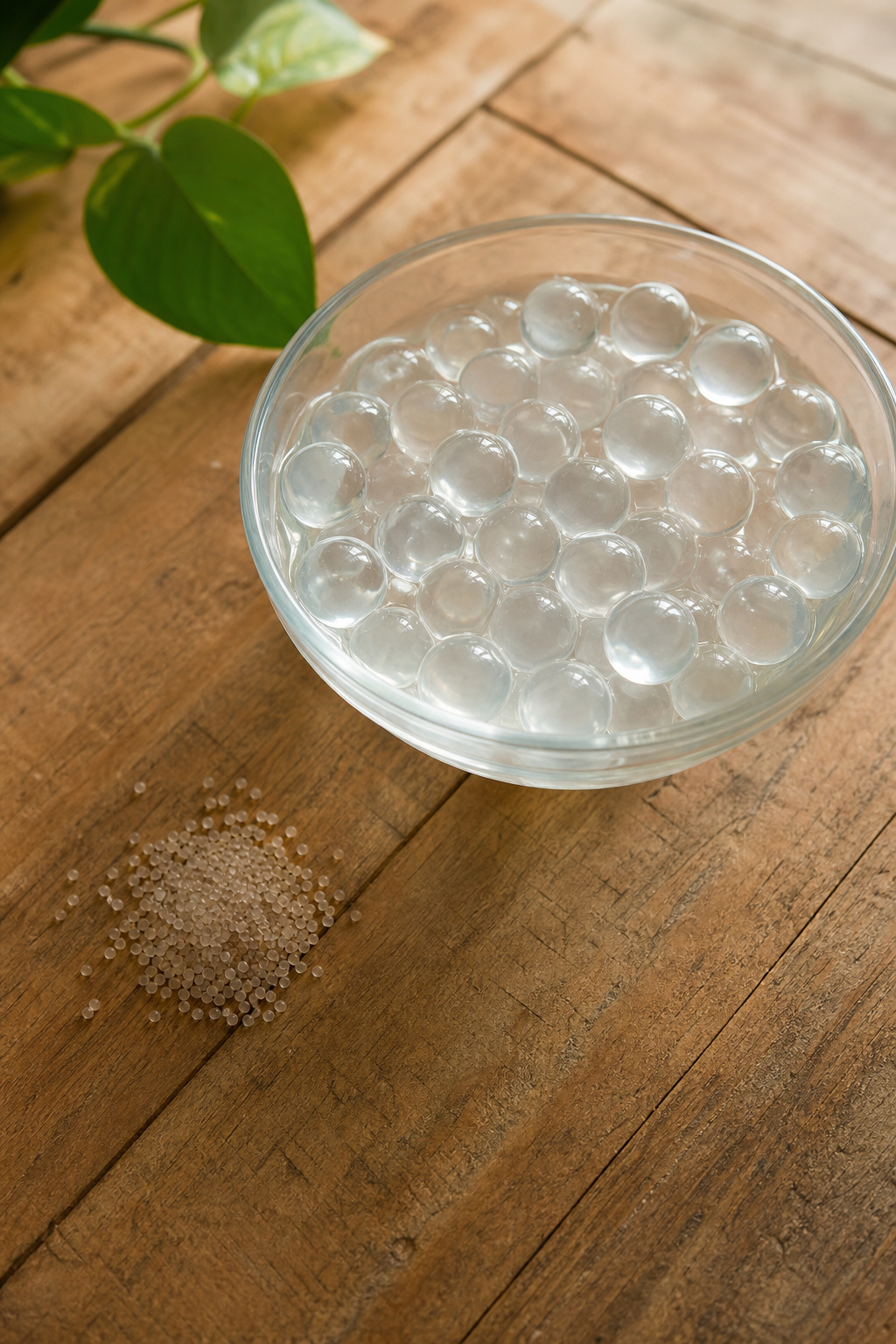
Water pearls, sometimes called water beads or hydrogel beads, start out as tiny dry pellets about the size of a peppercorn. Soaked in water, they absorb dozens of times their original volume and swell into soft, translucent spheres that look like marbles or oversized pearls.
They come in nearly every color, and clear or lightly tinted versions read as elegant in a design, while bold colors work well for a kid’s party or a bridal shower with a playful palette. Either way, they’re one of the cheapest ways I know to fill a vase with something that catches light.
Hydrate Them the Night Before
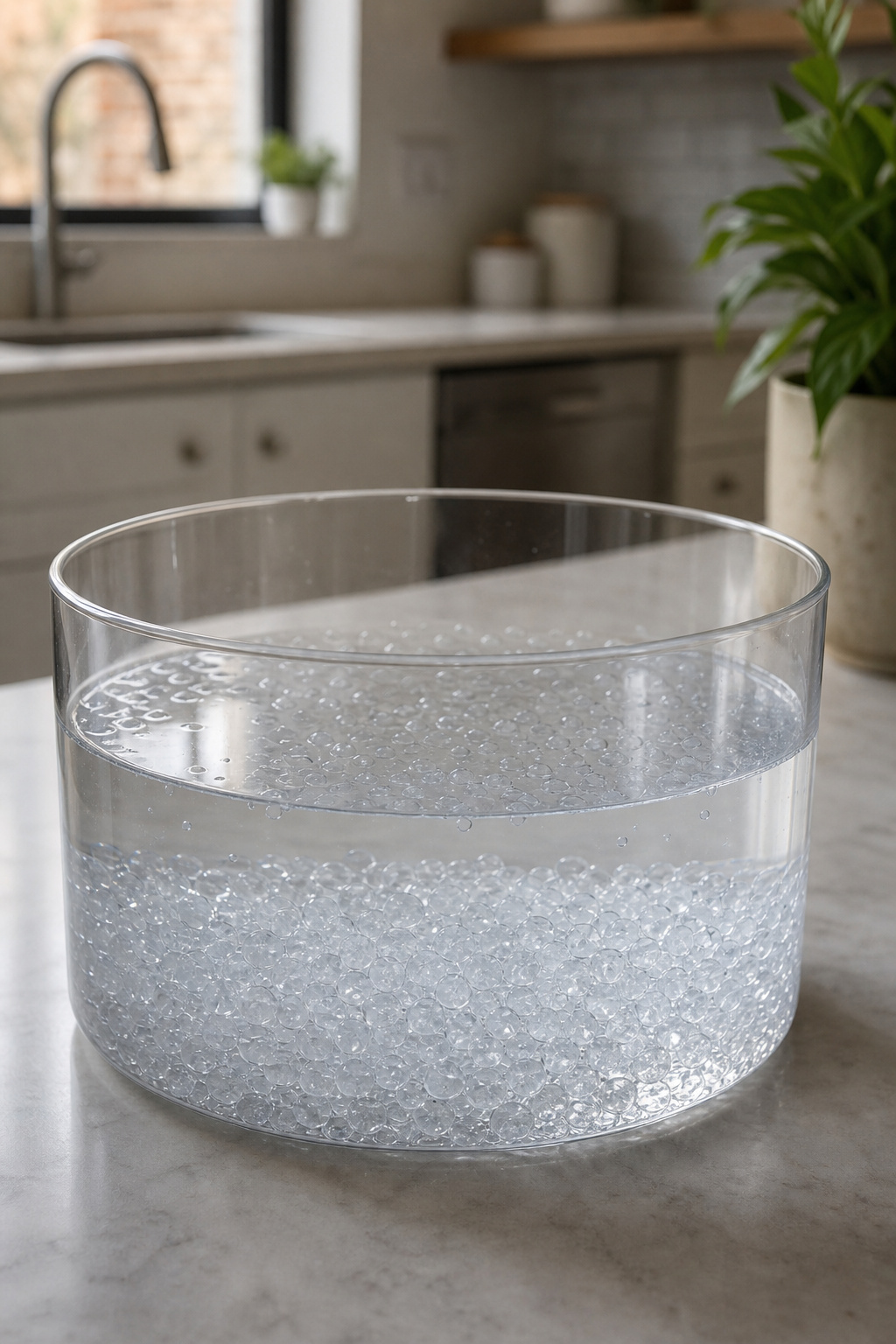
Water pearls need real time to fully expand, and rushing this step is the most common reason people end up with a container full of half-swollen, oddly shaped beads instead of the smooth pearls they expected.
Soak the dry pellets in room-temperature water for six to eight hours, or overnight if you can. Use a container much larger than you think you need, since the pellets expand far more than seems reasonable for their starting size. Once fully hydrated, drain off any excess water before adding the pearls to your final vase.
What I use in the shop: a bag of clear water beads as my default. They read as elegant in almost any design and never clash with the flowers going in around them.
Keep Them Away From Pets and Small Children
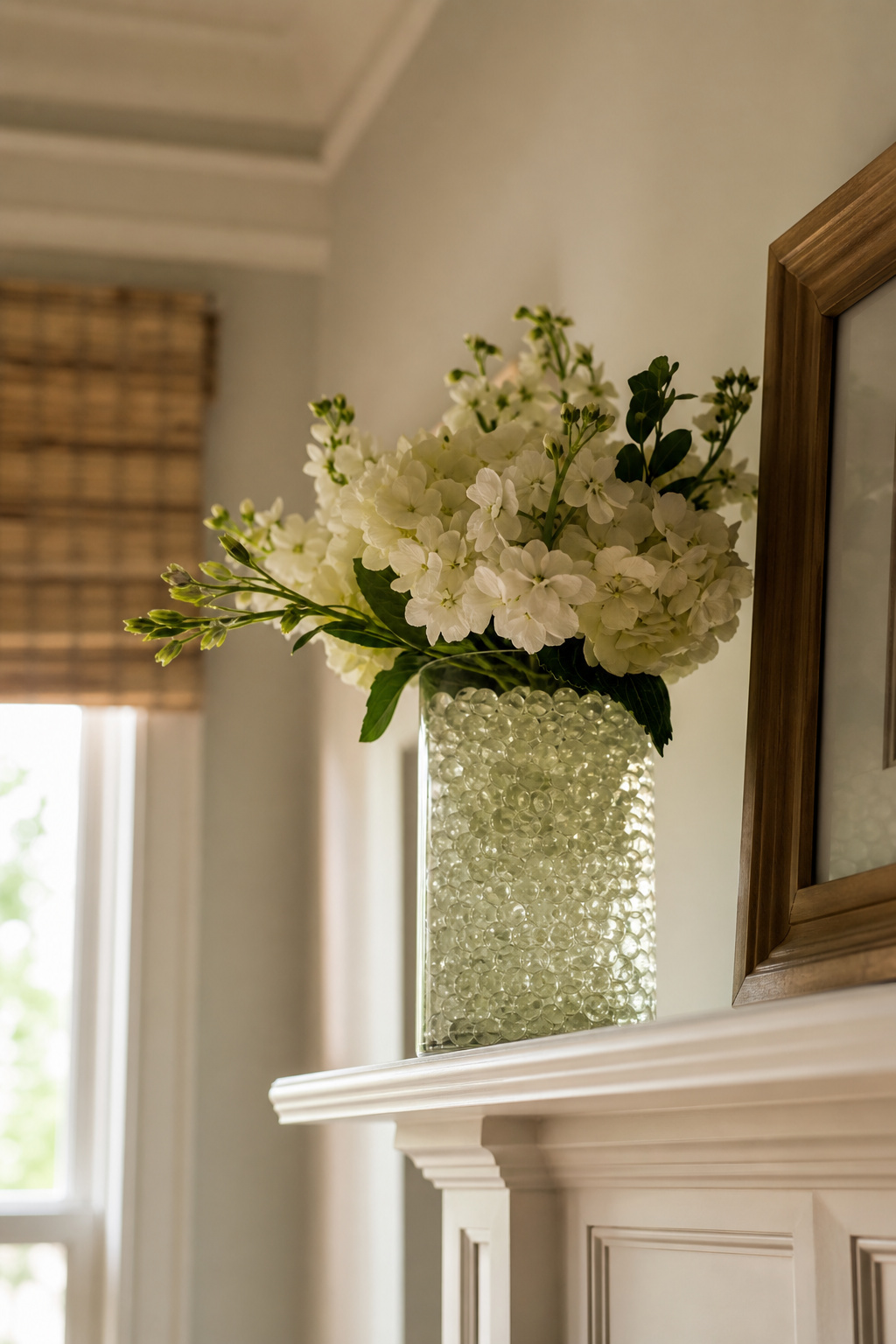
This is the part that doesn’t get said often enough. Hydrogel beads are a genuine swallowing and choking hazard for pets and young children, and they can expand further once swallowed, making them more dangerous than their soft appearance suggests. The ASPCA has more on the risks if you want the full picture.
If you’re worried this means you can’t use them at all, don’t be. It just means being thoughtful about placement. Keep water pearl arrangements up high, out of reach of a curious dog or a toddler who’s into everything, and skip them entirely for a design that’ll sit on a low coffee table in a house with pets or small kids. A high shelf, a mantel, or a dining table centerpiece for an adult gathering is safer than a floor vase or anything within easy reach.
Change the Water Regularly
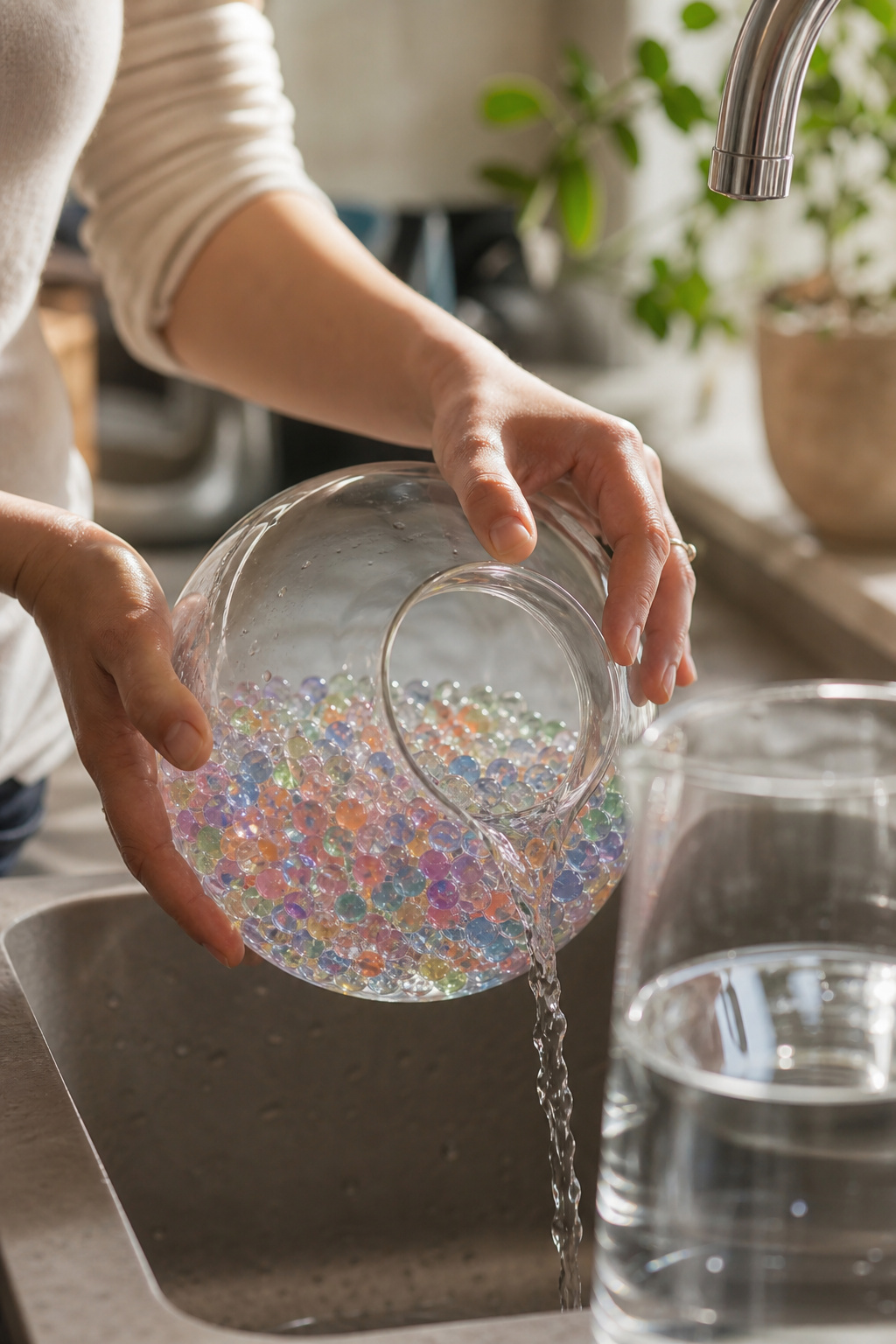
Water pearls will cloud over time just like the water in any vase, and they’ll eventually start to break down and lose their shape.
For a design that needs to hold up for more than a few days, drain and replace the water every few days to keep it clear; this is the same principle behind keeping a submerged flower arrangement looking fresh. Water pearls don’t need distilled water the way a submerged flower design does, since there’s no organic plant material breaking down in the vase, but clean tap water changed regularly will keep them looking their best.
Fully hydrated water pearls typically hold their shape and shine for one to two weeks before they start to shrink or break down. Plan your event timing around that window rather than hydrating them too far in advance.
Pair Them With Flowers That Can Handle Standing Water
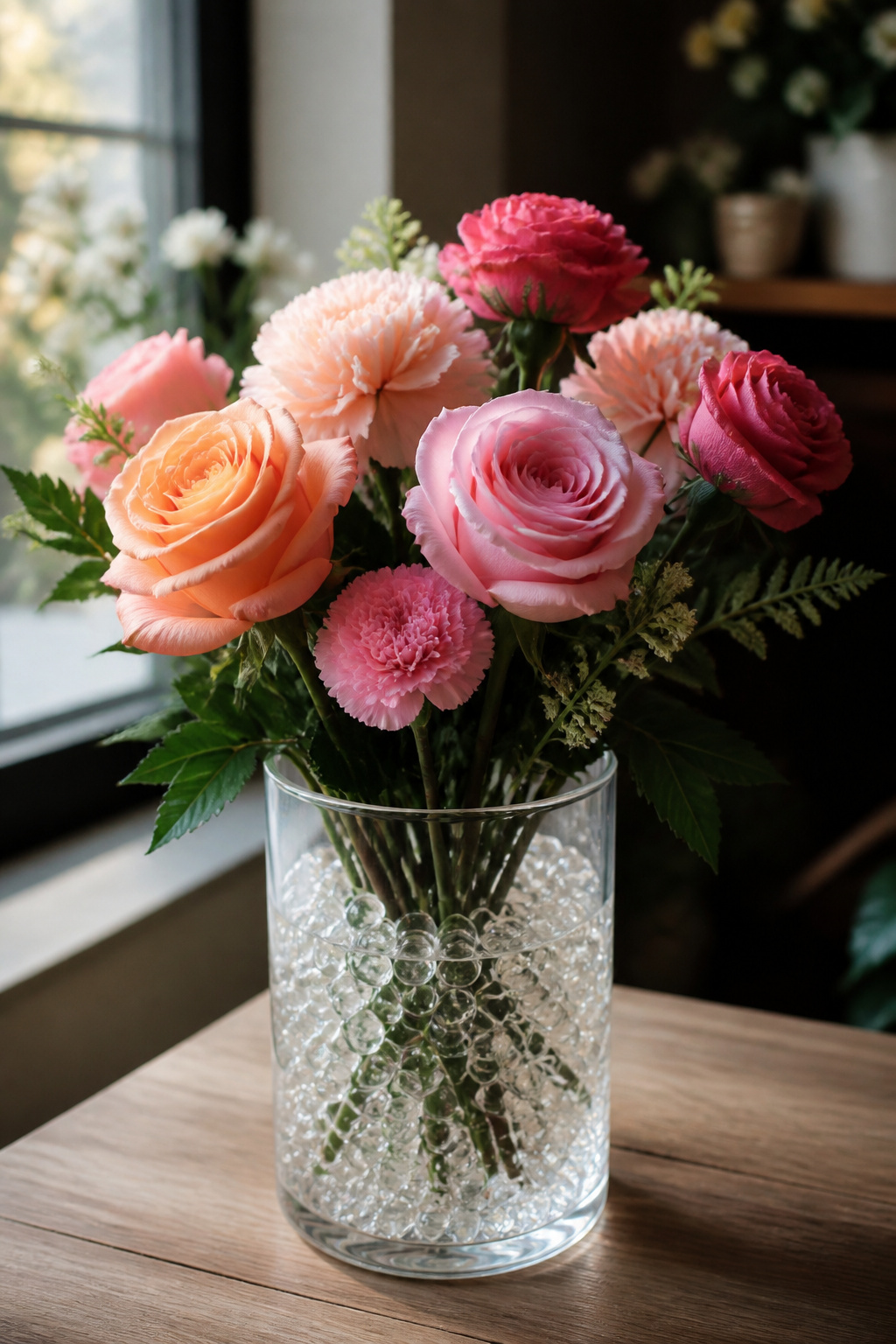
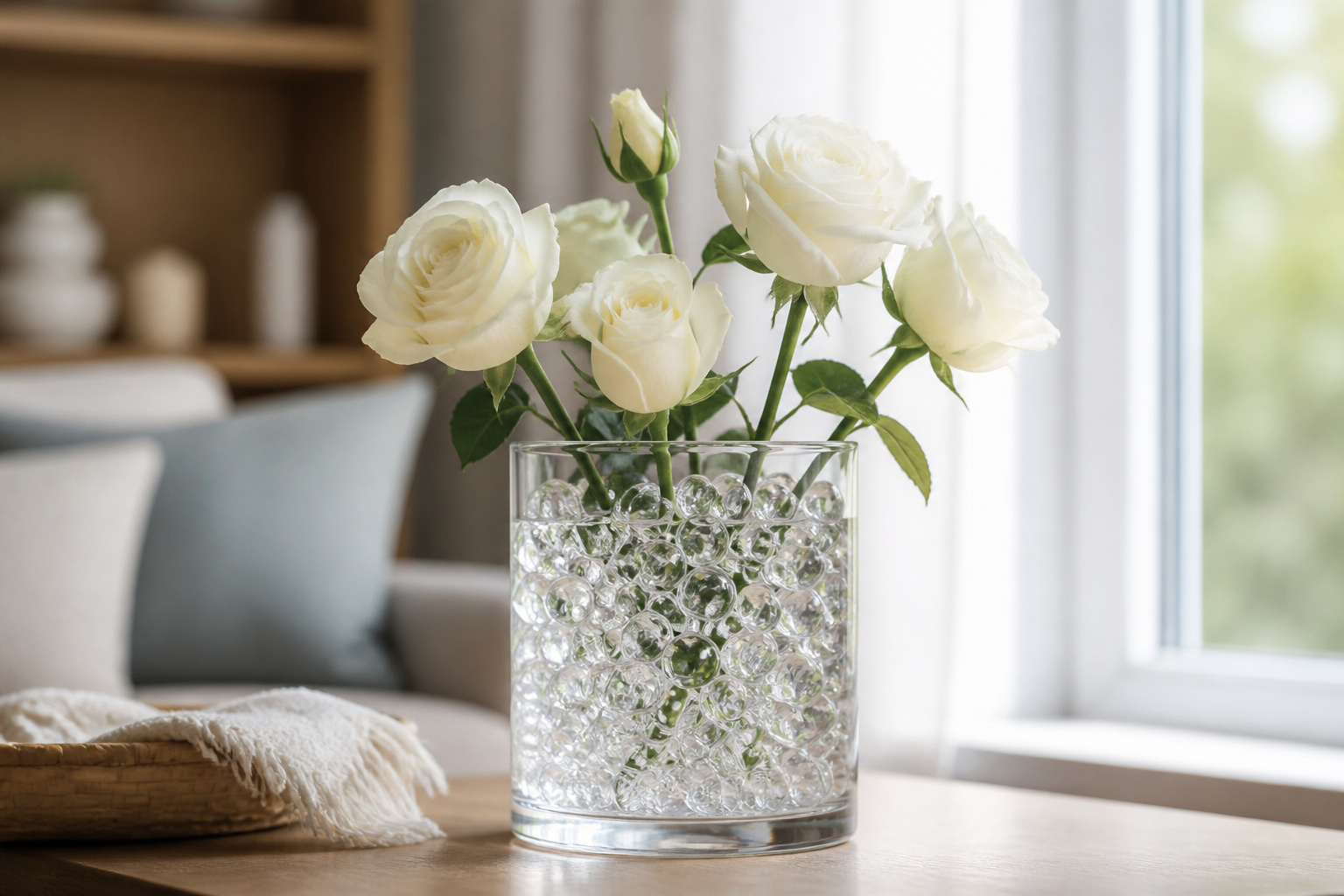
If you’re adding fresh flowers into a vase of water pearls rather than using them purely as a decorative filler around a separate arrangement, choose stems that hold up to continuous water contact the same way you would for a submerged design. Sturdy flowers like roses, carnations, or orchids handle it well. Delicate, thin-petaled flowers will break down faster surrounded by water pearls than in a normal vase.
Frequently Asked Questions
How long does it take for water pearls to hydrate fully?
Six to eight hours is the minimum, but overnight gives the most reliable, fully expanded result. Rushing this step is the main reason people end up with unevenly swollen or oddly shaped beads instead of smooth, round pearls.
Are water pearls safe to use around pets?
They’re a genuine swallowing and choking hazard, and they can expand further after being swallowed, which makes them riskier than they look. Keep any arrangement with water pearls up high and out of reach, and skip them entirely for low tables or floor vases in a house with curious pets or small children.
How long do water pearls last once hydrated?
Typically, one to two weeks before they start to shrink or lose their shape. Changing the water every few days helps keep them clear and looking their best throughout that window. Plan your hydration timing so the pearls are at their peak on the day of your event, not a week or two before it.
Can I put real flowers directly into water pearls?
Yes, and sturdy flowers like roses, carnations, and orchids handle water contact well. Thin-petaled flowers like ranunculus or sweet peas break down faster surrounded by water pearls than in a normal vase, so they’re better used as a separate accent rather than submerged directly.
Can water pearls be reused?
Not really, once they’ve started to shrink or break down. They’re inexpensive enough that treating them as single-event use makes more sense than trying to dry and rehydrate them for a second event, which rarely gives good results.
Closing Thoughts
Water pearls are one of the cheapest ways to add real visual interest to a design, as long as you give them time to hydrate properly and think through where the finished piece is going to sit.
Get the placement right, and nobody will guess how little you spent to get that effect.
Have you used water pearls before, or is the pet safety concern new information? Tell me in the comments.
Til next time,