Disclosure: This post may contain affiliate links. If you click and buy, we may earn a commission at no extra cost to you. As an Amazon Associate, we earn from qualifying purchases.
Last Updated: September 2, 2026
Quick Summary: A working florist’s honest list of the 8 tools that earn a spot on the bench every day, starting with the one purchase worth spending real money on. Below, I’ve added exactly what I use in the shop for each one, with links so you can build your own kit.
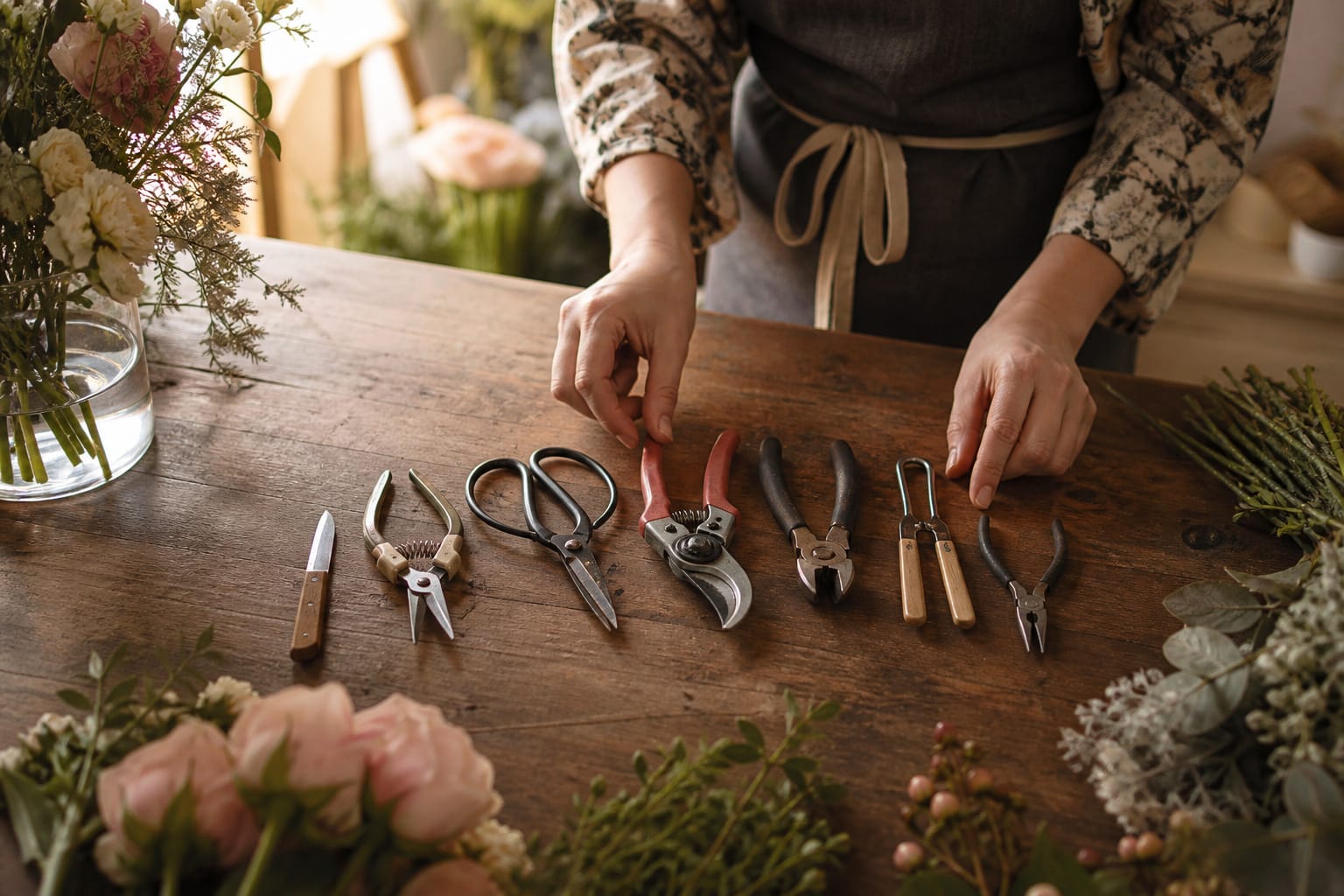
Someone stopped me at a trade show a while back and asked what I’d tell a brand-new florist to buy first. I thought about it for a second and said: buy the knife and the shears, and don’t cheap out on either. Everything else on this list comes after that. Here’s the full rundown, with honest notes on what I actually use and why.
1. A Good Floral Knife Is Non-Negotiable
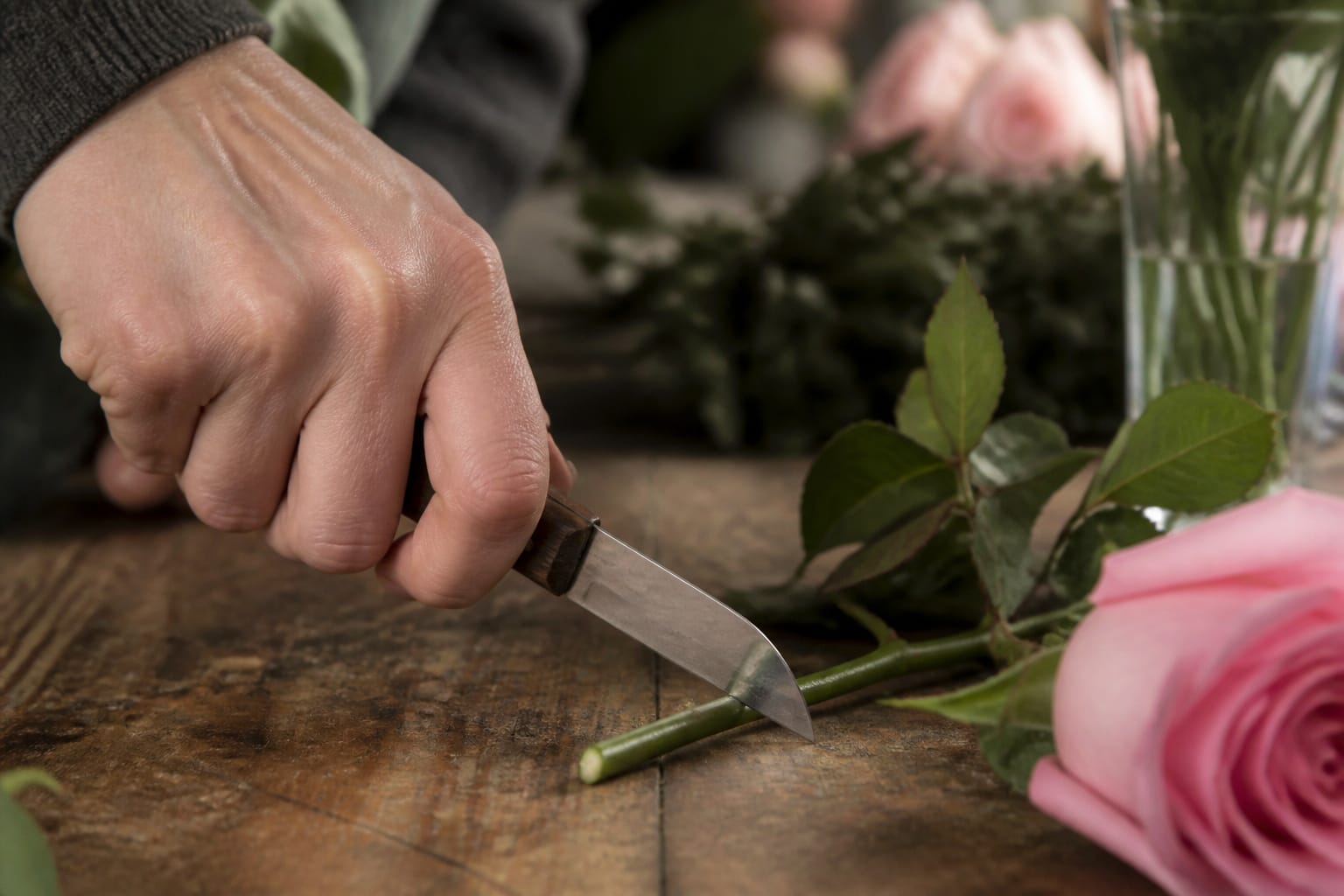
Let me be direct: if you’re serious about floral design, a quality floral knife is the single most important tool you’ll own. Not the most glamorous, but the most important.
I’ve been using the Victorinox floral knife for years. The 55mm blade is sharp, robust, and holds an edge well. The 100mm nylon handle gives you a comfortable grip that matters when you’re cutting stems for the fifth hour in a row. I’ve used it on everything from soft-stemmed tulips to hardwood branches, and it hasn’t failed me yet.
What you’re looking for in a floral knife: a straight blade (not serrated), a comfortable handle, and a blade length that gives you control without being unwieldy. The Victorinox checks all of those boxes.
One thing I’d add that the original article glossed over: keep it sharp. A sharp knife makes a clean cut without crushing stem tissue. A dull knife drags, tears, and shortens vase life. More on sharpening in a minute.
What I use in the shop: Victorinox Floral Knife. The 55mm blade holds an edge through a full day of cutting, and it’s the one purchase on this list worth spending real money on.
Products Worth Considering

Universal knife for florists and gardeners Key features: straight blade

【Precision Grafting & Pruning】:The professional grafting tool adopts a slight curve that excels at pruning branches, trimming twigs, picking fruits and flowers, as well as weeding and digging. Its fine tip allows for detailed budding and plant care

Made of highest quality Swiss and Victorinox materials
2. Fresh Flower Shears: Your Daily Workhorse
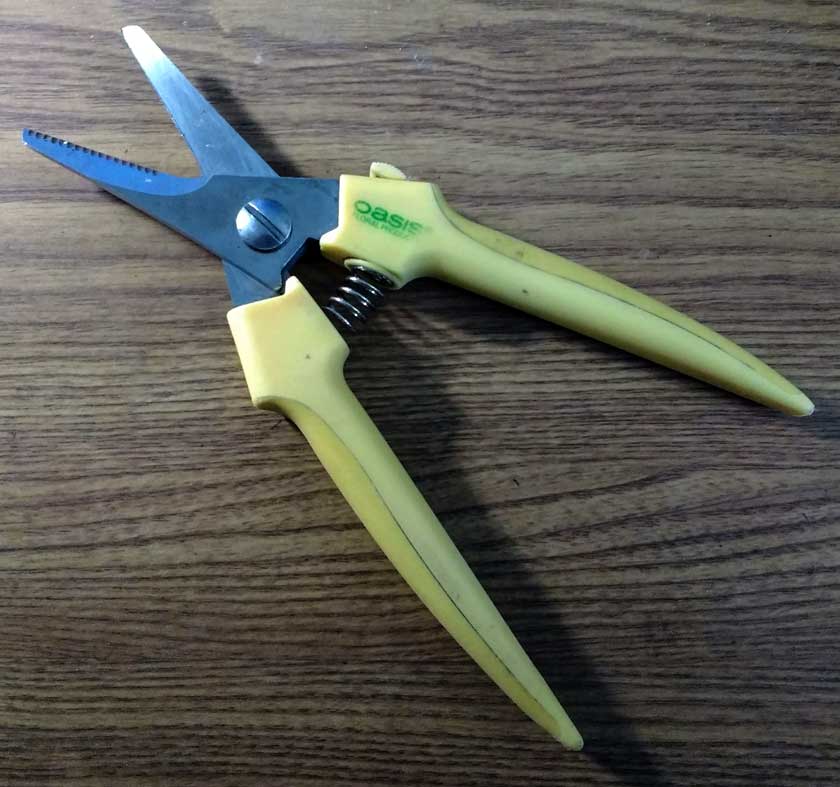
If the knife is the precision tool, fresh flower shears are the volume tool. In the shop, these get used constantly: processing deliveries, cutting stems for conditioning, trimming during arrangement. They earn their place on the bench every single day.
I use the Oasis Floral Bunch Cutter for processing. Spring-loaded, comfortable, built to handle high volume without wearing out your hand. When you’re moving through a hundred stems of roses on a Thursday morning before a weekend wedding, that spring action is not a luxury; it’s a necessity.
Keep a few replacement compression springs on hand. I pick mine up at the local hardware store. When the spring goes, most florists toss the whole tool. Don’t do that. The cutter itself lasts much longer than the spring, and springs cost almost nothing.
What I use in the shop: Oasis Floral Bunch Cutter. Spring-loaded and built to survive a hundred stems before lunch.
Products Worth Considering

Package: each package comes with 20 pruning shears for gardening; This quantity makes our offering ideal for use as well as a thoughtful gift for fellow gardening enthusiasts; Their net length is 18.5 cm/7.28 inch
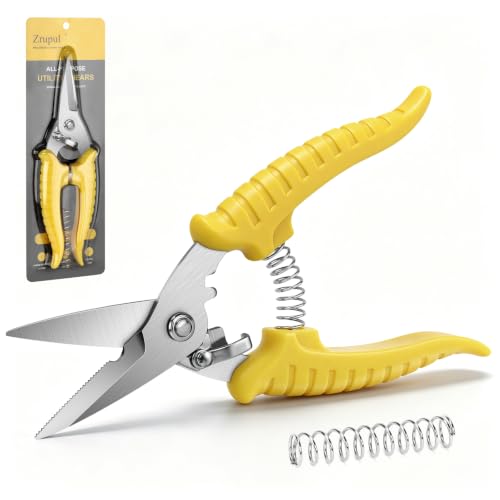
SPRING-ASSISTED CONTROL — The coil spring helps reopen the handles after every cut, reducing hand effort during repetitive jobs. A safety lock keeps these spring loaded scissors closed for storage and transport

Jero Assisted Opening Shears - Made In Portugal
3. Scissors: Keep a Dedicated Pair for Ribbon
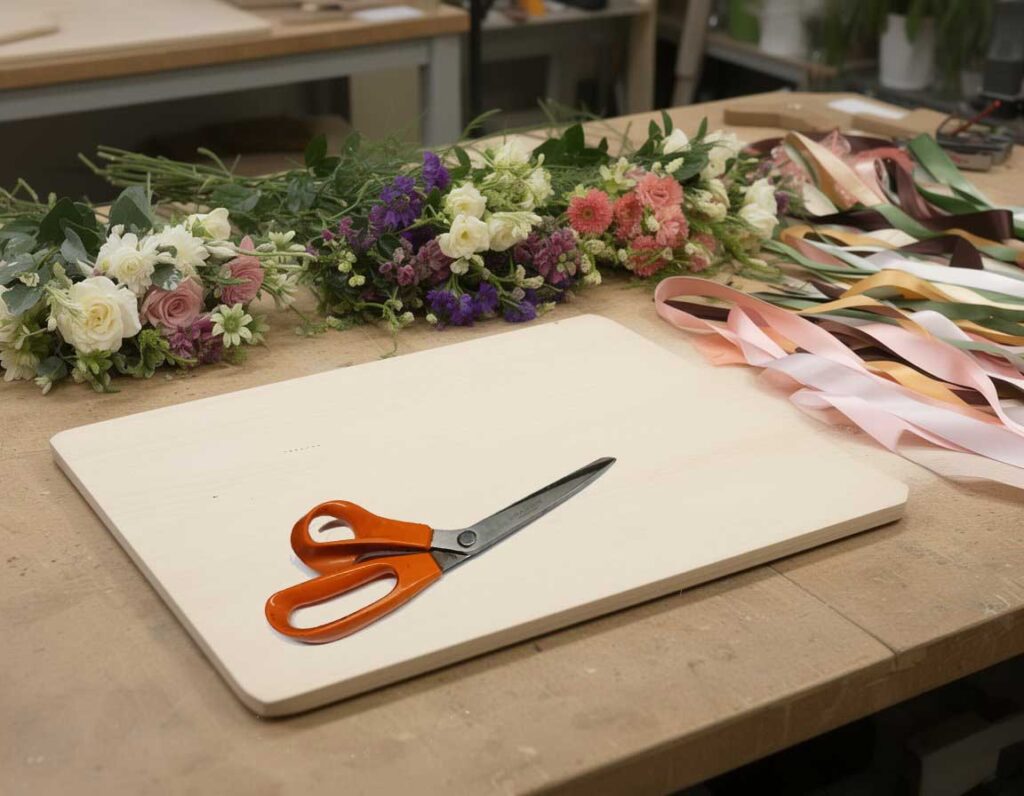
Every florist needs scissors. Several pairs, actually. But here’s the rule I follow in my shop: ribbon scissors never touch stems, and stem scissors never touch ribbon. Once you use a pair of fabric scissors on a wet stem, the blade integrity starts to degrade. Keep them separate.
For ribbon and fabric work, I use Fiskars RazorEdge Fabric Scissors. Hardened stainless steel blades, ergonomic handle, full lifetime warranty. They’re a bit heavier than average scissors, but you stop noticing that within a day or two, and the cutting performance more than makes up for it. I’ve got several pairs in the toolbox.
For general-purpose cutting (tape, packaging, netting), a standard pair of craft scissors works fine. No need to spend on something specialized for that.
What I use in the shop: Fiskars RazorEdge Fabric Scissors. Hardened steel blades and a lifetime warranty, worth the extra weight in your hand.
4. Don’t Skip the Sharpener
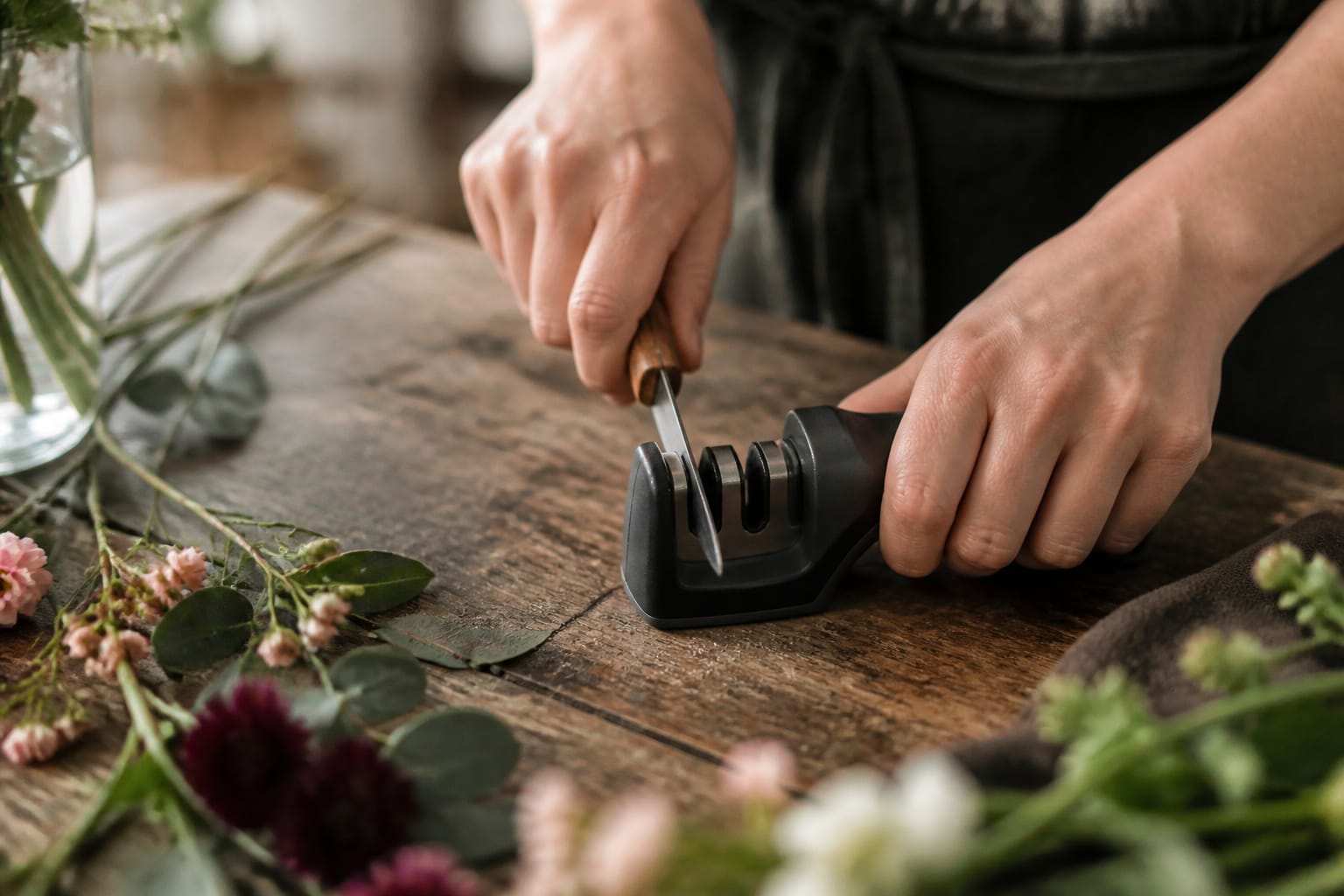
I’m more obsessed with keeping my blades sharp than most people I know. My staff will confirm this. But there’s a real reason for it that goes beyond preference: a dull blade damages stems at the cellular level, compressing the vascular tissue and reducing water uptake. That shortens vase life. It’s not just about efficiency; it’s about flower quality.
Buy a separate sharpener for your knife and for your scissors. Knife blades and scissor blades have different angles, and using the wrong sharpener on either one will actually make things worse over time.
What I use in the shop: the AccuSharp Knife Sharpener for the floral knife, and the Orange Ninja Scissors Sharpener for everything else. Different blade angles need different sharpeners.
Sharpen regularly, not just when you notice the blade dragging. By then, you’ve already been doing unnecessary damage.
5. Ratchet Shears for Branches and Woody Stems
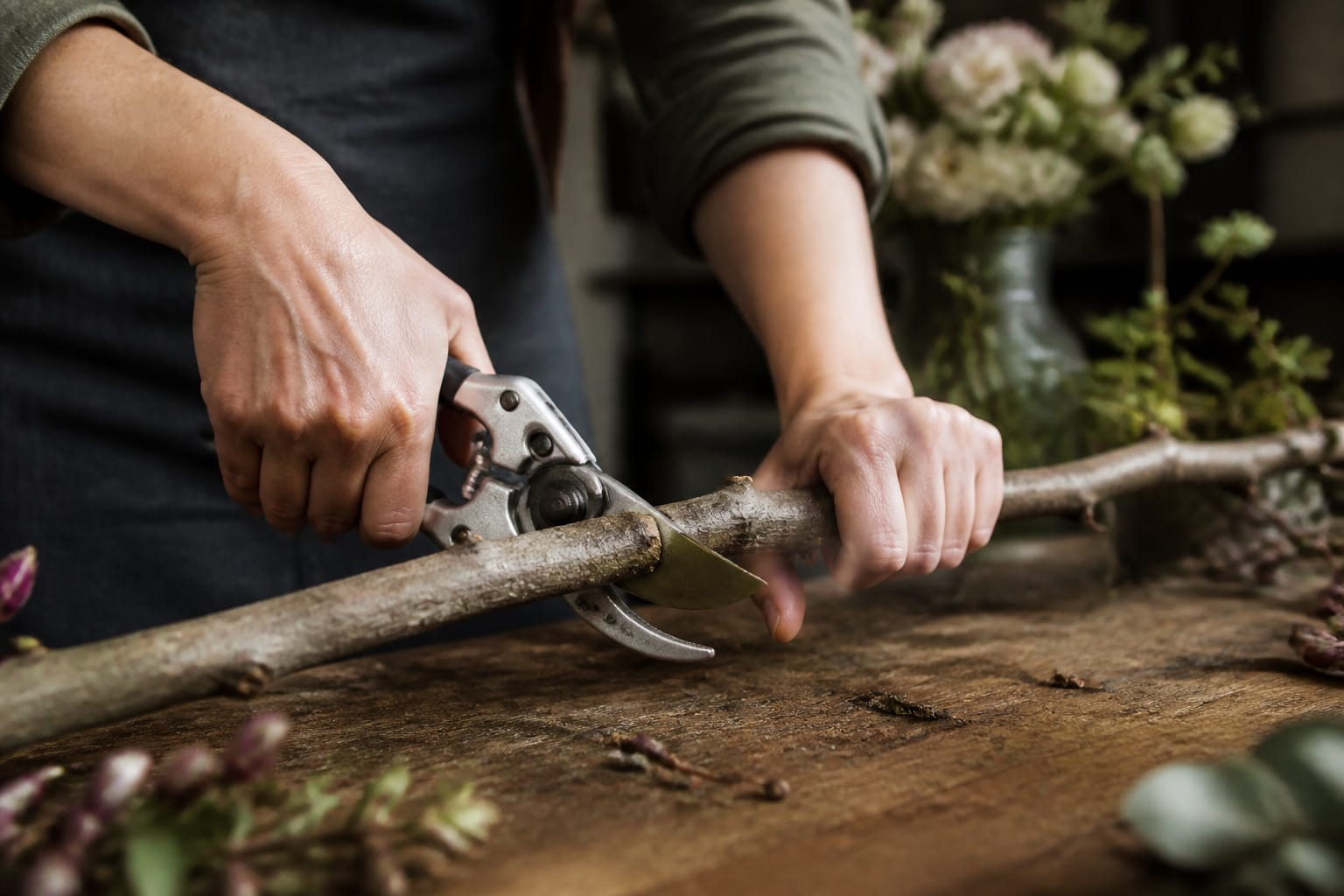
You won’t use these every day. But when you need them, nothing else will do.
Ratchet shears work by letting you apply cutting force in stages, squeeze, release slightly, and squeeze again, which builds up enough pressure to get through thick branches, woody stems, and flowering boughs without destroying your hand. Trying to muscle through that kind of material with bunch cutters is how florists end up with repetitive strain injuries.
I keep a pair handy for tropical work, large sympathy pieces with heavy branches, and anything structural that involves actual wood. Gonicc Ratchet Shears are what most serious florists end up with after trying a few cheaper options.
What I use in the shop: Gonicc Ratchet Shears. They get through woody stems in stages instead of forcing your hand into a repetitive strain injury.
Products Worth Considering
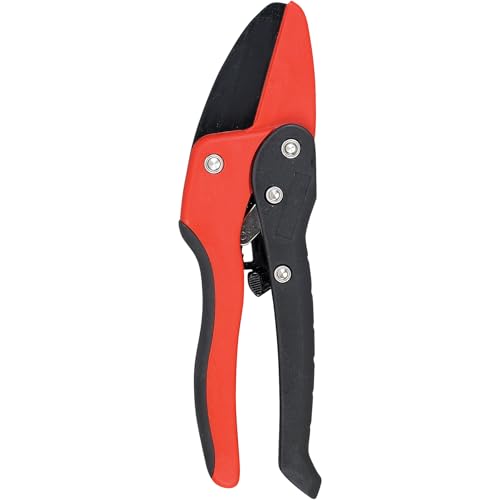
Powerful Ratcheting Cutting Action – Ratchet mechanism cuts in stages to increase leverage, making it easier to trim thicker stems and branches with reduced hand effort and fatigue.
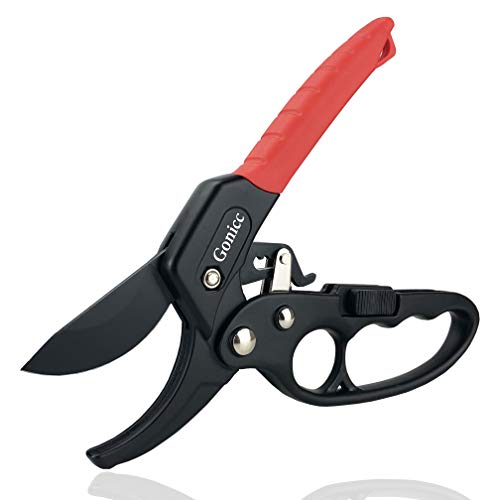
Premium SK‑5 Steel Blades - Our garden shears feature professional-grade SK‑5 steel blades built to the highest quality standards, delivering clean, precise cuts every time. Perfect for trimming light tree branches, rose bushes, shrubs, and hedges with ease.
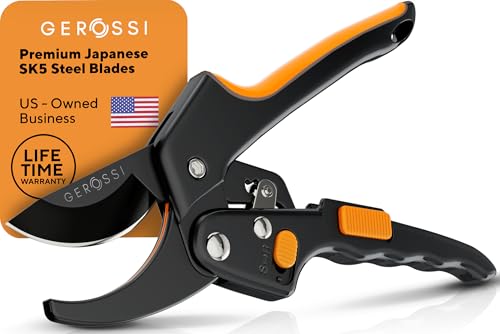
GARDEN SHEARS PRUNING - 2-in-1 Innovative Design. Our model stands out with its unique design, offering two distinct working modes – the traditional Single-Cut for everyday pruning tasks and an advanced Ratchet-Cut with a 3-step mechanism for dealing with thicker branches.
6. Wire Cutters: Scissors Won’t Cut It
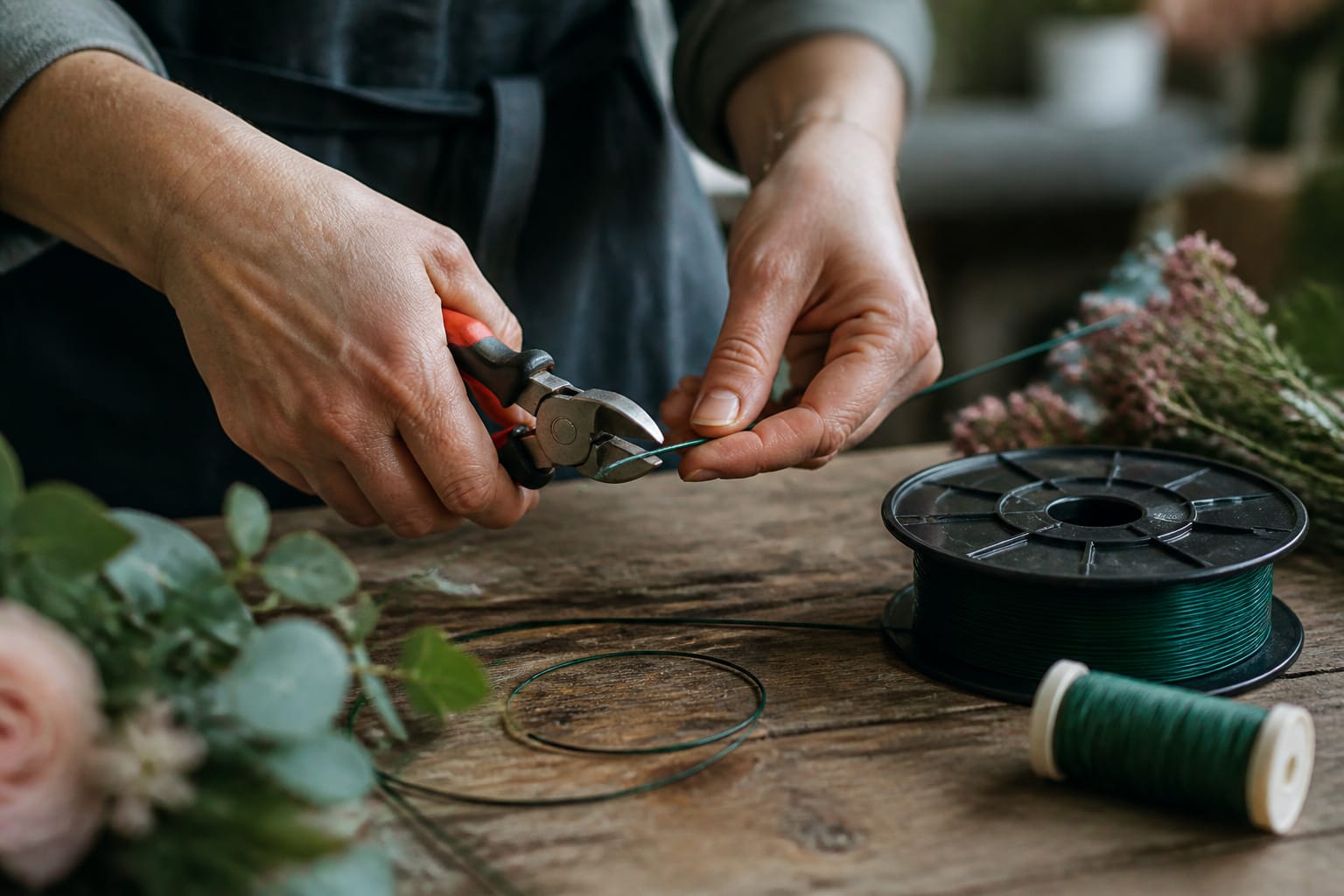
Using scissors to cut heavy floral wire is a fast way to ruin a good pair of scissors. Fine bullion wire and thin ribbon wire are fine for scissors. Anything heavier, 20 gauge and up, needs proper wire cutters.
In practice, if you do corsage and boutonniere work, wedding work, or any design that uses structural wire, wire cutters are in your hands regularly. I keep a pair within arm’s reach at the bench at all times.
What I use in the shop: BEONFU Floral Wire Cutters. Clean cuts on every gauge, and they hold up to daily use at the bench.
7. A Thorn and Foliage Stripper
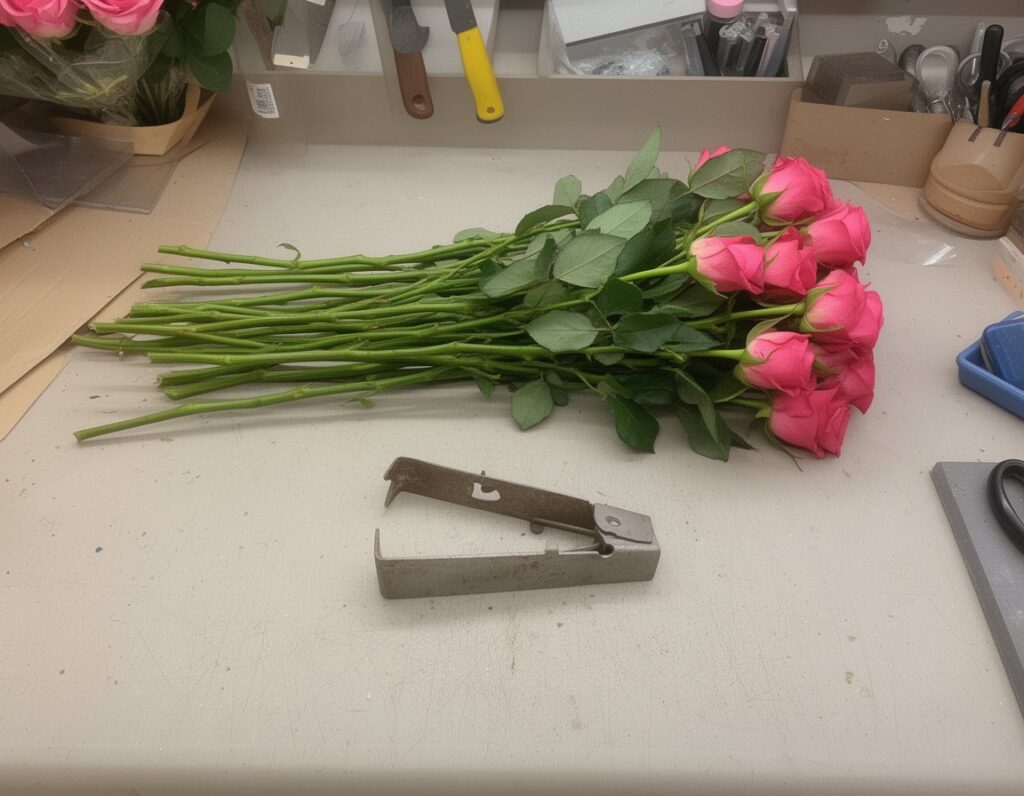
I’ll be honest: this one doesn’t always make the essential list, but it earns its spot on mine.
For roses, I use a metal thorn stripper; it’s faster and cleaner than stripping by hand, especially on long-stem roses with heavy thorns. For foliage on other flowers, I still strip by hand most of the time. If you have sensitive skin, a rubber stripper or garden gloves are your better option; rose thorns and some foliage can cause a reaction with repeated exposure that sneaks up on you.
What I use in the shop: Floral Thorn Stripper. The metal style gives you more control than the rubber multi-stem versions.
8. A Jewelry Plier for Fine Wire Work
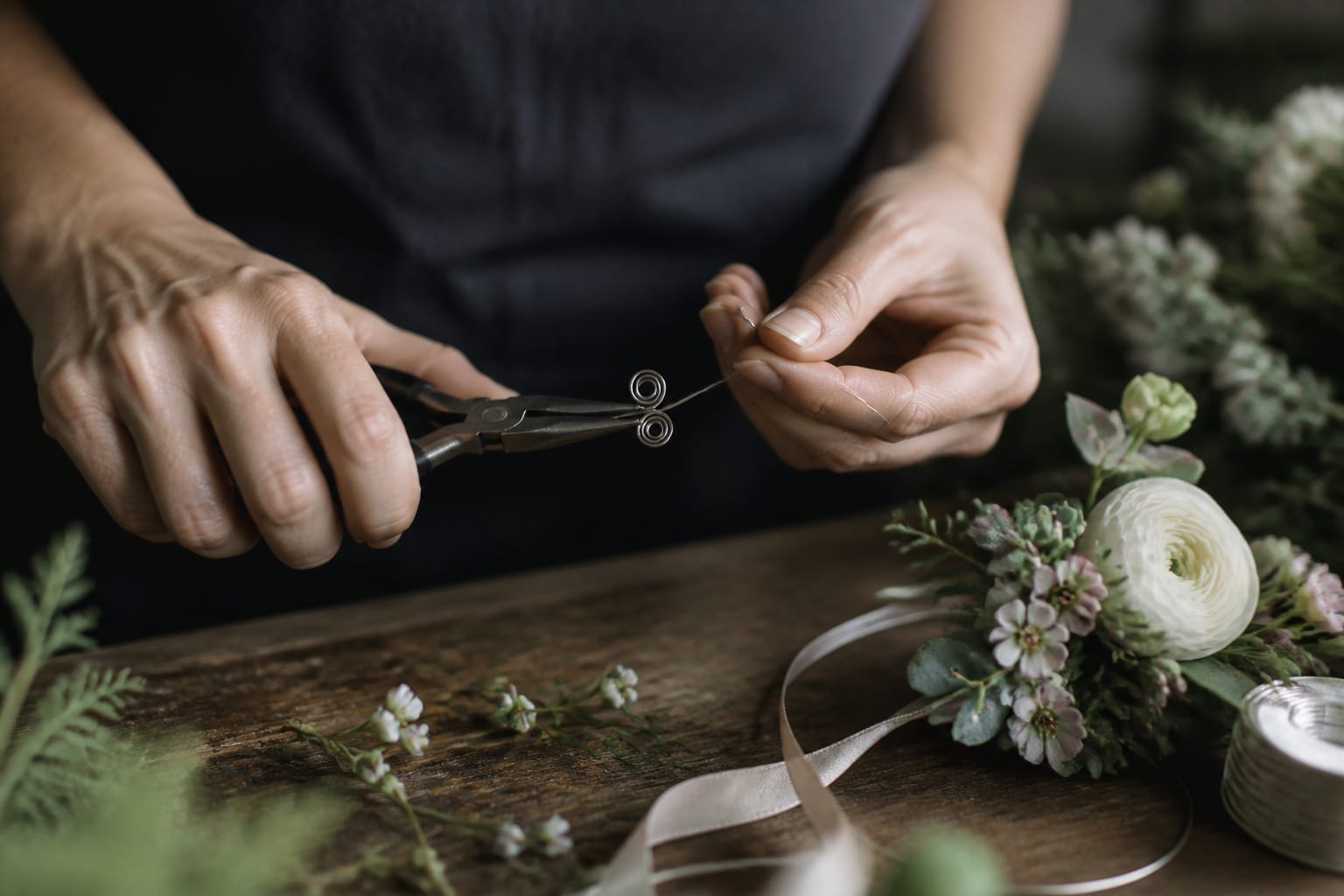
I’ll be transparent: the original article listed seven tools, and I’m adding this one because modern wedding design has made it genuinely necessary.
Custom wire armatures for bouquets, flat wire cuffs for corsages, decorative wire embellishments: this is all standard work now. A needle-nose plier will get you partway there, but the jaw width and grip precision on a proper jewelry plier is noticeably better for fine work. I switched a while back and haven’t looked back.
What I use in the shop: Shynek Jewelry Plier Set. The round-nose and flat-nose combination covers most of what you’ll actually reach for.
Your Complete Shopping List
Building the whole kit? A full set of tools adds up to a real order, so shipping speed matters, especially if you’re stocking up before wedding season. Prime gets eligible orders to your door fast, and eligible new members can start a free Prime trial. As an affiliate, we earn on qualifying purchases.
| Tool | My Pick | Notes |
|---|---|---|
| Floral knife | Victorinox Floral Knife | Most important purchase on this list |
| Fresh flower shears | Oasis Bunch Cutter | Stock replacement springs |
| Fabric/ribbon scissors | Fiskars RazorEdge | Keep separate from stem scissors |
| Knife sharpener | AccuSharp Sharpener | Sharpen before you think you need to |
| Scissor sharpener | Orange Ninja Scissor Sharpener | Different angle than knife sharpener |
| Ratchet shears | Gonicc Ratchet Shears | For branches and woody stems |
| Wire cutters | BOENFU Wire Cutters | Don’t use scissors for heavy gauge |
| Thorn stripper | Floral Thorn Stripper | Metal style preferred |
| Jewelry plier | Shynek Jewelry Pliers | Essential for modern corsage/bouquet work |
Frequently Asked Questions
What is the most important tool for floral design?
In my opinion, a quality floral knife. A sharp, well-made knife affects everything downstream: stem quality, water uptake, flower longevity, and how efficiently you work. It’s the tool I’d buy first and spend the most on.
What’s the difference between fresh flower shears and regular scissors?
Fresh flower shears are spring-loaded for high-volume stem cutting and built to handle wet, fibrous material without degrading. Regular scissors aren’t designed for that. They’ll dull quickly and make messier cuts. They serve different purposes and shouldn’t be substituted for each other.
Do I really need separate scissors for ribbon?
Yes. Cutting wet stems with fabric scissors can quickly damage the blade edge. Keep ribbon scissors for dry fabric and ribbon only, and use a separate pair for anything else. It takes discipline to maintain, but your fabric scissors will last significantly longer.
Why do I need a separate sharpener for my knife and scissors?
Knife blades and scissor blades are sharpened at different angles. Using the wrong sharpener doesn’t just fail to sharpen; it can actually damage the blade geometry over time. Worth getting the right tool for each.
When do I need ratchet shears versus regular bunch cutters?
Use bunch cutters for soft-to-medium stems, which is the vast majority of everyday cutting. Reach for ratchet shears when you’re dealing with actual wood: branches, boughs, heavy tropical stems, large sympathy piece structures. The ratchet mechanism lets you build cutting force gradually rather than trying to force through in one squeeze.
What gauge of floral wire requires wire cutters versus scissors?
As a rule, cut 22 gauge or heavier wire with proper wire cutters. Fine bullion wire, thin spool wire, and ribbon wire are generally safe to cut with scissors. When in doubt, use the wire cutters. It takes two seconds and saves your blades.
What’s a jewelry plier, and why do florists need it?
It’s a precision plier designed for fine wire manipulation. It has tighter jaws, smoother action, and better control than a standard needle-nose plier. For modern corsage construction, wire cuffs, and custom bouquet armatures, differences in control are meaningful. It’s not a day-one purchase, but it belongs in every working florist’s kit.
Where is the best place to buy floral design tools?
Wholesale floral suppliers carry professional-grade tools, though not all sell to the public. Amazon is reliable for most of the items on this list. I’ve linked to the specific products we use in the shop throughout this article.
Good tools don’t make you a good designer, but bad tools will consistently hold a good designer back. Buy the knife. Keep it sharp. Build from there. The rest of this list will follow naturally as you figure out what kind of work you do most.
If you’re building out the rest of your kit, the floral glue guide covers the adhesives that belong on the same bench as this list, and the flower processing guide shows most of these tools in action.
A good tool doesn’t do the work for you; it just gets out of the way so the flowers can.
What tool do you reach for most? I’d be curious to hear if there’s something you’d add to this list. Drop it in the comments.
Til next time,