Disclosure: This post may contain affiliate links. If you click and buy, we may earn a commission at no extra cost to you. As an Amazon Associate, we earn from qualifying purchases.
Last updated: June 2026
A woman came into the shop a few years back carrying a single echeveria in a cracked terra cotta pot. She wanted to know how to display it on a windowsill without it looking sad and lonely. I ended up spending twenty minutes with her talking through containers, groupings, and light. By the time she left, she had three new ideas and a handful of cuttings from our propagation shelf.
That conversation stuck with me. Most people who love succulents have no shortage of plants. What they need is a little creative direction on how to display them.
So here’s a roundup of display ideas I think you’ll find useful, from simple container planting all the way to succulent wedding bouquets. I’ve included a video tutorial that covers each one, because sometimes the best way to learn is to watch someone do it. Take a look and see what clicks.
Start With the Right Container — Then Get Creative
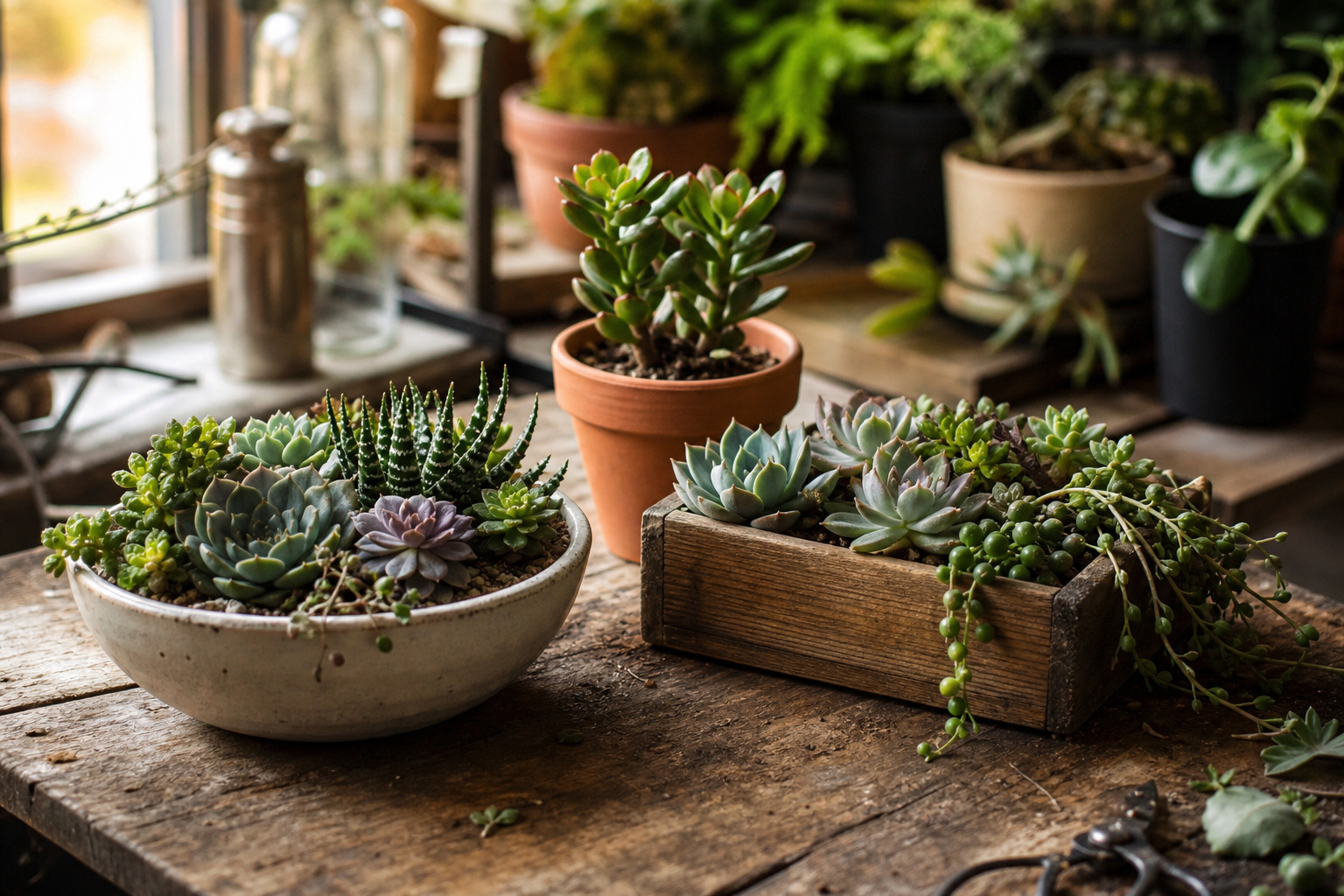
Before you run out and buy fancy pots, check what you’ve already got around the house. In my experience, the most creative succulent displays come from unexpected vessels — wooden boxes, ceramic bowls, old teacups, baskets, even vintage colanders. If it holds soil and has somewhere for water to go, it’ll work.
That said, when you do buy containers, drainage is non-negotiable. Succulents rot fast in standing water. One drainage hole at the bottom changes everything.
The other thing that matters is the mix. Standard potting soil holds too much moisture for succulents. You want something gritty and fast-draining.
What I use in the shop: Cactus and succulent potting mix — it’s formulated to drain quickly and keep roots from sitting in wet soil. Pair it with a decorative top dressing of pea gravel or coarse sand, and the whole planting looks polished with almost no extra effort.
Try a Kokedama for Something Really Different
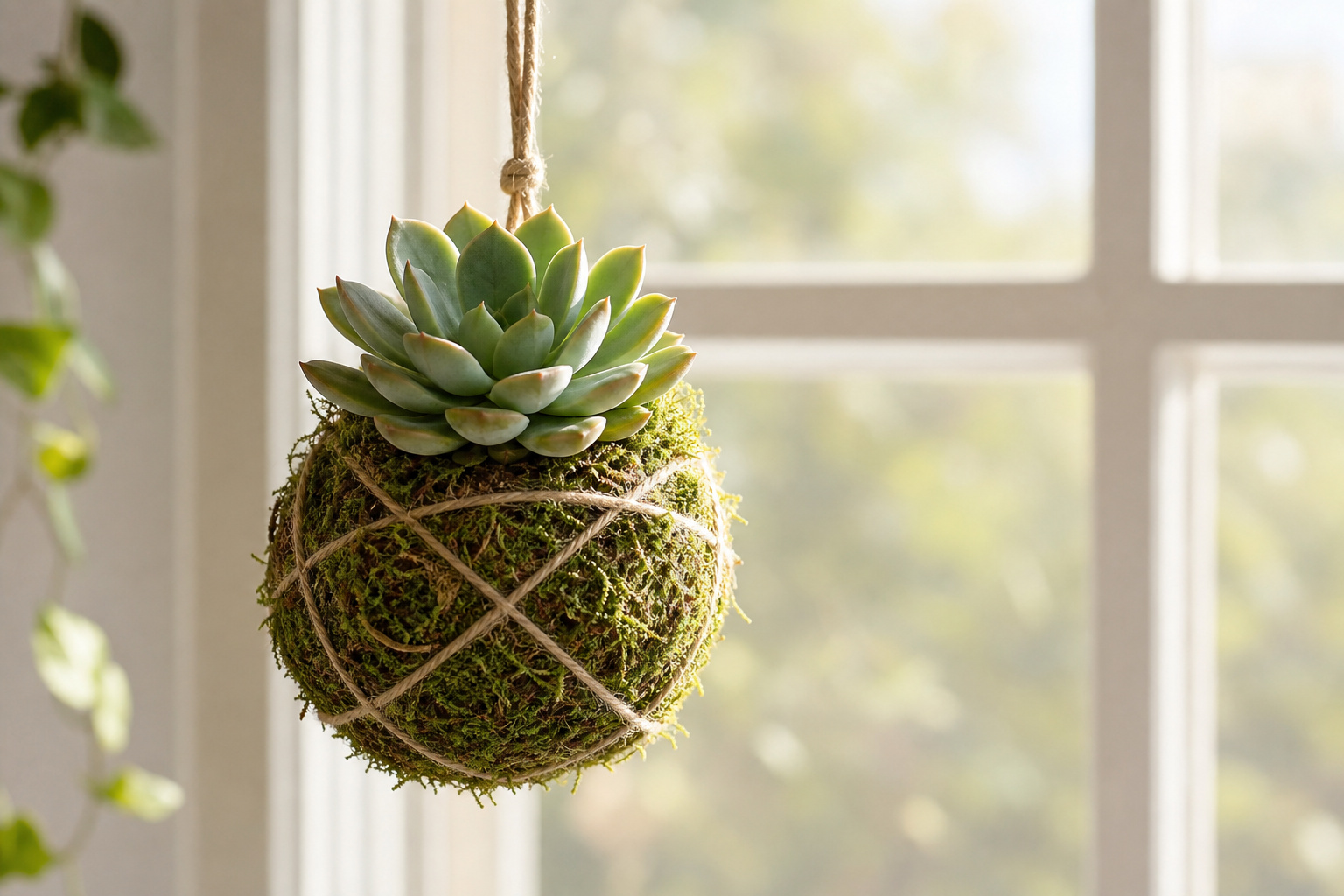
If you’ve never heard of a kokedama, you’re in for a treat. It’s a traditional Japanese planting technique. The plant’s root ball gets wrapped in moistened moss and bound with twine, creating a hanging sphere that looks like a botanical work of art. No pot required.
Succulents are ideal for kokedamas because they don’t need frequent watering. You can mist or dunk the moss ball every week or two, and the plants stay happy. I’ve made a few for our shop displays, and they always get comments.
If you want to go deeper into the technique, we have a full guide on how to make a kokedama that walks through the process step by step.
Use a Pumpkin as a Seasonal Planter
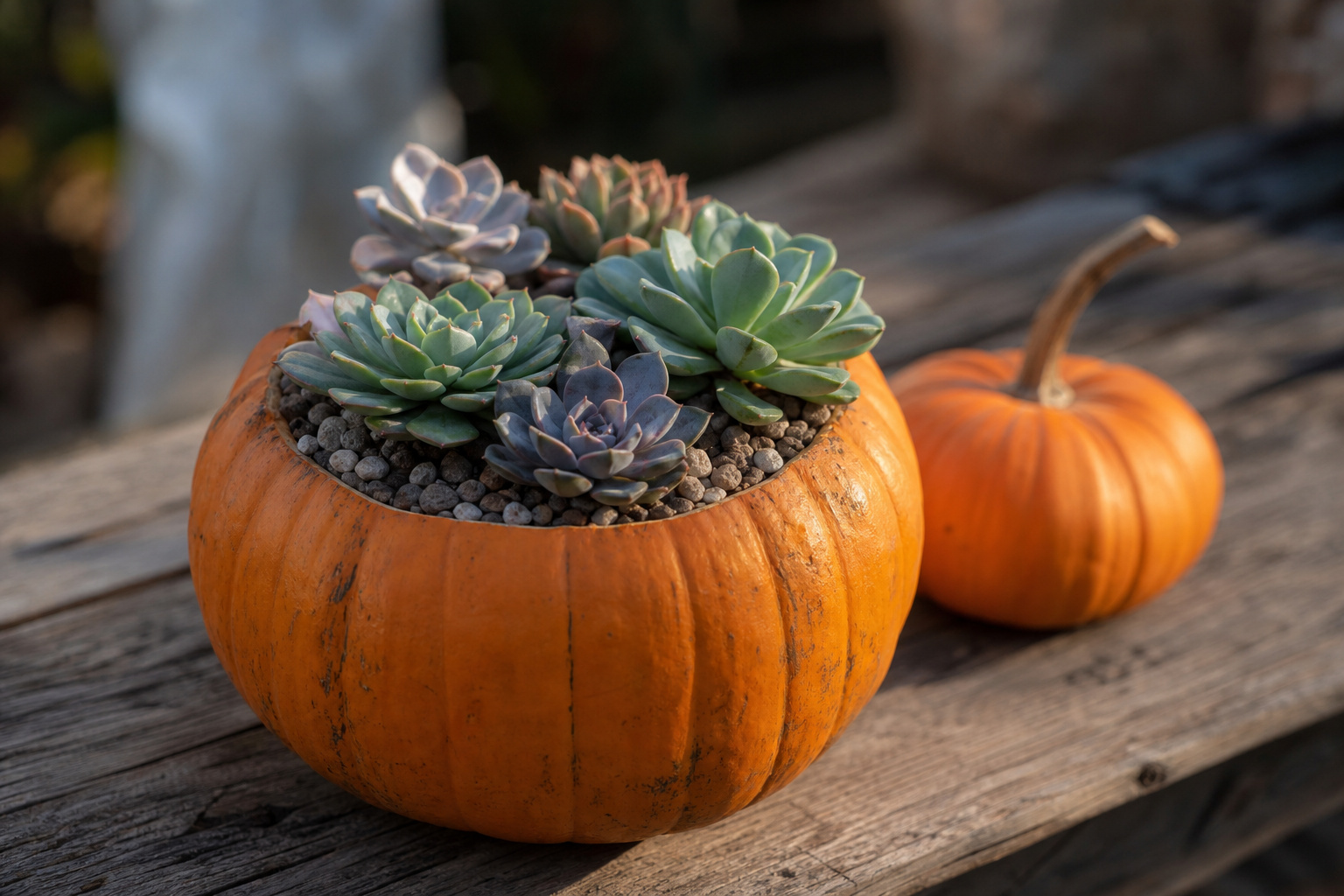
This one gets a lot of people. It sounds gimmicky until you see it done well, and then it looks genuinely great. A pumpkin or gourd makes a surprisingly good temporary planter for succulents, especially in the fall. The colors work together naturally, and you can find pumpkins everywhere from late September through November for next to nothing.
The arrangement won’t last forever, a few weeks at most before the pumpkin starts to break down, but for a seasonal centerpiece or party display, it’s hard to beat.
Combine Fresh Flowers and Succulents in an Arrangement
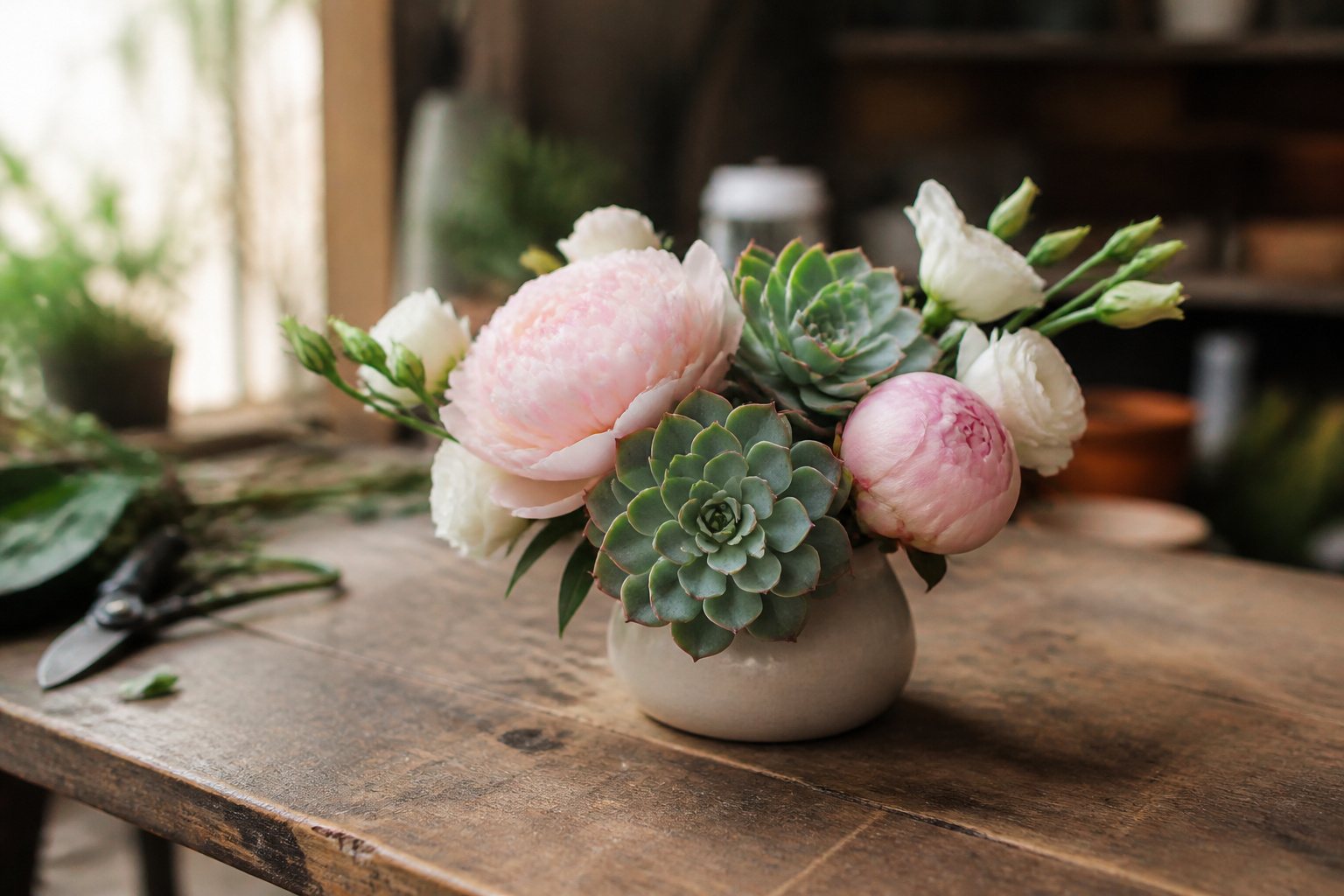
This is something we do at the shop regularly, and it always lands well with customers who want something with more texture and longevity than a standard cut flower arrangement. Succulents act as long-lasting focal elements while the fresh flowers provide color and movement.
The key is treating the succulent like you’d treat any other stem. Wire it if needed for stability, and don’t crowd it. Give it room to read as a distinct element in the design. This quick tutorial shows the technique:
Mount a Wall Hanger When Floor Space Is Tight
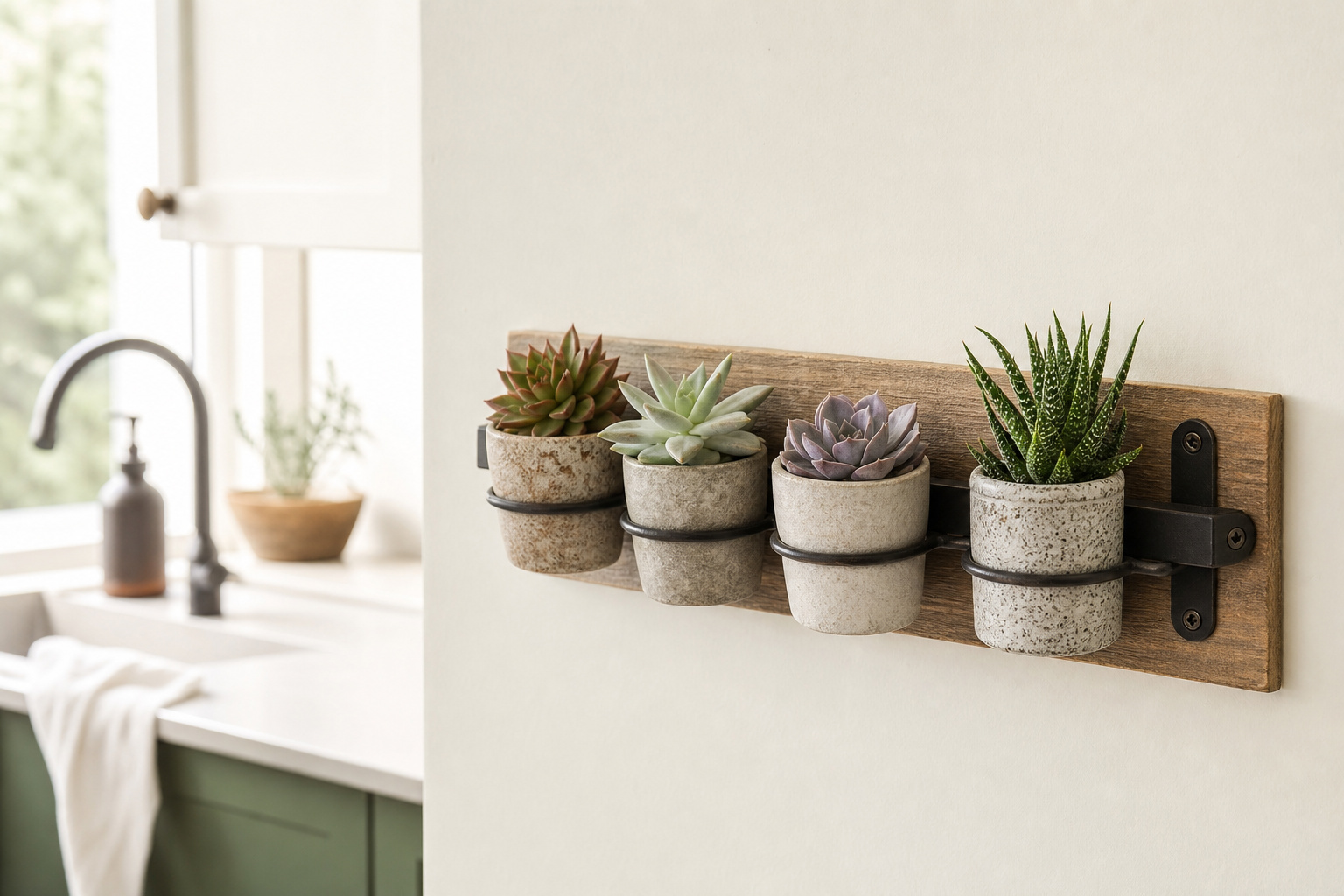
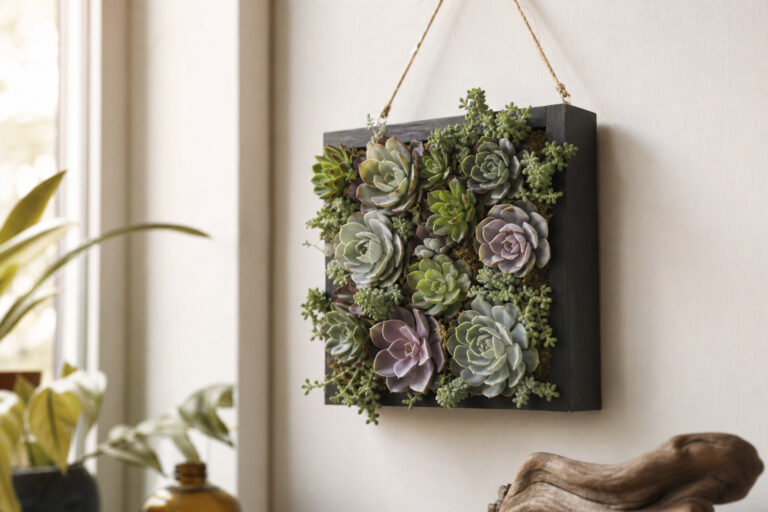
Wall planters solve a real problem: you love succulents, but you’ve run out of flat surfaces. A well-mounted wall planter turns dead vertical space into a living display. They work especially well in kitchens and bathrooms where counter space is always at a premium.
The idea is clever and disarmingly simple. It uses an inexpensive metal hose clamp to hold pots of different sizes in place. You can customize the layout to fit any wall. No complicated hardware, no major installation.
Propagate More Plants From What You Already Have
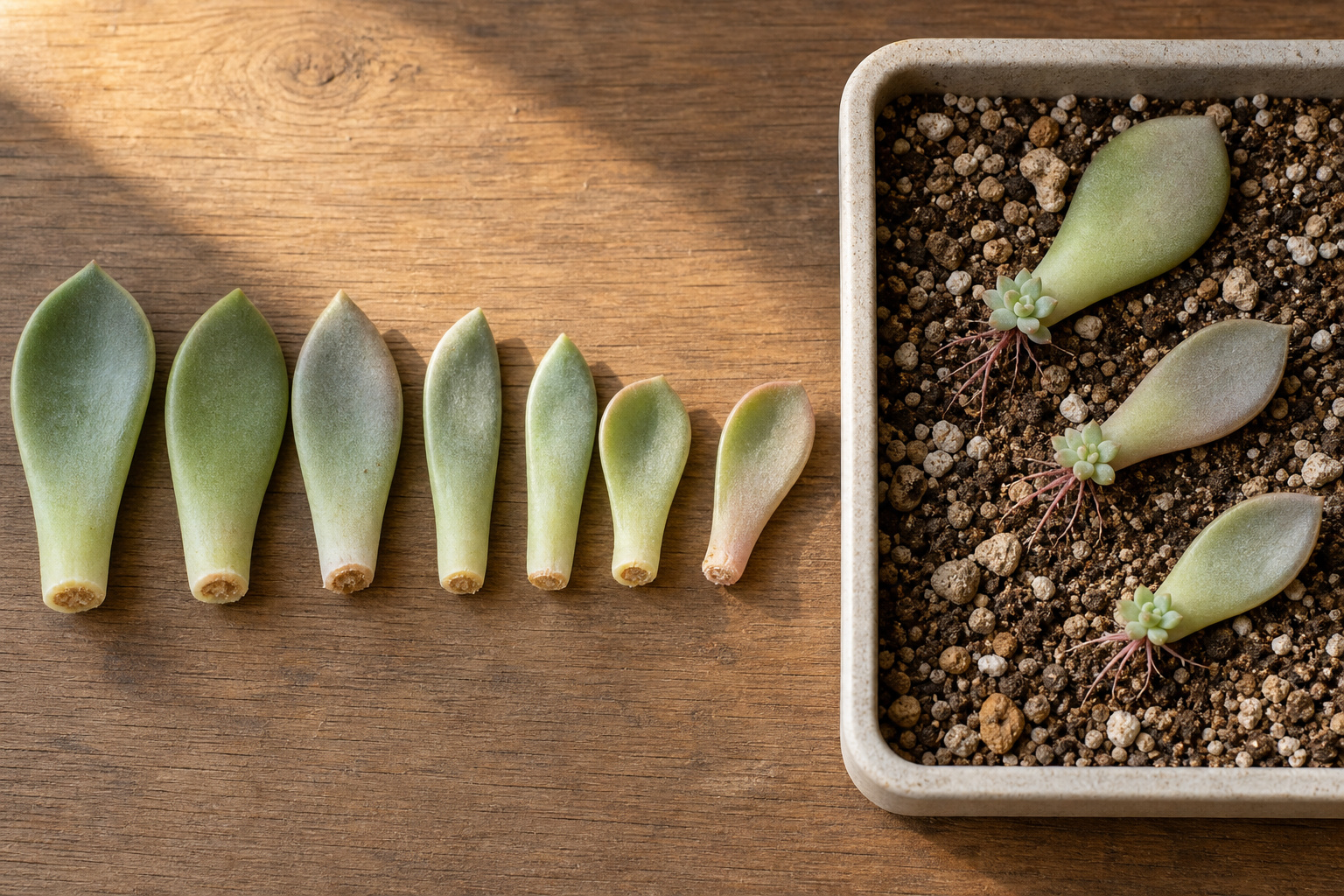
One of the underrated things about succulents is how easy they are to multiply. Jade plants in particular are almost embarrassingly simple to propagate. Snap off a leaf, let the cut end callous for a day or two, set it on top of some moist cactus mix, and wait. You’ll have roots in a few weeks without doing much of anything.
More plants mean more displays. And free plants from cuttings are a pretty good deal. If you’re curious about the full process, check out our jade plant care guide. It covers propagation in detail.
Display in Glass — Terrariums Are Hard to Mess Up
A glass terrarium is one of the most forgiving succulent displays you can make. You layer drainage material, then cactus mix, then plants, then top dressing. The finished product looks like something you’d pay a lot of money for at a boutique plant shop. It’s not.
The watering schedule is almost nothing. Monthly or every six weeks is usually plenty. Set it in bright indirect light and leave it alone. Succulents genuinely thrive on neglect, which is more than most houseplants can say.
Wire Succulents Into a Wedding Bouquet
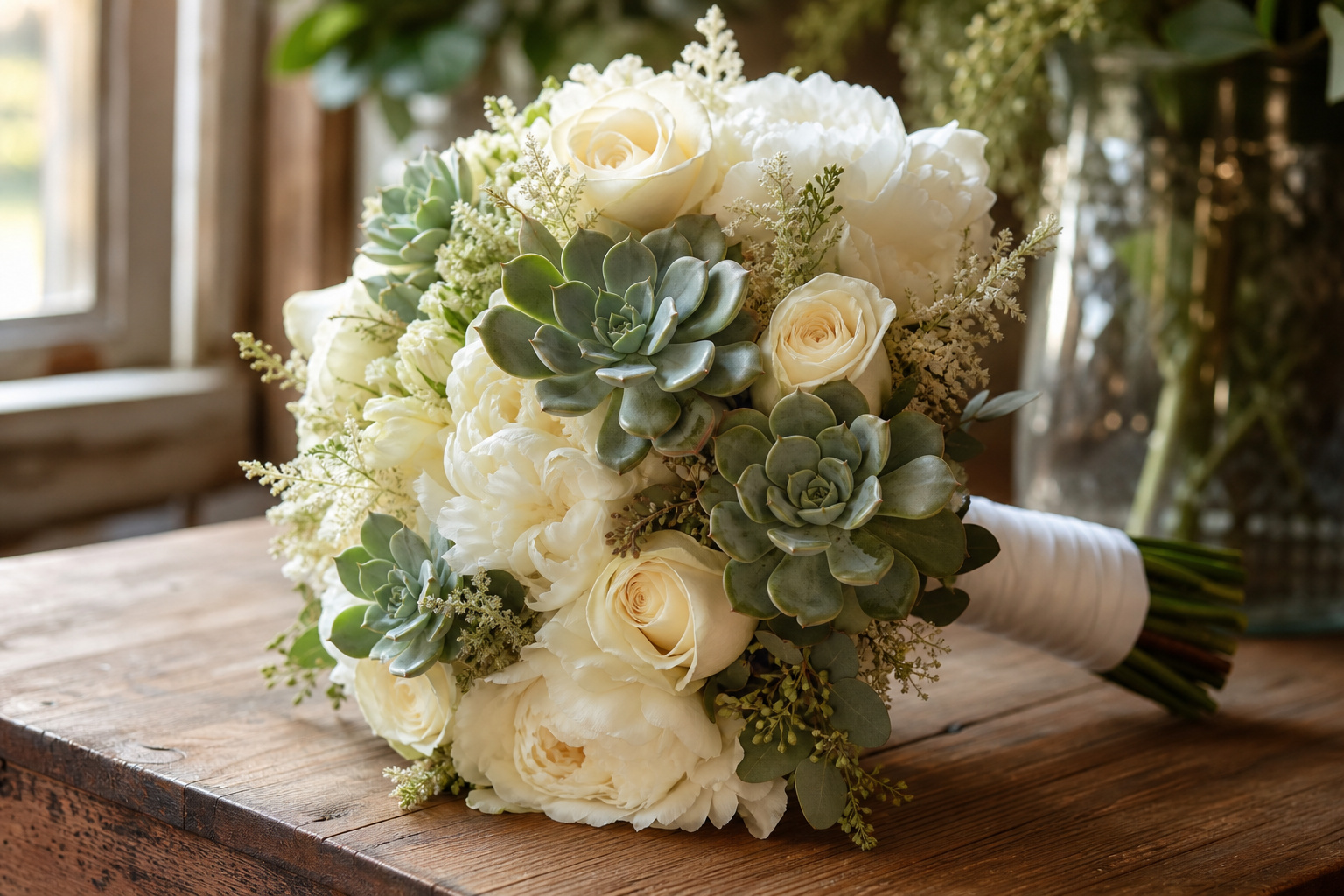
Succulents have been popular in wedding flowers for years now, and for good reason; they’re durable, they look interesting, and they hold up through a long day better than most fresh flowers. The trick is wiring them properly so they sit where you want them in the design and don’t droop.
We have a full guide on wiring succulents for wedding bouquets if you want to go step by step. The short version: run a floral wire through the stem or mount it on a wooden pick, tape it, and treat it like any other stem from there.
If you want to pair them with other textures, a boho-style wedding bouquet is a natural fit. Succulents work particularly well with wildflowers, dried grasses, and loose organic shapes.
Make a Hybrid Gift Arrangement for Any Occasion
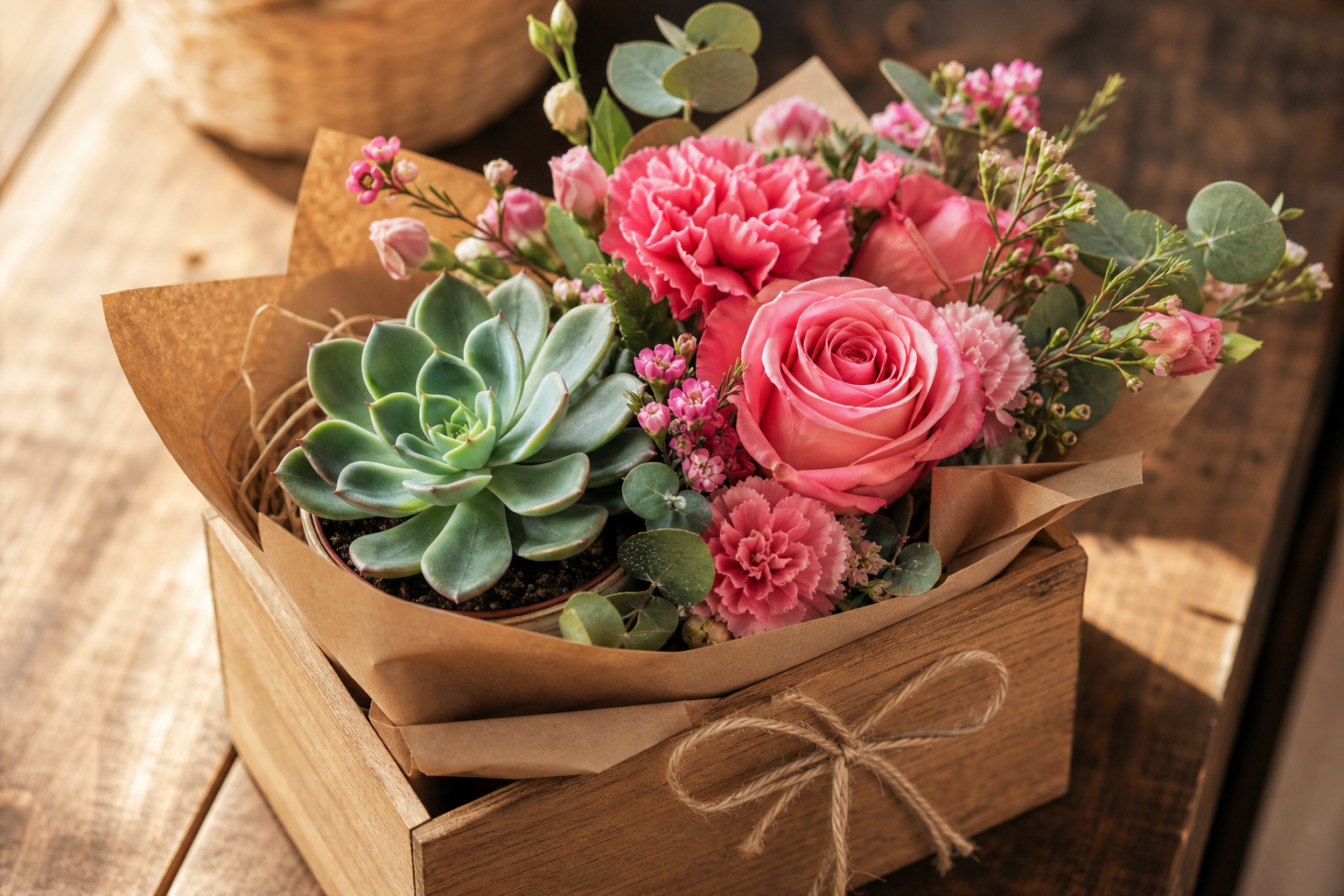
This is one of my favorite ideas in the list because it solves a real problem. Someone wants to give flowers but also wants the gift to last more than a week. The answer is combining fresh cut flowers with a potted succulent. You get the wow factor of fresh flowers upfront, and the plant sticks around long after the bouquet is gone.
It works for Valentine’s Day, birthdays, anniversaries, really any occasion where you want to give something that stands out. All you need are plants, flowers, and a few minutes.
Pull Together Succulent Party Favors
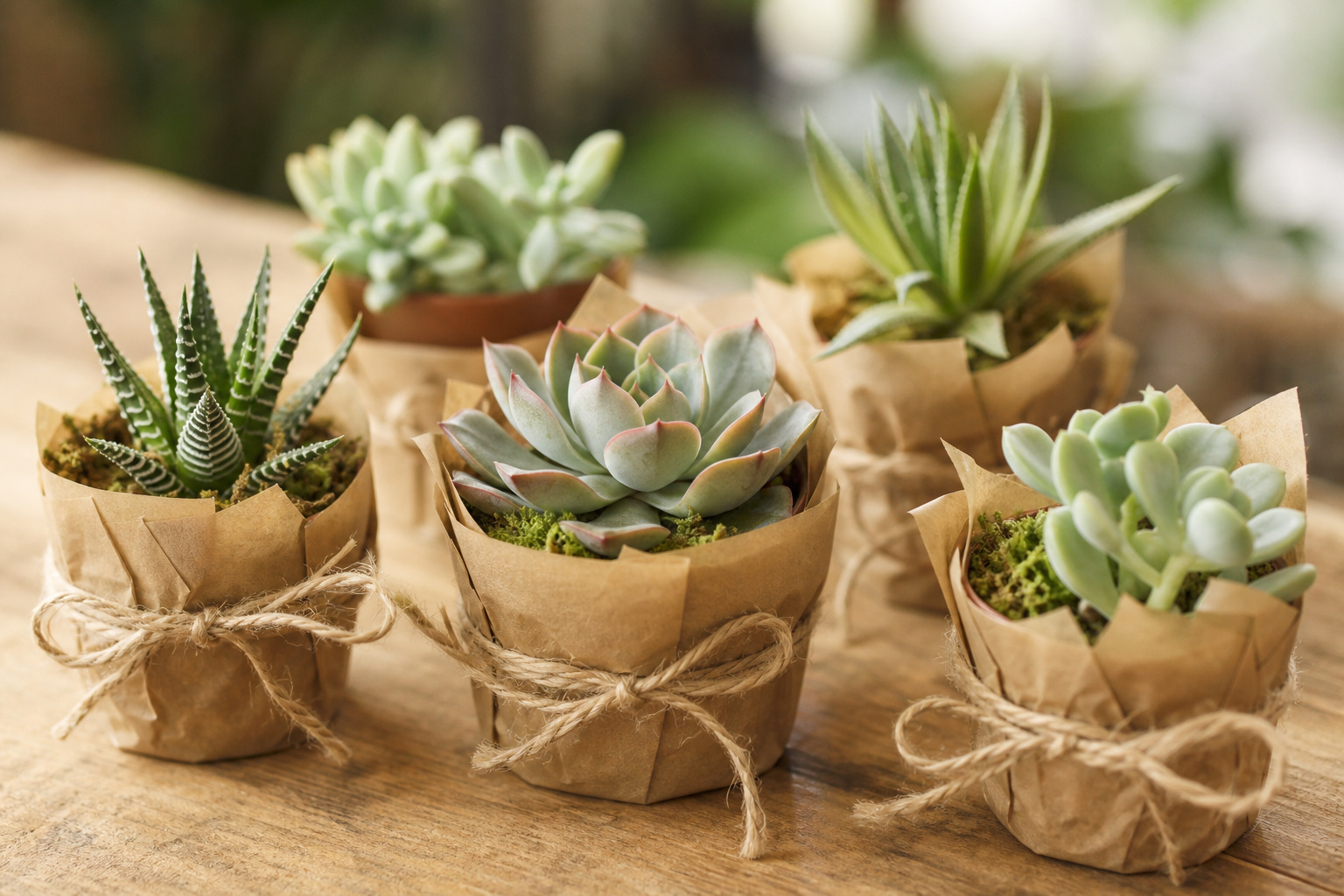
Small potted succulents make great wedding favors or party giveaways. They’re inexpensive in quantity, they survive being handled all day, and guests actually take them home and keep them, which is more than you can say for most favors. Wrap them in kraft paper, tie with twine, and add a small tag. Done.
You can get creative with the containers. Use tiny terra cotta pots, small mason jars, even repurposed tins. Mixing textures and varieties keeps the display from looking identical across the table.
You can watch the full video covering all of these ideas here:
Where To Find Succulents Worth Displaying
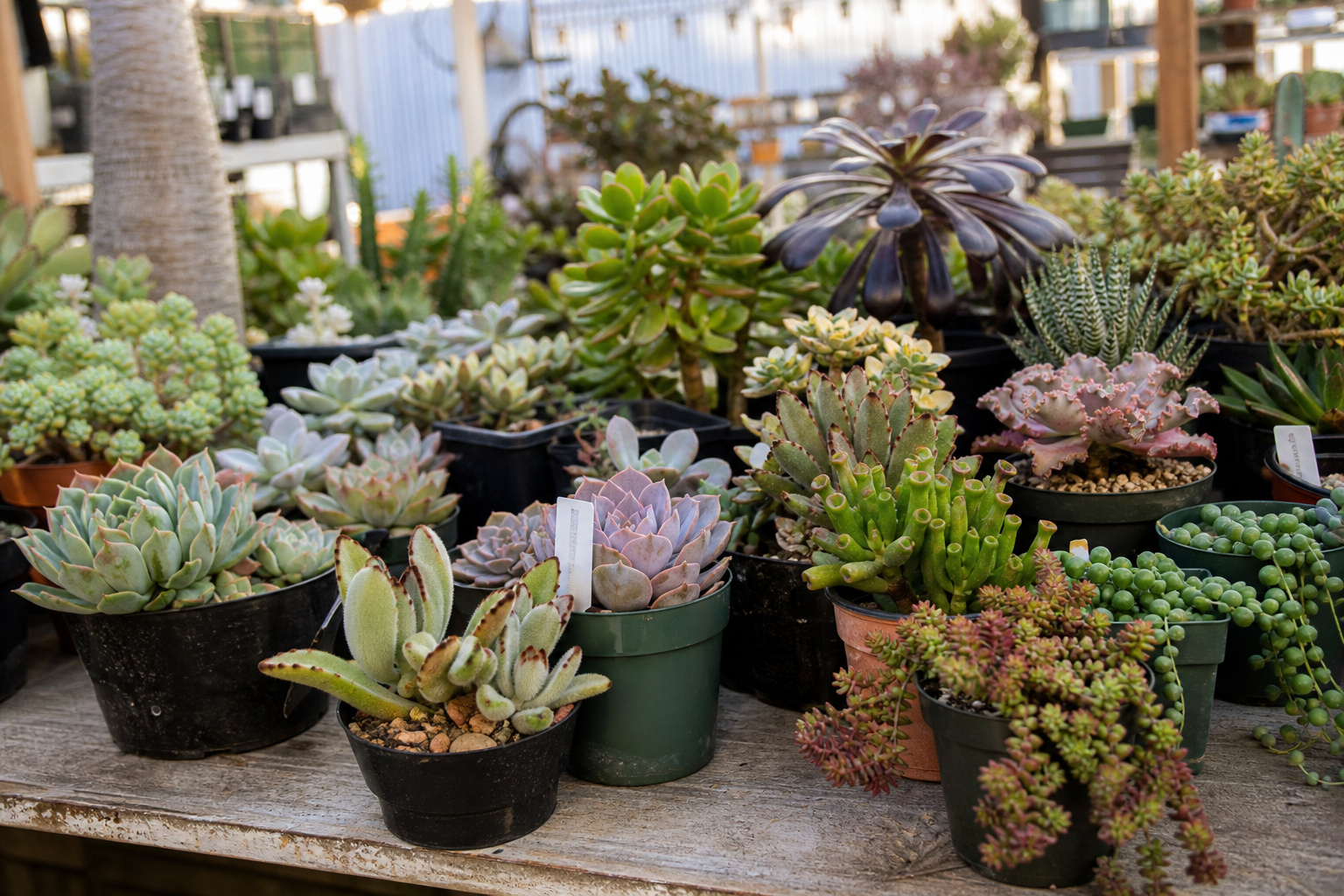
My first recommendation is always local. Check if you have a grower, greenhouse, or nursery nearby that specializes in succulents. You’ll get a better variety and healthier plants than most big-box options. Local florists are worth a call too. We stock succulents regularly, especially in spring and summer.
If you’re coming up empty locally, online retailers ship succulents well. I’ve seen customers have good luck with Leaf & Clay, Succulents Box, Planet Desert, and The Succulent Source. Each ships with decent packaging and a decent selection of varieties.
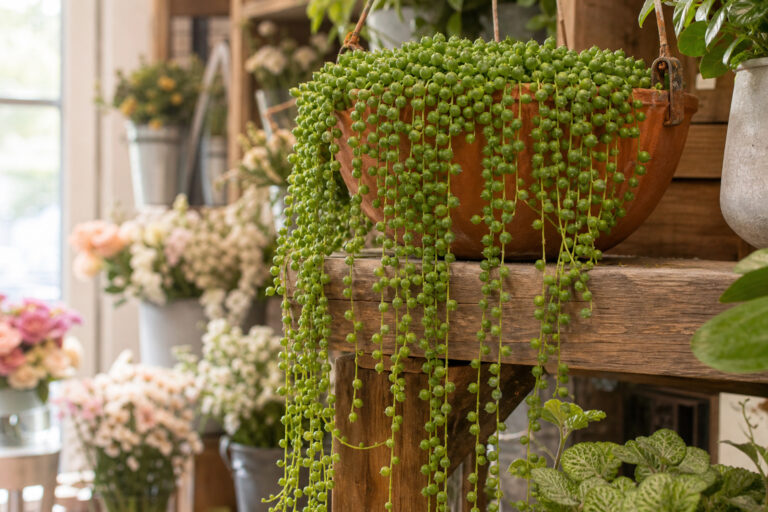
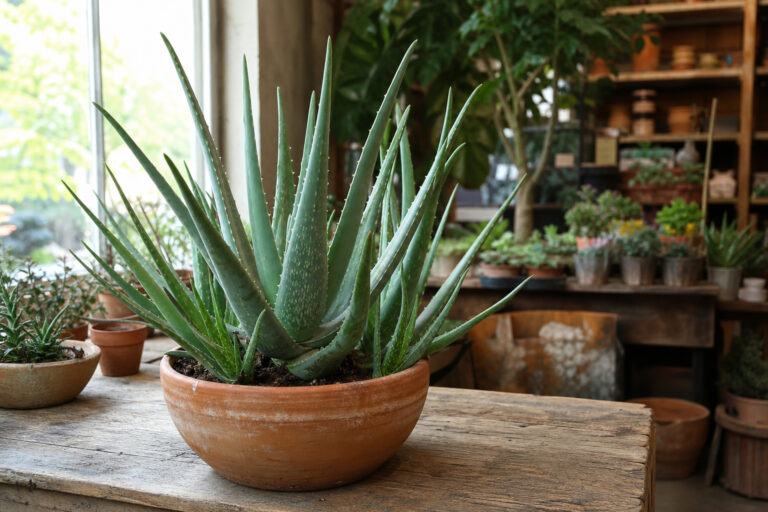
For ongoing care once you’ve got them home, our aloe vera plant care guide and string of pearls care guide cover some of the most popular species in more depth if you want to go further.
Frequently Asked Questions
What kind of soil is best for succulent displays?
Use a cactus and succulent mix, not standard potting soil. Standard mixes hold too much moisture and will rot succulent roots over time. A gritty, fast-draining mix is what you’re after. Adding perlite to a standard mix also works if that’s what you have on hand.
Do succulents need drainage holes in display containers?
Ideally, yes. Without drainage, water pools at the bottom, and roots rot. If you love a container that doesn’t have a hole, you can use it as a cache pot — put the succulent in a plain nursery pot with drainage, then set that inside your decorative container. Pull it out to water, let it drain, put it back.
How long do succulent arrangements typically last?
Planted arrangements in soil can last years with proper care. Arrangements using wired or cut succulents (like wedding bouquets) will last a few days to a couple of weeks, depending on conditions. The succulents themselves can often be re-rooted after an event if you keep the stem intact.
Can succulents survive indoors year-round?
Most common varieties do fine indoors as long as they get bright light. A south- or west-facing window is ideal. Without enough light, they’ll start to etiolate, stretching toward the light source and losing their compact shape. A grow light helps during the winter months in northern climates.
What’s the easiest succulent display idea for a beginner?
A simple container grouping. Gather three to five different succulent varieties in similar-sized pots and cluster them together on a tray or wooden board. Vary the height and texture. It takes about fifteen minutes, and it looks like you put in a lot more effort than you did.
Are succulents good for weddings in summer heat?
They hold up better than most flowers in heat, which is one of the reasons they’ve become so popular in wedding flowers. They don’t wilt, they don’t drop petals, and they don’t need to be kept in water. For outdoor summer weddings, succulents are a smart call. Just keep them out of direct midday sun if possible. They can sunburn like anything else.
Closing Thoughts
Succulents are about as forgiving a plant as you’ll find. They don’t demand much: decent light, the right soil, and a light hand with the watering can. What they give back in terms of texture, variety, and longevity is genuinely hard to match. Whether you’re filling a windowsill or putting together wedding flowers, they earn their place in the design.
The ideas in this post are a starting point, not a ceiling. Once you get the basics down, you’ll start seeing display possibilities everywhere. That cracked bowl you almost threw away. The old wooden crate in the garage. Succulents have a way of making it all work.
If you’ve tried any of these ideas or have a display setup that’s worked well for you, drop a comment below — I’m always curious what people are actually doing at home.
Til next time,