Disclosure: This post may contain affiliate links. If you click and buy, we may earn a commission at no extra cost to you. As an Amazon Associate, we earn from qualifying purchases.
Last Updated: July 2026
Every November I get the same phone call, sometimes two or three in the same week. Someone built a centerpiece the weekend before Thanksgiving, it looked great, and by Thursday dinner it was half-dead. The flowers had gone limp, the greenery was yellowing, and the whole thing smelled like a wet lawn. They want to know what went wrong.
Almost always, the answer is the same: they built it too early, used the wrong mechanics, or skipped the conditioning step entirely. None of that is hard to fix. You just have to know what you’re doing before you start cutting stems.
This post covers the mechanics of building a centerpiece that holds up, whether you’re building for a Thanksgiving table, a Christmas dinner, or anywhere in between. Foam vs. no-foam, which greenery actually lasts, how close candles can safely sit to fresh flowers, and how to swap blooms when the season turns.
Decide on Your Mechanics First
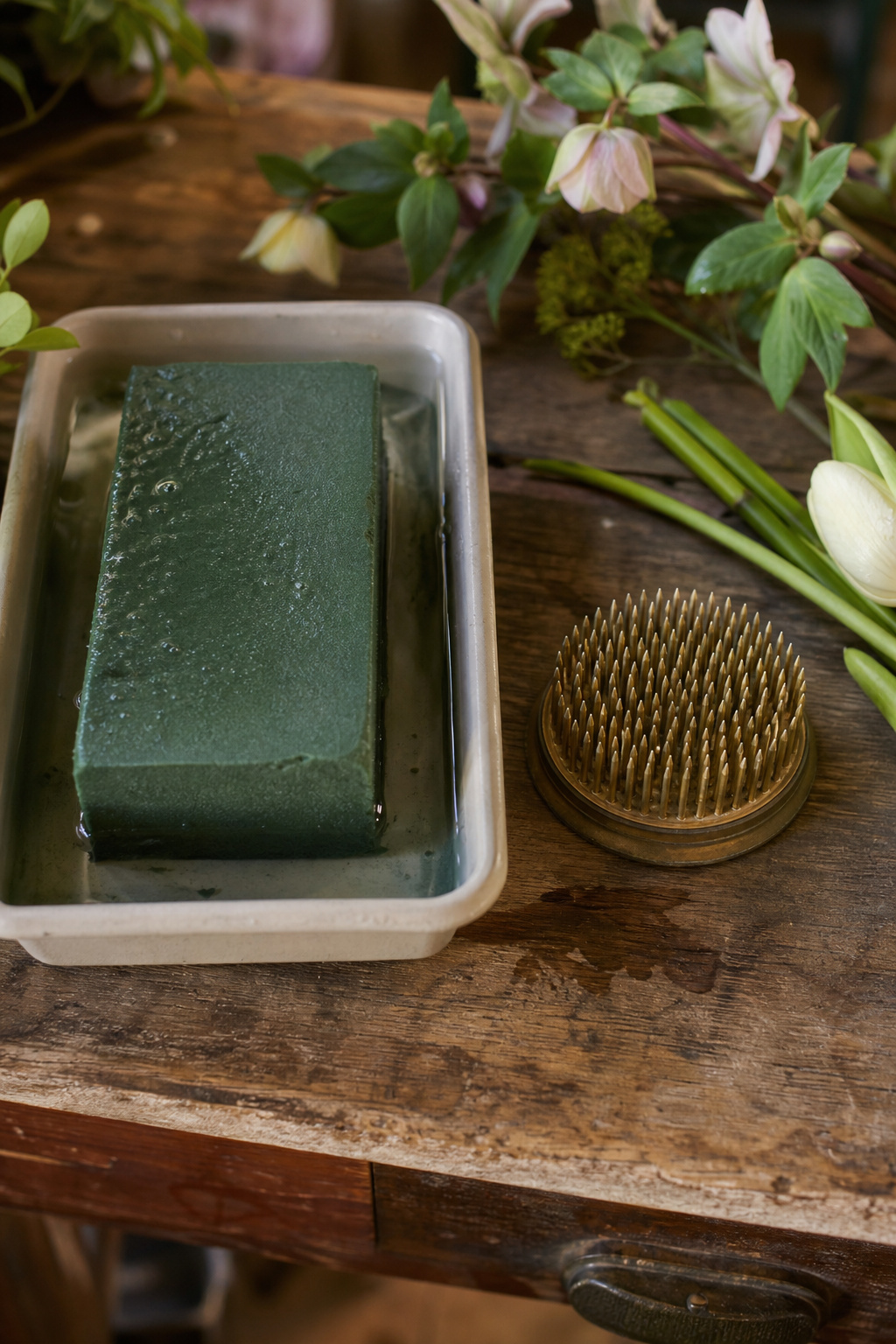
Before you touch a stem, decide how you’re going to hold the arrangement together. That decision shapes everything else: container choice, flower selection, how long the thing will last.
The two main options are floral foam and foam-free. I’ve written a full breakdown of when foam makes sense and when it doesn’t, but here’s the short version for centerpieces: foam is forgiving for beginners and keeps stems exactly where you put them, but it dries out fast if you don’t keep it watered. Foam-free mechanics, like flower frogs, chicken wire, or just a well-packed vase, are harder to learn but keep flowers hydrated longer because the stems sit in open water.
For a holiday centerpiece you’re building more than two days out, foam-free is the better call. For something you’re building the day before, foam works fine if you keep the brick fully saturated and top off the water daily.
Building for a holiday dinner? Foam, flameless candles, and containers are easy to order ahead of the holiday rush. Prime gets eligible orders to your door fast, and eligible new members can start a free Prime trial. As an affiliate, we earn on qualifying purchases.
What I use in the shop: floral foam bricks — soak them until they sink on their own, never force them underwater, and trim to fit the container, leaving a little room on the sides so you can add water without it sheeting off the foam.
Products Worth Considering

Excellent Material: Our package includes 4 green foam blocks (L 5.5 x W 3.1 x H 1.7inch) for flower arrangements, perfect for flower arrangements and crafts. Our floral foam is highly absorbent and is the frist choice for fresh flowers, silk flowers, artificial flowers and plant displays.
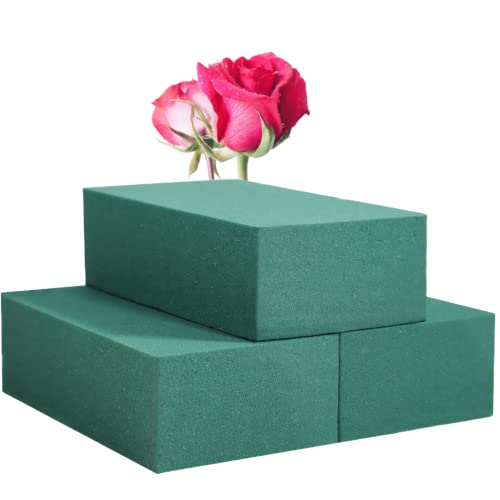
High-Quality Floral Foam Blocks: Our pack includes 3 green floral foam blocks (6"L x 3.00"W x 1.75"H), perfect for floral arrangements and crafts. Our green foam for flower arrangements has strong absorption and is ideal for fresh and silk flowers, artificial flower arrangements, and plant displays.

Perfect base for floral projects! Wet Foam is a soft fine that not only holds your arrangement, but also accepts and holds water to keep your flowers fresh and greens hydrated for longer period of time. Soak the foam in water, cut it to the desired shape, press the stems into the foam and then place the completed bouquet inside the container of your choice. Each block measures 7.8 inch L x 3.5 inch W x 2.4 inch H. Value Package-Wet floral foam brick for DIY crafts -Can be cut to size for any container
Condition Your Greenery Before You Build
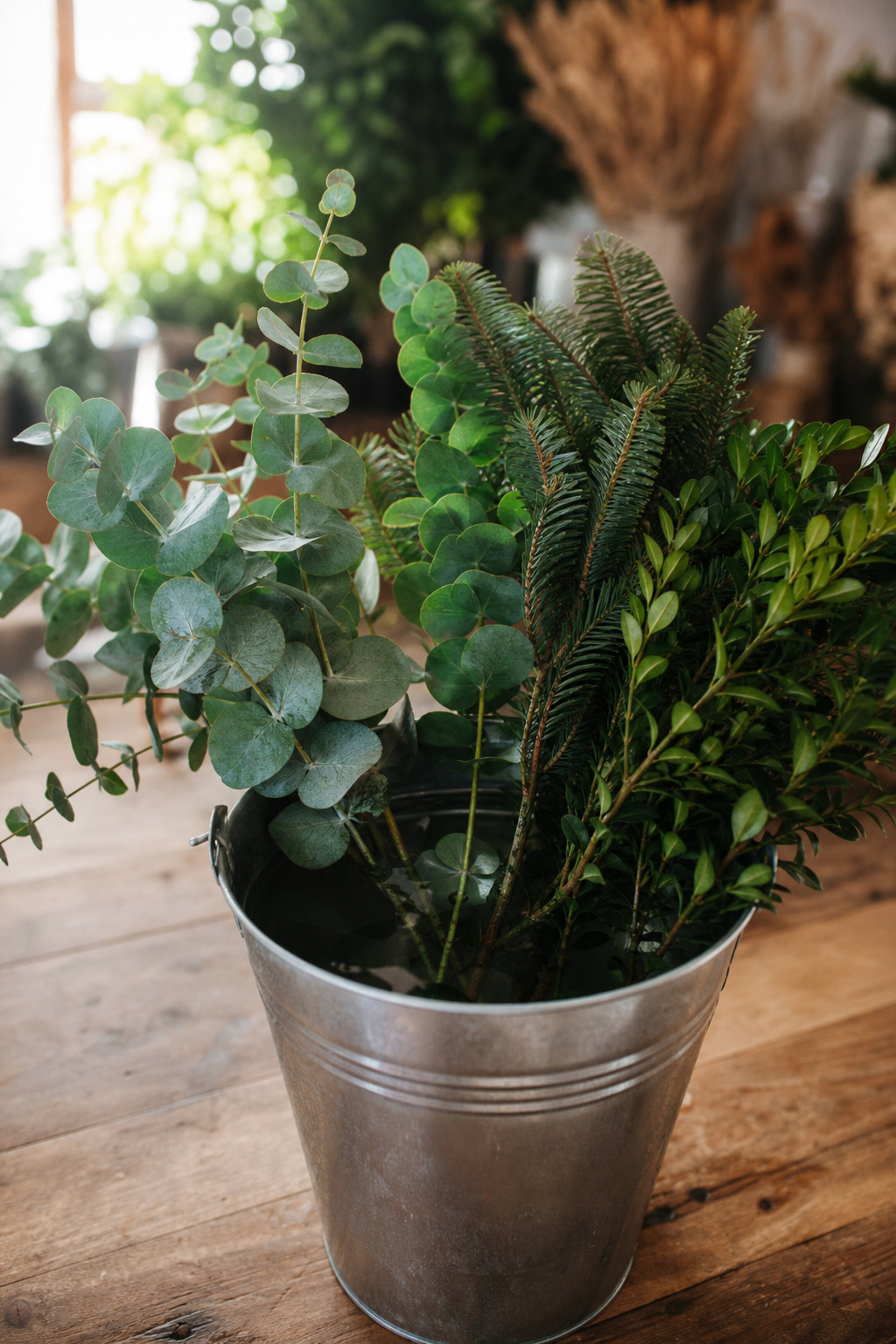
This is the step most people skip, and it’s the reason most DIY centerpieces look tired by day two.
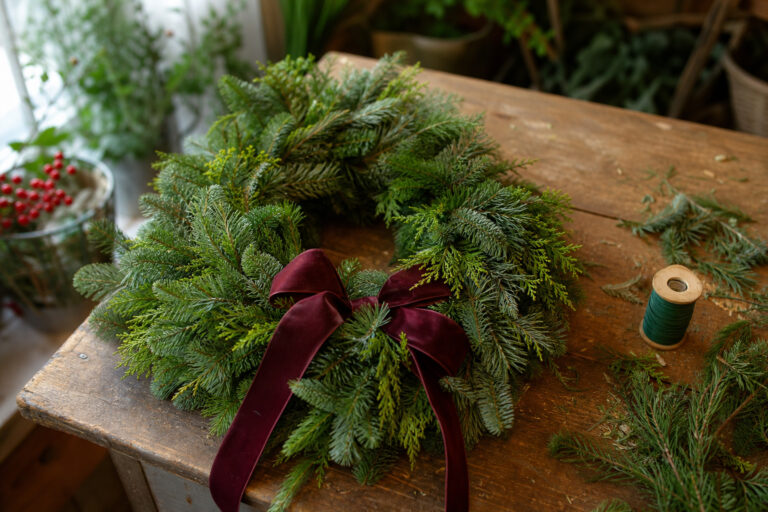
Fresh-cut greenery, fir, spruce, cedar, eucalyptus, and boxwood need a few hours in water before they go into an arrangement. Cut the stems at an angle, strip any foliage that would sit below the waterline, and let the stems drink in a cool spot away from direct sun. For a holiday centerpiece, I try to condition the greenery the night before I build.
In my experience, the varieties that hold up the longest in a centerpiece are eucalyptus (easily two weeks in water), boxwood (similar), and noble or Fraser fir. Spruce looks great but drops needles faster once it’s indoors and warm. Avoid anything tropical; it won’t survive the dry, winter-heating indoor air.
Flowers need the same treatment. Cut stems at an angle, remove guard petals on roses, and let them hydrate for at least four hours before building. Carnations and chrysanthemums are the workhorses of a holiday centerpiece, holding for ten days or more with proper conditioning. Dahlias are beautiful but short-lived indoors; if you’re using them, build them no more than a day before the event.
Build Low Enough for Conversation
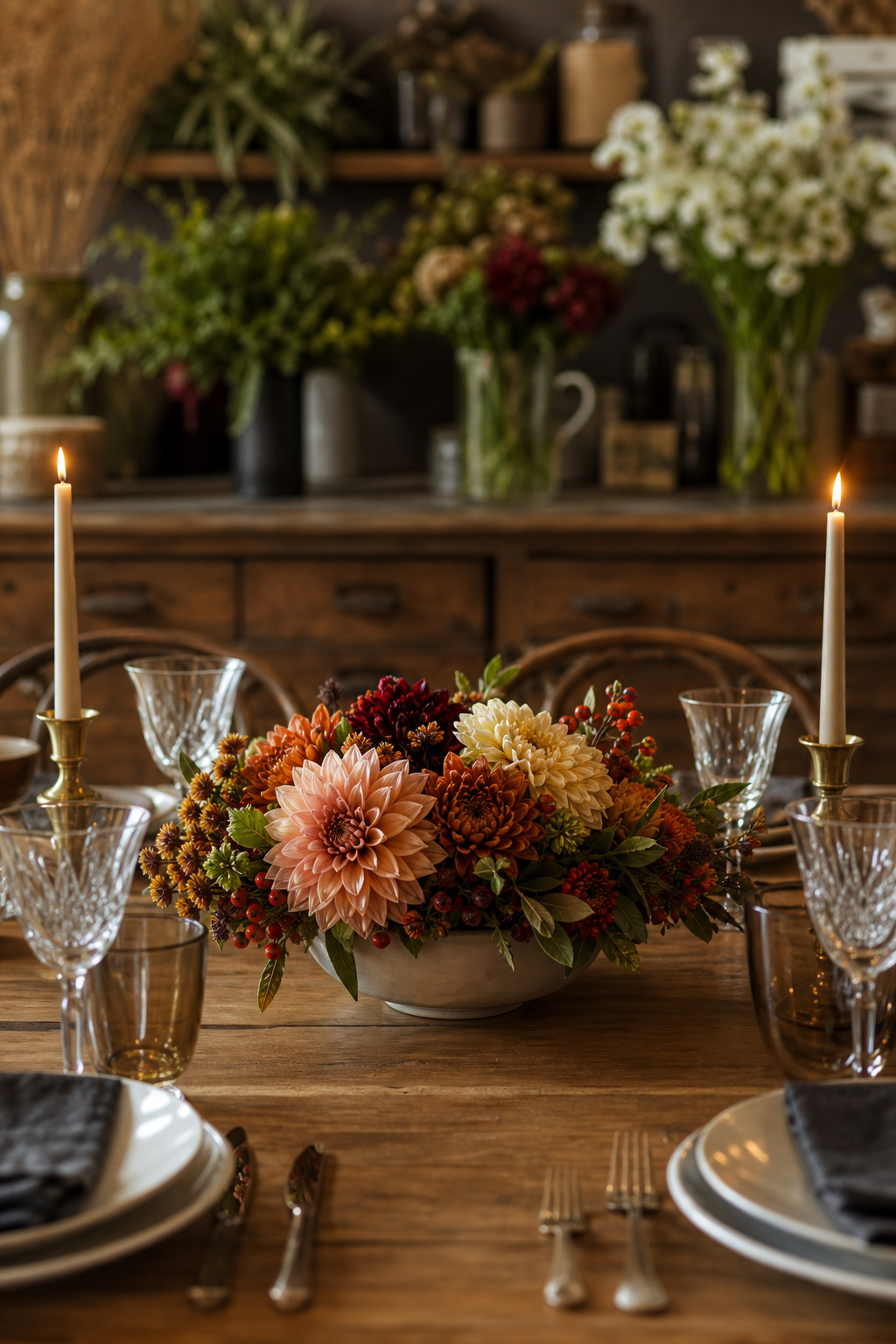
Centerpieces that block eye contact across the table get moved to the sideboard after the first course. I’ve seen it happen at more dinner parties than I can count.
The rule I give people: keep the arrangement under 12 inches tall, or go tall enough that guests can see through the center. Think of a tall vase with a narrow neck and a cluster of blooms at the top, with clear sightlines at seated eye level underneath. Everything in between those two heights is the dead zone.
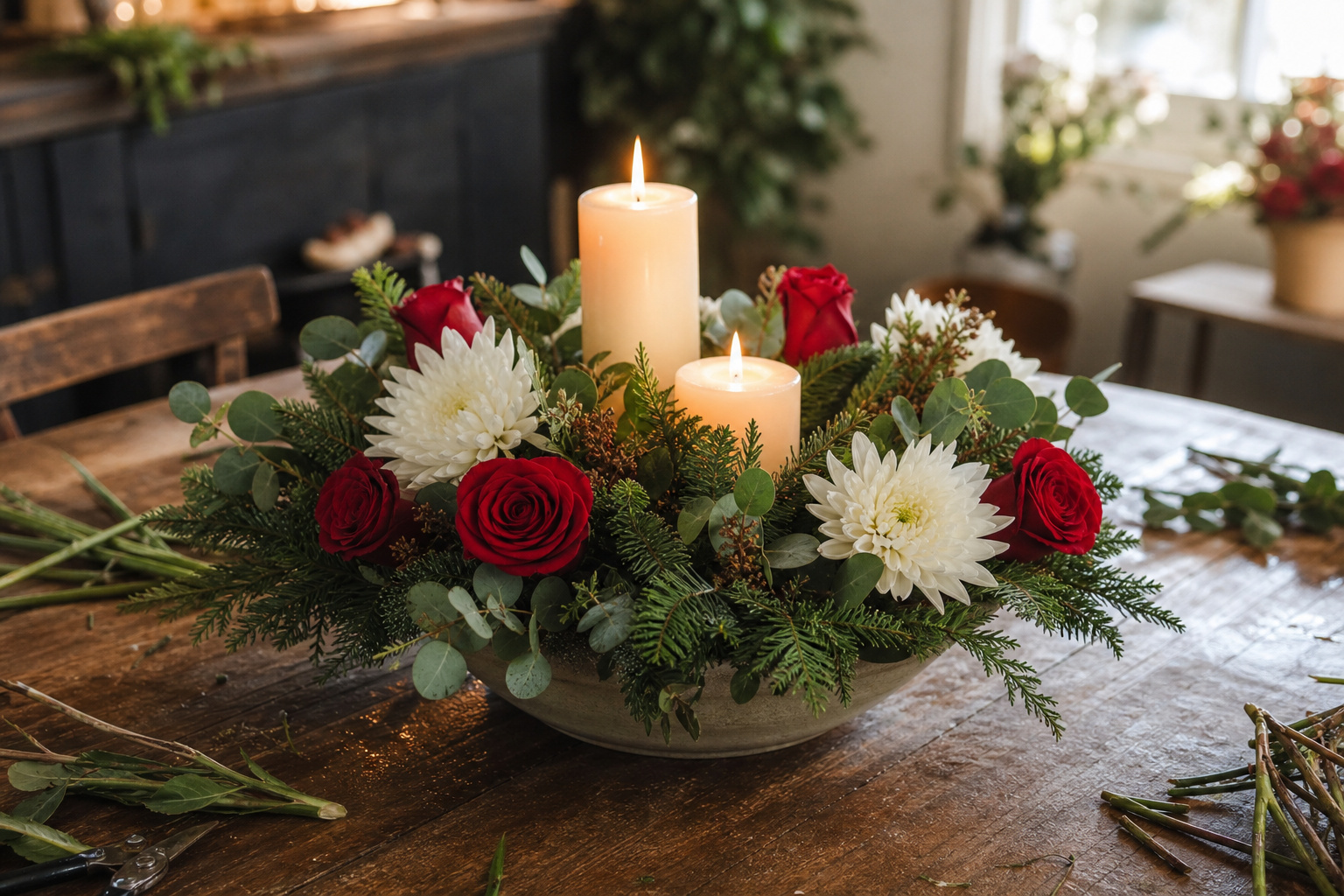
For fall tables, I like a low, wide bowl with dahlias, chrysanthemums, and a few sprigs of seasonal berries tucked in at varying heights. For Christmas, the same mechanics work. Swap in red roses, white amaryllis, or ranunculus, and layer in fir and cedar instead of fall foliage. The structure is the same. The flowers change with the season.
Products Worth Considering

DIY Mason Jar Set: Includes 12 vintage farmhouse mason jar vases (6.3" H × 3.1" base), plus a 20m jute twine, 24 kraft tags (heart & square), 26 wooden beads, and 1 cleaning brush. Unlike ordinary bud vases, this set lets you wrap the twine yourself and design personalized decorations, perfect for DIY lovers, event planners, and rustic wedding decor projects.

Minimalist Modern Aesthetic: Our sleek tall cylinder vases create an photo worthy look that instantly elevates your tabletops and everyday home decor styling
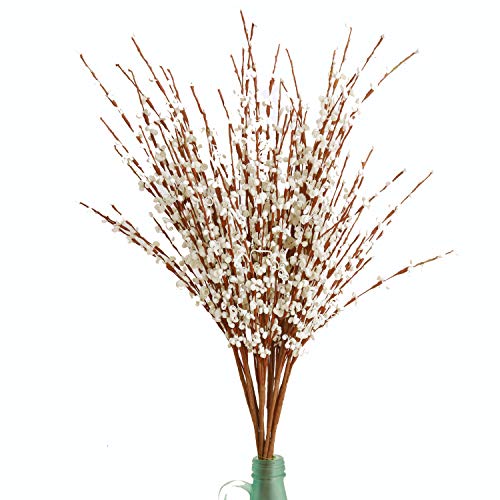
Add a fresh pop of color and a wintry touch to your wreaths, arrangements or other craft projects with this Winter and spring Jasmine artificial flowers
Handle Candles Carefully
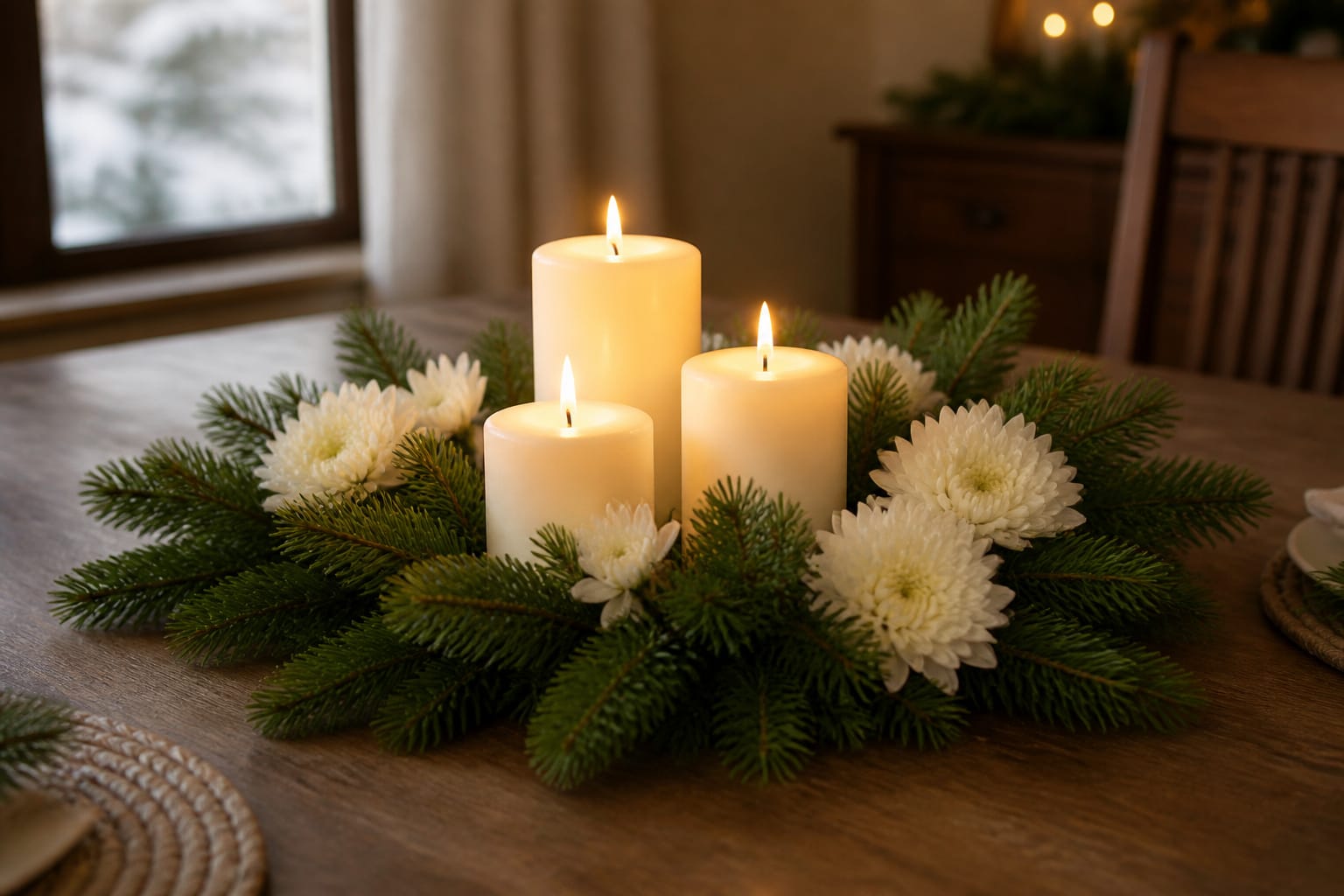
Candles and fresh flowers are a combination that comes up in almost every holiday centerpiece question I get, and the safety aspect is worth taking seriously.
The general rule: keep any open flame at least six inches from fresh foliage and flowers. Greenery that’s starting to dry, anything more than five or six days old, is significantly more flammable than freshly conditioned material. If your arrangement will be on the table for more than a few days, switch to flameless LED candles for peace of mind. Today’s LED options are good enough that most guests won’t notice the difference.
What I use in the shop: flameless pillar candles — for any centerpiece going near dried elements, children, or pets, these remove the risk entirely, and you can leave them running without watching.
If you’re committed to real candles, pillar candles in varying heights work best in holiday centerpieces. They sit stably on a flat surface. They’re easy to contain in a holder or tray, and varying heights add visual interest without extra effort. Keep wicks trimmed to a quarter inch before each lighting, and never leave them burning unattended.
Products Worth Considering
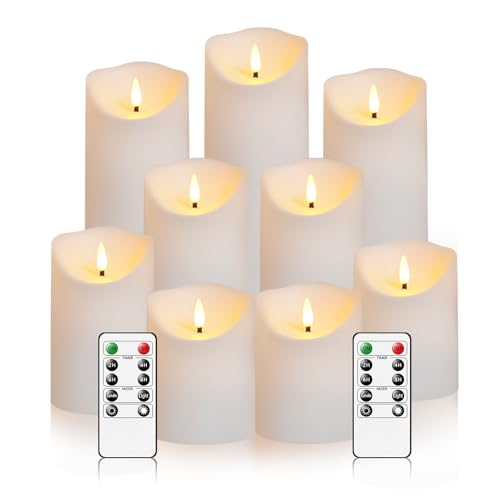
Realistic Plastisc Candles: Nimiko flameless candles with new technology simulates the effect of a flickering candles. Moving wick effect that refracts light to make the fake candles more realistic. Plastic material, will not melt, not waterproof.

Realistic real wax flameless candles. These LED pillar candles are made of real wax with natural rustic texture. Although they are battery operated fake candles, these flameless pillars look like and flicker like real candles. The bright and soft glowing candle lights create warm and romantic atmosphere. The traditional rustic texture design makes these candles classic and elegant.
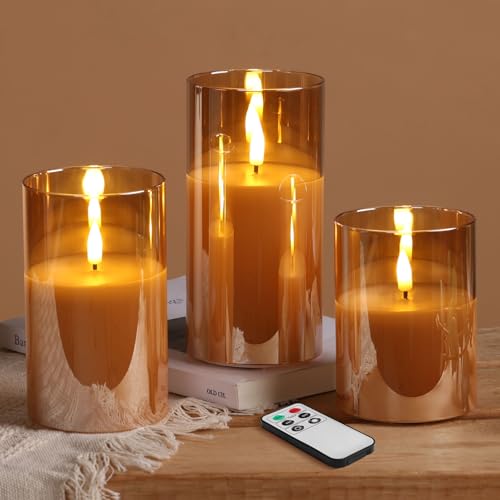
Amber Gold Glass Candles: made of premium golden glass, these candles add a luxurious and elegant touch, with a reflective surface that enhances any space with a cozy light effect
Swap Blooms as the Season Turns
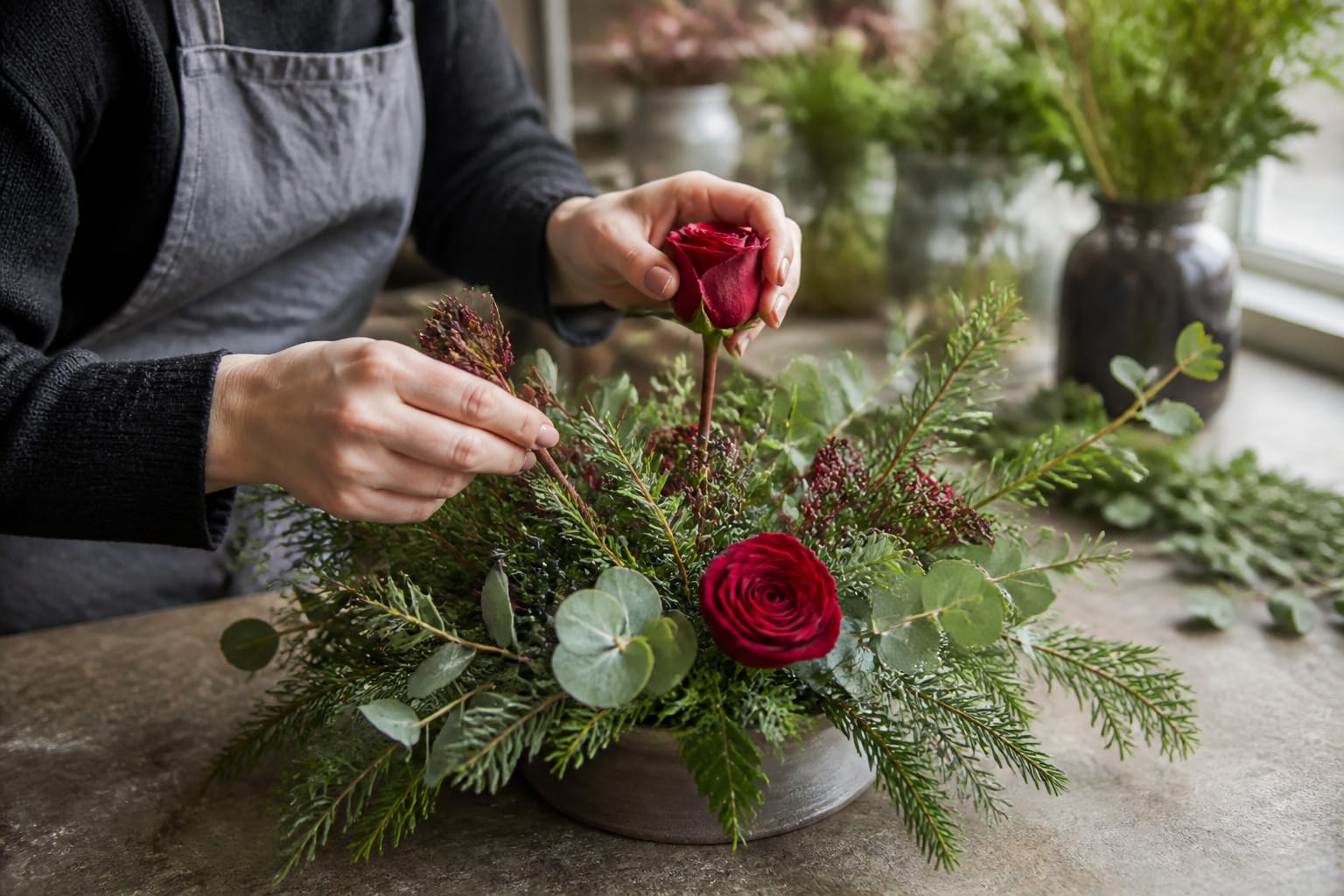
One of the most practical things about building a centerpiece on sound mechanics is that you can refresh it as the season progresses without starting from scratch.
If you build a foam-free arrangement in a container with a flower frog or wire grid, replace the stems if they start to fade. The greenery base typically outlasts the flowers by a week or more, so you can start with fall dahlias and chrysanthemums in October, pull those when they go, and replace them with Christmas roses and white amaryllis using the same container and greenery framework.
With foam, this is harder. Once foam starts to break down or dry out, it doesn’t recover well. If you’re planning to run a centerpiece across multiple seasonal occasions, foam-free mechanics will serve you much better.
How Far in Advance Can You Build It
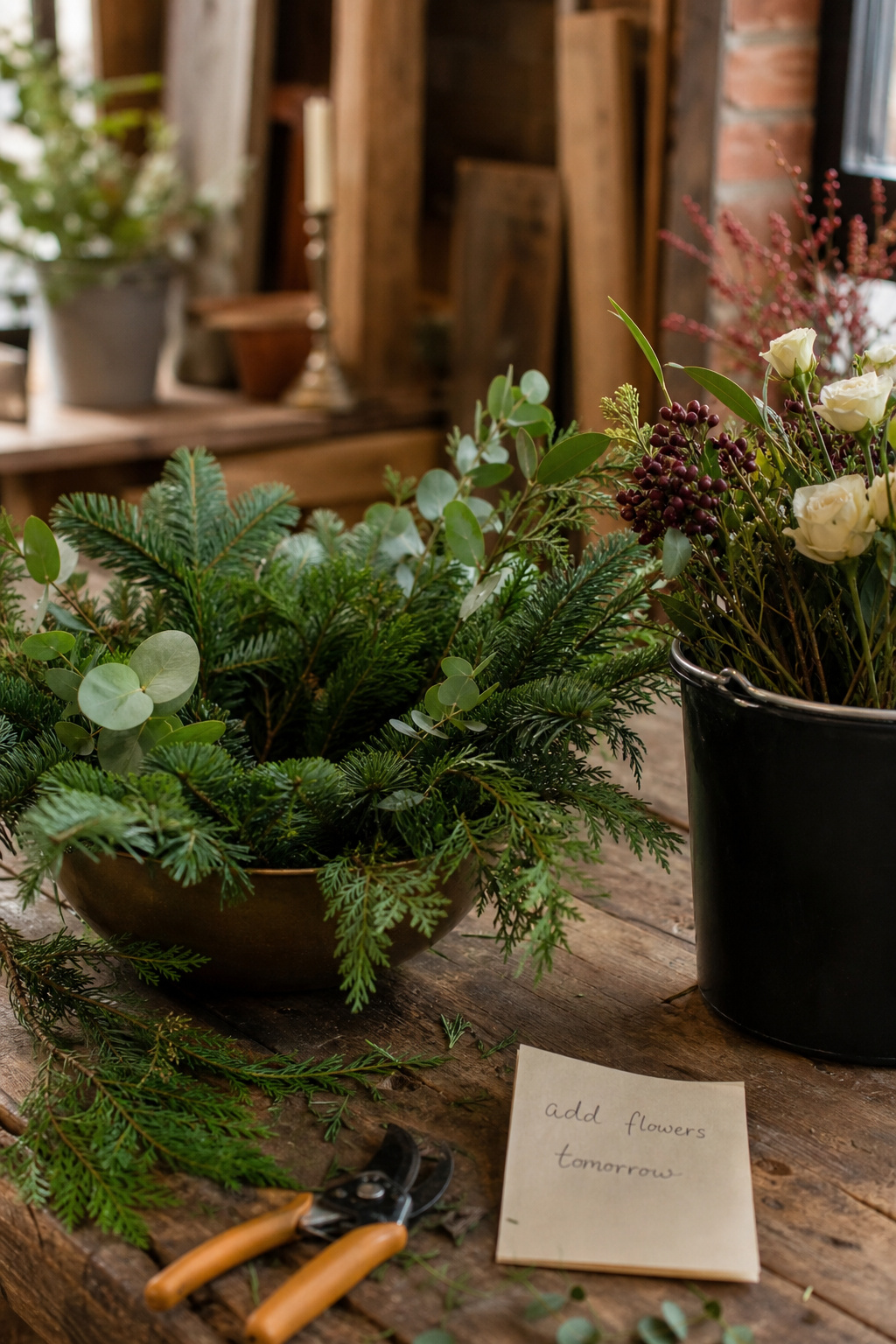
This is the question I get most often, and the honest answer is: it depends on your flowers.
For a greenery-only arrangement using fir, cedar, and eucalyptus, you can build three to four days out, and it’ll look fine if you keep it away from heat vents and direct sun. Mist it lightly every couple of days if the room is dry.
For mixed flower and greenery arrangements, one to two days before the event is the practical window for most flowers. Carnations and chrysanthemums give you a little more runway. Sometimes three to four days if they were well-conditioned. Dahlias and ranunculus are built the day before or on the morning of.
If you need to build further out, say you’re doing centerpieces for a large holiday party and can’t do everything day-of, build the greenery base early, keep it in a cool spot, and add the flowers within 24 hours of the event.
Frequently Asked Questions
How long will fresh flowers last in a holiday centerpiece?
It depends on the variety. Carnations and chrysanthemums can hold 10 days or more with proper conditioning and fresh water. Dahlias and ranunculus are closer to three to five days. Greenery like eucalyptus and boxwood will outlast most flowers by a week or more.
Should I use floral foam or go foam-free?
For arrangements you’re building more than two days out, foam-free mechanics keep flowers better hydrated. Foam works well for same-day or next-day builds if you keep the brick saturated. I’ve written a full breakdown of the pros and cons of floral foam if you want to go deeper.
How close can candles sit to fresh greenery?
Keep any open flame at least six inches from foliage, and at least twelve inches if the greenery is more than a few days old and starting to dry. When in doubt, flameless LED candles are the safer call, especially if the arrangement will be unattended.
What’s the ideal height for a dinner table centerpiece?
Under 12 inches, or tall enough that guests have clear sightlines at seated eye level, roughly 24 inches and above, with a narrow profile. Everything in between blocks the conversation across the table.
Can I use the same centerpiece from Thanksgiving through Christmas?
You can if you build on foam-free mechanics using a flower frog or wire grid. It lets you swap individual stems as they fade. The greenery base usually outlasts the flowers, so you can refresh the blooms while keeping the structure. Foam arrangements don’t handle long-term use as well.
What flowers work best for a holiday centerpiece that needs to last?
Carnations and chrysanthemums are the best value for longevity. They’re underrated and hold up well. Roses are a close third when conditioned properly. For greenery, eucalyptus and noble fir are the most durable choices for indoor use in a heated space.
Closing Thoughts
A holiday centerpiece doesn’t have to be complicated. The ones that hold up longest are almost always built on the same simple foundation, with well-conditioned materials, sound mechanics, and a little forethought about timing. Get those three things right, and the flowers will do the rest.
Foam or foam-free — which camp are you in for your holiday centerpiece, and has it ever let you down before the big day? Tell me in the comments.
Til next time,