Disclosure: This post may contain affiliate links. If you click and buy, we may earn a commission at no extra cost to you. As an Amazon Associate, we earn from qualifying purchases.
Last updated: May 24, 2026
A customer walked into the shop last week with a sad-looking jade plant in a coffee cup. Her grandmother had given it to her three years ago. She’d been watering it every Sunday like clockwork, and now it was dropping leaves and turning translucent at the base. She wanted to know what she’d done wrong.
I told her she’d loved it to death. Succulents are forgiving plants, but the one thing they will not forgive is being treated like a fern.
That conversation is the reason I keep this post around. Succulents are the plant I recommend most often to people who say, “I kill everything.” They are genuinely hard to kill, but only if you understand a few simple things about how they want to live. Get those right, and a single $8 plant from the grocery store will be on your windowsill ten years later.
Here are the seven I recommend most, why I like them, and the one thing each one needs you to get right.
Start With Aloe Vera
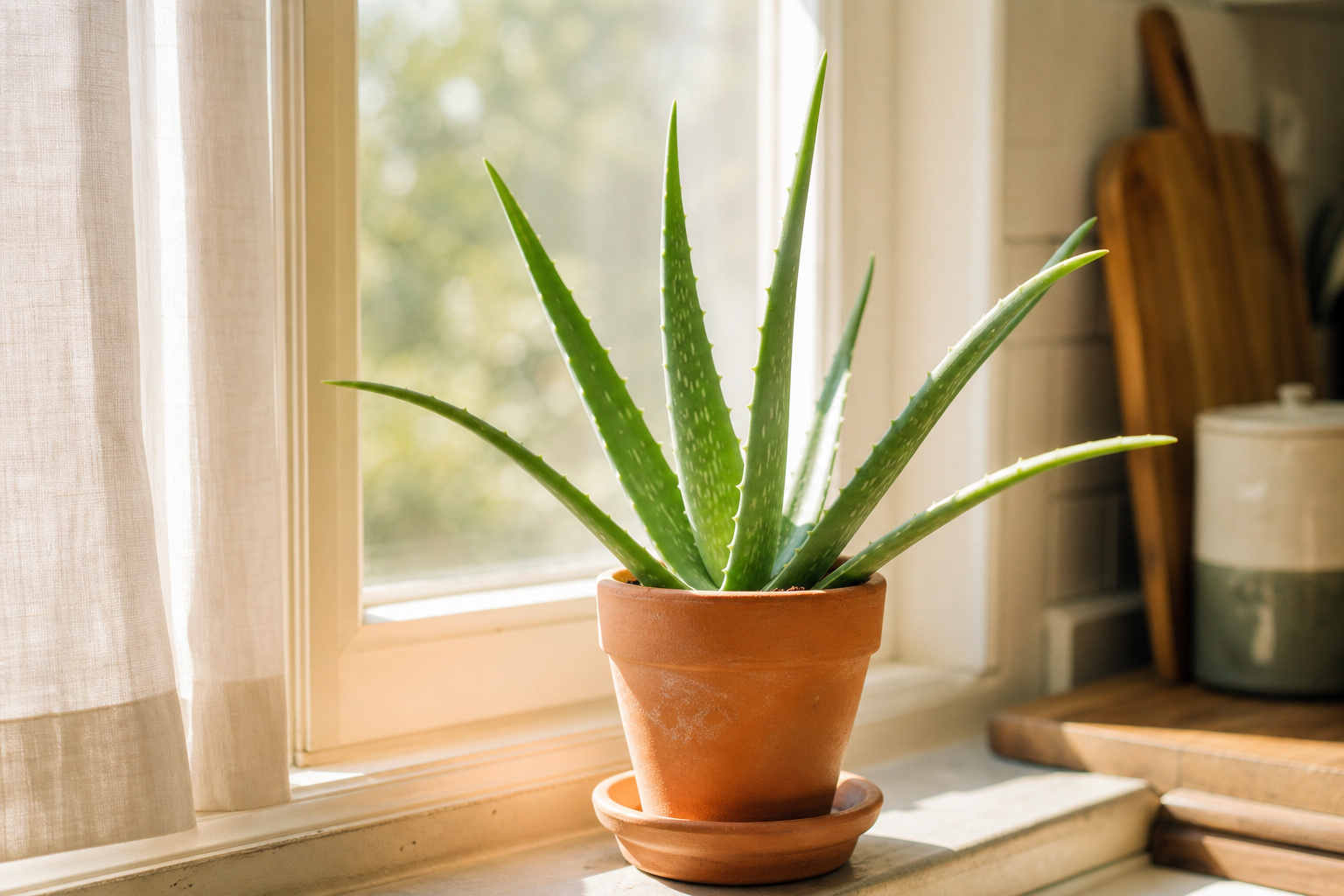
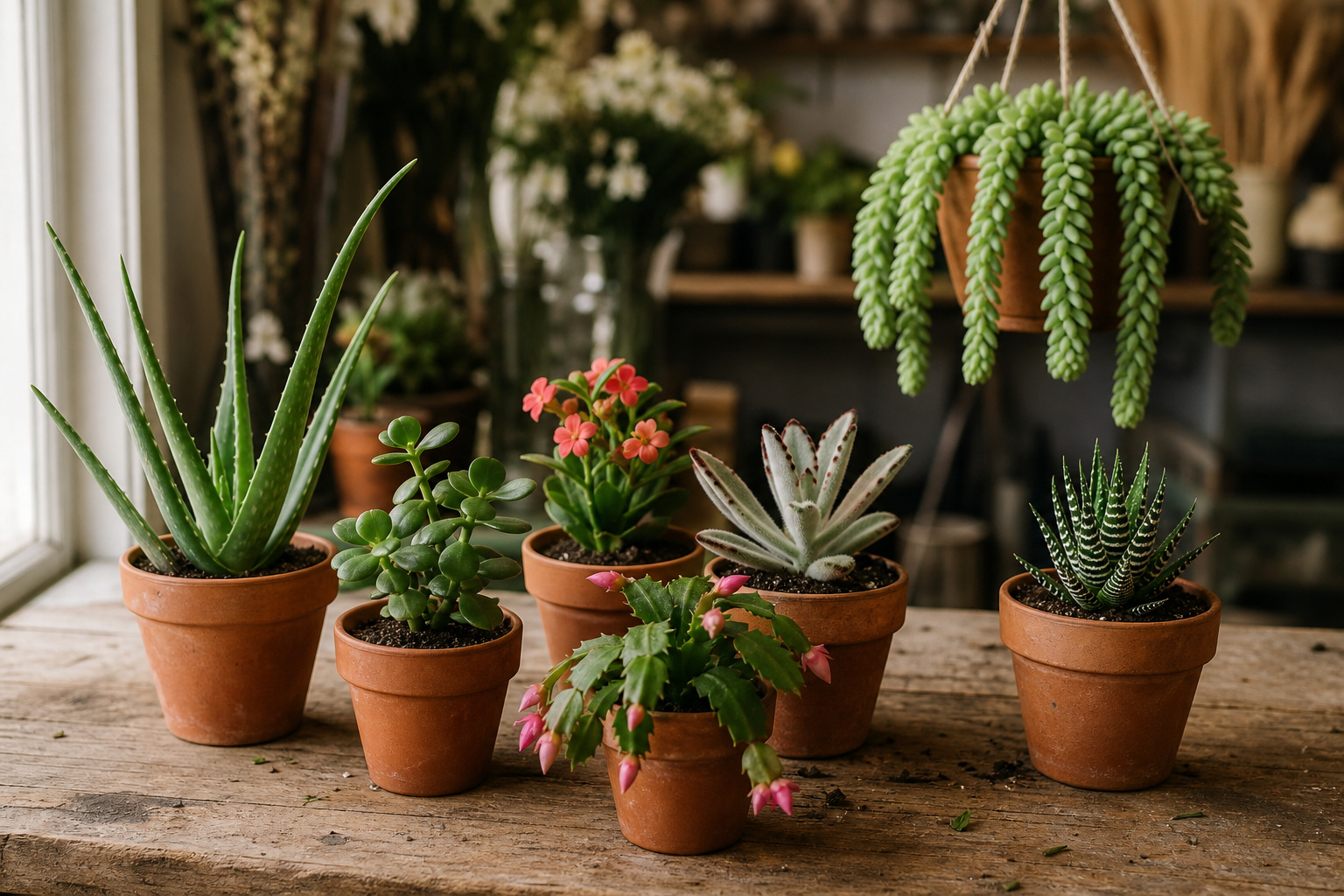
Aloe is the succulent I tell first-time owners to start with. It tolerates a remarkable amount of neglect, and the gel inside the leaves is actually useful — break a leaf off, squeeze it onto a minor burn, and you’ll see why this plant has been a kitchen-windowsill staple for a hundred years.
Give it bright, indirect light. A south or west-facing window is ideal. Water deeply when the soil is bone dry — usually every two to three weeks indoors, less in winter. The most common mistake I see is people watering on a schedule instead of checking the soil. Stick a finger an inch into the pot. If you feel any moisture, wait.
Aloe will tell you when it’s unhappy. Mushy, translucent leaves mean too much water. Brown crispy tips mean too much sun or too little water. Pale, stretched-out growth means not enough light — move it closer to the window.
Add a Jade Plant for the Long Haul
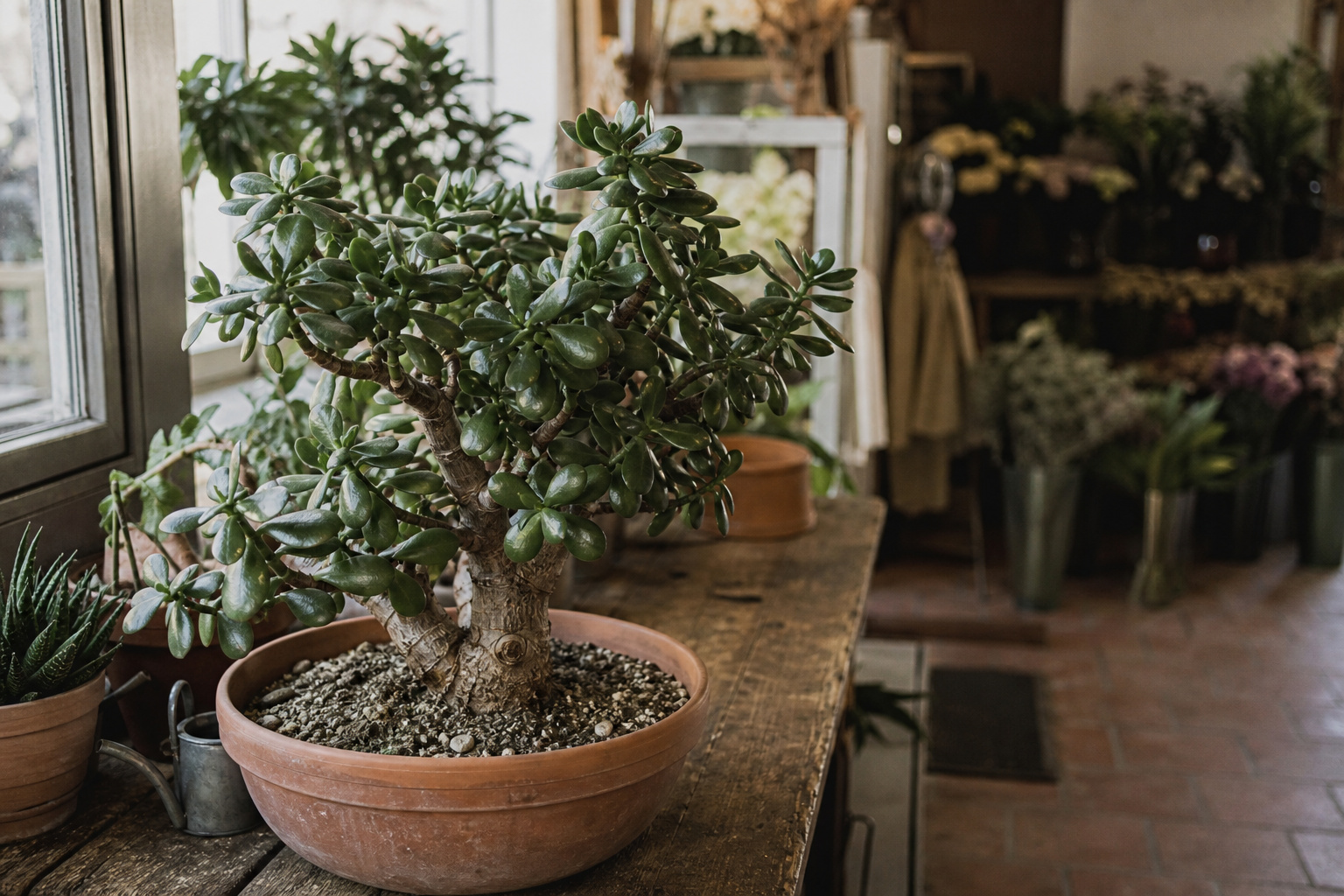
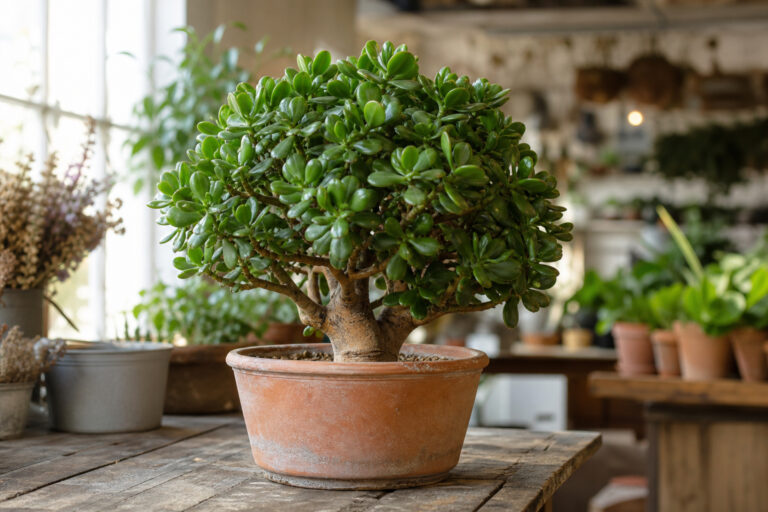
Jade plants (Crassula ovata) are the succulent equivalent of an oak tree. They grow slowly, they live forever, and a mature one looks like a miniature bonsai with no effort on your part. I’ve had customers bring in jades that have been in the family for thirty years.
The thing about jade is that the stems are heavy, and the roots are shallow. Use a wide, low pot, not a tall one, and use a terra cotta pot if you can. The porous clay wicks moisture out of the soil between waterings, which is exactly what a jade wants.
The customer I mentioned at the top of this post — her jade was in a ceramic coffee cup with no drainage hole, sitting in soggy soil all the time. That’s the recipe for root rot. We repotted into a wide terra cotta with a proper cactus mix, let it dry out for two weeks, and it came back. Jades are stubborn that way. They want to live.
If you want a similar look in a flowering version, the kalanchoe is in the same family and brings color to the mix.
Try a Christmas Cactus for Cool-Season Color
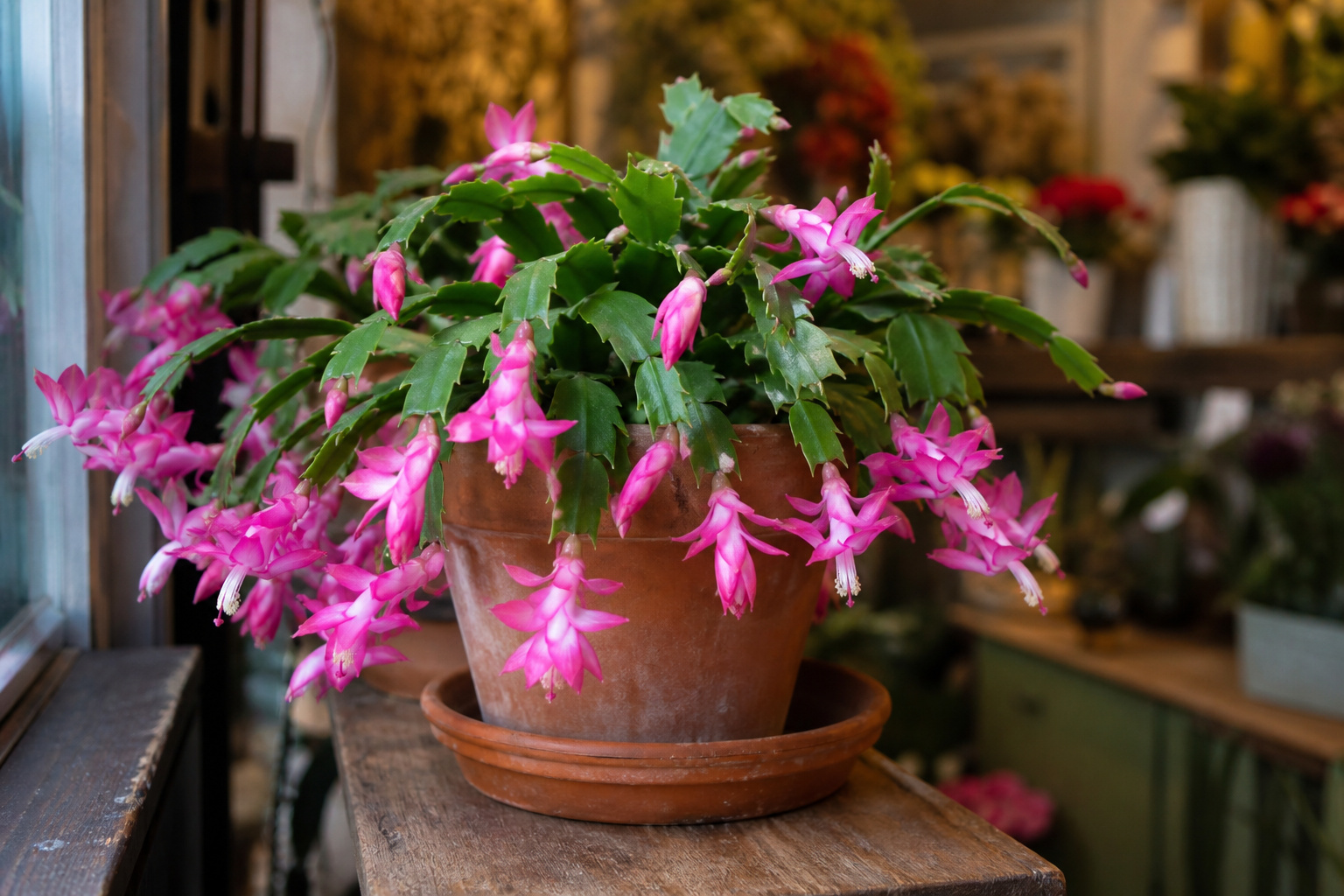
The Christmas cactus is a succulent that breaks the rules. It’s actually a tropical plant from the rainforests of Brazil, not the desert, so it wants more water and more humidity than the others on this list. But it’s still classified as a succulent, and the segmented leaves store water the way other succulents do.
What earns it a spot on my recommendation list is the blooms. From late November through January, a well-cared-for Christmas cactus will throw out dozens of bright pink, red, or white flowers right when nothing else in the house is doing anything interesting. It’s the easiest way I know to bring blooms indoors during a Wisconsin winter.
Bright, indirect light, water when the top inch of soil is dry, and a cool spot — around 55 to 65 degrees — for about six weeks in fall to trigger blooming. Full care steps are in this post if you want a deeper breakdown.
Choose Crown of Thorns for Year-Round Blooms
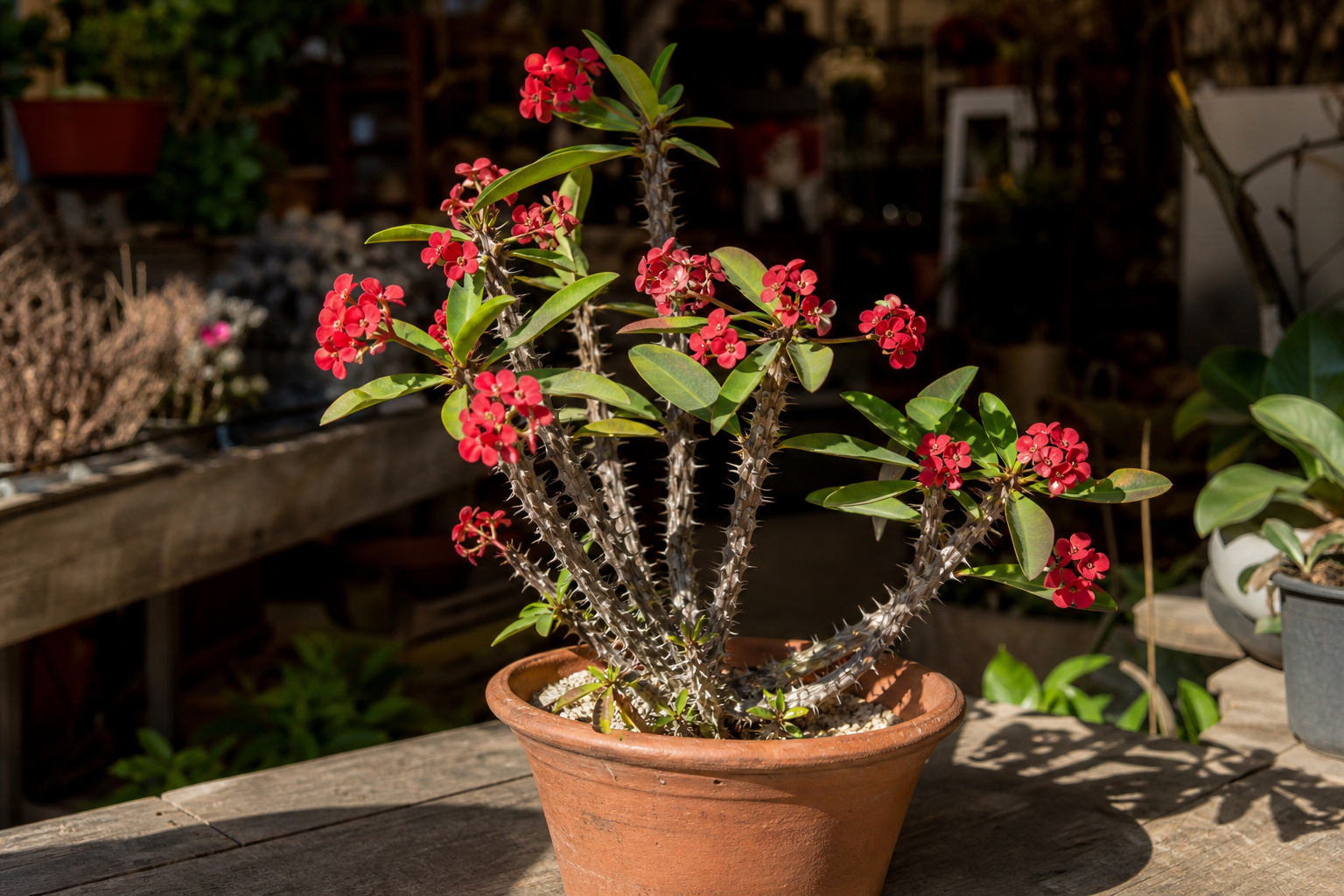
Crown of thorns (Euphorbia milii) is the succulent I recommend when someone wants flowers but doesn’t want to fuss. The blooms are small, but they keep coming — pink, red, yellow, or white, on and off for most of the year.
Two things to know. First, the stems have legitimate thorns. Not a metaphor. Wear gloves when you repot it, and don’t put it where pets or small kids will brush against it. Second, the sap is a skin irritant. Wash your hands after pruning.
Past those two things, it’s a tough plant. It wants bright direct sun — more than most succulents — and infrequent watering. In my home, it lives on a south-facing window and gets watered about every three weeks. If you’ve got a sunny spot nothing else seems to like, crown of thorns will probably thrive there.
Worth noting for pet owners: this one is toxic if chewed. If you’ve got curious cats or dogs, take a look at indoor houseplants that are safe for pets for alternatives.
Pick Up a Panda Plant for the Fuzzy Texture
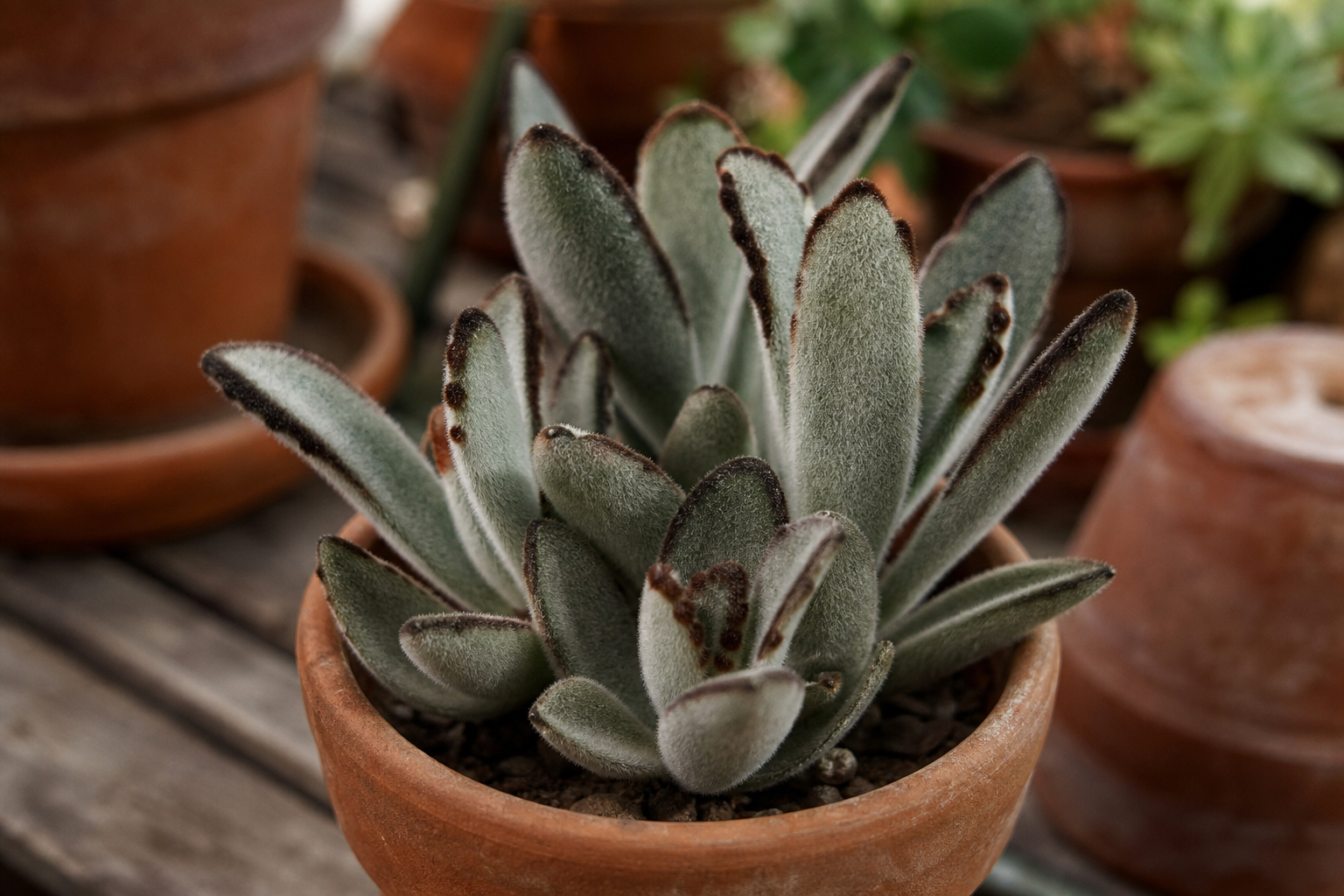
Panda plants (Kalanchoe tomentosa) are the succulent customers always want to touch. The leaves are covered in soft silvery fuzz with brown tips that look like they were dipped in chocolate. It’s a different look than the smooth, waxy leaves most people associate with succulents.
Bright, indirect light. Direct afternoon sun will scorch those fuzzy leaves, and they don’t recover well. Water the soil when it is fully dry, and not the leaves. Wet fuzz holds moisture against the plant that invites rot.
This one is slow-growing. A 4-inch panda plant from the garden center will take a couple of years to fill out. That’s a feature, not a bug — it means you won’t need to repot it constantly.
Hang a Burro’s Tail Where It Can Cascade
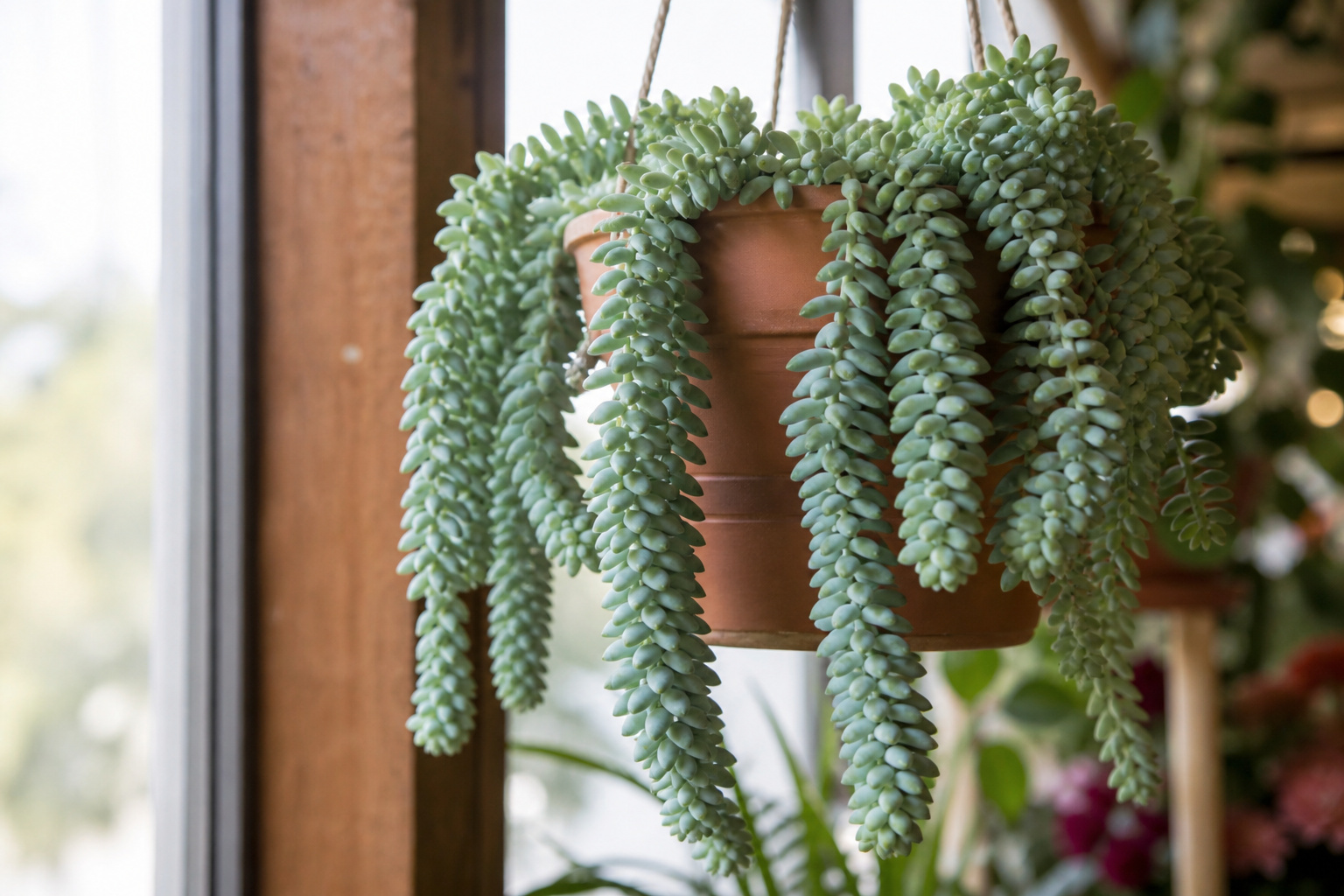
Burro’s tail (Sedum morganianum) is a succulent for hanging planters. Long, trailing stems covered in plump, blue-green leaves that look like braided rope. A mature one will hang two or three feet down. It’s a dramatic plant in a way most succulents aren’t.
The catch: the leaves drop at the slightest touch. Hang it somewhere it won’t get bumped — not next to a doorway, not where you’ll brush past it carrying laundry. Pick a spot and leave it there.
Bright light, less water than most on this list (every three to four weeks indoors), and don’t move it once you’ve found a spot it likes. Burro’s tails are creatures of habit. If it’s happy, leave it alone.
Round It Out With a Zebra Plant
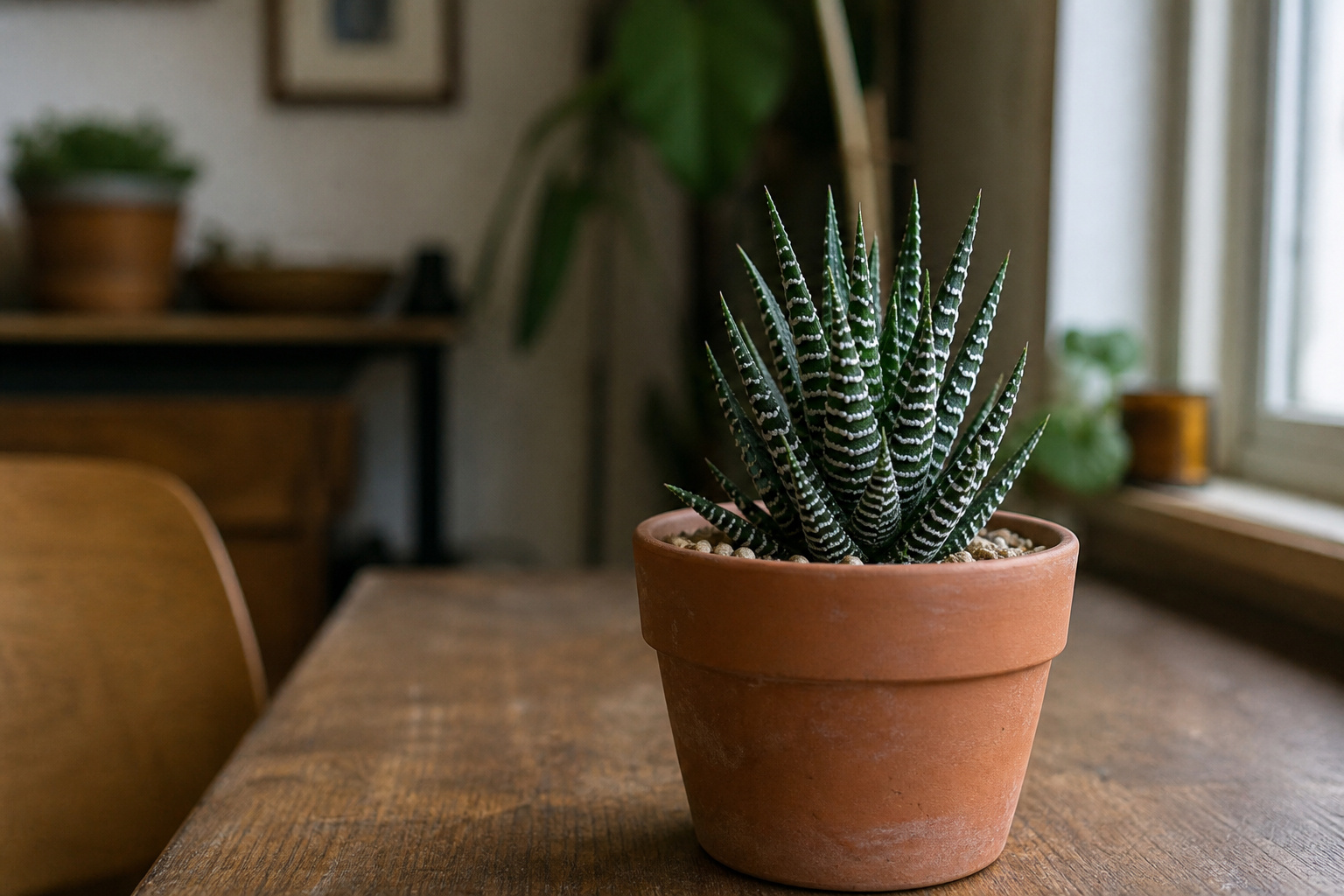
The zebra plant (Haworthia fasciata) is a small-space succulent. It stays compact — usually 4 to 5 inches tall — and the white horizontal stripes on the dark green leaves give it the name. It’s perfect for a desk, a bathroom shelf, or anywhere you’ve only got room for something the size of a coffee mug.
Zebra plants are more shade-tolerant than the rest of this list. Bright indirect light works fine. Direct sun will actually bleach the leaves and wash out the zebra striping that makes the plant interesting. Water when the soil is dry — maybe every two or three weeks.
This is the succulent I give to people who say, “I don’t have any sunny windows.” If you’ve got any light at all, a zebra plant will probably do fine.
What I Use in the Shop
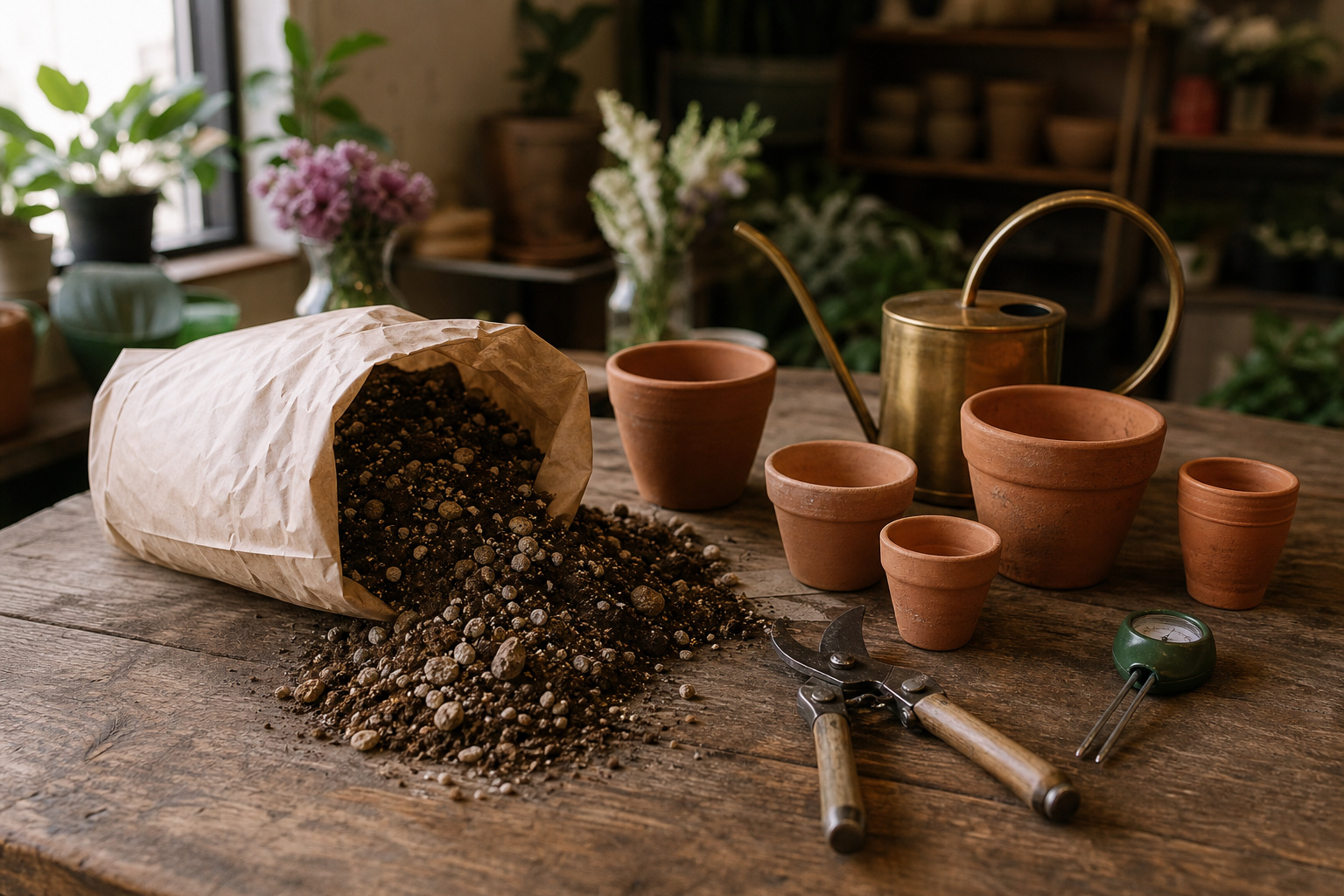
If you’re setting up a succulent at home, the only things you actually need are good potting mix, a pot with drainage, and the right amount of restraint when watering. Here’s what I keep on hand:
- Cactus and succulent potting mix — Don’t use regular potting soil. It holds way too much water. A purpose-made cactus mix drains fast, and that’s the whole game.
- Terra cotta pots with drainage holes — The porous clay wicks moisture out of the soil between waterings. A pretty ceramic pot with no drainage hole is a slow-motion plant killer.
- Small pruning shears — For taking cuttings, trimming dead leaves, and reshaping. A sharp, clean cut heals faster than a tear.
- A basic moisture meter — If you can’t trust the finger test, a basic meter takes the guesswork out. Mostly, I use it when I want to be sure.
- A long-spout watering can — Gets water to the soil without splashing the leaves, which matters a lot for fuzzy varieties like the panda plant.
I only recommend products I actually use. If you’ve got a setup that works for you, stick with it.
Avoid These Common Succulent Mistakes
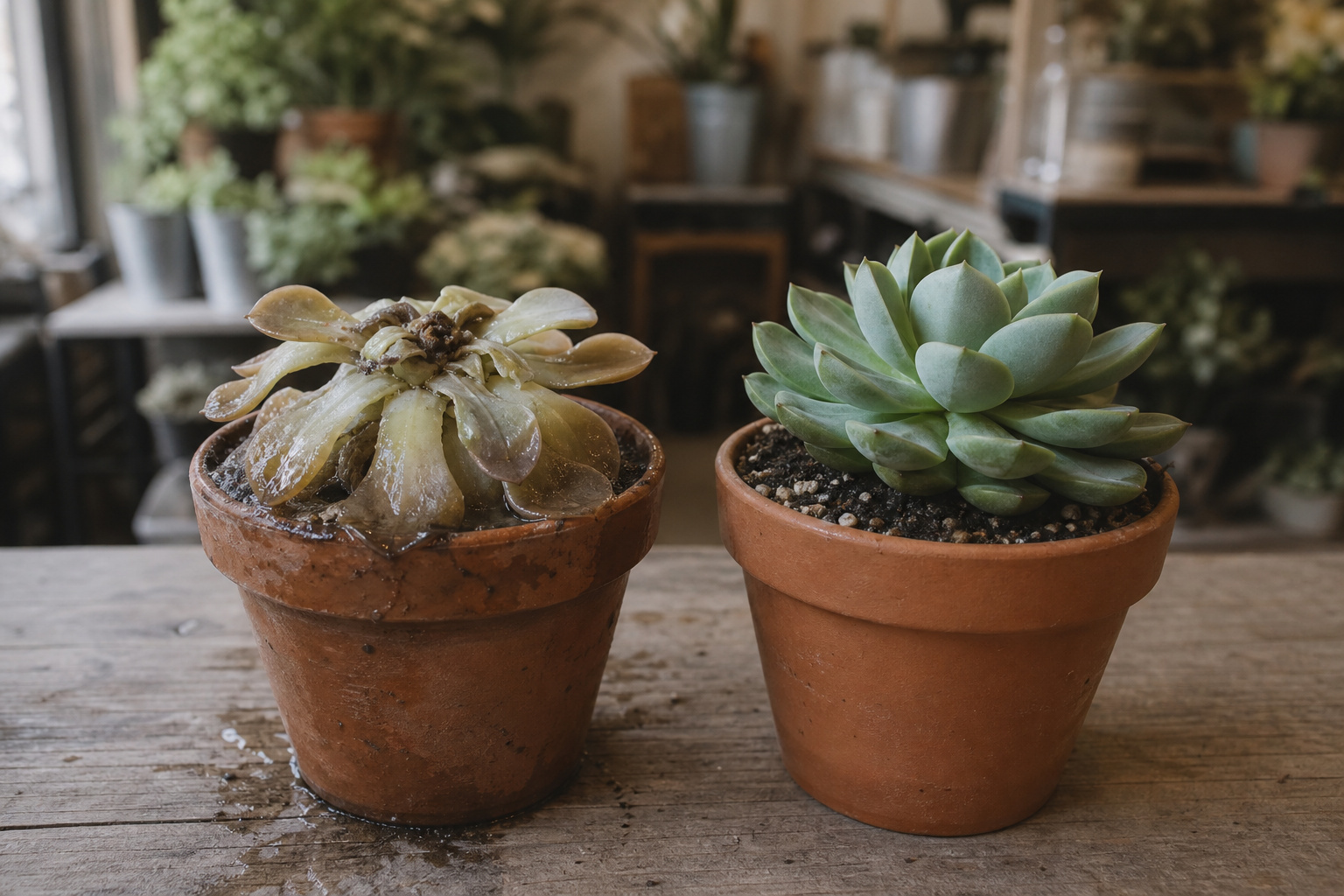
Most dead succulents I see come from one of four mistakes. Don’t make them and you’ll be ahead of about ninety percent of new owners.
Watering on a schedule. Succulents don’t care what day of the week it is. They care whether the soil is dry. Check first, water second.
Pots without drainage holes. A succulent in a sealed pot is sitting in a swamp every time you water it. If the pot you love has no hole, use it as a decorative outer pot and nest a plastic grow pot inside.
Regular potting soil. Standard potting mix holds far too much moisture for succulent roots. Spend the extra few dollars on a cactus and succulent mix, or amend regular soil with coarse sand and perlite.
Not enough light. A succulent on a kitchen counter ten feet from any window will slowly stretch out and pale. It won’t die right away, but it won’t thrive either. Most succulents want to be within three feet of a bright window.
Where to Buy Indoor Succulents
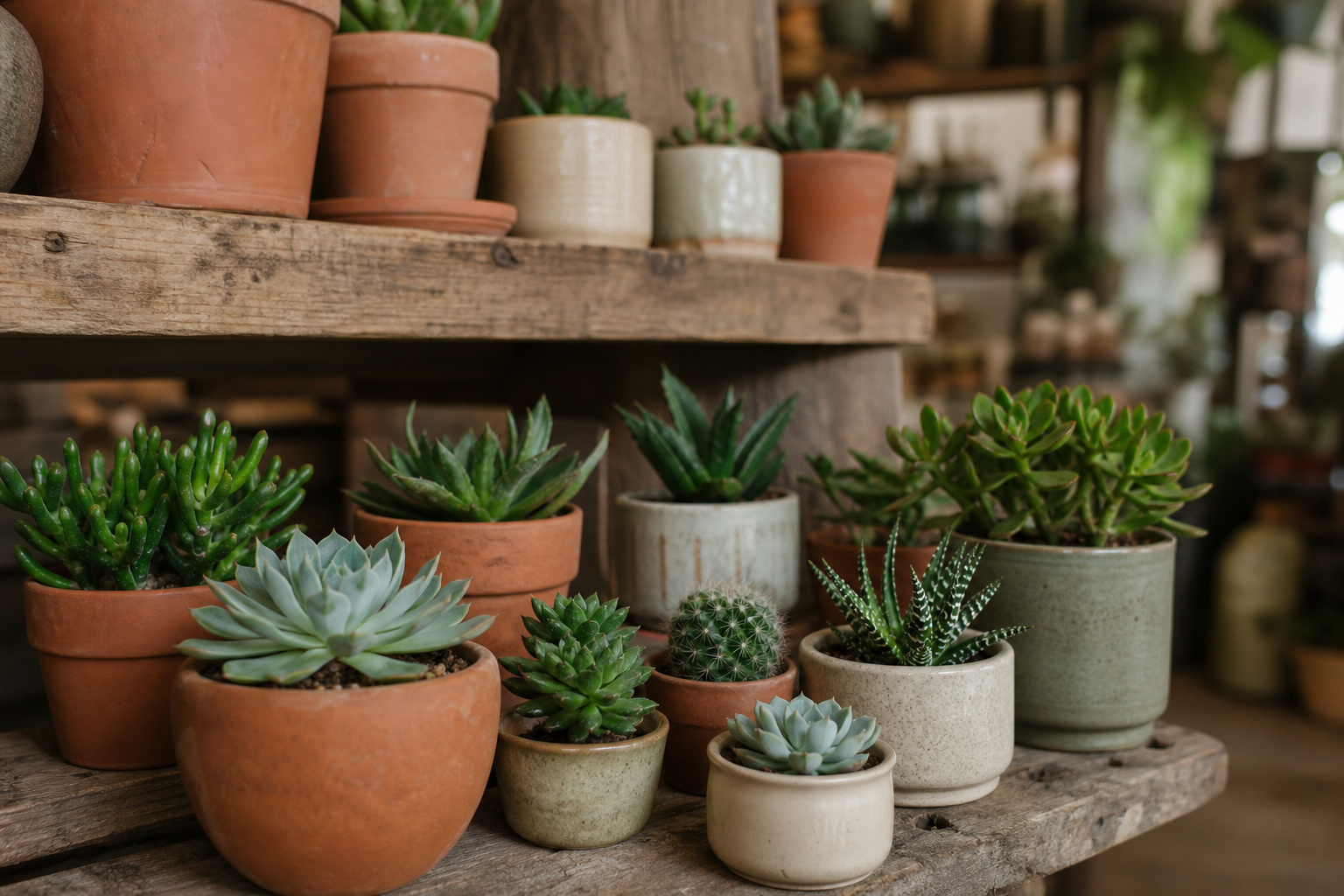
Grocery stores and big-box garden centers carry the common varieties year-round, and that’s fine for getting started. An $8 aloe from the supermarket will perform just as well as a $25 aloe from anywhere else. If you’ve got a local independent garden center, even better. The plants are usually healthier, and the staff can actually answer questions.
For unusual varieties or larger specimens, a few online specialty growers are worth knowing about:
- Leaf & Clay — wide variety, good for collectors
- Succulents Box — strong starter assortments and gift boxes
- Planet Desert — solid selection of cacti alongside succulents
- The Succulent Source — bulk wedding favor quantities if you need them
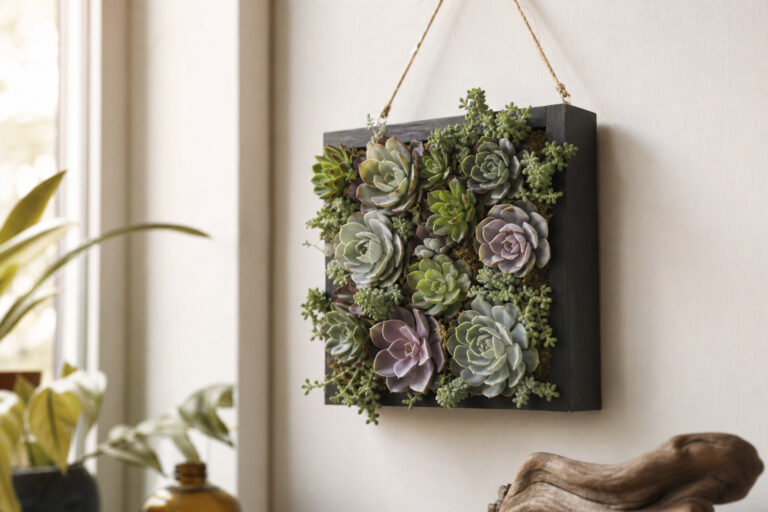
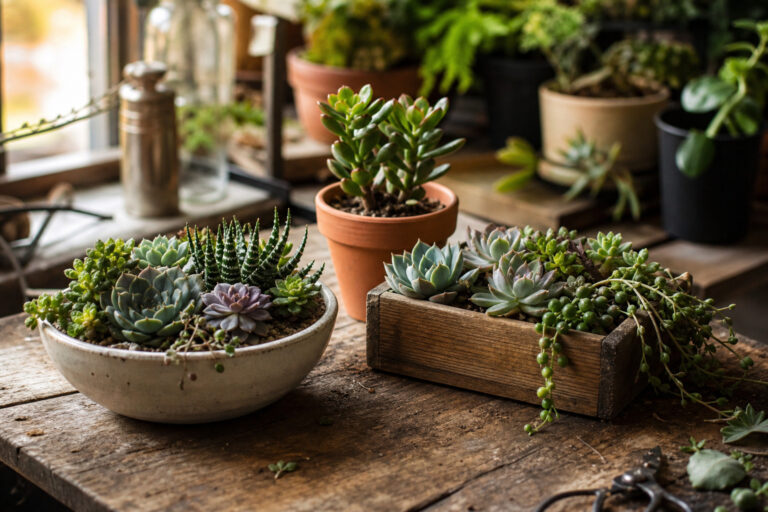
Once you’ve got a few succulents, the next question is usually how to display them. Succulent display ideas have a stack of options from terrariums to wall-mounted planters.
Frequently Asked Questions
How often should I water indoor succulents?
Most indoor succulents need water every two to three weeks during the growing season (spring and summer), and every four to six weeks in fall and winter. The right answer depends on your home — dry forced-air heat in winter dries soil faster than you’d think. Check the soil first, water only when it’s dry an inch down.
Do succulents need direct sunlight?
Most do best in bright indirect light — a few feet from a south or west-facing window. Crown of thorns is the exception and wants direct sun. Zebra plants and Christmas cacti will actually do better with less direct light. If your succulent is stretching toward the window or getting pale, it needs more light. If the leaves are scorching brown or red, it’s getting too much.
Why are my succulent leaves falling off?
Mushy leaves that drop off mean overwatering — the most common cause of succulent death. Shriveled leaves that drop off mean underwatering. Burro’s tail will drop healthy leaves at the slightest touch, which isn’t a problem with the plant, just the variety. In every case, look at the soil first to figure out what’s going on.
Can I grow succulents in any pot?
Only if it has drainage holes. A pot without drainage will trap water at the roots and kill the plant within a few months. If you love a pot that has no hole, use it as a decorative outer pot and put the succulent in a plastic grow pot inside it. Lift the grow pot out when watering and let it drain before nesting it back.
Are succulents safe for pets?
Some are, some aren’t. Aloe vera, jade, kalanchoe, and crown of thorns are toxic to dogs and cats if chewed. Burro’s tail and zebra plant are generally considered non-toxic. If you have curious pets, check the ASPCA’s toxic plant database before bringing any new plant home, or stick to varieties on the safe list.
How do I propagate succulents from a leaf or cutting?
Most succulents propagate easily. Snap off a healthy leaf or cut a stem with clean shears, let the cut end dry and callus over for two to three days, then lay the leaf on top of dry cactus mix or stick the stem cutting an inch into the soil. Mist lightly every few days. Roots will form in two to four weeks. Jade, burro’s tail, and panda plant are particularly easy this way.
Closing Thoughts
Succulents reward restraint. The people who kill them are almost always the ones who love them too much — too much water, too many pretty pots without holes, too much fussing. The people who do well with them treat them more like a pet rock with personality. A good window, the right soil, water when dry, and otherwise leave it alone.
Start with one. An aloe or a jade is hard to beat. Once you’ve kept it alive for six months, you’ll know the rhythm, and adding more is the easy part. Before long, you’ll have a windowsill that looks like a small desert garden, and a hobby that asks almost nothing of you in return.
Which one are you starting with, or which one have you already managed to keep alive? Drop a note in the comments and let me know. I’m always curious which varieties new growers gravitate to first.
Til next time,