Disclosure: This post may contain affiliate links. If you click and buy, we may earn a commission at no extra cost to you. As an Amazon Associate, we earn from qualifying purchases.
Last updated: May 24, 2026
A customer came into the shop last summer with a single aloe vera plant in a plastic grocery store pot and asked if I could split it for her. The plant was so rootbound that the soil was practically gone. Just a tangled mass of roots wrapped around itself, and there were six pups crammed in around the mother plant.
By the time I was done an hour later, she walked out with seven separate plants. One for herself, one for her sister, four for her grandkids, and one she gave back to me as a thank-you. That one’s still in the shop.
That’s the thing about aloe vera. It wants to multiply. Give one plant a sunny window and the right pot, and within a couple of years, you’ll have a small colony of them. They’re nearly indestructible, they propagate themselves for free, and the gel inside the leaves actually works on minor burns. I can’t think of another plant that gives you so much for so little.
The catch is the same one every succulent has. Aloe will not tolerate being overwatered. Most dead aloes I see were killed by kindness. Watered every few days because the owner thought it needed regular care.
Here’s what I tell customers when they buy one. Light, water, soil, the pot, and how to turn one plant into many.
Know What You’re Working With
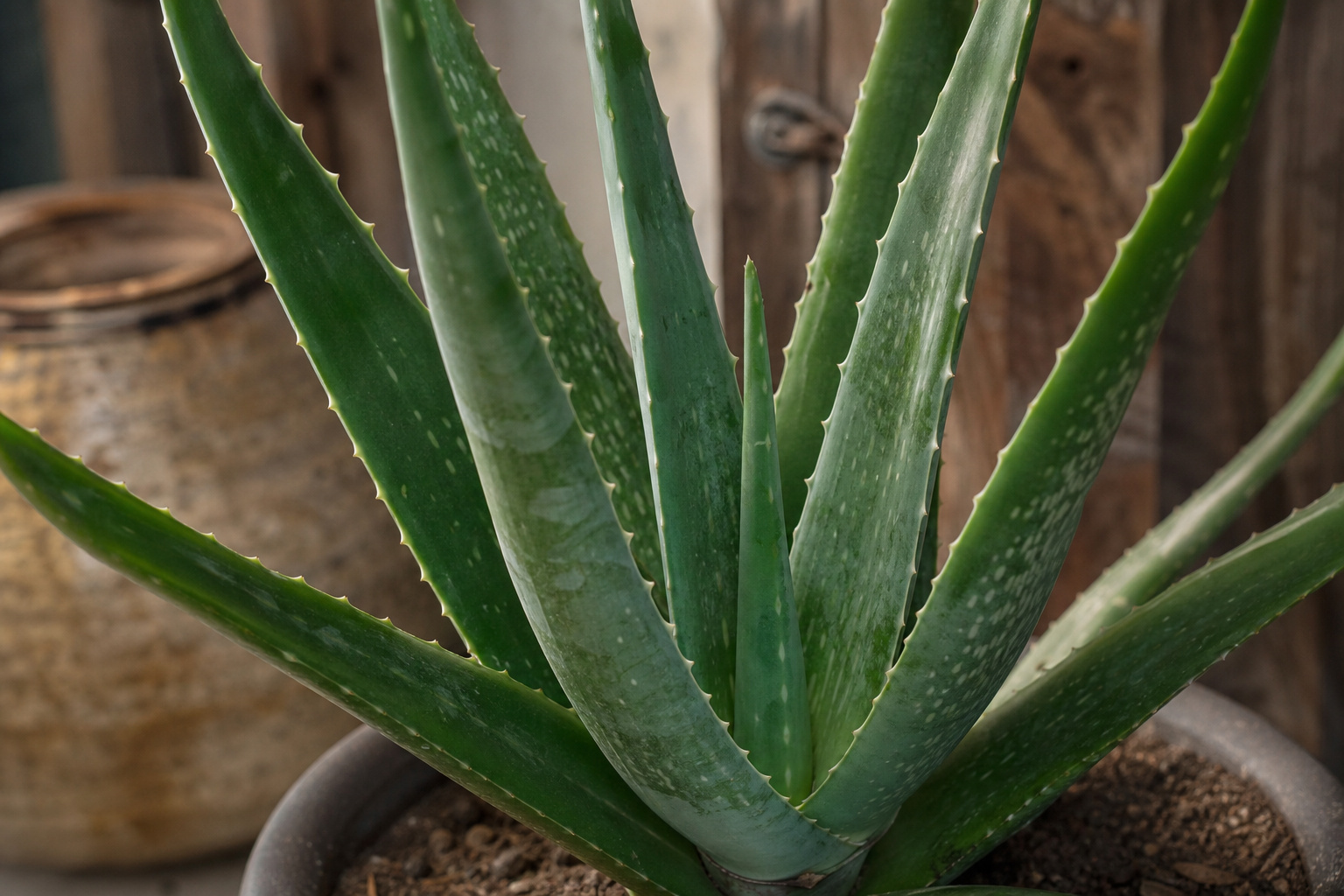
Aloe vera (Aloe barbadensis miller) is a succulent native to the Arabian Peninsula, though by now it grows wild across most warm, dry climates worldwide. It belongs to the broader Asphodelaceae family, different cousins from the jade-and-kalanchoe Crassula family, but the care rhythm is similar enough that if you know one, you can probably handle the other.
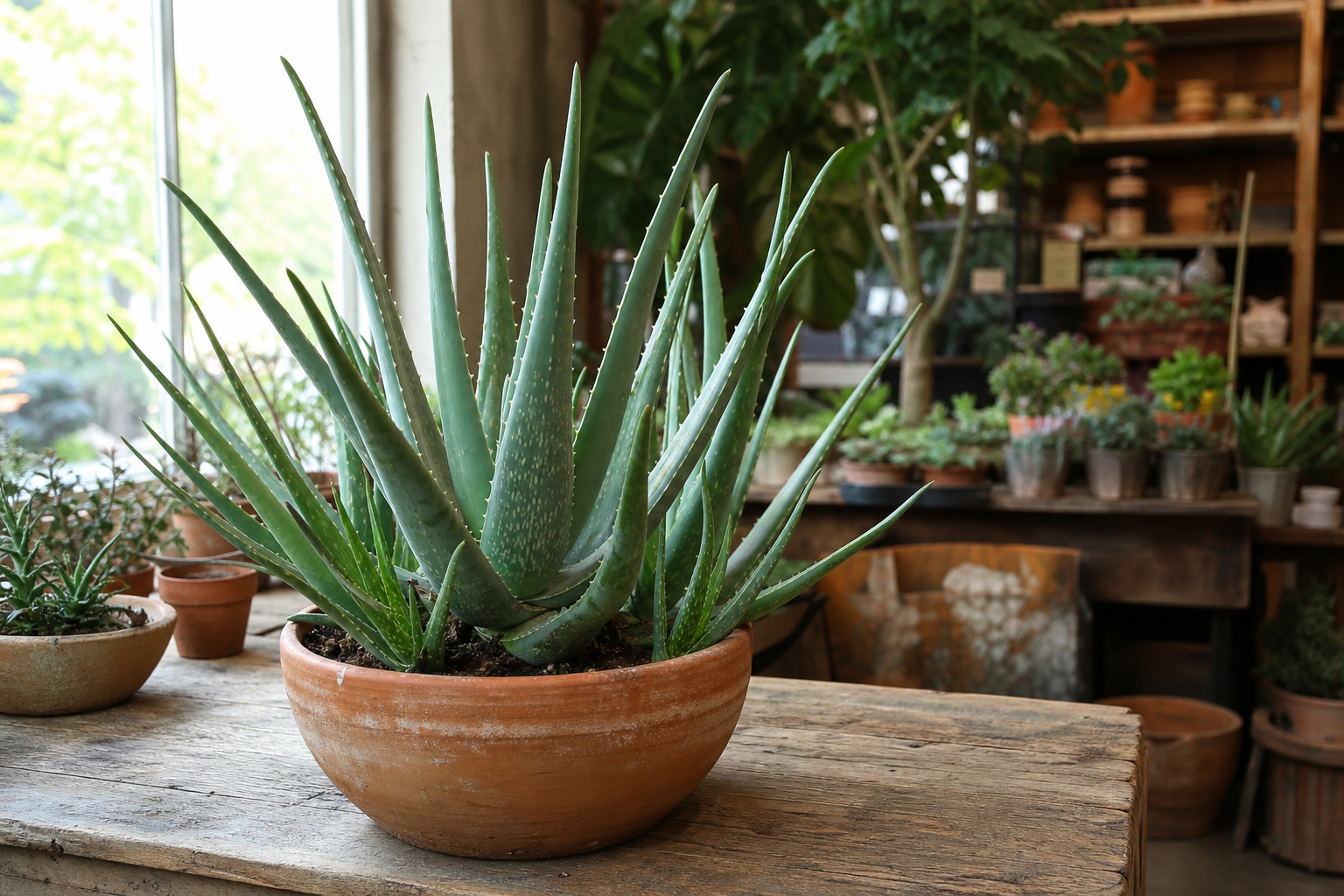
The plant grows in a rosette pattern. Thick fleshy leaves emerge from a short central stem and arch outward and upward in a spiral. The leaves are the storage tank. They hold the clear gel the plant is famous for, which is also how aloe survives long droughts in the wild. A healthy aloe leaf is firm and plump. A thirsty one starts to thin and curl at the edges.
One thing worth knowing up front: aloe is toxic to dogs and cats if chewed. The same medicinal compounds that make it useful for human skin will make a pet sick. If you have curious animals, take a look at indoor houseplants safe for pets for safer alternatives, or place the aloe somewhere genuinely out of reach.
Give It as Much Light as You Have
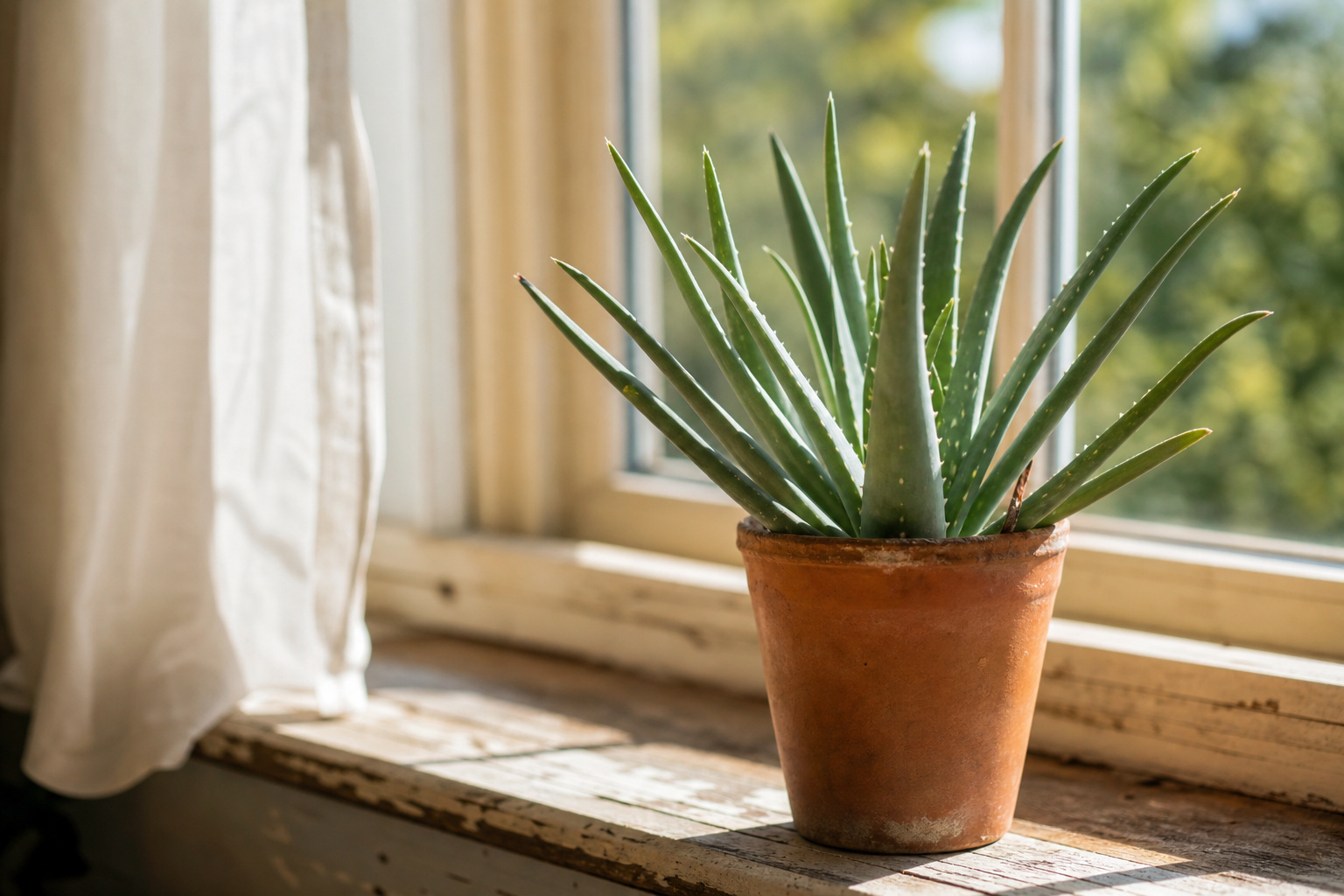
Aloe wants bright light — more than most houseplants. A south or west-facing window is ideal. East-facing works if it’s the brightest spot you’ve got. North-facing is going to be a struggle.
You can tell when an aloe isn’t getting enough light. The leaves stretch out long and thin, the plant tips sideways instead of growing upward, and the color fades to a pale yellow-green. A healthy aloe in good light stays compact, stands upright, and the leaves are firm and a vibrant blue-green with white speckling.
One quick warning. An aloe that’s been sitting all winter indoors can’t go straight outside into full sun in May. The leaves will scorch — brown patches in a few hours that don’t heal.
If you want to summer your aloe outdoors (and you should, they love it), move it gradually. Start with two hours of morning sun in the shade for a week, then four hours, then more. After two weeks, it’ll handle full sun. Same rule in reverse when you bring it back inside in the fall, though sunburn isn’t really the worry there.
If you don’t have a bright window at all, a basic grow light running 12 hours a day will keep an aloe healthy. They respond well to artificial light, which is part of why they’re so popular as office plants.
Water Deeply, Then Wait
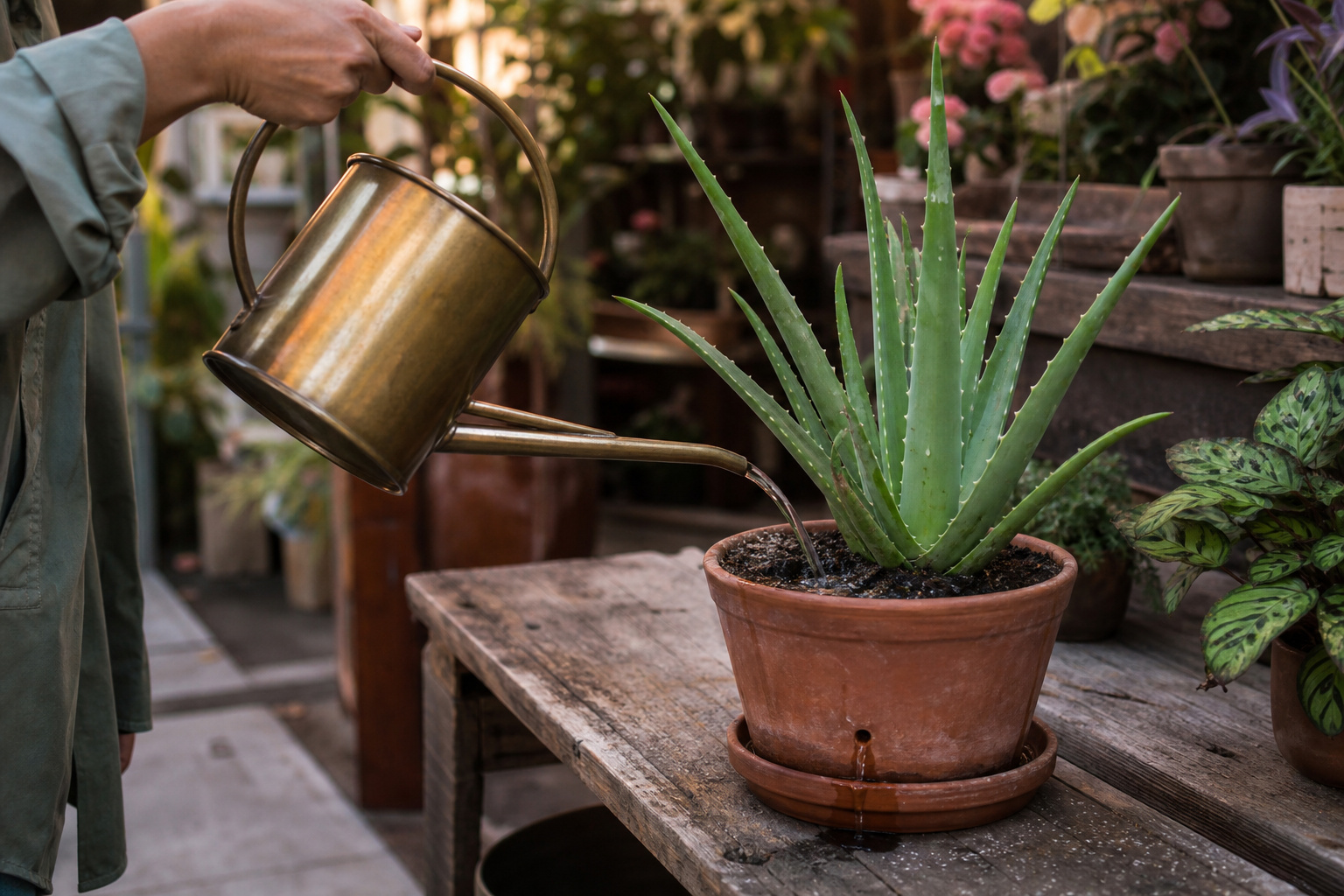
Watering is the make-or-break with aloe. The rule is simple. Water deeply until water runs out the drainage hole, then let the soil dry out completely before watering again.
In spring and summer, that usually means watering every two to three weeks indoors. In fall and winter, when growth slows, every four to six weeks. Sometimes longer. There is no schedule. The plant doesn’t care what day of the week it is; it cares whether the soil is dry.
Check the soil with your finger before every watering. Stick a finger an inch and a half down into the pot. If you feel any moisture at all, wait a few more days. Bone dry means it’s time to water. That’s the whole method.
When you do water, water all the way through. Half-measure watering, such as a little splash on top every few days, is worse than a proper drink less often. You want the whole root ball to drink deeply, then dry out completely between drinks. That dry-wet-dry rhythm is what mimics the desert conditions in which aloes evolved.
Signs you’re overwatering: mushy leaves, leaves turning yellow and translucent, leaves dropping easily, a soft, spongy feel at the base of the plant where it meets the soil. Any of those means stop watering immediately and let the plant dry out for two to three weeks.
In bad cases, the roots have already rotted, and you’ll need to repot into completely dry fresh soil to save the plant.
Pot It Right the First Time
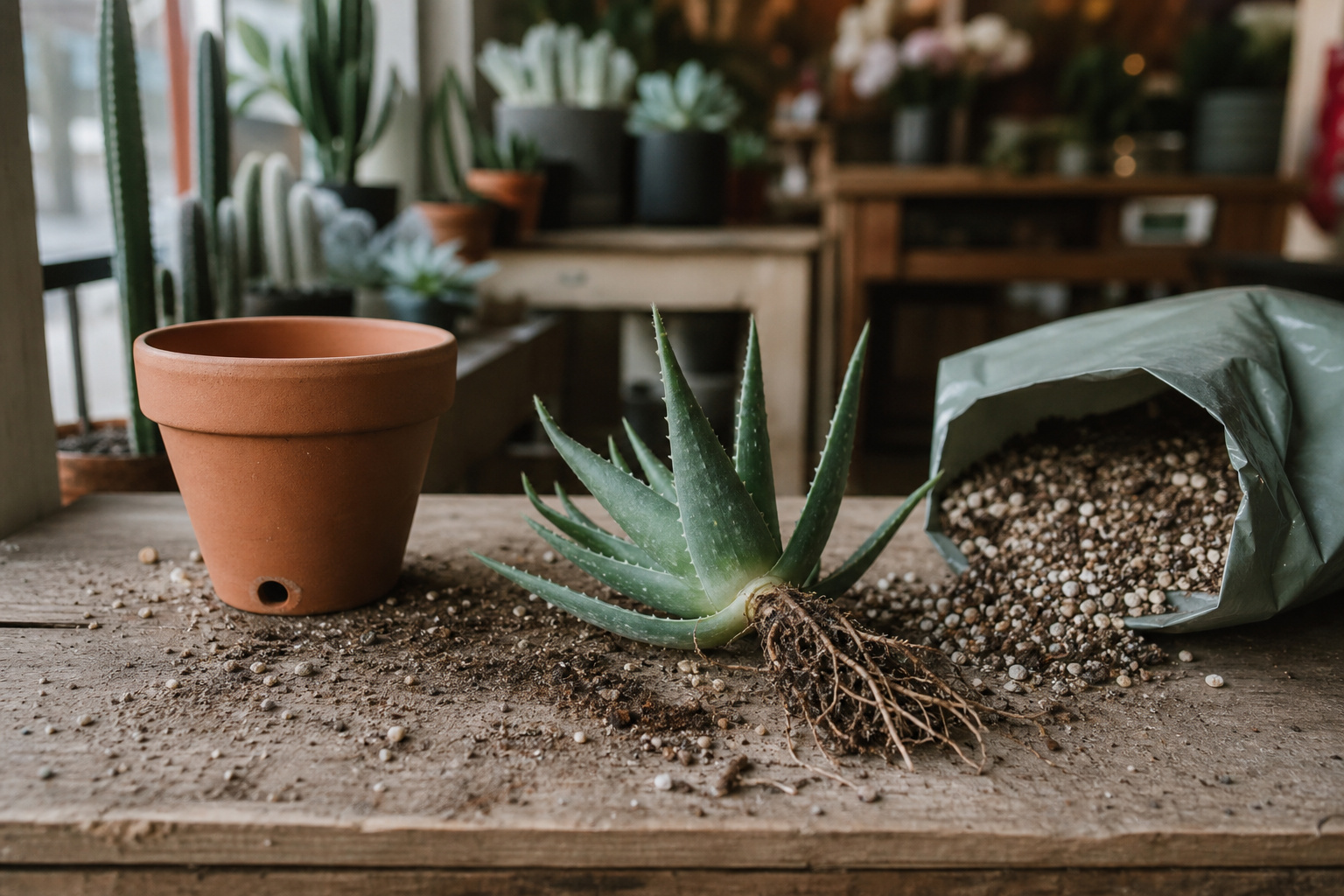
The pot matters as much as the watering for aloe. A few rules I follow.
Use terra cotta, not glazed ceramic or plastic. The unglazed clay is porous and wicks moisture out of the soil between waterings, which is exactly what aloe wants. A plastic pot traps moisture against the roots and stacks the odds against you from day one.
Drainage holes are non-negotiable. A pot without holes will kill an aloe within a few months, no matter how careful you are with watering. If you love a pretty pot that has no hole, use it as an outer pot and nest a plastic grow pot inside that you can lift out for watering.
Pick a pot only slightly bigger than the current root ball. An inch or two of extra room is plenty. Aloes prefer being slightly rootbound. Too much loose soil around the roots stays wet too long and invites rot. This is a plant that genuinely does better in a snug pot.
For soil, use a cactus and succulent mix. Don’t use regular potting soil, it holds way too much water for an aloe’s taste. If you can’t find cactus mix locally, amend regular potting soil with about a third coarse sand or perlite to approximate it. Even better: add a layer of small gravel or pumice at the bottom of the pot for extra drainage.
Repot Every Two to Three Years
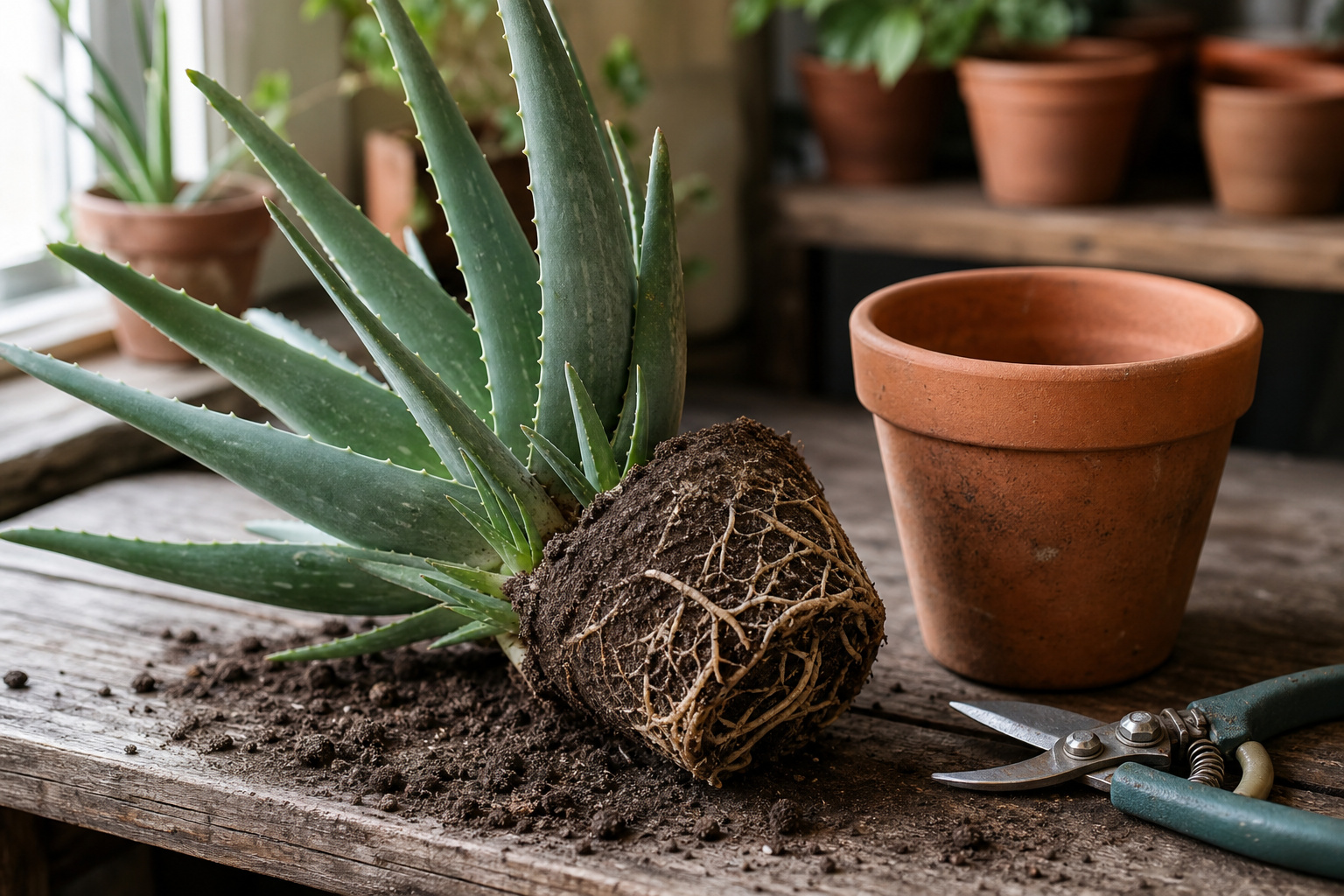
Aloe doesn’t need frequent repotting. Every two to three years is plenty, and most aloes will tell you when it’s time. Watch for roots growing out of the drainage hole, pups crowding the mother plant, or the soil drying out within a day or two of watering. That last one means the roots have outgrown the soil volume.
Spring is the right time. Pick a day when you haven’t watered in at least a week so the soil is dry. Slide the plant out of the old pot and gently brush off the loose soil. Inspect the roots — healthy ones are white or tan and firm. Cut off any black, mushy, or rotting roots with clean shears.
If pups have formed around the base, this is the moment to separate them. More on that in the propagation section below. Set the mother plant in a new pot only slightly bigger than the last one, fill with fresh dry cactus mix, and, this is the part people miss, do not water for at least a week. Let the roots heal in dry soil before reintroducing moisture. Watering immediately after repotting is one of the fastest ways to give an aloe root rot.
Multiply Your Aloe From Pups
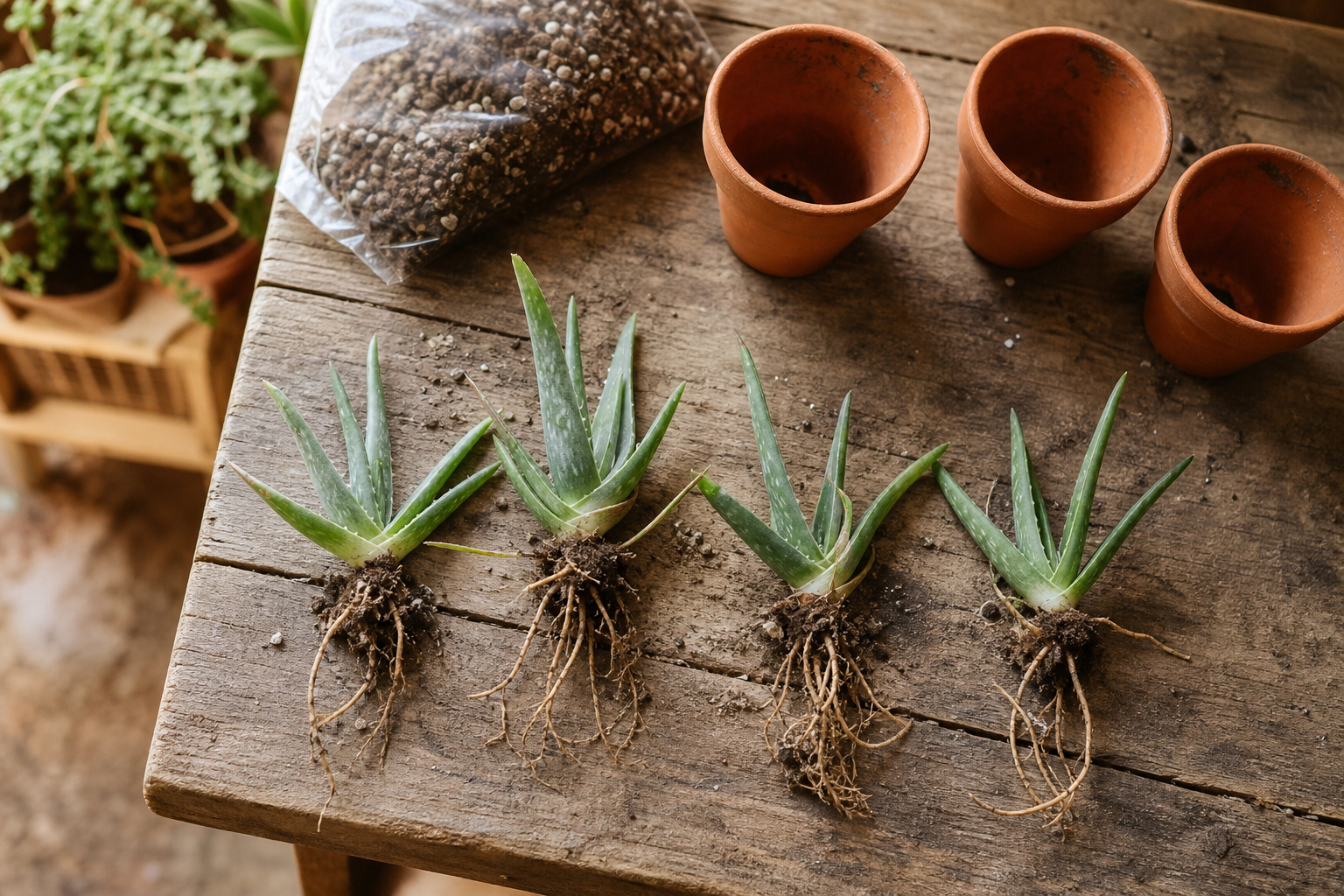
This is where aloe really earns its keep. A healthy plant in a sunny window will start sending up baby plants called pups, or offsets, from the base of the mother plant within the first year or two. Each pup is a complete miniature copy of the parent. Separate them, pot them up, and you’ve got new plants for free.
A quick note on what doesn’t work, since the question comes up. Aloe leaves do not reliably propagate the way jade leaves do. A leaf cutting will sit in soil for a few weeks, slowly rot at the base, and never produce a new plant. Pups and division are the only methods that actually work. Save yourself the time.
When to separate pups. Wait until each pup is at least three to four inches tall and has at least four or five of its own leaves. A pup that small has its own root system started, but is still small enough that the mother can spare it without sulking. If you separate too early, the pup hasn’t developed enough roots to survive on its own.
How to separate pups. Let the soil dry out for a week first, then unpot the whole plant. Use your fingers to gently work the soil away from where each pup connects to the mother plant. The pups will be attached by a thin underground stem with a small set of roots of their own. Either work them apart by hand, or use a clean, sharp knife to cut the connecting stem cleanly. Try not to damage the existing pup roots if you can help it.
Let the cuts callus. Set the separated pups (and the mother) aside for two to three days in a dry, shady spot. The cut ends need to dry out and form a callus before they go into the soil. Skipping this step is the most common way pups die. Wet cuts in wet soil are an invitation to rot.
Pot them in dry cactus mix. Use small terra cotta pots. 3 to 4 inches is plenty for a young pup. Plant the pup so the base sits at soil level. Do not water for at least a week, ideally two. The roots need to heal and seek moisture, which only happens in dry soil. After two weeks, start watering on the regular aloe schedule.
Pups are the gift that the customer at the top of this post walked out with seven of. One plant in, seven plants out. That’s a generous houseplant.
Divide a Rootbound Aloe
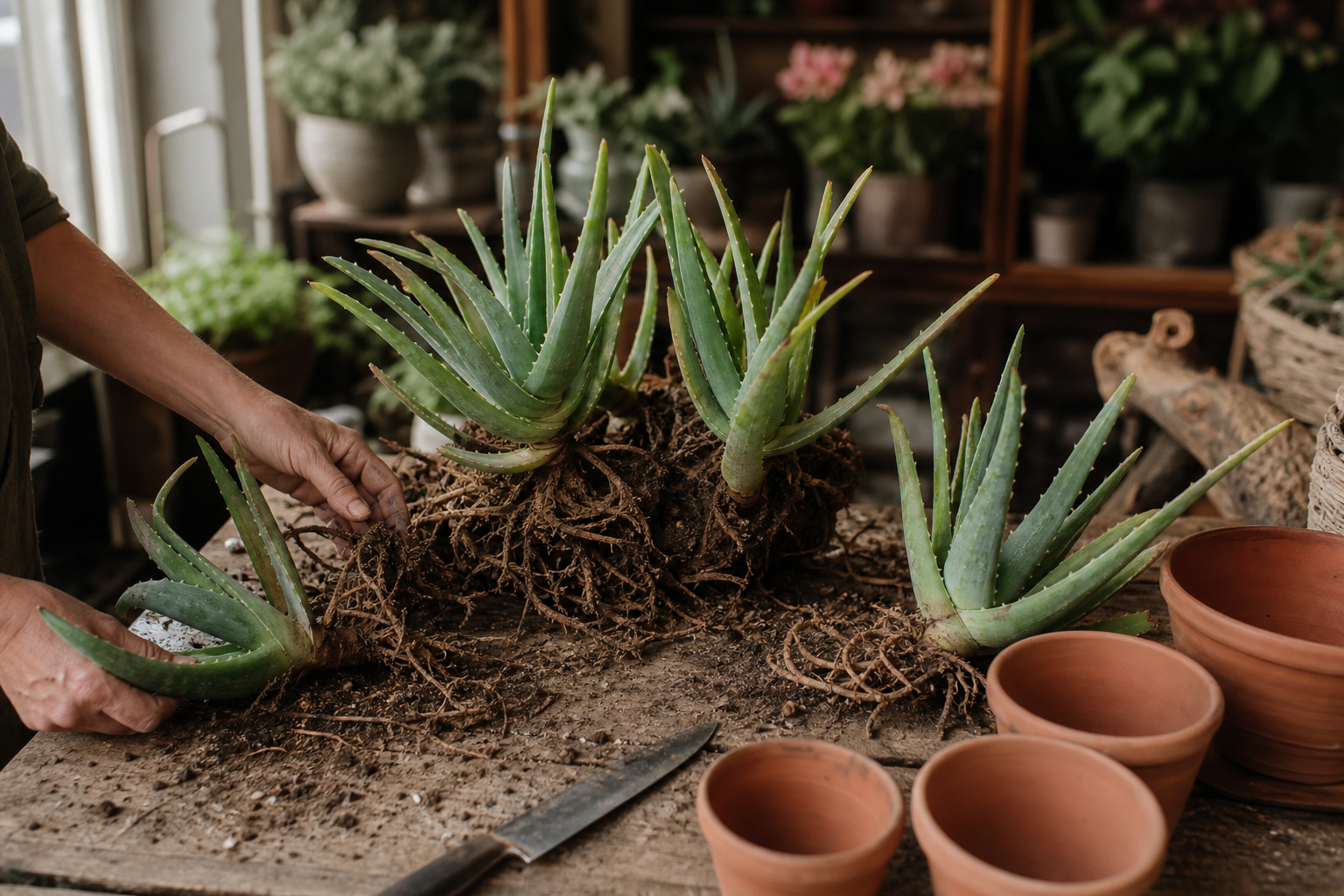
If your aloe has been in the same pot for years and is now a tangled mass of roots and crowded pups all roughly the same size, you’ve got a candidate for full division. This is a more aggressive version of pup separation. You’re essentially breaking the whole clump apart and starting fresh.
The process is the same. Let the soil dry. Unpot the whole thing. Work the roots apart by hand or cut with a clean knife, dividing the clump into individual plants. Trim any black or mushy roots. Let all the divisions callus for two to three days, then pot each one individually in a small terra cotta pot with dry cactus mix. Wait two weeks before watering.
Division is the move when one plant has become a mess of equally mature plants competing for space. You’ll lose a few leaves in the process — some will get bent, some will snap off, some of the smaller divisions won’t have enough root to recover. That’s expected. The survivors will spend a month looking unhappy, then take off in growth once they realize they have room.
What I Use in the Shop
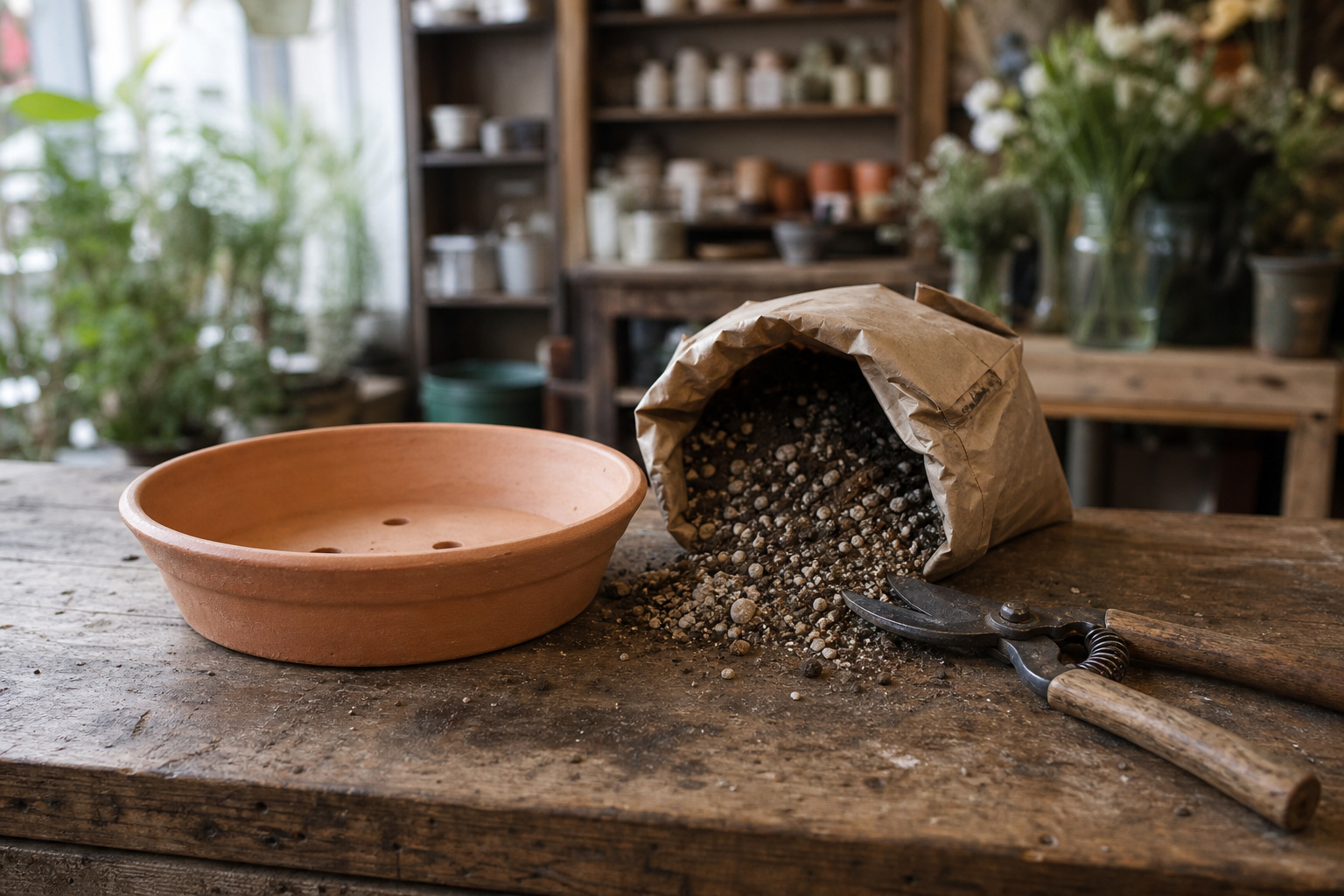
You don’t need much for aloe vera care. The same three things I use for jade cover everything you need for aloe, too, which is convenient if you’ve got both:
- A wide, shallow terra cotta pot — The shape suits aloe’s spreading rosette, and the porous clay keeps the soil from staying wet too long. For pups, smaller 3- to 4-inch terra cotta pots are perfect.
- Cactus and succulent potting mix — Drains fast, which is the whole game with aloe. Avoid anything labeled “moisture-control” — that’s the opposite of what aloe wants. A bag lasts a long time.
- Sharp bypass pruning shears — For trimming rotted roots, separating tough pup connections, and harvesting leaves cleanly when you want some of that gel. A clean, sharp cut heals fast and doesn’t invite rot.
I only recommend products I actually use. That’s the full kit for aloe. The same supplies work for the jade plant care routine, too, so one purchase covers both windowsill plants.
Fix Common Aloe Vera Problems
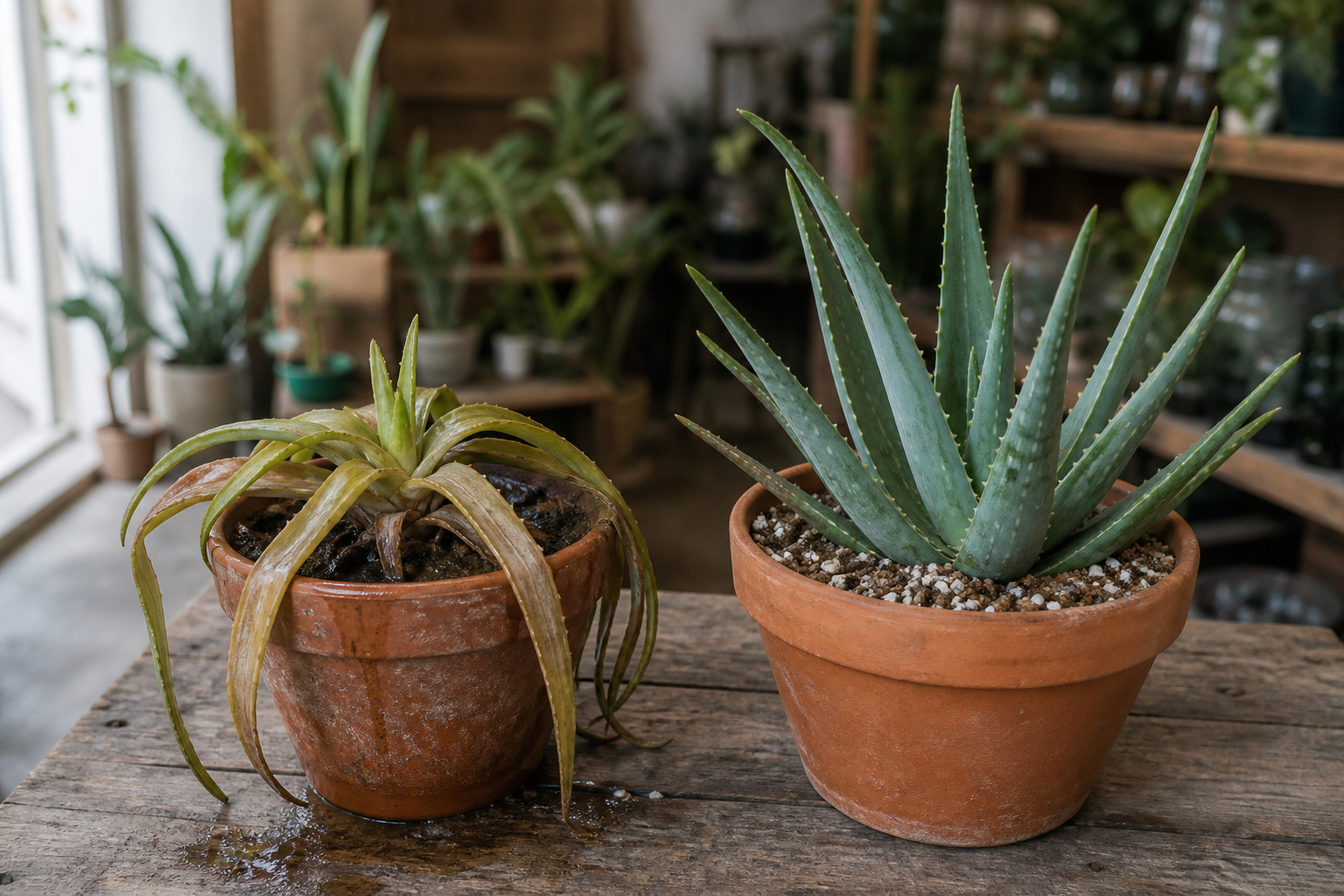
If your aloe is unhappy, it’s almost always one of these four things.
Mushy leaves, yellowing, dropping easily. Overwatering. Stop watering for two to three weeks. If the base of the plant is soft or blackening, the roots are rotting — unpot it immediately, cut away any black mushy roots, let the plant sit bare-rooted in open air for two to three days, and repot into completely dry fresh cactus mix. Don’t water for another full week.
Thin, curling, wrinkled leaves. Underwatering. Stick your finger in the soil. If it’s bone dry all the way down, water deeply, and the leaves will plump back up within a few days. If you’ve been watering on schedule but the soil is also bone dry within a day or two, the plant is severely rootbound, and the roots can’t absorb water efficiently — time to repot or divide.
Leaves flopping sideways, pale, washed-out color. Not enough light. Move the plant closer to a brighter window. The existing stretched leaves won’t recover, but new growth will come in compact and properly colored. You can trim off the worst of the floppy leaves once the new growth establishes.
Brown or reddish patches on the leaves. Sunburn from moving the plant too suddenly into direct sunlight. Brown patches don’t heal — those leaves are scarred for good. Move the plant out of direct sunlight for a couple of weeks, then reintroduce sunlight gradually over two weeks. New growth will come in undamaged.
Frequently Asked Questions
How often should I water my aloe vera plant?
Every two to three weeks in spring and summer, every four to six weeks in fall and winter — but only if the soil is bone dry an inch and a half down. Check first, water second. Sticking to a calendar instead of checking the soil is the most common cause of aloe death.
Can I grow aloe vera from a leaf cutting?
No, not reliably. Unlike jade and some other succulents, aloe leaves will not produce a new plant. The leaf rots at the base before it can root. Aloe propagates only through pups (offshoots from the base of the mother plant) or by dividing a mature clump. If you’ve seen tutorials online claiming otherwise, save yourself the disappointment.
When are aloe vera pups ready to separate?
When each pup is at least three to four inches tall and has four or five leaves of its own. At that size, each pup has its own root system started and can survive separation from the mother plant. Smaller pups don’t have enough roots and usually die after being separated. If you’re not sure, wait another month.
Why is my aloe plant turning brown?
Brown leaves usually mean one of two things. Brown patches that appeared suddenly after moving outdoors are sunburn — the plant wasn’t acclimated to direct sun gradually. Brown crispy leaf tips that develop slowly mean underwatering or extremely low humidity. The first won’t heal; the second will stabilize once you adjust the watering.
Is aloe vera toxic to pets?
Yes. Aloe vera is toxic to dogs and cats if chewed, causing vomiting, lethargy, and diarrhea. Not usually fatal, but unpleasant and worth a vet call. If you have curious animals, check the ASPCA’s toxic plant database or pick from the pet-safe houseplant list instead.
How do I harvest aloe vera gel from a leaf?
Cut a mature outer leaf as close to the base of the plant as possible with a sharp knife. Stand the leaf cut-side down in a glass for 10 to 15 minutes to drain the yellow latex (aloin), which is a skin irritant. Then lay the leaf flat, trim off the spiky edges, and split it lengthwise. Scoop out the clear gel with a spoon. Use immediately on a minor burn or store in the fridge in a sealed container for up to a week.
Closing Thoughts
Aloe vera is the plant I recommend most often when someone says they’ve killed everything they’ve ever owned. It tolerates more neglect than affection. Forgive it the occasional dry spell. Don’t drown it. Give it a bright window and a terra cotta pot. That’s the entire job.
What makes it worth keeping isn’t just survival, though. It’s the multiplication. The plant rewards basic care with pups, year after year, and within a few seasons, one plant becomes a tray full of plants you can hand out to friends, repot for the kitchen, or trade with neighbors. There aren’t many houseplants that pay you back like that.
If you want to round out the windowsill, the jade plant uses the same supplies, the kalanchoe adds flowers to the mix, and the seven succulents guide covers other beginner-friendly options worth pairing.
How many pups has your aloe vera plant produced for you, and did you give any away? I’d love to hear the stories — these plants tend to travel through families and neighborhoods the same way jade does. Drop a note in the comments.
Til next time,