Disclosure: This post may contain affiliate links. If you click and buy, we may earn a commission at no extra cost to you. As an Amazon Associate, we earn from qualifying purchases.
Last Updated: May 15, 2026
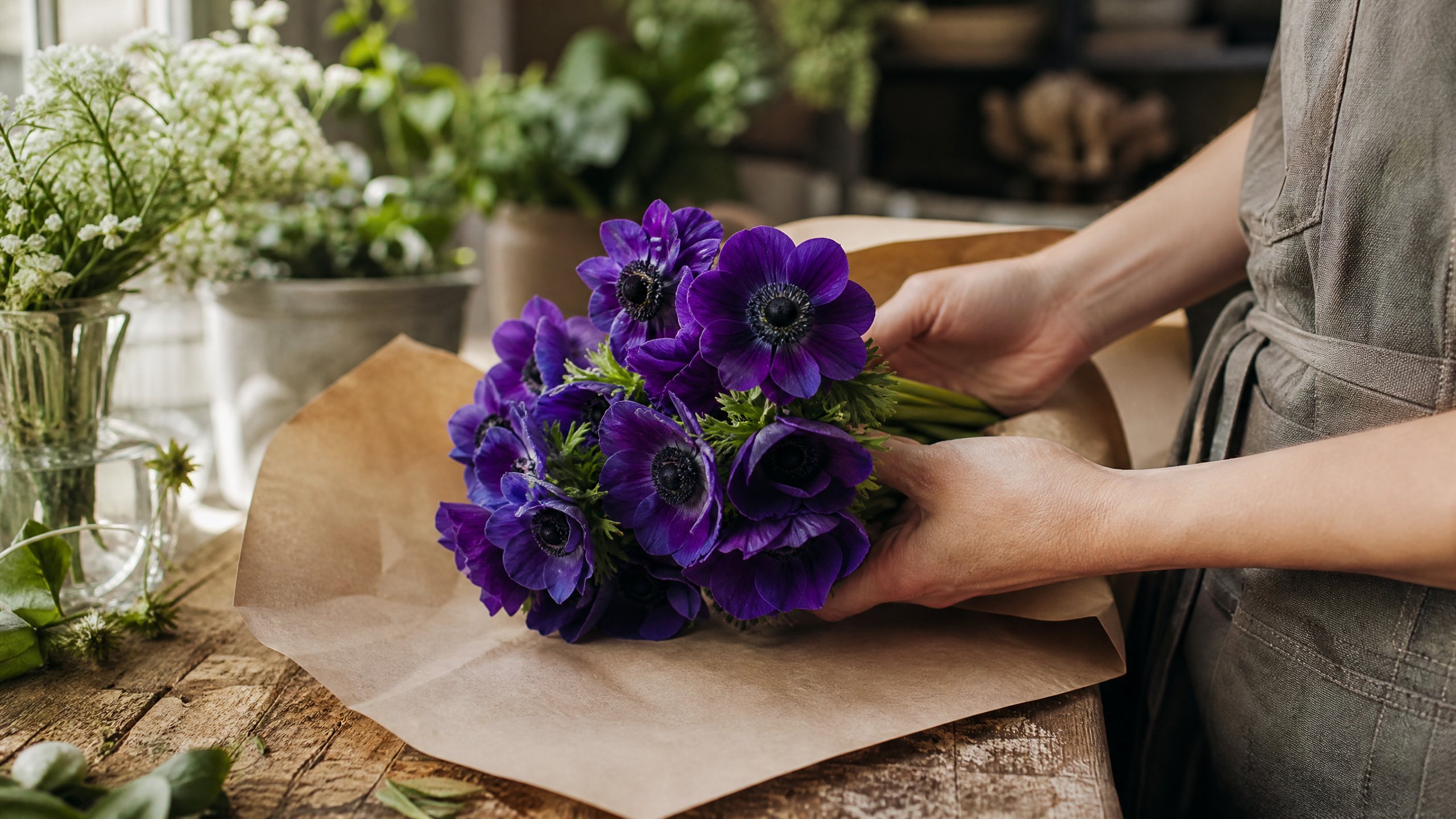
A bride walked into the shop last spring with a single photo on her phone — a moody, romantic bouquet built around deep purple Panda anemones with those signature black centers. “Can you do this?” she asked. I told her yes, then quietly hoped her wedding wasn’t in July.
Here’s the thing about anemones: they’re stunning, they’re trending hard in wedding work right now, and they’re fussier than most flowers I bring through the back door. Get the care wrong, and you’ve got 5 days of vase life. Get it right, and you’ll squeeze out 8, maybe a touch more.
I’ve been arranging these little drama queens for over 30 years at Greenfield Flower Shop. In my experience, almost every “bad anemone” story comes down to one of three mistakes I’ll walk you through below.
Let’s get into it.
Know Your Anemone Before You Buy
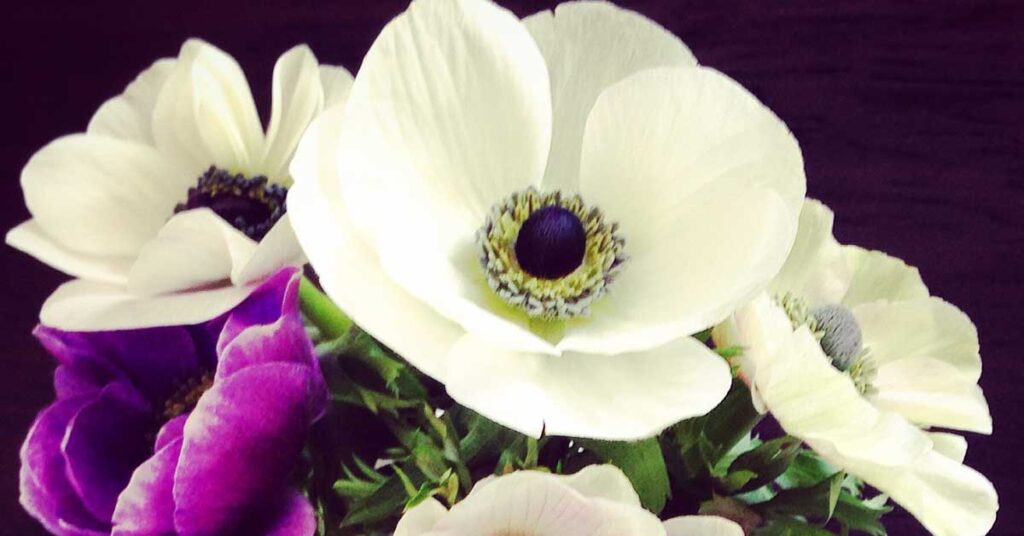
Anemones — sometimes called windflowers — come in a surprising range of shapes, sizes, and colors. As cut flowers, you’re most likely to encounter Anemone coronaria in two main varieties: ‘Mistral’ and ‘Marianne’.
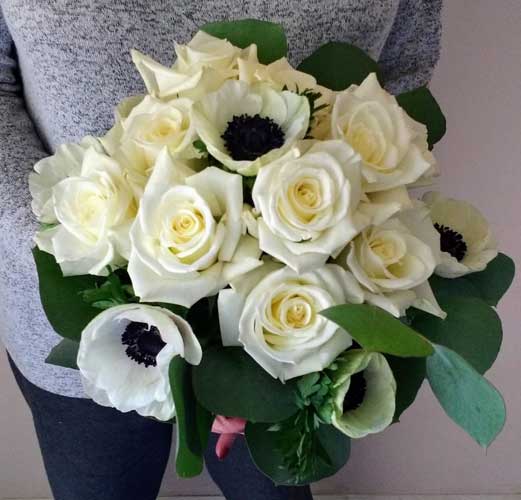
The ‘Marianne’ varieties — sometimes called poppy anemones — come in vivid reds, blues, purples, and whites with those bold dark centers brides go crazy for. The white ‘Panda’ falls into this family and is hands-down the most-requested anemone we see in bridal work.
‘Mistral’ anemones lean into warmer, softer tones — pinkish-orange, butter yellow, dusty rose, and deep burgundy. They’re the ones I reach for when a bride says “moody but not goth.”
Here’s a recent bridal bouquet from our shop featuring white Panda anemones as the focal flower:
Availability: Anemones run from August through May, peaking late autumn through spring. In my opinion, the best stems show up between February and April. If you want them in summer for a July or August wedding, expect to pay more and accept smaller, weaker blooms. Or pick a different flower. I’ll usually steer brides toward lisianthus or ranunculus as warm-weather substitutes.
Condition Them the Minute They Arrive
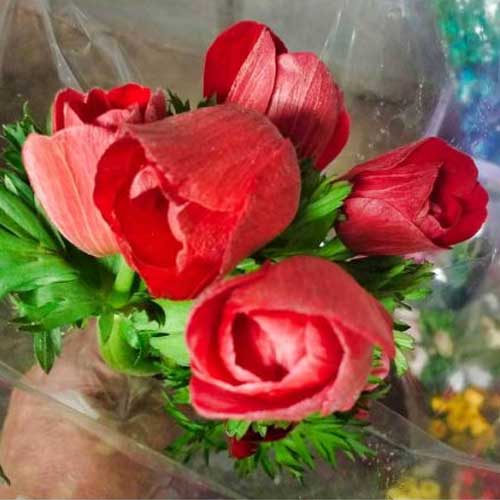
This is the step most people botch, and it’s the one that matters most. Anemones often ship dry — wrapped in paper, no water — to keep them tight in transit. If you let them sit on the counter “for just a minute” while you finish another task, you’re already losing hours of vase life.
Here’s what I do at the shop the second a box of anemones lands on the worktable:
- Cut the rubber bands off and unbunch them gently. Anemones tangle.
- Strip any foliage that’ll sit below the waterline.
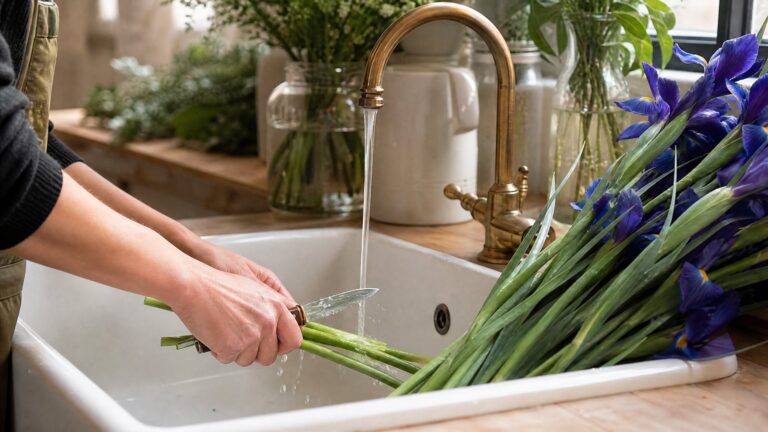
- Trim about an inch off each stem at a sharp 45° angle with a clean floral knife — never scissors. Crushed stem ends choke off water uptake.
- Drop them straight into a clean bucket of lukewarm water (100–110°F) mixed with flower food.
- Let them hydrate undisturbed for at least 1–2 hours — longer if they look limp.
Lukewarm — not cold. I see this mistake constantly. Cold water slows uptake when what you need is a fast, deep drink. The flower food matters too. We use Floralife Crystal Clear at the shop because it keeps water from clouding up and feeds the stems while it hydrates. Plain water alone won’t get you full vase life. Period.
If you want a full walkthrough on conditioning any flower properly, I’ve got a step-by-step over here: how to process fresh flowers like a pro.
One quirk to know about: anemones keep growing after they’re cut. Like tulips, they’re produced from corms, and the stems will stretch another inch or two in the vase over the next couple of days. Factor that into your bouquet design or you’ll wake up to a lopsided arrangement.
Build the Arrangement to Support Their Weakness
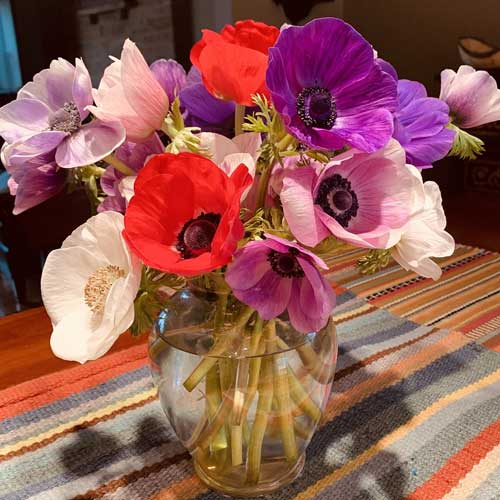
Anemone stems are floppy. There’s no getting around it. The stems are hollow, the blooms are top-heavy, and gravity wins more often than not if you don’t plan for it.
Here’s what I’d do when designing with anemones:
- Pick a narrow-neck vase. A wide-mouth vase lets anemones flop outward and look exhausted within a day. A tall, narrow vessel holds them upright naturally.
- Pair with structural flowers. Ranunculus, roses, and lisianthus all have firmer stems that hold anemones in place inside a mixed arrangement.
- If you’re using floral foam, soak it in the same flower food solution. Never use plain tap water for foam.
- Mass them in monochrome. A simple cluster of 8–10 white Pandas in a clear glass cylinder is one of the prettiest things you can put on a dinner table. Sometimes, restraint is the design.
Heights matter too. Anemones look best when they sit just above the rim of the vase — close enough to be supported, tall enough to show off those dramatic centers.
Keep Them Alive Past Day Three
Once your arrangement is built, your job isn’t done. Anemones are heavy drinkers. They’ll empty a vase faster than almost any cut flower I work with — partly because they keep growing, partly because they just love water.
Daily maintenance routine:
- Top off the water daily. Don’t wait for the vase to look low — by then, the stems are stressed.
- Change the water completely every other day. Add fresh flower food each time. Bacteria are the silent killer here.
- Re-trim the stems a quarter-inch every two to three days. Fresh cuts mean fresh water uptake.
- Keep them cool. Direct sun, hot windowsills, and HVAC vents will cook anemones in hours. A cool, indirectly-lit spot will easily double your vase life.
One more pro tip: anemones close up at night and reopen with morning light. Don’t panic the first time you see your “wilted” arrangement at 10 p.m. They’re just sleeping.
Avoid These Common Mistakes
After three decades of working with anemones, these are the screw-ups I see most often — sometimes from customers, occasionally from younger designers learning the ropes:
- Buying them too open. Anemones bloom fast. If they’re fully open at purchase, you’re getting 2–3 days max. Buy them tight or just barely cracked.
- Using cold water for conditioning. I said it above and I’ll say it again. Lukewarm water = fast hydration. Cold water = sluggish stems.
- Skipping flower food. “I’ll just use sugar and bleach” — I hear this all the time. Just buy the packets. Your flowers will thank you.
- Crowding them with strong-smelling foliage. Eucalyptus, in particular, can shorten anemone vase life when packed tightly. Give the blooms breathing room.
- Storing them near fruit. Ripening fruit releases ethylene gas, which is the kiss of death for fragile flowers like anemones. Keep them away from the kitchen counter.
What I Use in the Shop
These are the tools and products I reach for every time anemones come through the back door. Most of these are on heavy rotation in our shop, and they’re what I’d recommend to any DIY bride or home arranger working with delicate cut flowers:
- Floralife Crystal Clear Flower Food — keeps water clear and feeds stems through the full vase life. The standard in our shop for over a decade.
- Victorinox Floral Knife — my personal favorite for clean 45° cuts. Heavy, folding, lasts forever. I’ve owned several for 15+ years.
- Chrysal Universal Flower Food packets — single-serve packets I keep on hand for when I run out of Floralife or send arrangements home with a customer.
Where to Buy Anemones
In my opinion, anemones are one of the worst flowers to order online for a wedding. They’re fragile, they don’t ship well, and their vase life is short enough that any shipping delay can ruin your day.
If you need fewer than 50 stems, go to a local florist. You’ll pay a little more per stem, but you’ll get fresh product that’s already been conditioned. The math almost always works out in your favor when you factor in shipping costs, and the inevitable handful of stems that arrive damaged.
For larger quantities, wedding-scale orders of 100+ stems, ask your local florist about quantity pricing before you go anywhere else. If you must order online, BloomsByTheBox.com is one of the more reliable sources I’ve used, but I’d still order a week early and inspect them the moment they arrive.
Frequently Asked Questions About Anemone Care
How long do cut anemones last in a vase?
Realistically, 5 to 8 days with proper care. I’ve stretched them to 10 days once or twice with perfect conditions — cool room, daily water changes, flower food — but 7 days is a fair benchmark. If you’re getting less than 5, something in your process needs adjustment.
Why are my anemone stems drooping?
Three likely culprits: insufficient hydration (they need that initial 1–2 hour deep drink), vase too wide (the stems have no support), or stems weren’t cut at an angle with a sharp blade. Recut the stems, top off the water, and move them to a narrower vessel if you can.
Can I revive wilted anemones?
Often, yes. Recut the stems at a fresh 45° angle, submerge them in lukewarm water with flower food, and leave them somewhere cool for a couple of hours. If they were dry-shipped and never got a proper initial drink, this trick recovers them about 80% of the time.
Do anemones close at night?
Yes. and it freaks people out the first time they see it. Anemones are photoperiodic, meaning they close in low light and reopen in morning light. This is completely normal. Don’t trim them, don’t panic, just wait until morning.
Are anemones poisonous to pets?
Yes. Anemones contain compounds that are toxic to dogs and cats if ingested, and the sap can irritate skin. Keep arrangements out of reach of pets, and wash your hands after handling stems for a while. The good news is that most pets don’t find them appetizing in the first place.
What flowers pair best with anemones in a bouquet?
My go-to companions are ranunculus, garden roses, sweet peas, and lisianthus — all flowers with similar romantic vibes and overlapping seasonal windows. For texture, I add eucalyptus or olive branch greens, but keep heavy eucalyptus packs away from the anemone heads directly.
Closing Thoughts
Anemones aren’t the easiest flowers in the cooler, but they’re worth the extra fuss every single time. Those moody centers, that hint of vintage romance, the way a single Panda stem can anchor a whole bouquet — there’s a reason brides keep asking for them.
Get the conditioning right, give them a vase that holds them up, change the water religiously, and you’ll have a week’s worth of arrangement that earns its keep.
Now I’d love to hear from you. Have you worked with anemones before? Got a favorite variety or a horror story about a bouquet that didn’t make it? Drop a comment below and let me know. I’m always curious how home arrangers and DIY brides are getting on with these gorgeous little troublemakers.
Plant the right care habits today, and your anemones will bloom beautifully tomorrow.
Til next time,