Disclosure: This post may contain affiliate links. If you click and buy, we may earn a commission at no extra cost to you. As an Amazon Associate, we earn from qualifying purchases.
Last Updated: May 25, 2026
A customer stopped by the shop a few winters back, holding a small potted plant wrapped in tissue paper. She’d just gotten it as a gift and had no idea what it was. Bright flowers, dark glossy leaves. “It’s gorgeous,” she said, “but I’m terrified I’m going to kill it.”
It was a Rieger begonia. And I had good news for her: these are not difficult plants. They just have a few quirks you need to know about.
In this post, I’ll walk you through everything: the light, water, fertilizing, pests, and how to get yours to rebloom. I’ll also tell you where to buy one worth bringing home.
Know What You’re Working With
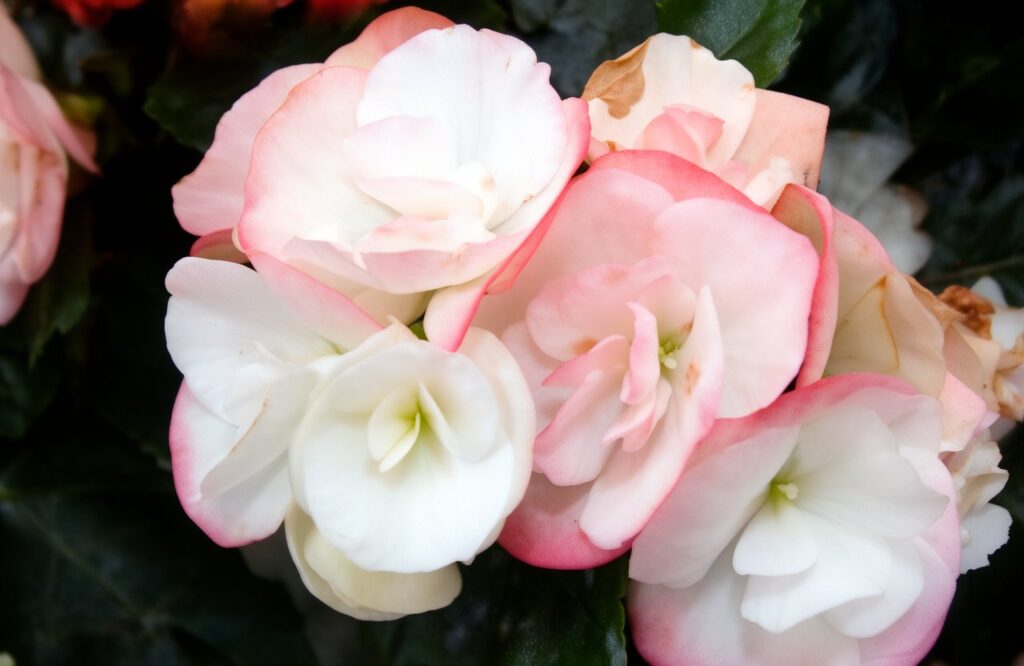
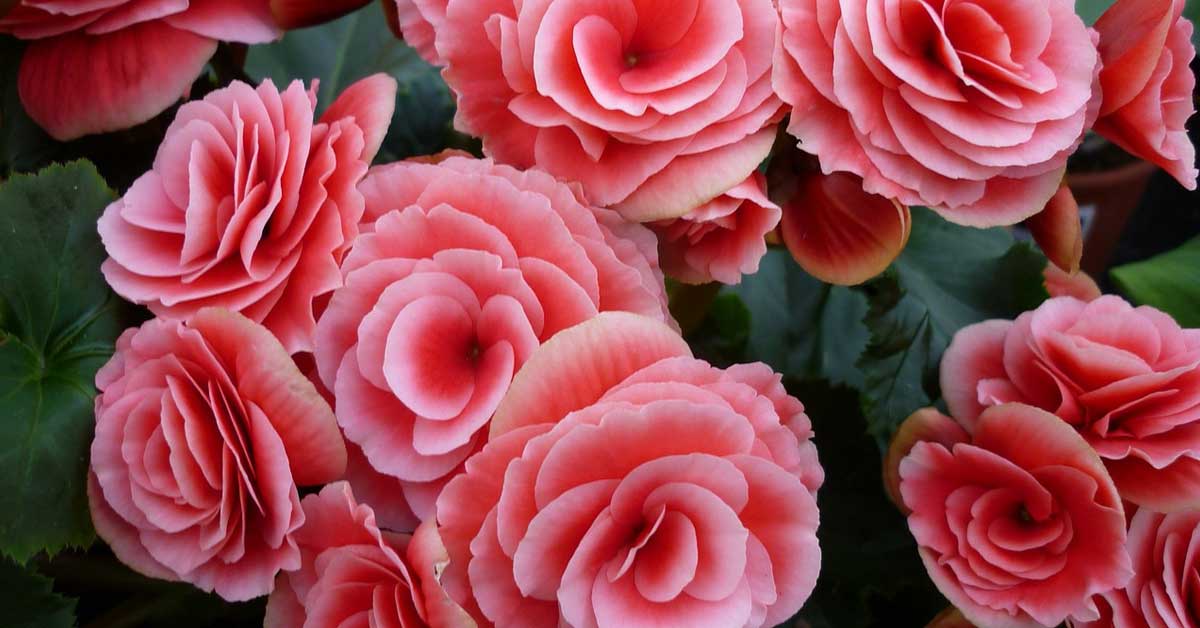
Rieger begonias (Begonia x hiemalis), also called Elatior begonias, are tuberous begonia hybrids. They produce lush dark green foliage and clusters of colorful flowers in shades of red, orange, yellow, peach, pink, and salmon. They’re bred specifically for winter bloom, which is part of why they show up at florists and garden centers right when everything else is looking bare.
A lot of people compare them to kalanchoes in terms of care, and that’s not wrong. Both are compact, colorful, and flower in winter. But Riegers are a bit more temperamental about watering. Knowing that upfront saves a lot of frustration.
Get the Light Right From the Start
Rieger begonias want bright, indirect light. A south-facing window is ideal. Direct sun, though — especially afternoon sun — will scorch the leaves. You’ll see the edges go papery and brown before you know it.
If the only spot you have is lower light, the plant will survive, but flowering will drop off. More light, more blooms. That’s the rule.
Rotate the pot a quarter turn every week or so. It keeps the plant from leaning hard toward the window and helps it fill out evenly.
Water Carefully — This Is Where Most People Go Wrong

Watering is where most Rieger begonias meet an early end. These plants hate sitting in wet soil, but they also don’t like drying out completely. The window is narrower than with most houseplants.
Water at the base of the plant, not from above. Getting water on the leaves invites fungal problems and leaves ugly spots on those dark, glossy leaves. Not a great look.
Check the soil surface with your finger. When the top inch feels dry, it’s time to water. Water thoroughly — until it drains from the bottom — then let it go again until that surface dries out. Consistent moisture without pooling is the goal.
If you overwater and the roots start to rot, you’ll see it in the leaves first. They go yellow, then limp. If you catch it early, cut back on watering, remove any visibly affected leaves, and let the soil dry out before resuming. I’ve seen plants recover from that. I’ve also seen people water them more because the leaves look droopy. That’s the wrong call.
Keep Temperatures Cool and Consistent
Rieger begonias are cool-season plants by nature. They do best at 65–70°F (18–21°C) during the day and 60–65°F (15–18°C) at night. That’s more like a cool room than a cozy warm one.
Keep them away from heating vents, radiators, and drafty windows. Temperature swings stress the plant and shorten bloom time. If you’re comfortable in a sweater, your Rieger begonia is probably comfortable too.
Feed It While It’s Flowering — Then Back Off
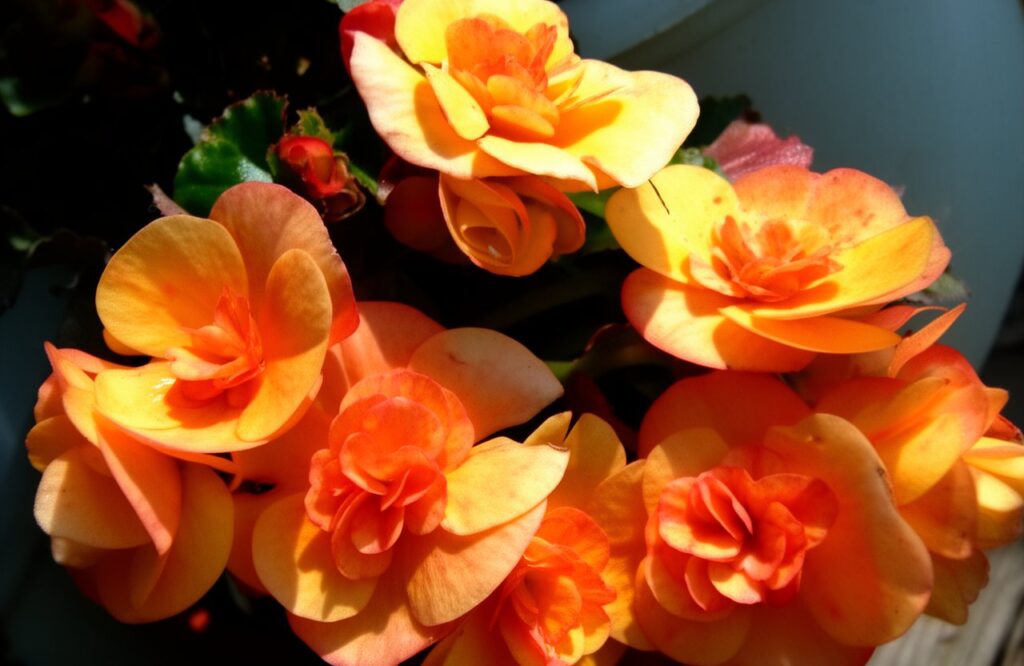
During the bloom period, fertilize once a month with a high-phosphorus fertilizer. Phosphorus supports flower production — that’s the middle number on the fertilizer label. I use a high-phosphorus liquid plant food because it’s easier to apply than mixing a soluble formula. Just dilute it to half-strength bi-weekly or a quarter-strength weekly if you prefer a lighter, more frequent approach.
If your schedule is erratic and you know you’ll forget, a slow-release granular fertilizer works too. You apply it once, and it does the work gradually. Not my preference, but it beats not feeding at all.
Once flowering winds down, stop fertilizing. The plant is heading into dormancy, and pushing nutrients at it during that phase doesn’t help.
Watch for These Common Pests
Rieger begonias attract the usual houseplant troublemakers: spider mites, aphids, mealybugs, and scale. All of them feed on plant sap, and the first sign is usually leaves that look slightly off — faded, stippled, or a little sticky to the touch.
Check the undersides of leaves regularly. That’s where pests like to set up shop. If you find something, isolate the plant first. You don’t want it spreading to nearby plants.
For most infestations, a few treatments with insecticidal soap will take care of it. For scale specifically, a cotton swab or paper towel dipped in rubbing alcohol works well to remove them manually before spraying. Consistency matters — one treatment usually isn’t enough.
Avoid These Common Mistakes
Overwatering. The number-one killer. When in doubt, wait another day before watering.
Watering from above. Wet leaves on a begonia are an invitation to botrytis and other fungal problems. Always water at the base.
Too much direct sun. These are not sun-lovers. Bright indirect is the sweet spot. A south window with a sheer curtain works perfectly.
Fertilizing during dormancy. Feeding a resting plant doesn’t wake it up. It stresses it. Hold off after flowering ends.
Throwing it out after blooming. A lot of people assume Riegers are disposable. They’re not — they can rebloom if you know what to do. More on that below.
Get It to Rebloom Instead of Tossing It
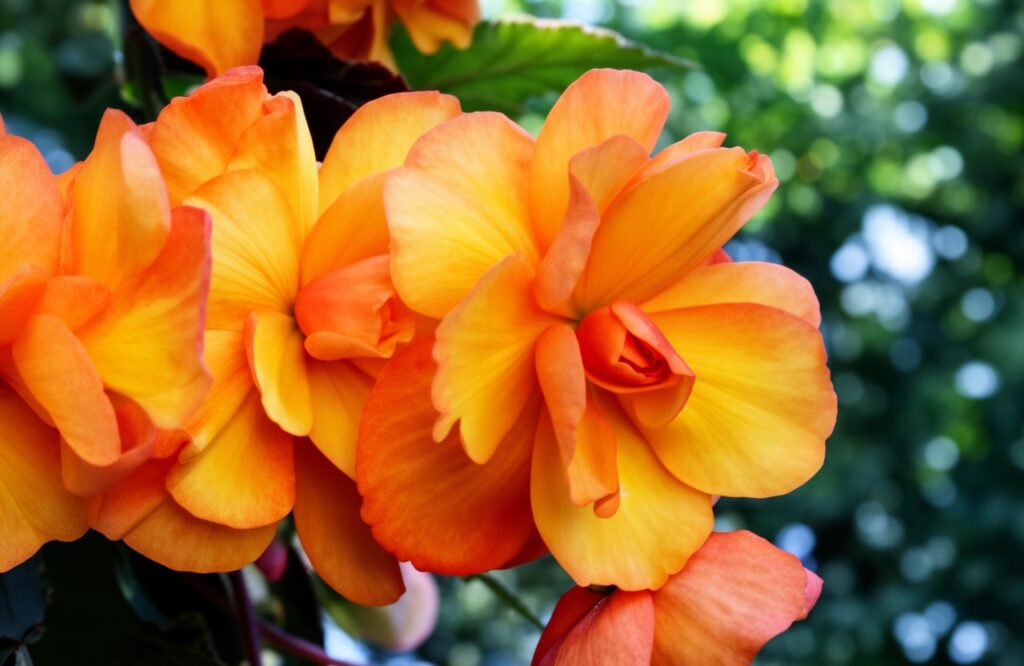
Many Rieger begonias are discarded after their first bloom cycle. That’s a shame, because they’re worth keeping. Here’s what to do.
Once flowering is finished, gradually reduce watering until the soil is nearly dry. Stop fertilizing entirely. The plant is going dormant, and you want to respect that.
To restart it, cut the original plant back to within 3 inches of the crown, leaving a few of the old shoots in place. Repot in fresh mix — a sandy soil and peat moss blend works, or you can use an African violet potting mix, which has the right drainage profile. Start watering again and resume monthly fertilization.
If you’d rather propagate from cuttings than keep the original plant, wait until new shoots are about 3 inches tall, then remove them. Pot each cutting in a damp half-and-half mix of sand and peat moss, burying at least one node per stem. Check for root development after about four weeks.
Once roots are established, move them into a shallow 6-inch pot — three cuttings per pot is the standard. Pinch back the tips once they settle in to encourage branching.
What I Use in the Shop
These are products I’ve used personally. The affiliate links help support the site, but I only recommend things I’d actually reach for.
What I use in the shop:
High-phosphorus liquid plant food — Easier than mixing soluble fertilizer, and dilutes well for both weekly and bi-weekly feeding schedules.
Insecticidal soap spray — My go-to for aphids and mealybugs. Gentle enough to use regularly without damaging the plant.
Well-draining potting mix — Rieger begonias need soil that doesn’t stay wet. A mix with good drainage prevents most root rot problems before they start.
Bottom-watering tray — Lets you water from below, keeping the leaves dry. It dramatically cuts down on fungal issues.
Buy From a Source That Knows What It’s Selling
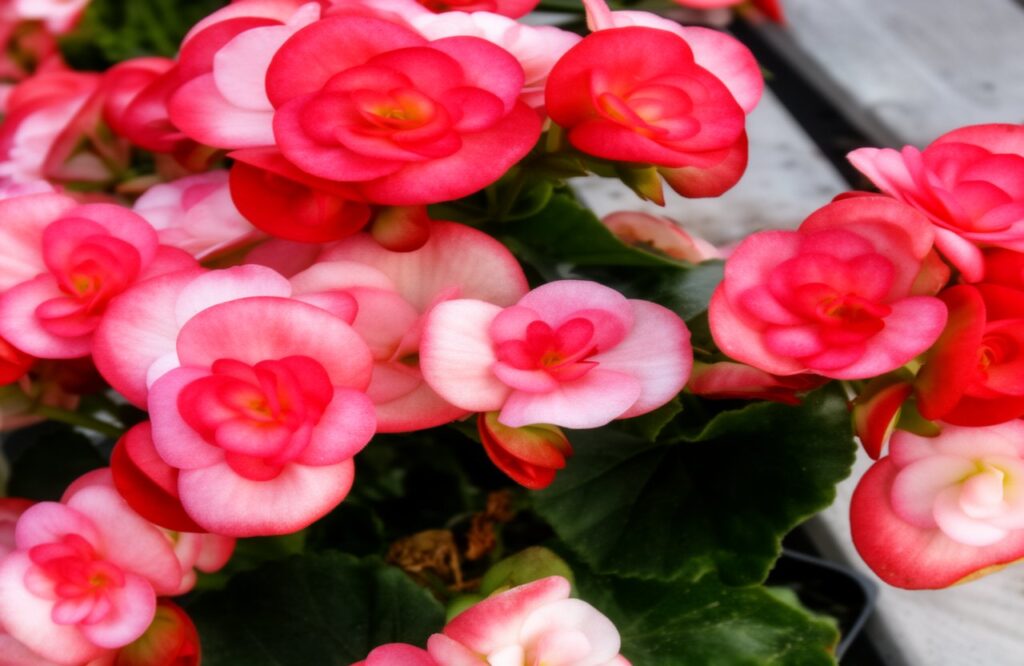
Rieger begonias are widely available in late fall and early winter — florists, garden centers, grocery stores, and big-box retailers. The quality varies.
My recommendation: buy from a local florist, garden center, or greenhouse. Those plants are more likely to have been grown under controlled conditions and handled properly from the grower through to the sale. A plant that’s been sitting under fluorescent lights in a big-box store for two weeks before you buy it is already stressed before it gets to your house.
You want buds, not fully open flowers. Buds mean you’ll get the full bloom cycle at home rather than watching it happen in the store aisle. Look for dark, firm foliage — no yellowing, no soft spots on the stems.
And while you’re there, check out what else they have. Orchids, Christmas cactus, and Rieger begonias all make great winter houseplants, and a good florist or greenhouse will have healthy versions of all three.
Frequently Asked Questions
How often should I water a Rieger begonia?
Water when the top inch of soil feels dry to the touch. That usually works out to every 5–7 days, but it depends on your home’s temperature and humidity. Don’t go by a schedule, go by the soil.
Why are the leaves on my Rieger begonia turning yellow?
Yellow leaves usually mean overwatering. Let the soil dry out a bit before your next watering, and make sure the pot has drainage. If the roots smell bad when you check them, you’ve got root rot. Cut back the affected roots and repot in fresh mix.
How long do Rieger begonias bloom?
Typically 4–6 weeks, sometimes longer if conditions are right: cool temperatures, indirect light, and consistent moisture. Deadheading spent blooms can extend the display a bit.
Can Rieger begonias be grown outdoors?
In warm climates, yes, as a seasonal plant in a shaded spot. In the Midwest and other cold-winter areas, they’re strictly indoor plants. They won’t survive frost.
Are Rieger begonias toxic to pets?
Yes. Begonias are toxic to cats and dogs, with the tubers being the most concentrated part. If you have pets that like to chew on plants, keep Riegers out of reach. For a list of pet-safe houseplants, I’ve got a post that covers that.
What’s the difference between a Rieger begonia and a tuberous begonia?
Rieger begonias are a type of tuberous begonia, a hybrid bred specifically for indoor winter flowering. Standard tuberous begonias are usually grown outdoors in summer, then stored over winter. Riegers skip that dormancy cycle and bloom indoors when outdoor plants are long gone.
Closing Thoughts
Rieger begonias have been a favorite at the shop for years — colorful, manageable, and a welcome pop of life in the middle of winter. The care isn’t complicated once you understand the watering. Get that right, keep the temperatures cool, and these plants will do most of the work for you.
If you’ve been thinking of one for a windowsill or as a gift, late fall is the right time to look. A good local florist or greenhouse is where I’d start. You’ll find better plants and someone who can actually answer your questions.
Every winter plant has its quirks. A Rieger begonia’s quirks are worth learning — bloom like that in January is hard to beat.
If you’ve grown Rieger begonias before, I’d love to hear how you handled the rebloom cycle. Drop a comment below and let me know what worked for you.
Til next time,