Disclosure: This post may contain affiliate links. If you click and buy, we may earn a commission at no extra cost to you. As an Amazon Associate, we earn from qualifying purchases.
A customer called the shop a few weeks back asking for mistletoe. Not a sprig, a whole bunch of it, enough to hang over her back door for the holidays.
I had to break the news that real mistletoe is tough to source in Wisconsin this time of year, and even when I can get it, a single stem doesn’t hold up to a season of doorway traffic.
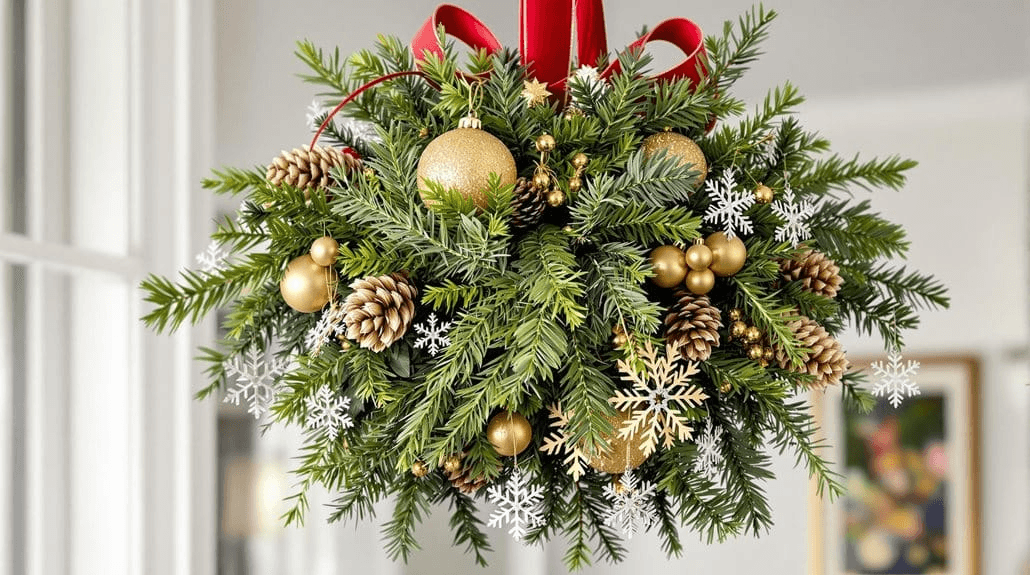
What I suggested instead was a kissing ball. Same purpose, more staying power, and it looks a lot better doing it.
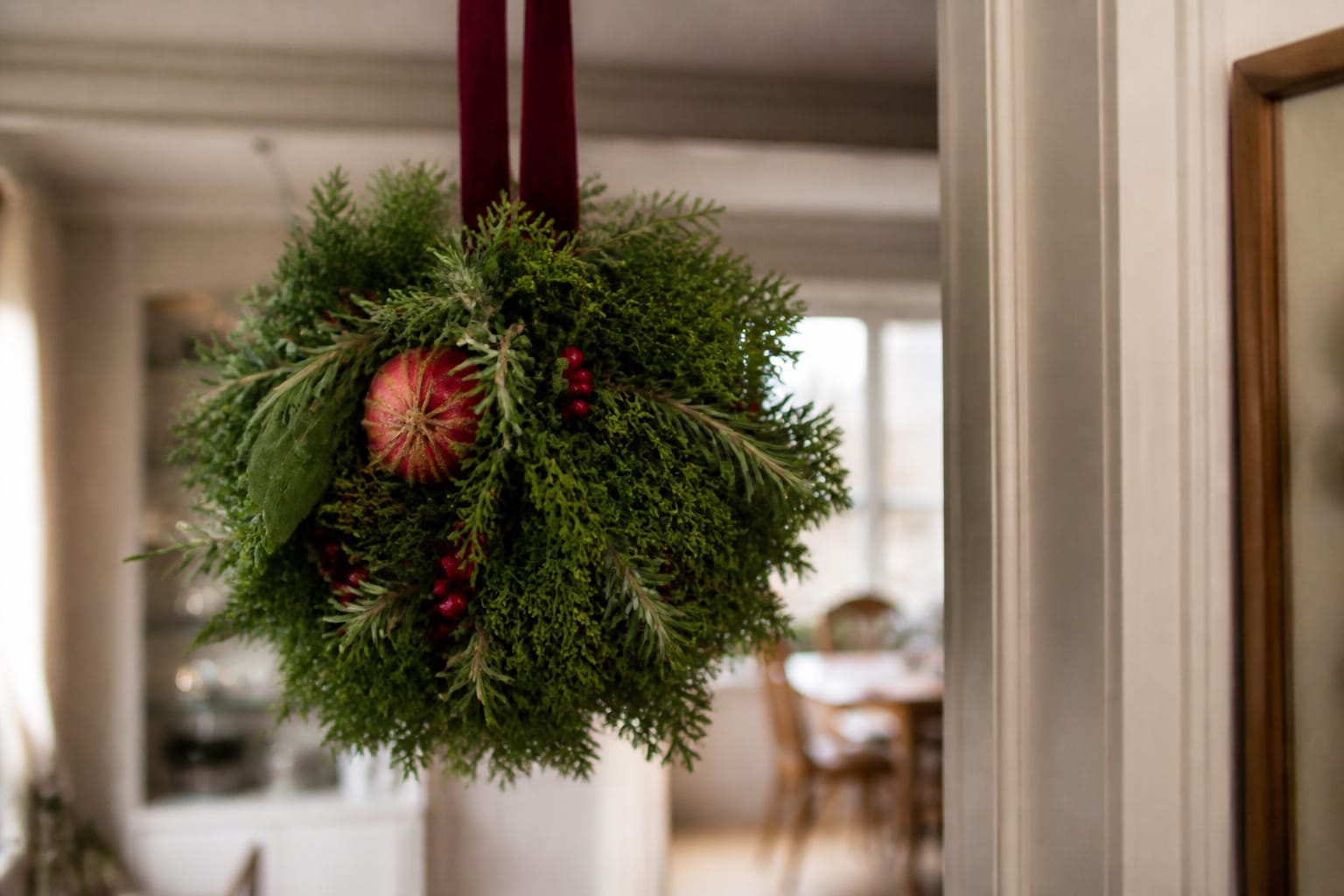
A kissing ball is exactly what it sounds like: a ball of greenery, hung wherever two people might find themselves standing under it. It’s been doing mistletoe’s job since long before Instagram made holiday doorways a photo op.
Where the Kissing Ball Tradition Really Comes From
In my experience, most people assume the kissing ball is a modern craft-store invention. It’s not.
The tradition goes back to medieval England, where they were called “holy boughs,” evergreen frames built to hold small religious figurines rather than kisses. It wasn’t until the Victorian era that the custom shifted toward romance, with apples or potatoes used as moist bases and packed with symbolic plants like rosemary, lavender, and mistletoe.
Today’s version has traded the produce for floral foam, but the idea hasn’t changed much. It’s still a way to bring a little greenery, and a little tradition, into a doorway.
Get Your Materials Right the First Time
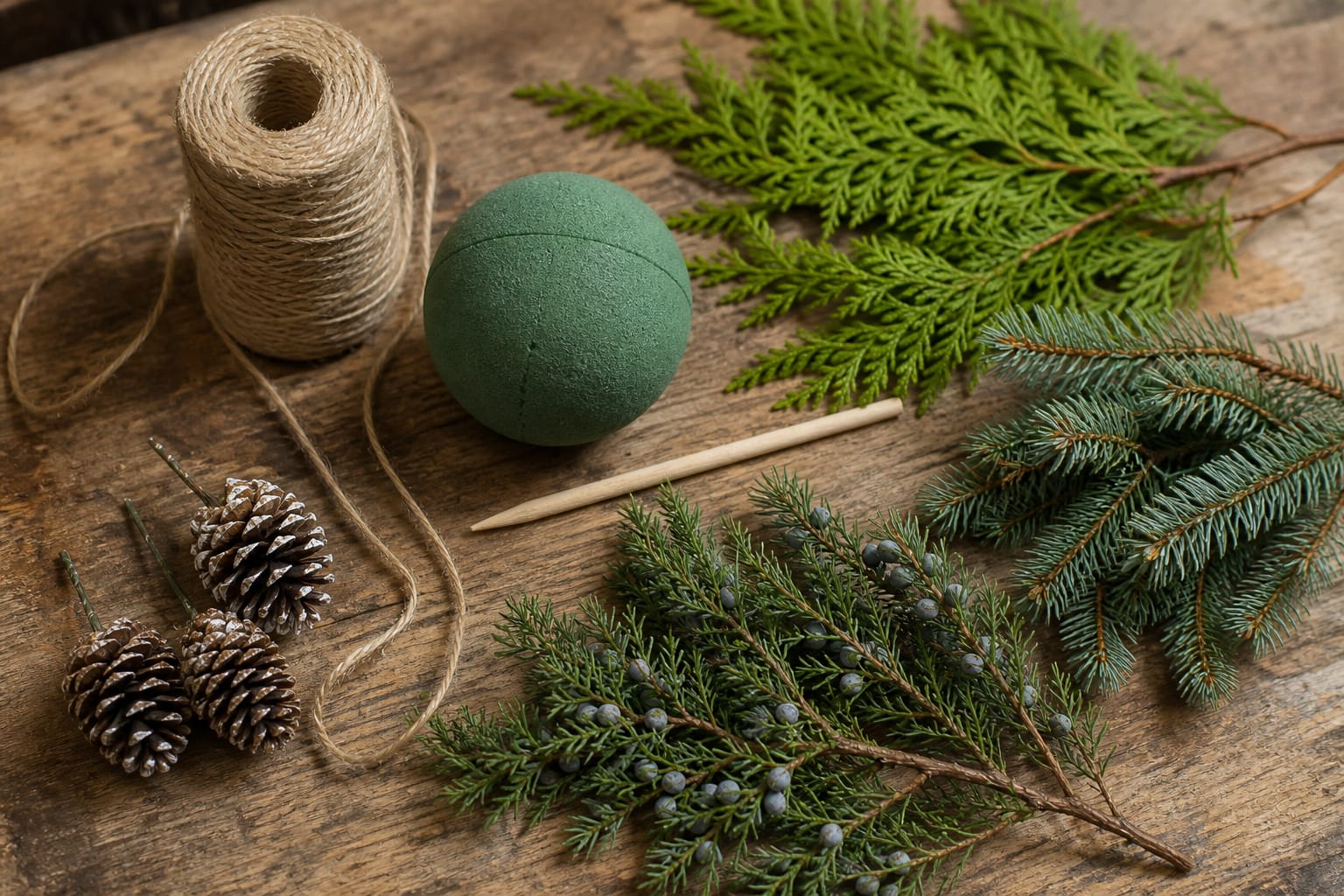
Start with a floral foam sphere, and go smaller than you think. A 3-inch ball is plenty for a doorway or chandelier. I’ve seen people reach for a 6-inch sphere because it looks impressive on the shelf, and end up with something too heavy to hang and too big for the space it’s meant to fill.
Soak the foam thoroughly before you add greenery. Push a jumbo straw through the center as a channel, then thread a doubled length of jute twine through that channel for your hanger.
Tie a small stick or twig to the bottom of the twine on the inside of the ball. That keeps the twine from pulling straight through the foam once the greenery’s weight is hanging off it, a mistake I’ve watched more than one DIYer make with string alone.
For greenery, mix your textures. Arborvitae, blue spruce, and juniper with berries give you variation in color and shape, and none of them will shed the moment you touch them. If you want pinecones in the mix, wrap floral wire around the base of each one first. That turns a pinecone into a pick you can insert straight into the foam instead of gluing or wiring it on after the fact.
Short on time before the holidays? A foam sphere, jute twine, and jumbo straws are all easy to order ahead. Prime gets eligible orders to your door fast, and eligible new members can start a free Prime trial. As an affiliate, we earn on qualifying purchases.
What I use in the shop: a jumbo craft straw multipack works better than a standard drinking straw here. It’s wide enough to guide doubled twine through without fraying, and a multipack means you’ll have extras on hand for wreaths and garlands too.
Watch Laura Build One From Scratch
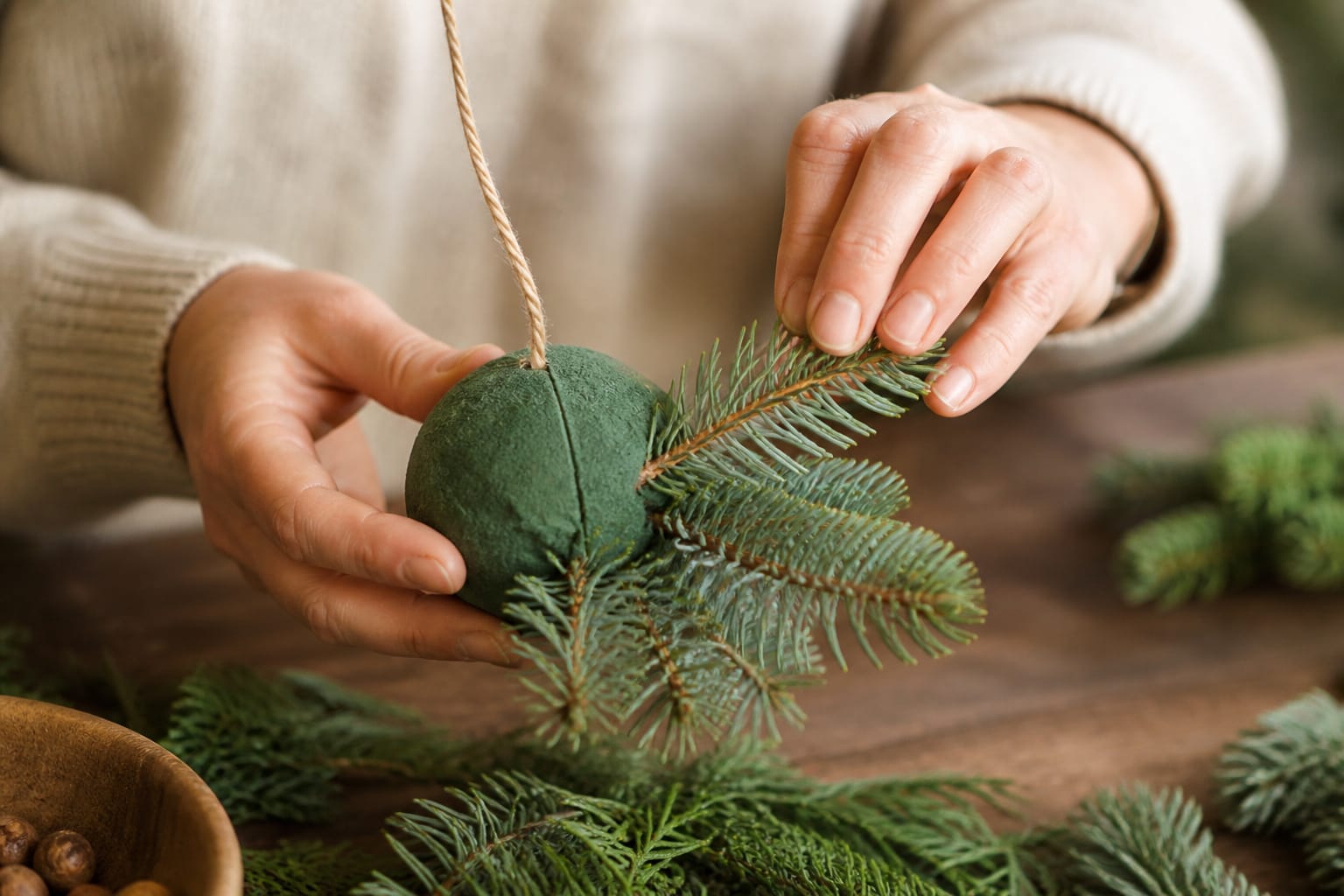
If you’d rather watch the process than read it, Laura at Garden Answer walks through the whole build in this video, from soaking the foam to hanging the finished ball. If you’re considering making one yourself, you’ll enjoy watching her work through it start to finish. Watch it, and see if you agree it’s easier than it looks.
Assemble It Step by Step
1. Soak your foam sphere in water for several minutes. The 3-inch size is the one to reach for.
2. Push a straw through the center as a guide, then thread doubled jute twine through it.
3. Secure a small stick or twig to the bottom of the twine so it can’t pull through.
4. Tie a hanging loop at the top of the twine.
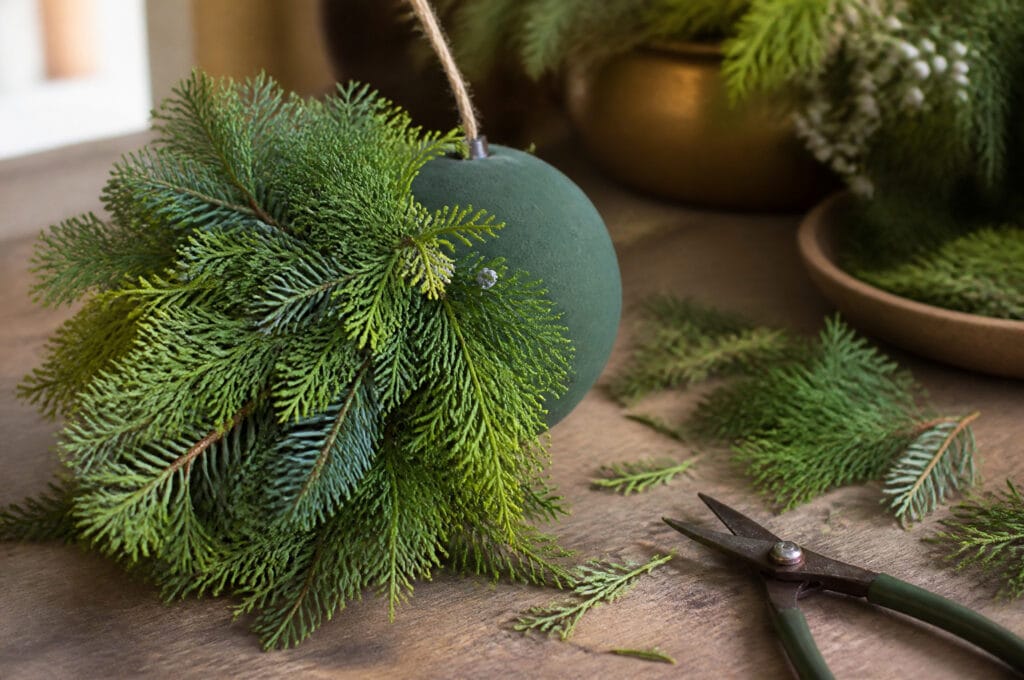
5. Insert your evergreen stems evenly around the ball, working in sections so you don’t lose track of bare spots.
6. Fill any remaining gaps with shorter sprigs.
7. Insert wired pinecones, holly, or other accents where you want them to show.
8. Finish with a ribbon bow at the base or top, wherever it’ll be seen.
9. Mist the finished ball with water, then check that every stem and accent is secure.
10. Hang it and stand back.
What I’d Do In My Shop
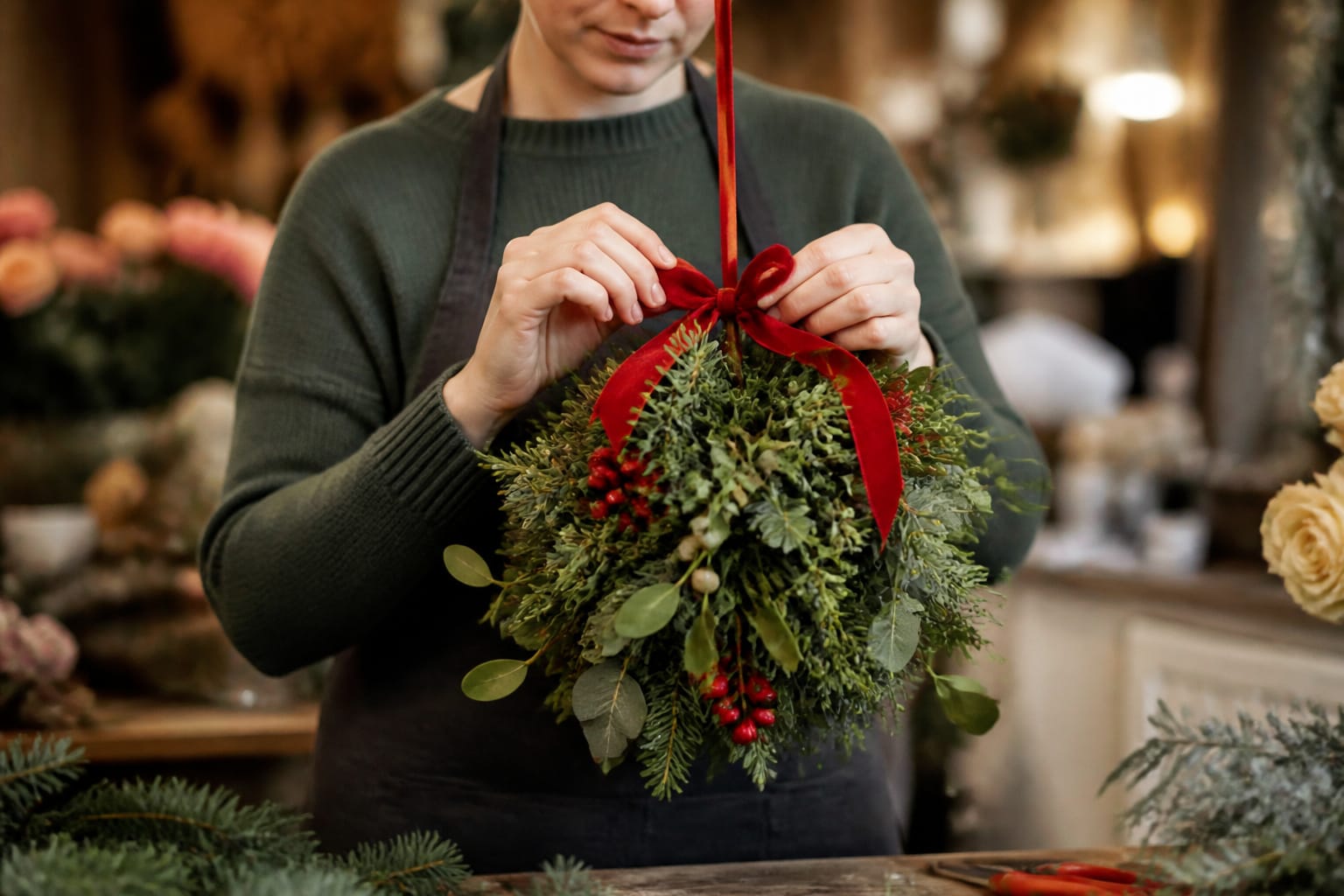
If I’m building one for the shop window, I keep the greenery mix to two or three types at most. A kissing ball packed with five different evergreens starts to look busy instead of full, and busy isn’t the look I’m going for on a doorway.
I also skip the ribbon bow until the very end. Every time I’ve added it early, it gets crushed or knocked sideways before I’ve finished inserting greenery. Bow goes on last, always.
I’ve had customers ask if they can just hang a real sprig of mistletoe by itself and skip the ball entirely. Sure, if you want your doorway looking like a single stray eyebrow instead of a proper holiday statement.
Stretch Your Budget With What You Already Have
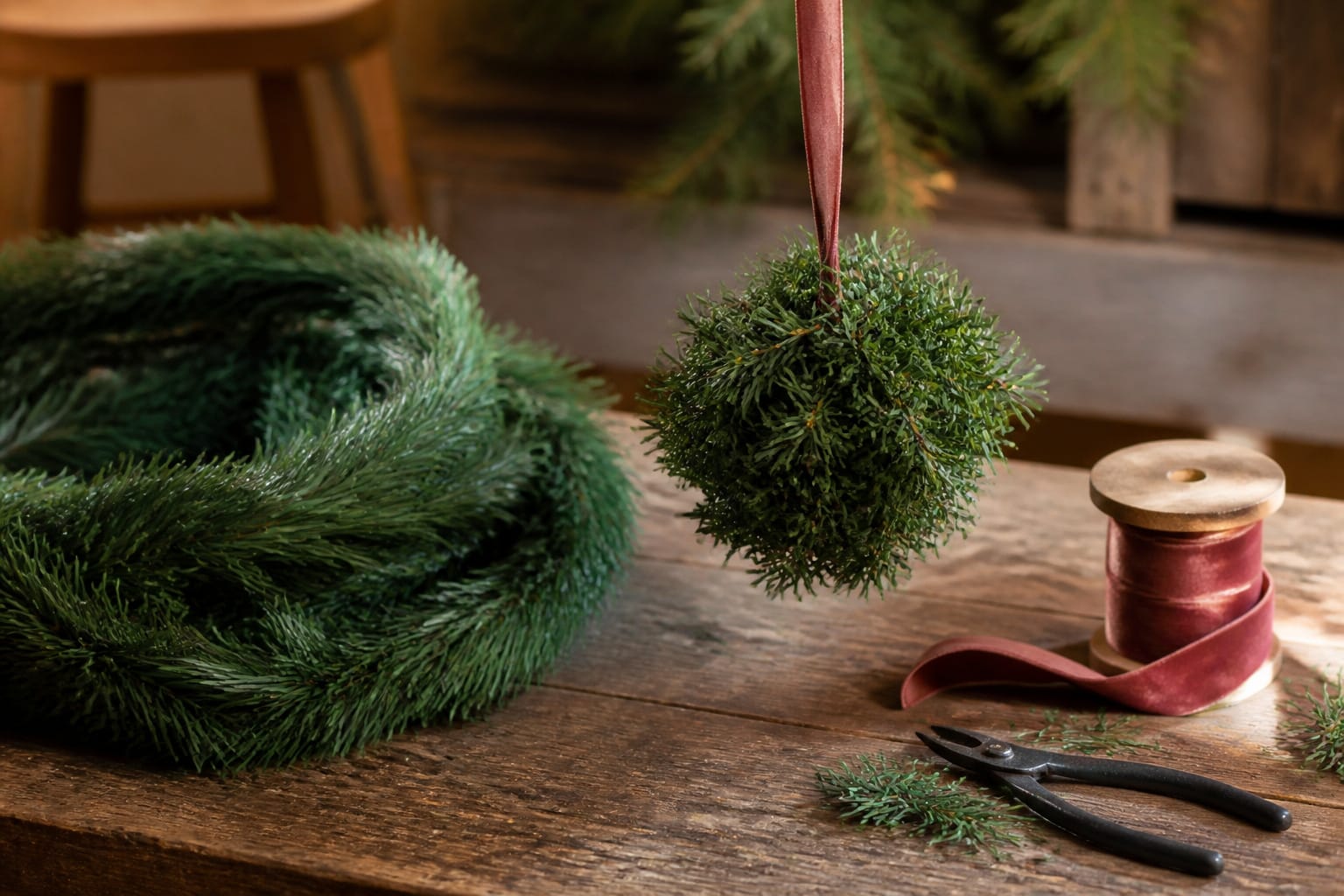
One thing I love about holiday design is how cost-effective it can be. Faux pine garland left over from last year, or pulled off a mantel display you’re retiring, works just as well as anything you’d buy new. A kissing ball is one of the easiest ways to repurpose a length of garland that’s otherwise sitting in a storage bin.
They also make a great winter wedding detail. Match the ribbon and accents to your wedding colors, and you’ve got a piece that costs a fraction of a floral installation. If you’re planning a winter wedding around fresh flowers too, take a look at my Christmas wedding bouquet ideas for ways to carry the same look from the bouquet to the doorway.
If you don’t have garland on hand, the materials for this project are easy to find at Michaels, Hobby Lobby, Home Depot, Dollar Tree, Walmart, and similar stores.
For more ways to dress up an entryway this season, I’ve also put together a guide to front porch florals that hold up outdoors, and a full Christmas wreath tutorial that leans on a lot of the same techniques as this one.
Try Cut Flowers Instead of Greenery
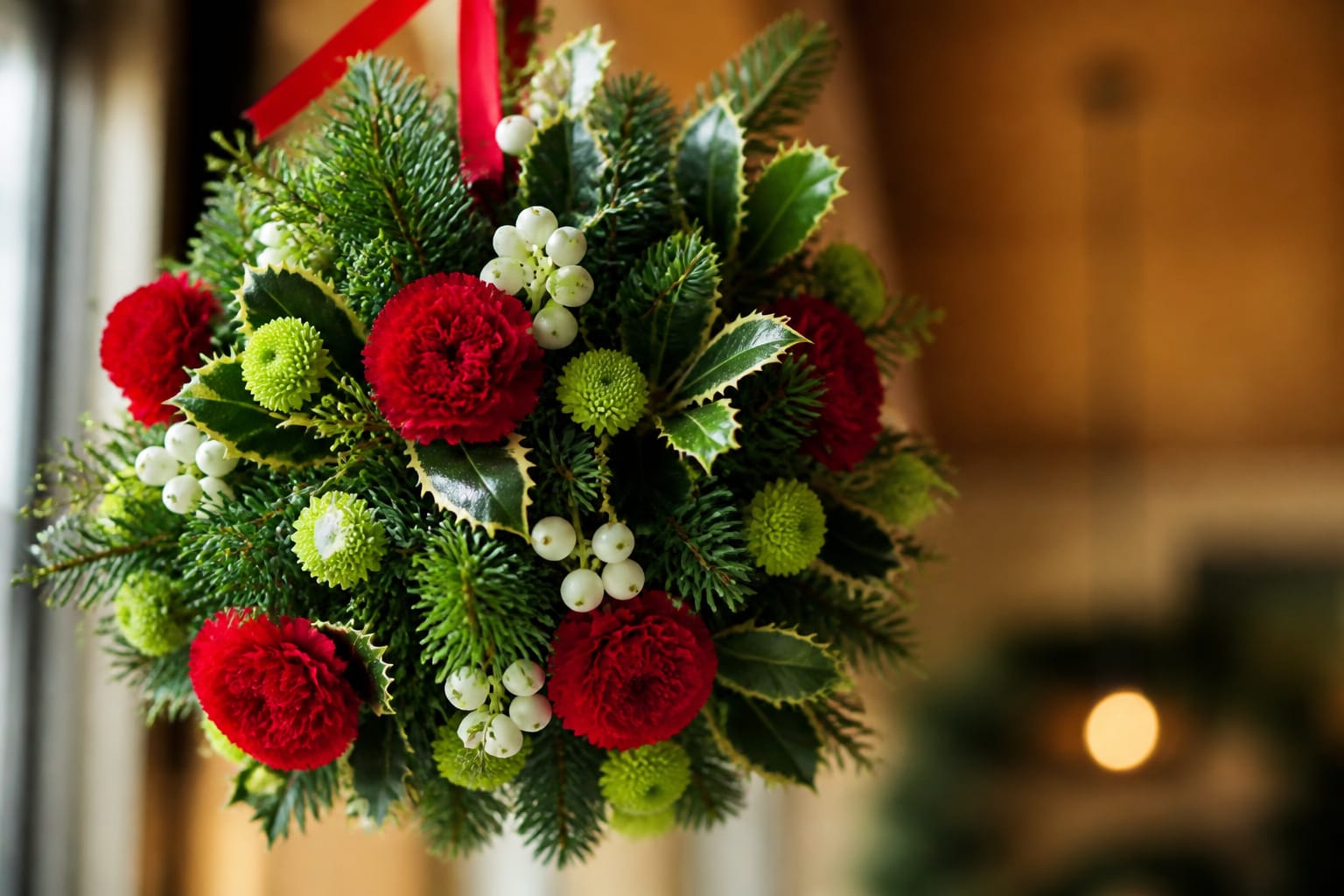
Cut flowers work well in a kissing ball too, and I’d argue they’re underused for this project. My go-tos are snowberries, hypericum berries, carnations and mini carnations, button poms, and snowflake poms.
All of them hold up well out of water for the few hours it takes to build and hang the finished piece, and they’ll give you color that straight evergreen can’t.
Frequently Asked Questions
How Long Will a Fresh Kissing Ball Last?
You should get 2 to 3 weeks of festive charm out of a fresh kissing ball if it’s maintained properly.
Mist it daily, keep it away from heat sources and direct sunlight, and display it somewhere cool. Indoor temperatures around 65 to 70°F will help it last on the longer end of that range.
Can I Use Artificial Greenery Instead of Real Branches?
Yes, and it’s a popular choice for good reason. Faux branches won’t dry out, they’re lightweight, and you can store the finished ball and reuse it next year instead of starting over.
Today’s higher-quality faux greenery looks remarkably realistic too. What I use in the shop: mixed faux pine and berry picks blend in well with real greenery if you want to bulk up a foam sphere without buying more fresh stems.
What’s the Difference Between a Kissing Ball and Mistletoe?
Mistletoe is a specific parasitic plant with white berries, traditionally hung alone as a single sprig. A kissing ball is a decorative sphere you build using greenery, flowers, and ornaments, and mistletoe is often just one ingredient in it.
The kissing ball itself has the older, stranger history. Medieval English versions, called “holy boughs,” held small religious figurines rather than kisses. The romantic version we know today didn’t show up until the Victorian era, when apples or potatoes stood in as moist bases packed with rosemary, lavender, and mistletoe.
Should I Spray My Kissing Ball With Water to Keep It Fresh?
Lightly, yes. Don’t saturate it, since that can lead to mold and premature decay.
Mist the greenery before assembly and again every day or two once it’s hanging, and keep the finished ball in a cool spot away from heat and direct sun. If you’re working with fresh materials, a few drops of glycerin in your misting water before construction will help extend their life.
Where’s the Best Place to Hang One Besides a Doorway?
Chandeliers and light fixtures over a dining table make for an elegant spot, and a mantel hook above the fireplace works well too.
Ceiling beams, an archway between rooms, or a small stand on the holiday table as a centerpiece all work just as well if you’re short on doorways. And if garlands are more your speed for those same spaces, my Christmas garland guide covers a lot of the same techniques at a bigger scale.
Closing Thoughts
A kissing ball won’t outlast the season, and it isn’t meant to. That’s part of the appeal. You build it, you enjoy it through the holidays, and then you let it go and start fresh next year, same as the greenery itself.
Give it a try this year. Even a small one hanging in a doorway does more for a room than most people expect from a bundle of evergreen and a bit of wire.
Tell me in the comments: fresh greenery or faux this year?
Til next time,