Disclosure: This post may contain affiliate links. If you click and buy, we may earn a commission at no extra cost to you. As an Amazon Associate, we earn from qualifying purchases.
Last Updated: September 2026
Ever wonder why florists don’t just snip a poinsettia bract and drop it into an arrangement the way you would a rose? There’s a reason, and it’s the same reason most home arrangers never bother trying. The stem bleeds a milky white sap the second you cut it, and left alone, that sap keeps the stem from taking up any water.
Seal it right, and a poinsettia holds up in an arrangement for a week or more. In my experience, it’s one of the most underused holiday blooms, mostly because nobody explains the one step that makes it work.
Seal the Stem Before You Do Anything Else
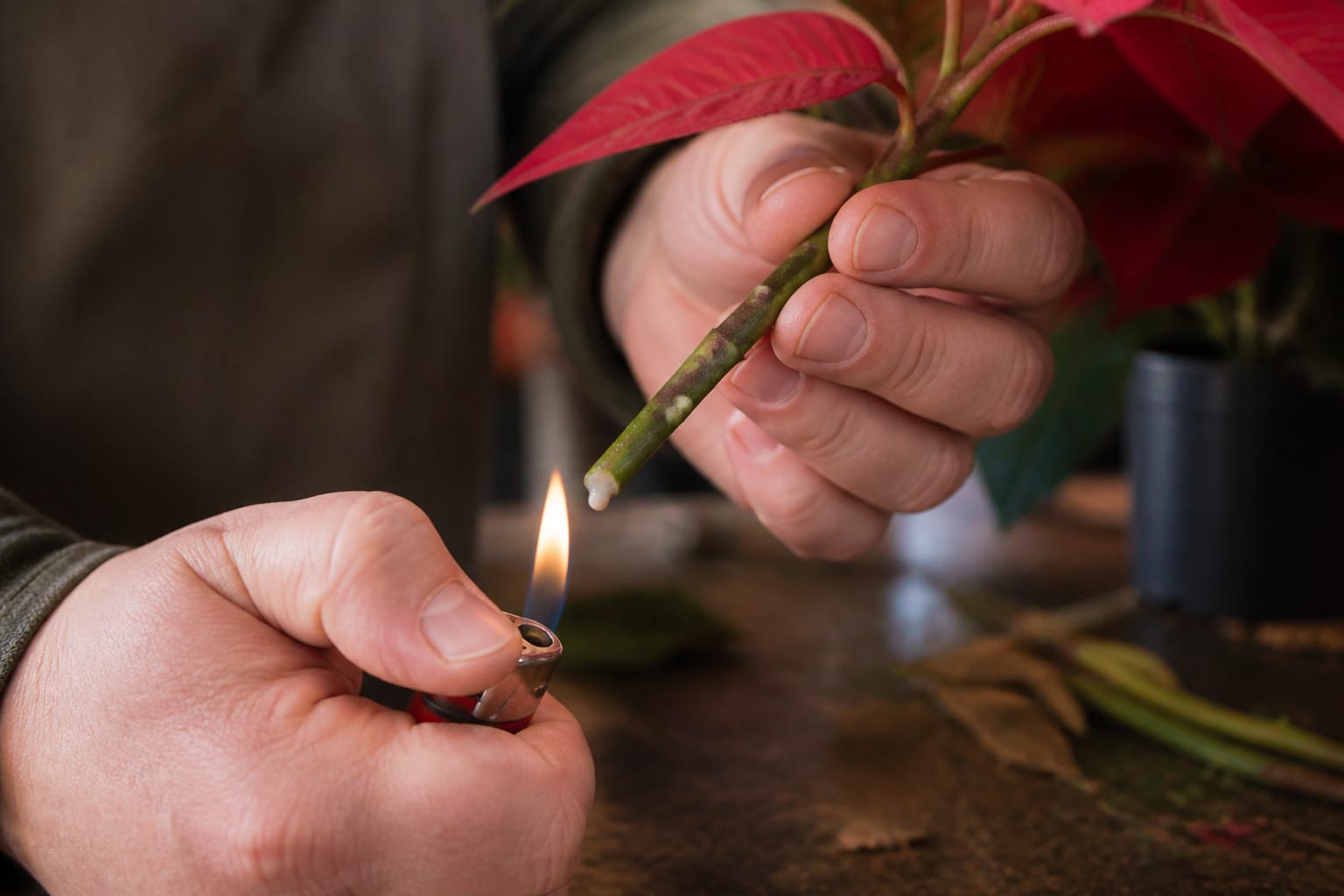
Cut your stem to the exact length you need before you seal it. That part matters more than people expect. Once you seal a stem, you can’t cut it shorter without re-sealing it.
I prefer searing the cut end over an open flame; a candle or lighter both work fine. Hold the stem in the flame for a few seconds until the cut surface darkens and the sap stops running. It’s the fastest method, and what I reach for in the shop when I’ve got a stack of stems to prep.
If you’d rather skip the open flame, spray denatured alcohol directly on the cut and on any tears or nicks along the stem. It seals the sap without blocking water uptake, same as the flame does. Either way, let the stem sit in plain water with no preservative for about 24 hours before you use it. You’ll know within an hour or two if the seal didn’t take, since an unsealed stem starts wilting fast.
What I use in the shop: a refillable butane lighter. It gives a steady flame long enough to seal several stems in a row without relighting every time.
Products Worth Considering

【Effortless One-Handed Operation】With the flame regulator and flame lock button easily in reach of your thumb, adjust and lock the flame with just one hand. Never again do you need to free up the other hand to assist.

🔥【Great Value 5-Pack】5 Pack Colored Torch Lighters Versatile and multi-purpose, each lighter has a blue jet flame that can reach temperatures up to 2800°F, and the flame adjustment slider makes it easy to control flame size. It can easily maintain the continuous output of the flame. It is easy to understand, easy to operate and very practical.

ATTENTION: ALL LIGHTERS ARE SHIPPED WITHOUT BUTANE. PLEASE FILL WITH FUEL BEFORE USING
Build It Foam-Free With Taped Chicken Wire
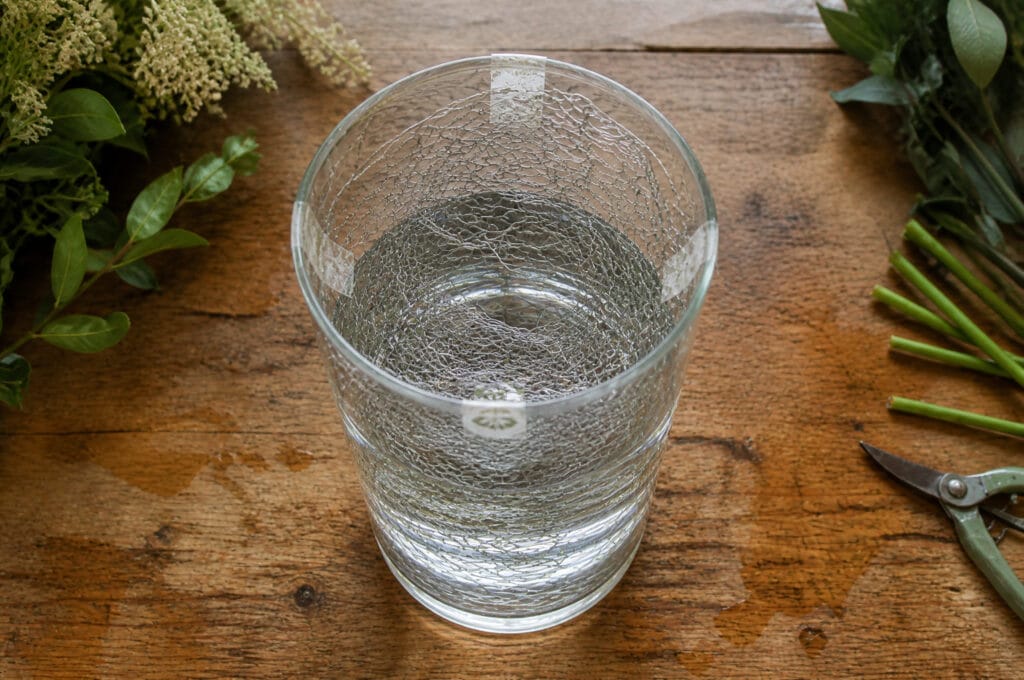
Poinsettias don’t need floral foam to hold their place in an arrangement, and honestly, I’d rather skip it here. Crumple a length of chicken wire netting into a loose ball, drop it into your vase, and tape it across the rim. Fill the vase with water and flower food. The netting does the same job foam would, minus the environmental downside.
If foam-free design is new to you, I go into more depth on the mechanics in my floral foam basics guide, including why more shops, mine included, are moving away from foam for arrangements like this one.
Products Worth Considering

【Larger Size】 You will receive a roll of chicken wire mesh, which measures about 16 inches x 13.1 feet, longer than others, 1 x 0.63 inch fine mesh, wire diameter: 0.9mm, perfect chicken wire for floral arrangements and craft projects

【Chicken wire netting Package & Dimensions】You will receive a roll of chicken wire mesh measuring 4" W x 118" L (0.1 x 3 m) with a wire thickness of 0.9mm. The kit includes a cutting plier, a pair of gloves, and 50 wire ties. This chicken wire is easy to unroll and cut, making it ideal for various DIY projects

Generous Size for Diverse: Our chicken wire for floral arrangements measuring1.31ft x 13.12ft / (15.7in x 157in), can be easily cut to different sizes as needed, perfect chicken wire fencing for craft endeavors, floral arrangements, moss poles, and more
Wire or Hot-Glue Your Pinecones
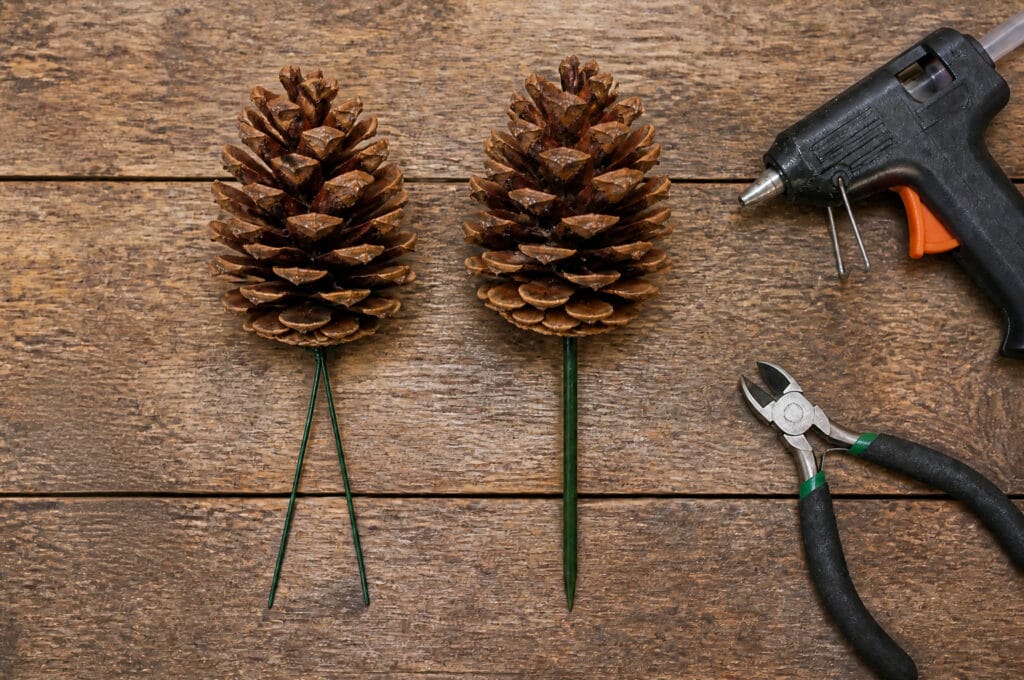
Pinecones don’t grow with stems, so you have to give them one before they’ll go anywhere near your netting.
The traditional way: wrap 18-gauge wire around the base of the cone, between the bottom two rows of scales, then bend the wire ends down into a “dog leg” so it feeds into the netting like any other stem. It’s sturdy, and what I use when a pinecone needs to hold its position in a bigger design, especially anything that’s going to get moved or shipped.
The shortcut: hot-glue the pinecone directly onto a wood floral pick. Faster, no wire cutters required, and sturdy enough to stay put on a table. If I’m building one arrangement for my own house, I’ll glue. If I’m building a dozen for the shop, I wire. Same result either way.
What I use in the shop: 18-gauge floral wire. It’s heavier than the 22 or 26-gauge I’d use for corsage and wedding designs, which matters once a cone starts adding real weight to a design.
Products Worth Considering

Complete Set:The package includes 100 green floral wire stems,supporting daily floral creation and DIY handmade projects.Adequate quantity to meet the needs of conventional flower arrangement,floral wreath,and handicraft production.

Multiple Sizes and Colors: Our flower stems are 35cm long and come in three basic sizes - 50 pieces of 16 gauge (0.6 inches) 、50 pieces of 18 gauge (0.054 inches)and 100 pieces of 26 gauge (0.027 inches) - to give you the flexibility you need for a variety of craft projects. There are four vibrant colors to choose from: green, white, light green, and brown. With a large number and a variety of colors, these flower stems are perfect for adding a touch of color and creativity to any arrangement or craft

18 gauge flower wire-- 50 pcs 18 gauge green paddle wire, the length is 14 " (36cm), the diameter is about 1MM, the 18 gauge flower wire is thicker than the 26 gauge, suitable for use as a flower stem.
Layer It Like a Real Arrangement
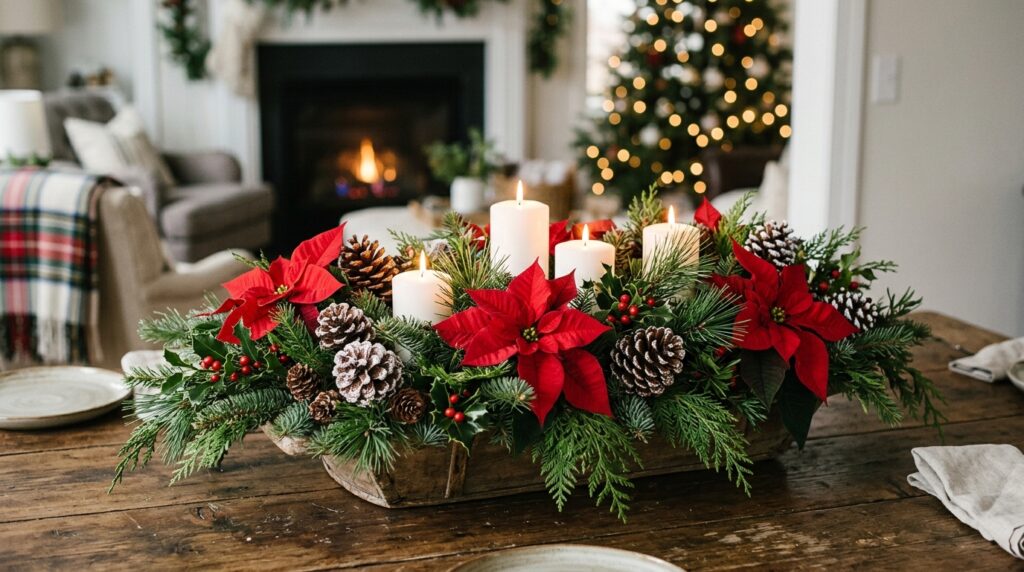
Once your netting’s in and your pinecones are ready, build in this order: pinecones and evergreens first, poinsettias second, then your color and texture layers last.
- Place your wired or glued pinecones into the netting first, followed by two or three types of evergreen; pine, Douglas fir, and cone cedar work well together. Let a few stems drape over the edge to soften the container line.
- Insert your sealed poinsettia stems deep into the water once the greenery structure is in place.
- Add carnations for color depth, and pieris or holly berries near the rim to soften the edge of the vase.
- Finish with a few tall stems like kangaroo paw, reaching above the rest of the design for height and a little movement.
This video from FlowerSchool walks through the exact build, including how the pinecones and poinsettias layer together in real time. Watch it, and see if you agree it looks better in person than it sounds on paper.
In my experience, the pinecones and evergreen do most of the heavy lifting here. The poinsettias are the star, but they read a lot more finished once they’ve got real texture underneath them instead of sitting alone in a vase.
Let’s Clear Up the Toxicity Myth
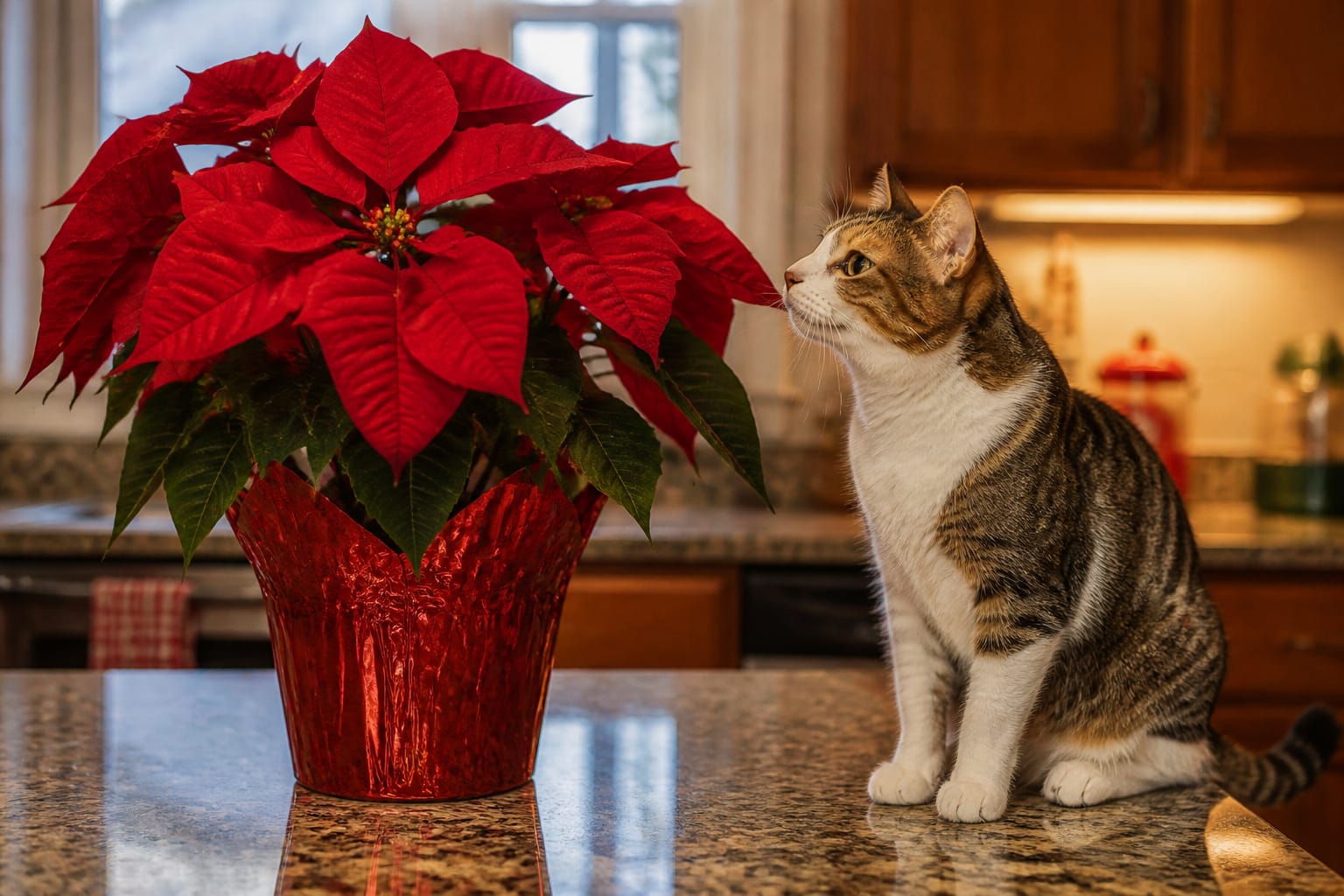
I still get asked whether it’s safe to have poinsettias in the house with pets or kids around. It is. The idea that a single leaf can send a child to the hospital has been floating around for decades, and it’s just not backed up.
Research cited by the Society of American Florists and POISINDEX found that a 50-pound child would need to eat more than a pound and a quarter of plant material, somewhere around 500 to 600 leaves, before experiencing anything worse than mild stomach upset. Nobody’s accidentally eating 500 leaves off a poinsettia.
That doesn’t mean I’d hand one to a toddler to chew on. The sap can irritate skin on contact, and a curious pet nibbling a leaf might get an upset stomach. But the “deadly plant” reputation is exactly that: a reputation, not a fact.
Ways to Use Your Cut Poinsettia Blooms
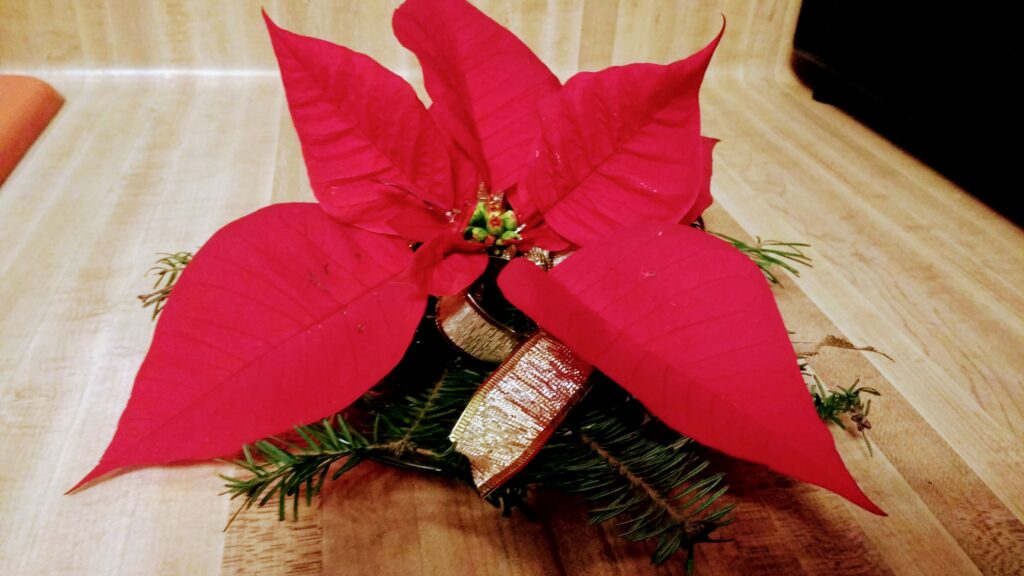
Once a poinsettia bract is sealed, it behaves like any other focal flower. Because of its size and star shape, it holds its own as the centerpiece of a design instead of getting lost among other blooms. A little goes a long way here, so don’t overdo it.
Around the house, I like them in seasonal vase arrangements, bud vases, and holiday centerpieces. Slide one into a water tube, and you can tuck it right into a garland or an indoor wreath, the same water-tube trick I use on my Scandinavian tabletop tree. We’ve even used them in sympathy work and, once or twice, in a winter wedding bouquet.
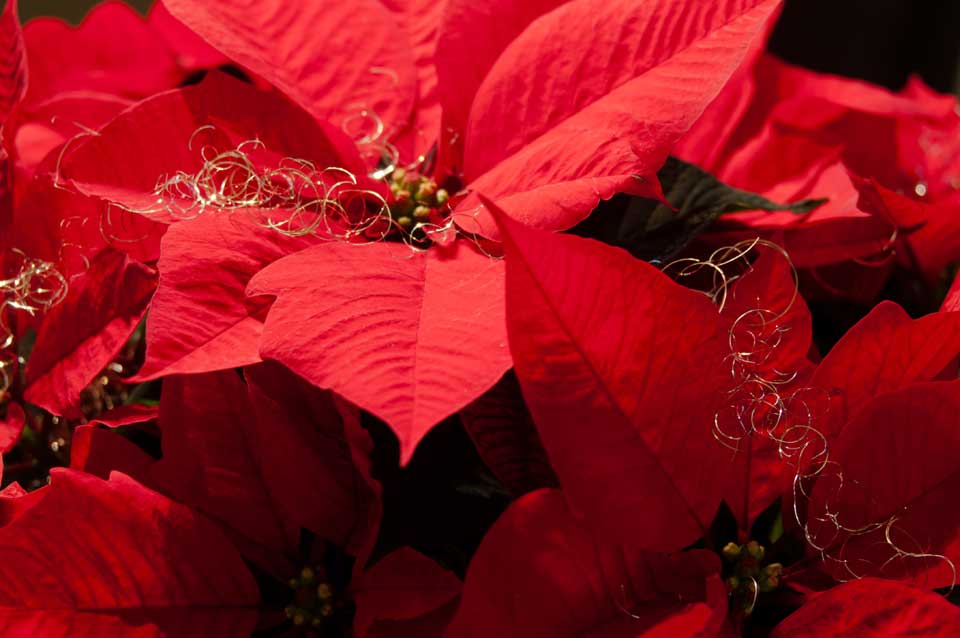
One of my favorite low-effort options: float a single bloom in a shallow dish, accented with a few balsam sprigs and a length of gold ribbon. The one pictured above is five days old and still holding its color.
If you’d rather start with a potted plant and pick the right one before you ever make a cut, I’ve got a full poinsettia buying guide that covers exactly what to look for at the store. And if you’re keeping some of the plant potted rather than cutting the whole thing, my poinsettia care guide covers watering, light, and getting it through the season without the leaves dropping.
Frequently Asked Questions
How do I stop a cut poinsettia stem from oozing sap?
Seal the cut end right after cutting, either by searing it over a flame for a few seconds or spraying it with denatured alcohol. Both stop the sap without blocking water uptake. Let the stem rest in plain water for 24 hours before using it in a design.
Can I recut a poinsettia stem after it’s already sealed?
Yes, but you’ll need to reseal it. Any new cut opens the stem back up to the same sap problem, so sear or seal it again immediately after trimming.
How long will a cut poinsettia bloom last?
A week to two weeks is realistic with a good seal and proper care, water changes, floral preservative, and a spot out of direct heat. I’ve had well-sealed stems go the full two weeks without much fading.
Do I need floral foam for this kind of arrangement?
No. Taped chicken wire netting inside the vase holds everything in place just as well, and it skips the environmental downside of floral foam entirely.
Should I wire or hot-glue my pinecones?
Either works. Wire with a dog-leg bend holds up better for larger designs or anything that’s getting moved, which is what I reach for on shop work. Hot glue is faster and plenty sturdy for a single arrangement staying put on a table at home.
Are poinsettias actually toxic to pets or kids?
Not in any serious way. Research from the Society of American Florists and POISINDEX shows a 50-pound child would need to eat 500 to 600 leaves before experiencing more than mild stomach upset. The sap can irritate skin on contact, so I wouldn’t hand a leaf to a toddler, but the plant’s reputation as dangerous is overblown.
Closing Thoughts
A sealed poinsettia stem opens up a plant most people only ever see sitting in a pot on a shelf. Seal it right, build it foam-free, and let the pinecones and evergreen do some of the work, and you’ll get a design that holds up for a week or more, no water tube required.
Tell me in the comments: searing or denatured alcohol- which method are you trying first?
Seal the stem, and even a plant that’s spent its whole life in a pot can bloom right alongside the rest of your holiday arrangement.
Til next time,