Disclosure: This post may contain affiliate links. If you click and buy, we may earn a commission at no extra cost to you. As an Amazon Associate, we earn from qualifying purchases.
Last Updated: May 31, 2026
A bride came in a few years ago, organized, spreadsheet in hand, vendor deposits already paid, and asked me to help her figure out what she was missing. We went through everything together and realized she hadn’t accounted for corsages for the grandmothers, boutonnieres for the ushers, or a separate toss bouquet. Three things she hadn’t even thought of. That’s not unusual. There are a lot of moving parts when it comes to wedding flowers, and it’s easy to overlook something.
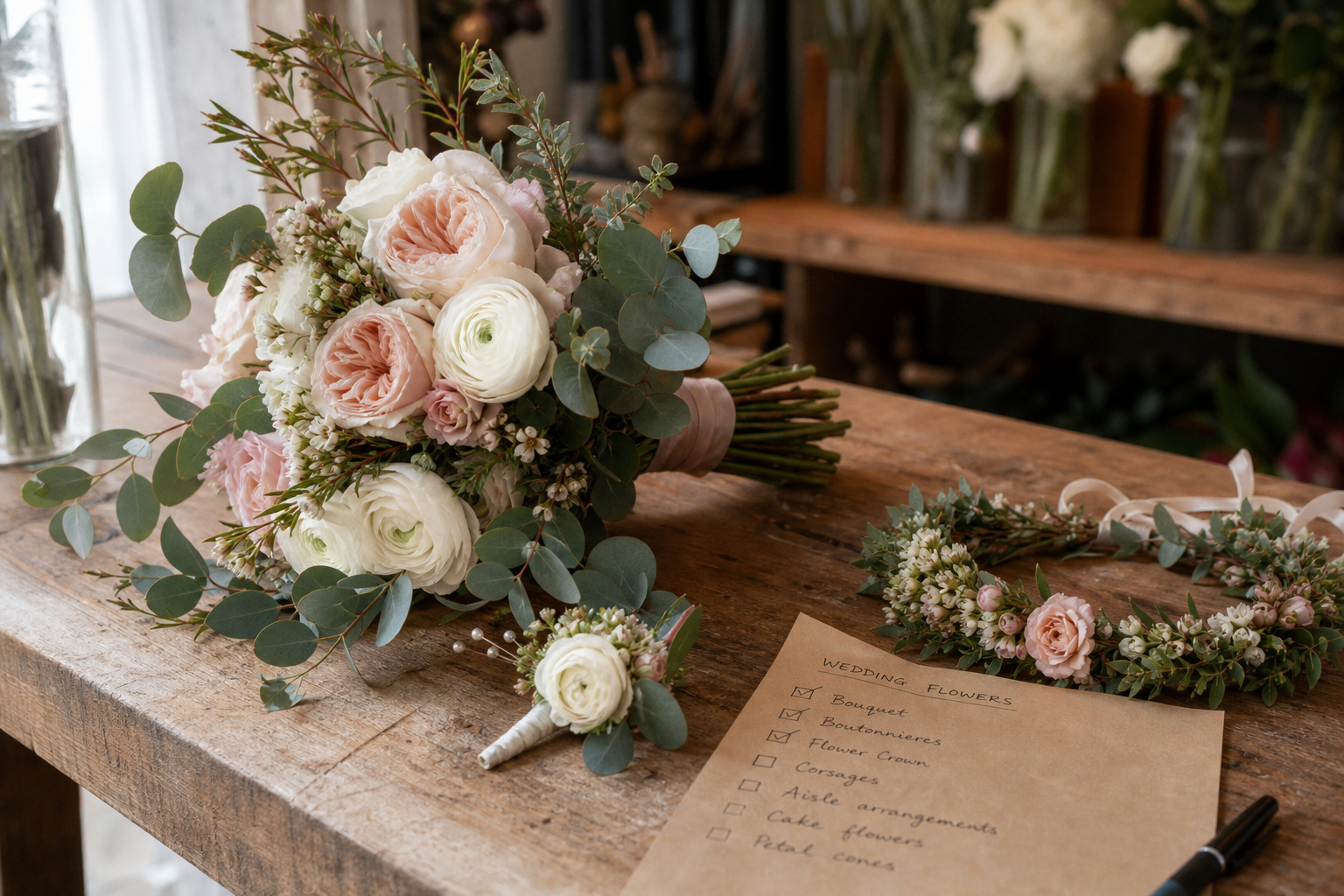
That’s exactly why I tell every couple I work with to use a checklist before they sit down with a florist. Not because I think they’re disorganized, most of them aren’t, but because wedding flowers touch a lot more areas than people realize until they’re standing in the shop trying to remember if they need flowers for the escort card table.
This isn’t a comprehensive planning guide. Think of it as a walkthrough of the three main categories, personal flowers, ceremony flowers, and reception flowers, so you go into your consultations knowing what to ask about and where to spend wisely.
Start With Personal Wedding Flowers
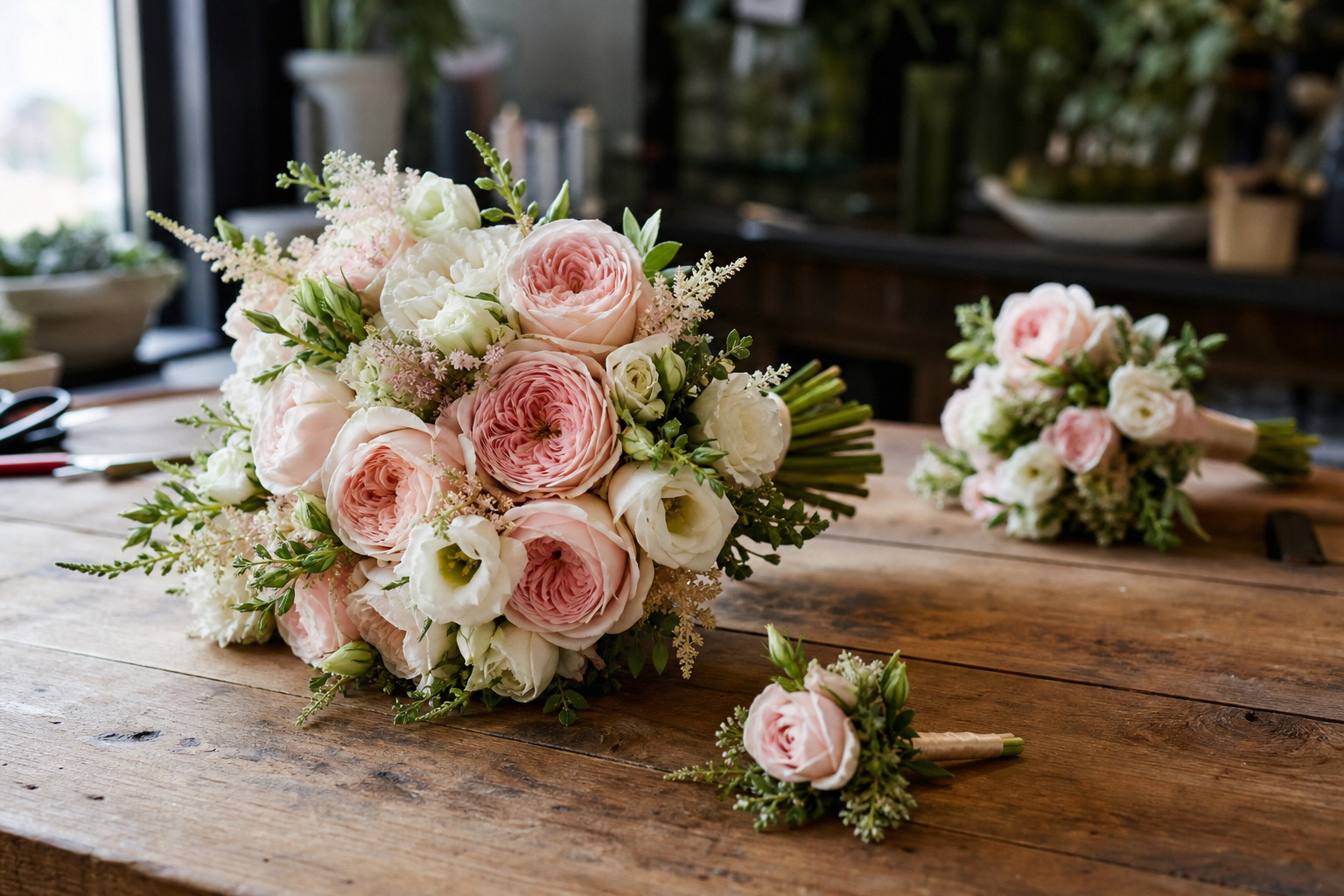
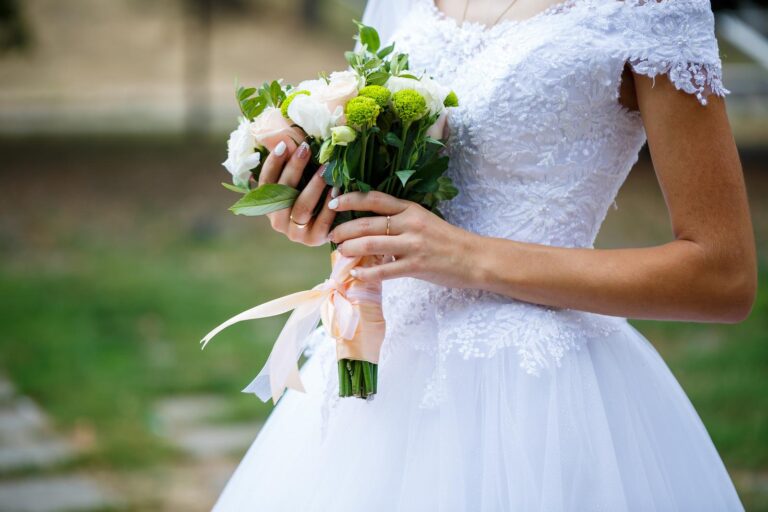
Personal flowers are anything that’s carried or worn on the wedding day — bouquets, floral headpieces, corsages, boutonnieres. They’re also the most photographed flowers of the entire event. That matters when you’re making decisions about where to put your budget.
In my experience, couples who work through a personal flowers checklist before their consultation arrive much better prepared. They’ve already thought about the flower girl, the grandmothers, and the ring bearer. The conversation goes faster, and the quotes come back more accurate
Bridal Bouquet
I like to think of the bridal bouquet as jewelry. If there’s one place to spend a little more to get exactly what you want, this is it. It’s the most photographed arrangement of the entire wedding, and it sets the visual tone for everything else.
Worth remembering: a more expensive bouquet doesn’t always mean a bigger one. The value of the flowers — not the volume — determines the price. A tight garden rose bouquet will cost more than an oversized wildflower bundle, usually by a significant margin.
If you’re working on a tight budget, your bridal bouquet is still worth protecting. Scale back on the bridesmaid bouquets or the toss bouquet before you cut here.
Floral Headpiece, Flower Crown, or Hair Flowers
Whatever style you choose here, crown, headpiece, or single stems pinned into an updo, it’s going to appear in photographs constantly. Make sure it complements your look rather than competing with it.
Select a floral headpiece that’s proportional to your bouquet and your hairstyle. A crown that overwhelms a simple chignon reads differently in photos than it does in the shop. If you’re unsure, bring a photo of your hairstyle to the consultation.
Attendants’ and Bridesmaids’ Bouquets
After the bridal bouquet, these are the next personal flowers to lock in. I recommend using flowers that complement the overall wedding palette rather than trying to exactly match the bridal bouquet. Complementary reads better in photographs than matched.
Handheld bouquets are the most common choice, but you don’t have to go that route. Arm bouquets, wrist corsages, or even a single long-stemmed flower are all legitimate options depending on the style of the wedding.
Flower Girl’s Basket or Nosegay
Keep this one simple. A small nosegay or a basket of petals works well, and it won’t overwhelm a young child. If your flower girl is scattering petals down the aisle, check with the venue first. Some have rules about what’s allowed on their floors.
Floral Collar
If a dog is part of your wedding, don’t overlook this. A floral collar is a nice touch that photographs well and takes very little budget. Even a small corsage attached to an existing collar will do the job.
Groom’s Boutonniere
This one is not optional unless the groom is in military dress uniform. A flower or two pulled from the bridal bouquet is the standard approach, and it visually ties the couple together without much additional cost.
Groomsmen’s Boutonnieres
Almost any flower works for groomsmen boutonnieres, but I recommend choosing blooms that will also appear in the bridesmaid bouquets. It creates a visual connection between the two sides of the wedding party without any extra planning.
The ring bearer gets one too. Pin it to his lapel or attach it to the pillow — either works. Don’t forget him on the checklist; he’s an easy one to miss.
Miscellaneous Corsages and Boutonnieres
Proper wedding etiquette calls for corsages or boutonnieres for the parents and grandparents of the bride and groom. Beyond that, consider ushers, readers, soloists, musicians, the officiant, and personal attendants. These add up, so list them all out before you get your quote. You don’t want surprises.
As you can see, personal flowers alone require several decisions. A checklist keeps you from arriving at the reception and realizing someone was left out.
Plan Your Ceremony Flowers Carefully
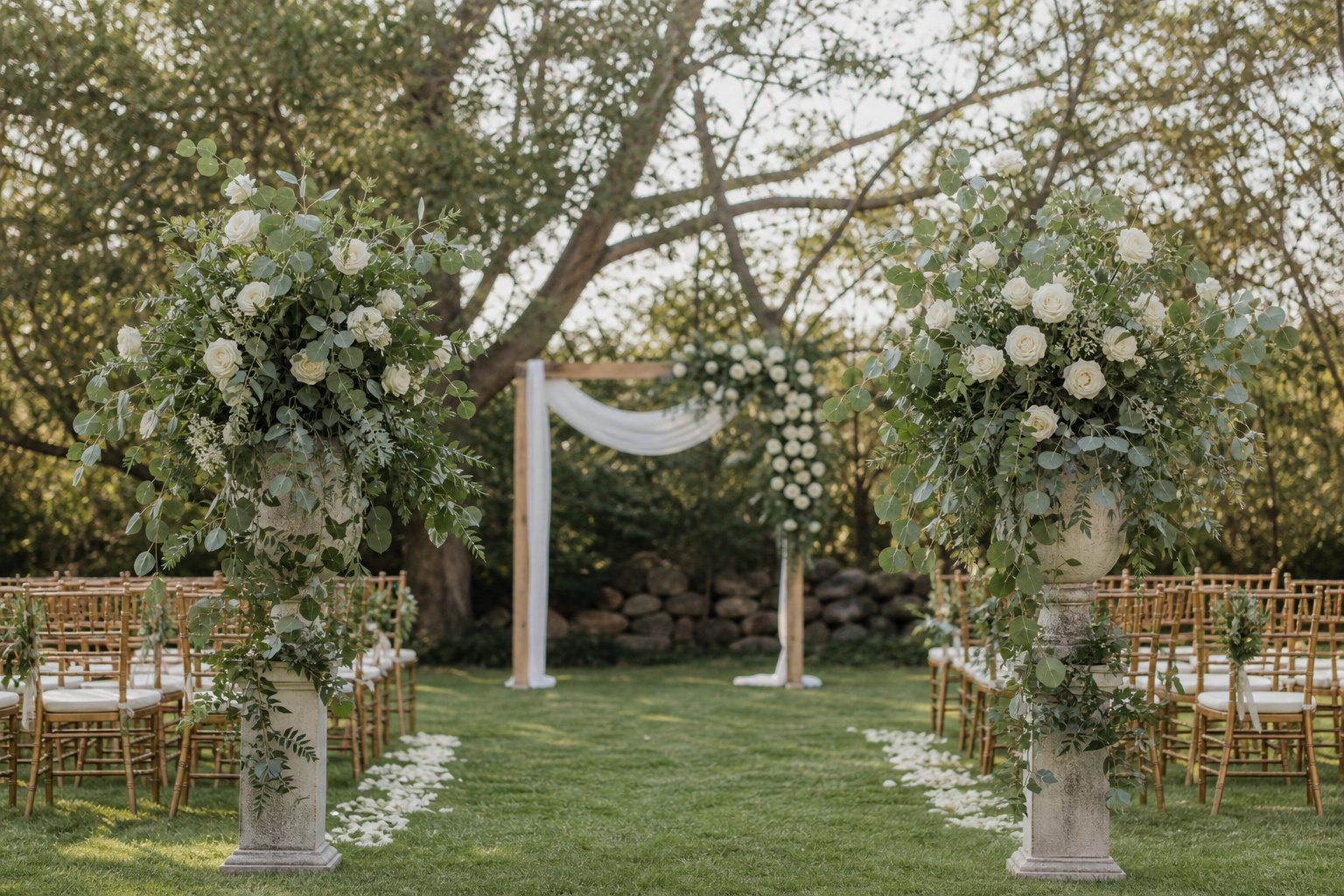
Ceremony flowers don’t have to be elaborate. But they do need to be planned, because the ceremony backdrop is what’s behind every processional photo. A little structure here goes a long way.
One thing I always emphasize: think repurposing. Most ceremony flowers can serve double duty at the reception. Plan for it from the start, and you get twice the visual impact for the same dollars spent.
Entryway Arrangements
Flowers at the ceremony entrance set the tone before a single guest reaches their seat. If you use them, design them to move. After the ceremony, they should go straight to the reception venue. Use them on the escort card table, the lounge area, or anywhere that needs a focal point.
Altar Arrangements
The altar or chuppah is the backdrop for almost every ceremony photo. I always suggest investing in a couple of larger, bolder arrangements here rather than spreading the budget across several small ones. Two statement pieces photograph dramatically better than five modest ones.
If the backdrop needs more structure, a floral arch, floral hoops, or a flower curtain are solid options. All of them can be repurposed at the reception, which makes them efficient budget choices.
Pew End Arrangements and Aisle Decor
Pew end arrangements add visual rhythm to the aisle without a huge budget commitment. You can also go simpler, using two statement arrangements flanking the aisle entrance, which will frame it nicely without markers on every row.
Aisle decor is one of the best repurposing opportunities you have. Whatever you place here during the ceremony can be moved easily and will show up again at the reception as something fresh.
Petals for Tossing
Tossing petals as the couple exits is still popular, and it photographs beautifully. Fresh rose petals are the most common choice. If fresh isn’t practical, freeze-dried rose petals hold up well and are easier to manage logistics-wise. I’ve used both, and either works fine.
Make the Most of Your Reception Flowers
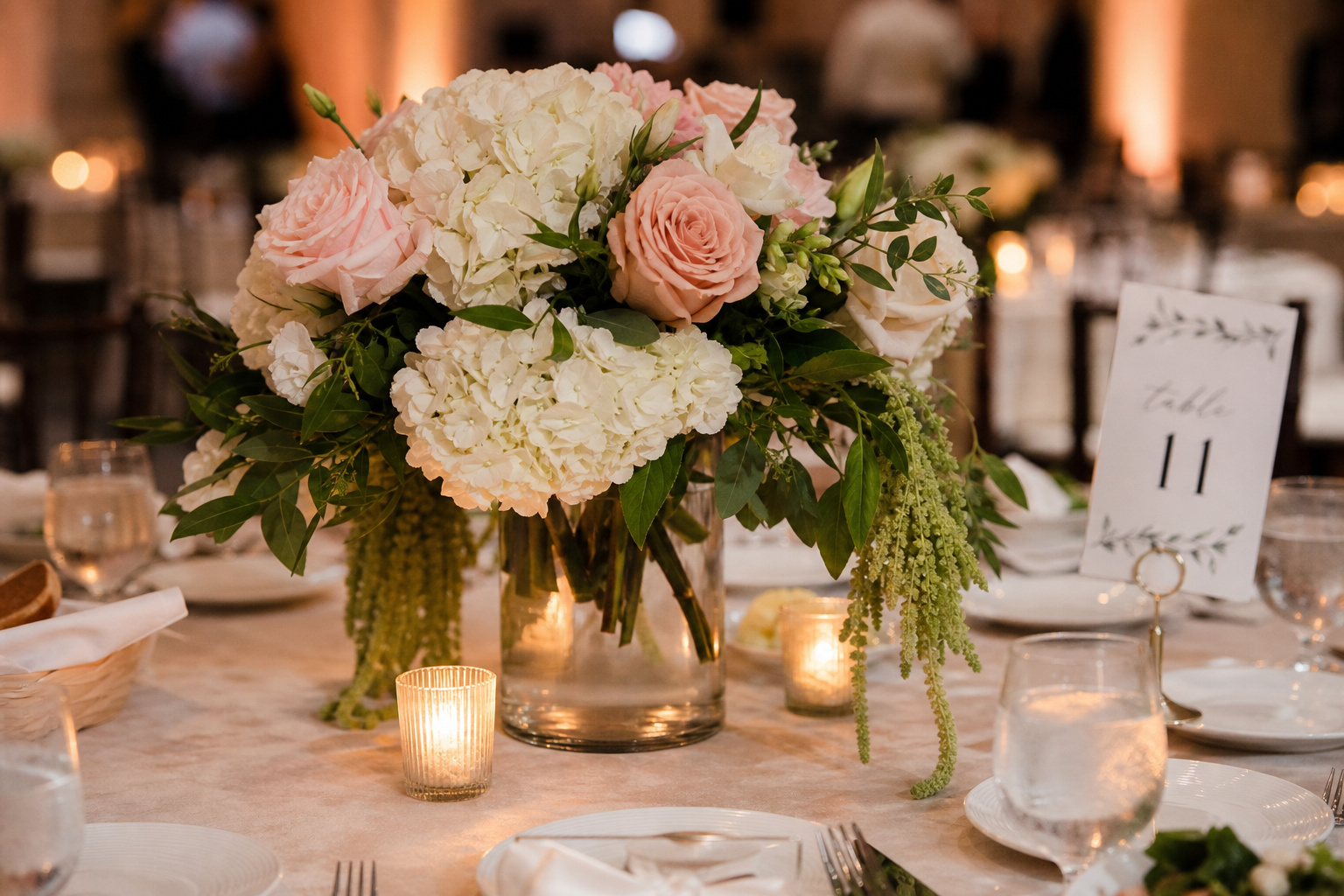
The reception is where your guests spend most of their time, and it’s where flowers can do the most work for your budget if you’re strategic about it. The repurposing strategy pays off here. Flowers that served at the ceremony have a second life at the reception.
One principle I use when planning reception flowers with couples: wherever you want to draw attention at the venue, that’s a good place to add flowers. Simple as that.
Cocktail Table Arrangements
A small bud vase with a bloom or two on each cocktail table is one of those details that guests notice without knowing why the room feels polished. It’s inexpensive and easy to overlook on the planning checklist. Don’t skip it.
Bar Arrangements
I wouldn’t design an arrangement specifically for the bar area. But it’s a natural landing spot for repurposed ceremony pieces. A statement arrangement or two from the altar or entryway can move here without any modification and look completely intentional.
Guest Book Table
Guest book tables are near the reception entrance, which means they’re high-visibility. A floral arrangement here, ideally repurposed from the ceremony, does real work. I like adding a few votive candles alongside it to draw the eye. Small details, big effect.
Escort Card Table Arrangements
This depends on how you’re displaying escort cards. If you’re using a creative display, you may not need an arrangement here. But if the table feels bare, a repurposed welcoming arrangement from the ceremony fits perfectly.
Head Table or Sweetheart Table Centerpiece
Guests will be looking at the head table all night. Put some of your flower budget here. Options range from garlands and floral table runners to simply placing the bridesmaid bouquets in vases along the table. It’s a smart, cost-effective move that also solves the question of what to do with those flowers once everyone’s seated.
Guest Table Centerpieces
These are the flowers your guests will spend the most time with. They’ll appear in more reception photos than anything else, and they’re the arrangements people remember. This is where I suggest putting a meaningful portion of your reception flower budget. A well-designed centerpiece table by table makes the whole room feel considered.
Take a look at wedding centerpiece ideas early in the planning process so you know what you’re working toward before you finalize your budget.
Bride and Groom’s Chair Decor
Optional, depending on your table setup. Small bouquets or a simple garland draped across the chairs work well. If you’re using a sweetheart table, something here makes the couple’s seats easy to spot from across the room.
Wedding Cake Flowers
Fresh flowers on the wedding cake are always beautiful when done right. Coordinate with both your baker and your florist ahead of time so the flowers are properly handled. Not every bloom is food-safe, and placement matters. Include this in your flower budget if you’re planning it.
Buffet Table Arrangements
Buffet tables don’t have a lot of real estate, so keep any floral additions compact. A eucalyptus or greenery garland with a few loose flowers tucked in works well. If your budget allows and you need to preserve table space, consider Eiffel tower vases or a small hanging installation overhead.
Don’t overlook the dessert table either. A small pop of color here makes a difference in photos.
Bouquet to Toss
Most brides today want to preserve their bridal bouquet, which means they order a separate, simple bouquet specifically for the toss. It doesn’t need to be elaborate, just something that photographs well in motion. If the budget is tight, ask one of the bridesmaids if they’re willing to lend theirs. It happens more often than you’d think.
Lounge Area Arrangements
Lounge areas work best with smaller arrangements or bud vases, something that feels intimate rather than formal. Larger statement pieces draw attention to the space, but in a lounge, you want guests to feel settled, not like they’re sitting under a floral installation. Repurposed ceremony flowers are perfect here.
Powder Room Arrangements
I suggest this to every bride I work with: put a small arrangement or a bud vase in the powder room. It’s always one of the most-commented-on details after the wedding. Guests notice it, especially the women. It takes almost nothing to execute and usually uses repurposed flowers, so the cost is close to zero.
Getaway Car Arrangements
Not required, but a nice finishing touch. A lush garland or floral wreath on the getaway car pushes the whole departure moment over the top if the budget allows. The standard “Just Married” signs are fine without flowers, but flowers make for a better photo.
One Tip Before You Finalize the List
Plan your reception flowers before your ceremony flowers. Your guests will spend more time at the reception, and the flowers need to work harder there. What I do with many couples is design the reception arrangements first, then use them at the ceremony before moving them over. Inverse repurposing. And in my experience, it’s the most cost-effective way to get both spaces looking right.
Frequently Asked Questions
How far in advance should I start planning wedding flowers?
Six to twelve months out is ideal for most weddings. If you’re planning during peak season, May through October in most of the country, the earlier the better. Popular florists book fast, and locking in your consultation early means you’ll have more options. Once you’ve booked a florist, bring your checklist to the first meeting so nothing falls through the cracks.
What’s the best way to stretch a tight wedding flower budget?
Repurposing is the single most effective strategy. Ceremony flowers that can move to the reception do double duty for the same cost. Beyond that, choose flowers that are in season locally, and be flexible on specific varieties. Your florist knows what’s available and abundant, and working with that market instead of against it saves real money. You can read more about managing costs in my post on how much to budget for wedding flowers.
Do I need flowers for the ceremony if my reception flowers are elaborate?
Not necessarily. Some couples keep the ceremony flowers minimal and focus the budget on the reception. The ceremony is shorter, and if the venue is already beautiful. Whether a garden, a historic church, or an outdoor space with natural surroundings, you may not need much. A strong bridal bouquet and boutonniere can carry the ceremony photos on their own.
What should I bring to my first florist consultation?
Your checklist, a rough budget range, your color palette, and any inspiration photos you’ve collected. You don’t need to have everything figured out. That’s what the consultation is for. But the more specific you can be, the more accurate your initial quote will be. Knowing your guest count and the number of tables helps too.
Is it worth ordering a separate toss bouquet?
If you want to preserve your bridal bouquet, and most brides do, then yes. A simple toss bouquet doesn’t need to be expensive. A small hand-tied bundle that photographs well in motion is all you need. It’s a small line item on the overall budget and worth it to protect the one you’ve invested in.
Can I mix and match flowers across different areas of the wedding?
Absolutely, and most weddings do. You don’t need the same flowers at every table or in every arrangement. What you want is a consistent color palette and style so everything reads as part of the same event. For more on this, take a look at my post on whether all your wedding flowers need to match. It covers the coordination question in more detail.
Closing Thoughts
Wedding flower planning doesn’t have to be overwhelming if you work through it in sections. Personal flowers, ceremony flowers, and reception flowers. Cover each category, and you won’t find yourself at the reception realizing you forgot the powder room or left someone in the wedding party without a boutonniere.
A checklist is also useful beyond the planning phase. Bring it to every vendor meeting as a reference, and use it to confirm details as the wedding date gets closer. The couples who come in most prepared tend to end up with the flowers they actually wanted, which is the whole point.
For more on the planning side of things, this year’s wedding flower trends and the post on the best wedding planning tools are both worth a look if you’re still in the early stages.
Whatever your budget looks like, there’s a version of this checklist that works for you. Add the items that apply, subtract the ones that don’t, and use it as a starting point, not a mandate. Every wedding is different, and so is every flower budget.
If you’ve used a wedding flower checklist, or wish you had one when you were planning, I’d love to hear what worked and what surprised you. Drop a comment below.
Til next time,